
A frog in an air-pump receiver appeared to have died. Robert Boyle’s record, dated 9 September 1662, describes its swollen body, the absence of visible signs of life and the admission of air back into the chamber. The animal was taken out and left in a garden overnight. The next morning it was alive. The surviving account turns an apparent result into a problem of observation and timing.
This is a revealing place to begin the history of an apparatus famous for making experiments persuasive. Boyle and his collaborators could change the conditions around an animal or object by removing some of the surrounding air. But interpreting what followed required judgements about the device, the trial and the signs an observer could recognise. A glass vessel did not turn every outcome into a self-explanatory fact.
PLACE & TIME
Oxford · 1659–1662 CE
Oxford
Boyle and Hooke’s early apparatus; a wider experimental audience
1659–1662 CE
Oxford is the reference city for the early work, not the location of every later trial or witness account.
An invisible substance acquired visible effects
Boyle’s New Experiments Physico-Mechanicall, Touching the Spring of the Air appeared in 1660. Its forty-three experiments investigated what happened as air was removed from a receiver. The original publication and its apparatus plate survive. “Spring” referred to air’s capacity to expand and press, rather than to a metal coil hidden in the machine.
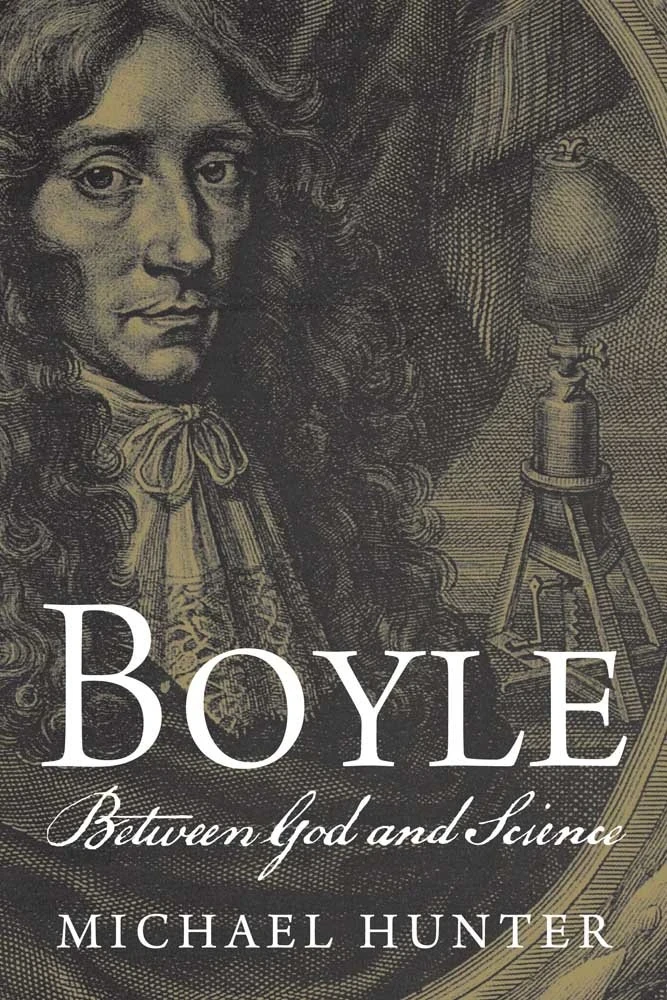
The apparatus had a history before this publication. Boyle learned of earlier air-pump investigations associated with Otto von Guericke, and Robert Hooke supplied crucial construction and practical skill for the equipment used in Boyle’s work. The University of Oklahoma’s historical description connects these developments. “Boyle’s pump” is a convenient name, but it can conceal both earlier devices and the collaborator who helped make this one work.
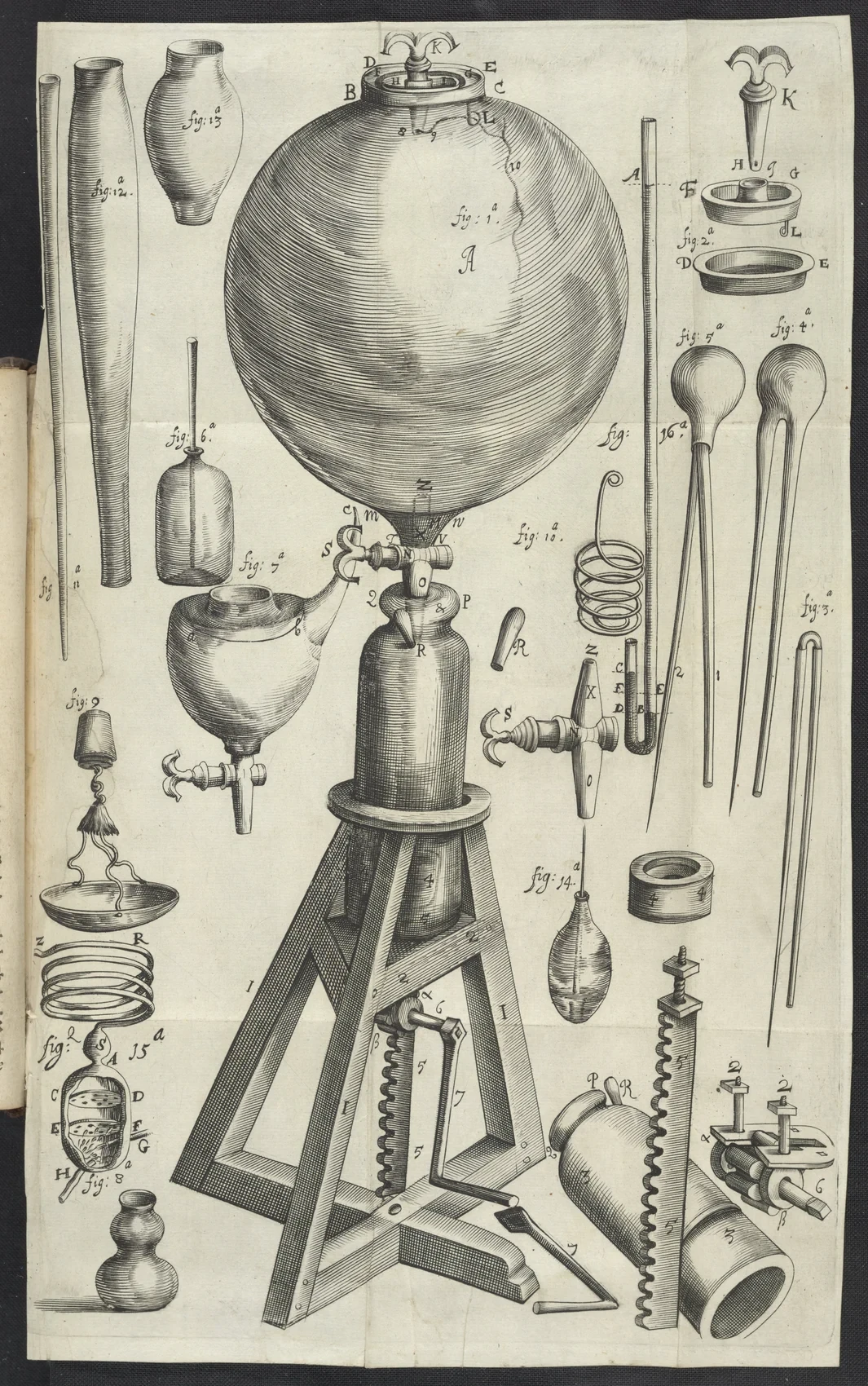
The engraving presents a glass receiver above a mechanism for extracting air, with labelled components around it. The apparatus separates a space that can be altered from the air outside. Glass permits the observer to see into that space. Valves, joints and seals make the separation possible. What looks like a single experimental object is really a set of connected parts, each capable of limiting the trial.
FOLLOW THE PROCESS
What the apparatus changed
Enclose a trial
A receiver held the object or animal whose behaviour would be observed under changed surrounding conditions.
Remove some air
The pumping mechanism reduced the amount of air in the receiver. This was a partial evacuation, not a guarantee of a perfectly empty space.
Compare what happened
Observers could follow changes as pumping proceeded and as air was readmitted.
Record the conditions
An account needed to relate the result to the apparatus and to what had actually been done, rather than report an unexplained spectacle.
The difficulty was keeping the change in place
A receiver is useful only if it remains adequately sealed. Boyle’s surviving papers include notes on cement used with air pumps. The Boyle Project identifies an unpublished memorandum on its preparation. That small material detail belongs inside the history of the results. An investigator who could not maintain the required conditions could not simply substitute confidence or an elegant theoretical explanation.
Different questions placed different demands on the machine. A brief change could be observed while pumping, whereas a trial requiring a long period of reduced pressure made leakage more consequential. The challenge was not merely to possess an air pump. It was to make this particular device sustain conditions suitable for this particular enquiry. Practical competence shaped the range of questions that could be investigated.
KEEP THE DISTINCTION
A result depends on the conditions maintained
A change during pumping
Something alters as air is removed under the conditions of this trial.
Whether leakage, handling or another change influenced the result.
A response after air returns
Readmitting air is associated with a further observable change.
Whether the timing and the subject’s condition support the proposed explanation.
A long trial in the receiver
The apparatus may allow an effect to be followed over time.
Whether the intended reduced pressure was actually maintained throughout.
The frog required a longer account
The frog record belongs to 1662, not to the original text of the 1660 book. Boyle described the changing appearance of the animal over several hours and then its condition the next morning. This is not a simple report that removing air invariably kills immediately. Its interest lies in the difference between seeing no sign of life and establishing an irreversible death. The later observation changed what could responsibly be concluded from the earlier one.
That distinction does not depend on giving Boyle modern knowledge he did not possess. We can read the uncertainty already present in the sequence. The body’s appearance was observed; an inference was drawn; further time supplied another observation. A narrative that ends as soon as the receiver is opened would remove the evidence that complicates the result. Experimental records have beginnings and endings chosen by people, and those choices matter.
KEY IDEA
An apparently decisive result may change when the subject is followed for longer.
Animal trials also imposed suffering. John Evelyn’s diary entry for 25 April 1661 describes a Society demonstration involving a snake and a chick, with different outcomes. The account is reproduced alongside Boyle’s frog memorandum. These creatures were not interchangeable props. Their responses were part of the enquiry, and their distress should be named without turning the event into an entertaining recipe for repetition.
A witness inspected a trial, not every possible cause
An audience could compare what happened in the receiver with what the operator said had been done. It could also ask questions, request another attempt or notice an unexpected change. But not every condition was equally available to the senses. A transparent vessel made its contents visible without making the quantity, composition or movement of the remaining air directly visible. The instrument changed what could be investigated; it did not abolish interpretation.
Trust in the operator therefore mattered. An observer needed reasons to believe that the apparatus had been prepared competently and that the account included relevant circumstances. That was not a substitute for a material result. It was one of the conditions under which a material result could become evidence for someone else. A leaky joint and an unreliable description could damage an argument in different ways.
LOOK FROM HERE
Three positions around the same apparatus
Preparation, seals and adjustment determine whether the machine is suitable for the trial. A failure may reveal a practical problem rather than settle a general theory.
A person present can inspect selected actions and outcomes, while still relying on the operator for details that are not immediately visible.
A description and plate allow a trial to be followed at a distance. They cannot transmit every practical judgement needed to rebuild and operate the device.
A written experiment had to carry its circumstances
Boyle’s printed reports paired explanations of apparatus with accounts of trials. The plate’s labels let readers connect a described component to something they could locate on the page. The sequence of actions and outcomes supplied a different kind of access from a picture alone. A reader could examine the reasoning even without immediate access to a working engine. That accessibility was valuable, but it did not make reading the same activity as repeating the experiment.
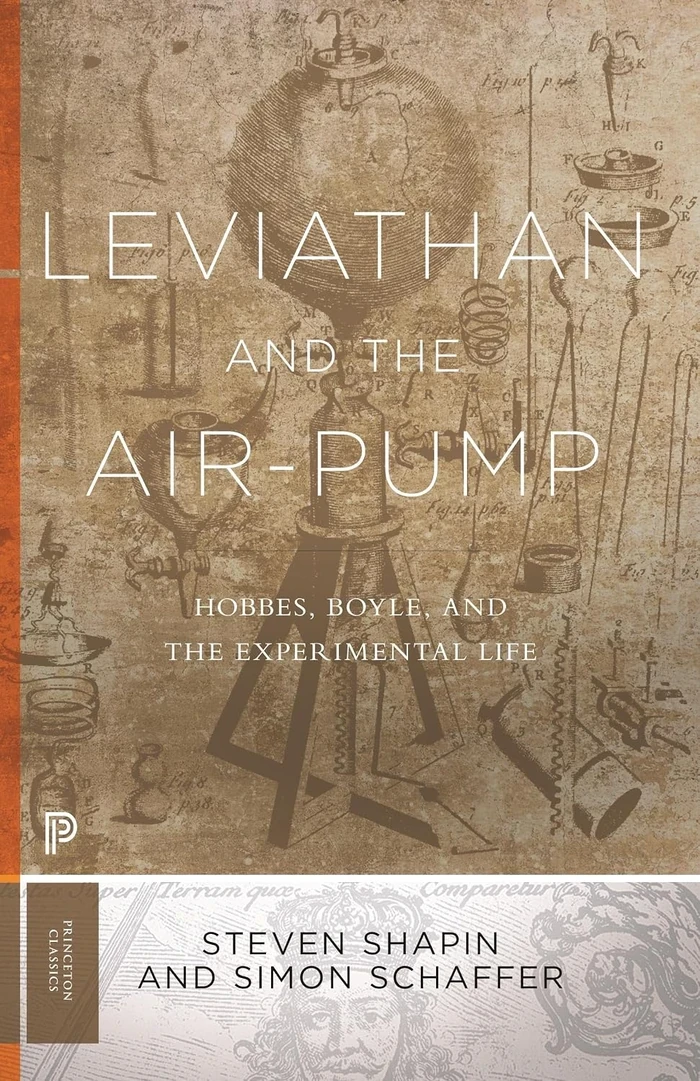
Disagreement could also concern the explanation attached to an outcome. The controversy with Thomas Hobbes, explored in Shapin and Schaffer’s historical study, makes the pump a case in how experimental authority was contested. The equipment did not provide a position outside all philosophical and religious commitments. Boyle himself connected natural investigation with religious concerns. The Boyle Project’s introduction keeps those interests within the same life.
The chronology needs care here too. The 1660 book and its early apparatus should not simply be labelled the finished discovery of “Boyle’s law”. The statement about pressure and expansion appears in the second edition of 1662. A modern formula can help a physics lesson, but substituting it for the earlier trials would remove the difficulties that made those trials historically interesting. The investigators did not begin with a complete textbook explanation waiting to be illustrated.
The famous bird painting shows another moment
The dramatic painting used at the beginning of this article is Joseph Wright of Derby’s An Experiment on a Bird in the Air Pump, dated 1768. The National Gallery identifies the work. It belongs to a later world of demonstration and spectatorship, more than a century after Boyle’s first publication. Its emotionally divided audience makes it useful for thinking about a spectacle, but it cannot identify who stood around Boyle’s receiver.
TAKE THIS WITH YOU
An experiment became persuasive through an account of its conditions
Start with the apparatus
Receiver, pumping mechanism and seals created the conditions; their reliability was a historical achievement, not an assumption.
Read the whole sequence
The frog’s recovery and differences between animal trials complicate a simple dramatic result.
Separate effect from explanation
Witnessing or reading an outcome does not alone settle its cause or every philosophical claim attached to it.
A receiver allowed investigators to alter a small enclosed environment. Merian’s work, in the next chapter, depended instead on following living creatures through longer changes and finding the plants that sustained them. Her difficulties were different, but time, practical care and other people’s knowledge were again essential to what could be observed.