
Before Nashville students challenged segregated lunch counters, they rehearsed. In James Lawson’s workshops, participants practised responding to abuse without striking back. The preparation joined an argument about justice to the difficult business of controlling a response under pressure. Sitting down to ask for service would involve much more than occupying a stool.
Nonviolent resistance in the civil rights movement was active work: refusing cooperation, disrupting exclusion and organising people to keep going. Yet agreeing to a demonstration’s rules did not mean that everyone shared the same beliefs about every use of force. Between about 1955 and 1965, activists debated what nonviolence demanded, how it could win change and whether it extended to protecting a home. Those distinctions explain more than a simple division into peaceful and violent people.
PLACE & TIME
A strategy tested in different settings
Nashville · Birmingham · Mississippi · Washington, D.C.
United States
About 1955–1965 CE
Main settings
Resisting segregation meant disturbing ordinary routines
Jim Crow segregation restricted access to public facilities and political rights. At a lunch counter, the restriction became a concrete decision about whom a business would serve. A sit-in challenged that decision by staying in the space where exclusion operated. A boycott applied pressure by withholding custom. Both actions refused to treat the existing arrangement as acceptable.
In his February 1957 essay Nonviolence and Racial Justice, Martin Luther King Jr. insisted that restraint was compatible with determined resistance. He wanted action directed against injustice without humiliating the opponent. That ambition included reconciliation, but getting along peacefully within segregation was no satisfactory outcome. A quiet counter could still be an unjust counter.
IN THE SOURCE
this is not a method for cowards; it does resist.
For some activists, the method expressed a way of life
King connected Christian love with the example of Gandhi’s nonviolent struggle in India. His commitment developed through study, advice and the Montgomery bus boycott. The King Institute identifies Bayard Rustin and Glenn Smiley among his advisers. Ideas reached the movement through conversations and practical experience, not just through one famous leader announcing a finished doctrine.
King’s ethical argument went beyond keeping fists lowered. He opposed hatred as well as physical injury and hoped for a community in which former opponents could live with justice. In the 1957 essay he explained love as goodwill, rather than affection for someone committing oppression. You did not have to like an adversary to refuse to make hatred the purpose of your action.
KEEP THE DISTINCTION
A shared method could rest on different commitments
Why refrain from force?
An activist believes the means should express the just relationships being sought.
An activist agrees that organised restraint can help a particular campaign achieve its goals.
How far does it extend?
The commitment may extend beyond demonstrations into everyday conduct.
A person may follow protest discipline without rejecting every form of self-defense.
What can we infer?
King and Lawson articulated demanding moral visions; their views were not every participant’s views.
A disciplined public action does not, by itself, reveal each participant’s private beliefs.
Nashville turned an idea into a practised response
Lawson had studied Gandhian thought while living in India after serving a prison sentence as a conscientious objector to the Korean War. In Nashville he taught students including Diane Nash, John Lewis and Bernard Lafayette. His teaching connected non-retaliation with a belief in the power of direct action. These students were learning how to act together, as well as why the method mattered.
The workshops combined discussion with role-playing. Participants anticipated hostile encounters and practised responses; their demonstration rules also required courteous conduct and reporting serious incidents to a leader. The Digital Gateway’s workshop account draws on participants’ later recollections. Training addressed a real problem: an individual reaction could change the course of a collective action.
- Preparation joined political purpose to behaviour under pressure.
- Shared rules made a collective commitment visible to participants.
- Reporting incidents gave organisers information beyond what one person could see.
The rules did not protect students from attack. In the Digital Gateway’s account of the Nashville movement, Lewis recalled white attackers beating demonstrators on 27 February 1960 and police arresting the students rather than those attacking them. The students refused to pay bail. Jail became a further site of resistance, with a cost borne by the people inside it.
Warren K. Leffler · Public domain · resized and jpeg encoded.
Direct action was meant to open a blocked negotiation
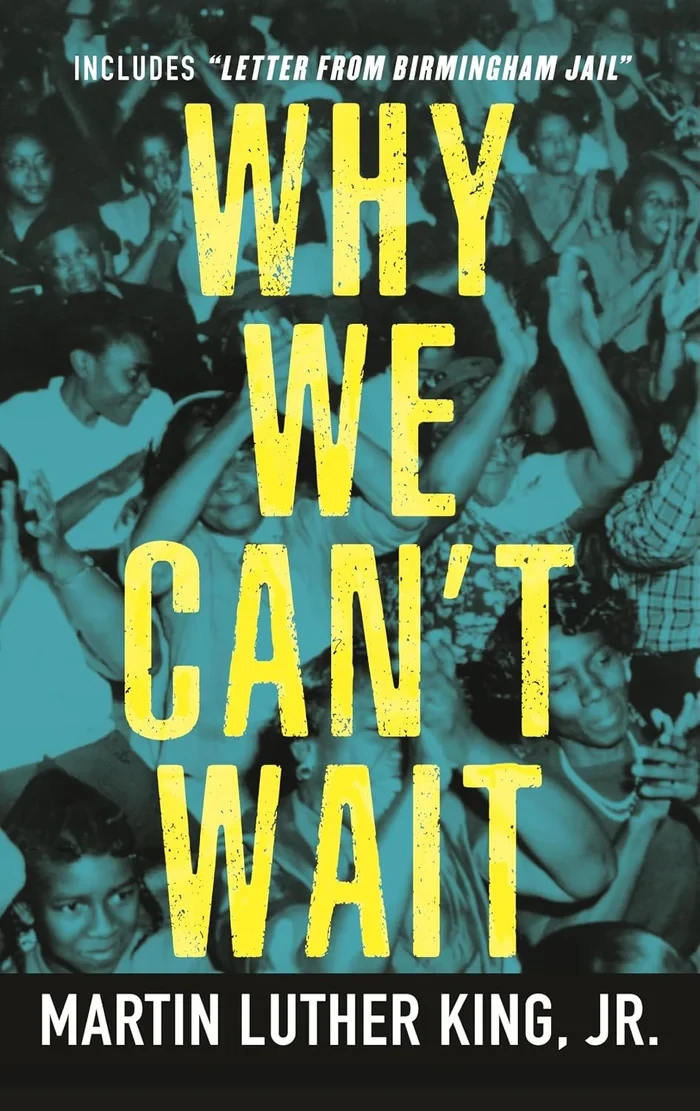
King’s Letter from Birmingham Jail, dated 16 April 1963, answered clergy who had criticised the campaign. He defended protest against the suggestion that activists should simply wait. The letter travelled beyond its original audience in mimeographed copies, pamphlets and periodicals; King later revised it for his book Why We Can’t Wait.
FOLLOW THE ARGUMENT
Four stages in King’s account of a campaign
Establish the injustice
Collect facts about the conditions being challenged.
Seek negotiation
Ask those with power to address the demands.
Prepare participants
King’s term “self-purification” included preparation for non-retaliation and jail.
Use direct action
Create pressure that makes continued refusal to negotiate harder.
These stages describe King’s argument in the letter, not a promise of automatic success. He presented direct action as a way to make a refusing community confront the issue. Negotiation and pressure were connected: a campaign could seek a meeting while also making business as usual more difficult. The language of nonviolence contained conflict, rather than an instruction to avoid it.
Pressure involved money, timing and difficult decisions
In Birmingham, the Southern Christian Leadership Conference (SCLC) joined Fred Shuttlesworth’s existing Alabama Christian Movement for Human Rights. The April–May 1963 campaign targeted downtown businesses through boycotts, sit-ins and marches. Its timing around Easter gave lost trade particular weight. The King Institute’s campaign history also records depleted bail funds: continuing arrests created a practical problem that commitment alone could not pay away.
Publicity, economic pressure and negotiations worked together. A May agreement included plans to desegregate lunch counters and changes in employment. Yet King and Shuttlesworth disagreed over easing demonstrations during negotiations, and segregationist attacks followed the agreement. Even leaders committed to nonviolent action could argue about when pressure should stop. An agreement did not make those at risk safe overnight.
A peaceful march required an enormous support system
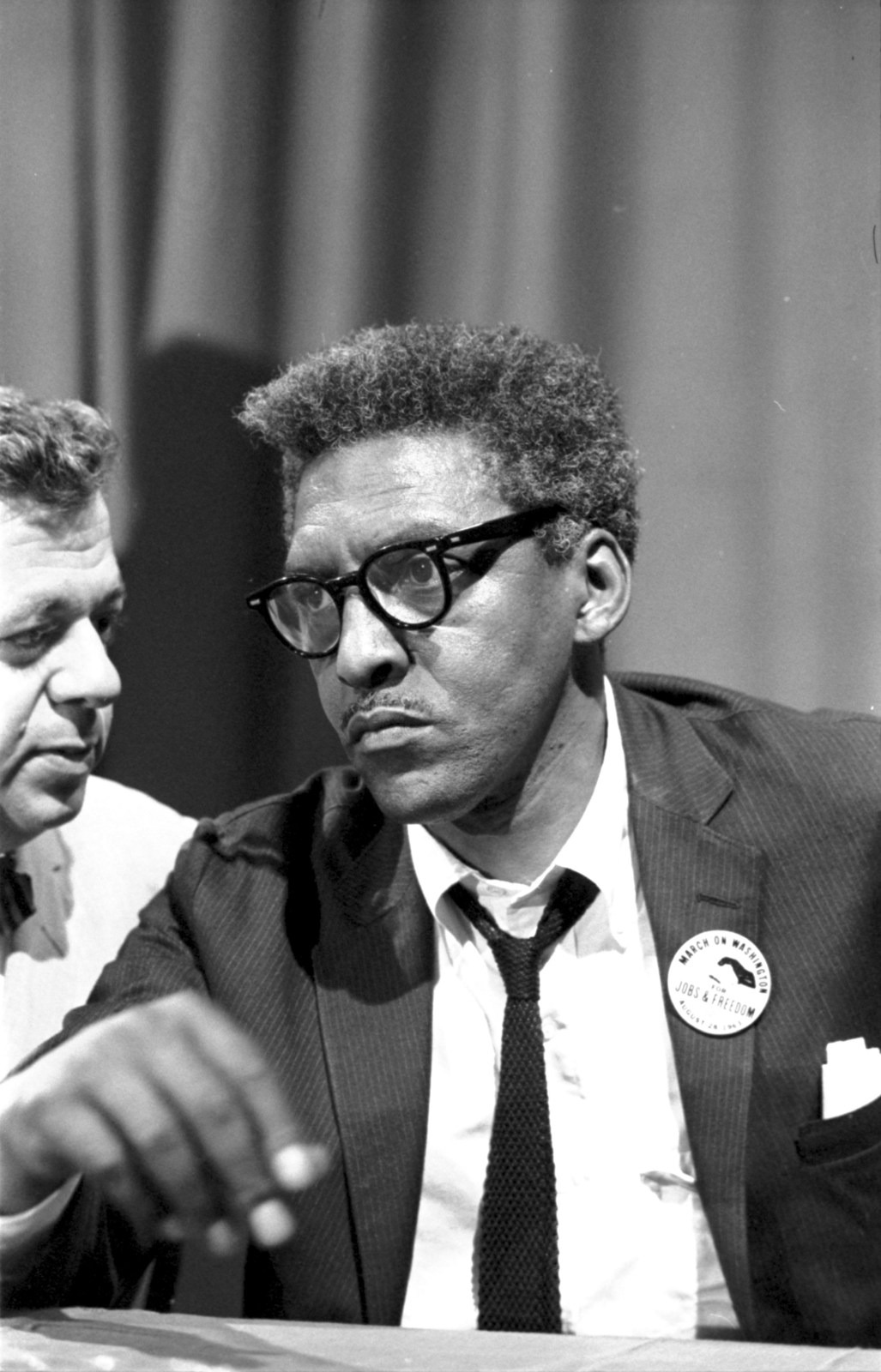
At the March on Washington for Jobs and Freedom on 28 August 1963, Bayard Rustin coordinated much of the practical organisation. The National Park Service describes training marshals in nonviolent crowd control, arranging transport, recruiting participants and providing facilities. The microphones and the marchers were the visible result of work that began well before the speeches.
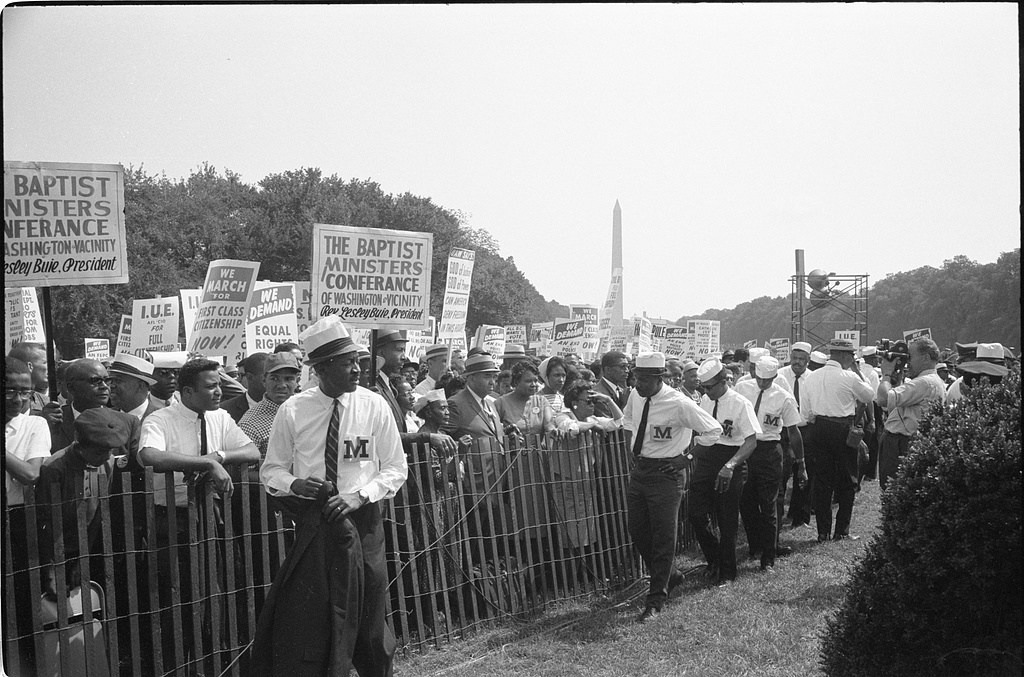
A common discipline allowed people with different backgrounds to make demands together. The march joined student, civil rights and labour organisations; its demands included jobs and civil rights legislation. That broad cooperation did not erase disagreement. John Lewis’s speech was moderated under pressure from other leaders. Keeping an event orderly and agreeing on every political statement were different tasks.
TEST THE EVIDENCE
Does a peaceful crowd prove a shared philosophy?
Everyone in this crowd rejected every use of force in everyday life.
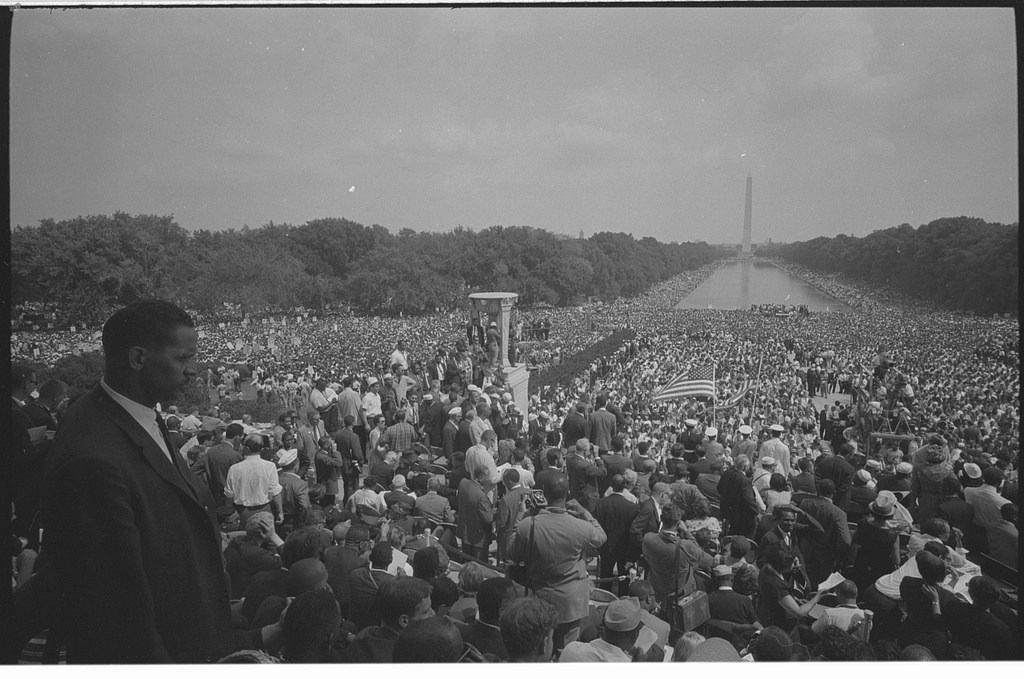
- SHOWS
- A large crowd around the Reflecting Pool, seen from the Lincoln Memorial.
- SUGGESTS
- Many people assembled for this public action. Other records identify its organisers and demands.
- CANNOT PROVE
- A photograph does not reveal each person’s beliefs about self-defense, or how those beliefs changed.
A better-supported reading
The photograph documents participation in a mass demonstration; it cannot establish unanimous personal pacifism.
Photograph record: Warren K. Leffler · March on Washington ·
Warren K. Leffler · Public domain · resized and jpeg encoded.
Protecting a family raised a different question
Hartman Turnbow, a Black farmer in Holmes County, Mississippi, attempted to register to vote in April 1963. Afterwards, attackers firebombed and shot at his home. He fired back. The Digital Gateway places his defense of his family beside his continued voting-rights activism. It does not establish the rumour that he killed an attacker, so that claim cannot be treated as a known outcome.
Turnbow’s experience changes the setting of the question. Discipline at a planned demonstration and the response to an attack on a family home were not the same decision. A person could support organised political protest and refuse to leave a household undefended. That did not settle every disagreement about force; it made a sweeping label a poor description of what people faced.
Warren K. Leffler · Public domain · resized and jpeg encoded.
The name of an organisation could not speak for everyone
The Student Nonviolent Coordinating Committee (SNCC) adopted its founding statement at Shaw University in April 1960. It affirmed nonviolence and a just social order shaped by love. It also asked local groups to work out the statement’s meaning. The text records a declared purpose. It cannot substitute for the different decisions made by every field worker over the following years.
Cynthia Washington joined SNCC through Howard University’s Nonviolent Action Group and worked in Mississippi. Her later account described accepting nonviolence for its strategic goals without being a committed believer in the philosophy. After hearing about the killing of James Chaney in 1964, she acquired a handgun. The Gateway’s profile records both her fear and her commitment to organising. Her response was part of the movement’s history, rather than evidence that she had ceased caring about civil rights.
The debate was already more complicated than two camps
In October 1959, King addressed the argument over force in The Social Organization of Nonviolence, responding to Robert F. Williams. He distinguished pure nonviolence, self-defense and initiating organised violence as a means of advancement. He defended sustained mass action and doubted the effectiveness of an armed offensive. His distinctions complicate the idea that he treated every use of force as an identical political choice.
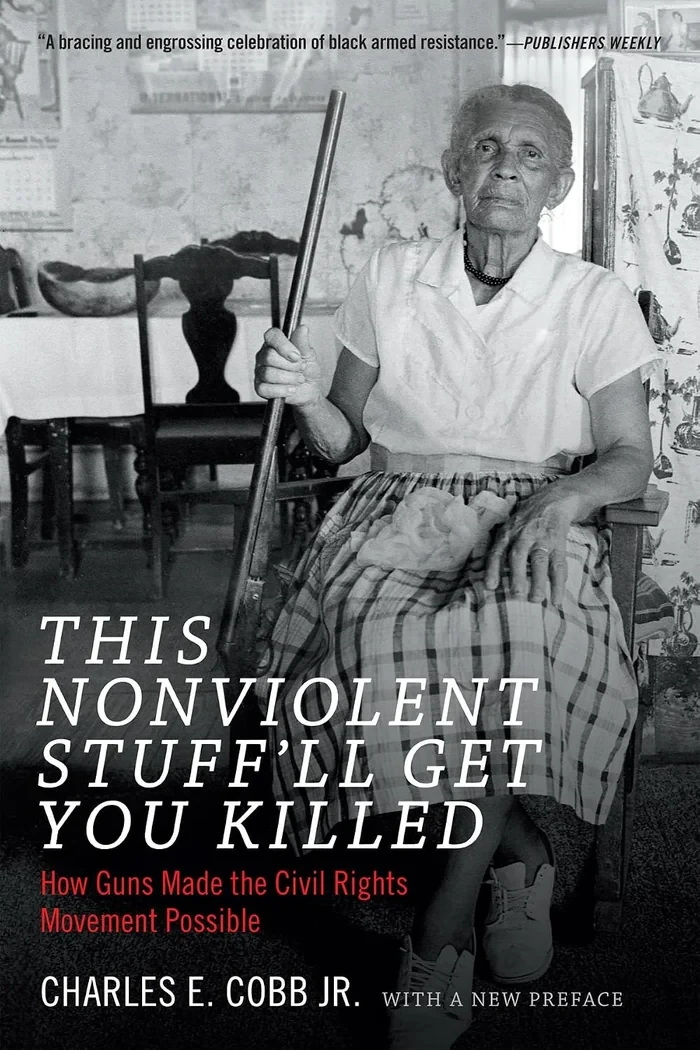
Histories by Charles E. Cobb Jr. and Akinyele Omowale Umoja bring armed protection into accounts of the freedom struggle. Their published descriptions foreground the relationship between self-defense and organising. Umoja’s study treats it as a significant part of Mississippi’s struggle. These interpretations invite attention to people often missing from a story built entirely around speeches and public marches; they do not turn every campaign into an armed campaign.
KEY THOUGHT
Ask what an activist was doing, where, with whom and under what danger before treating “nonviolent” as a complete description of a person.
What nonviolent resistance meant depended on who was choosing
For King and Lawson, nonviolence expressed a demanding moral vision as well as a method of struggle. For other participants, disciplined protest could be a useful shared strategy without defining every aspect of life. The differences mattered because people were weighing real risks while trying to win rights that segregation denied them.
Understanding those decisions does not require making peaceful conduct a moral condition for deserving equality. Responsibility for racist attacks belongs to those carrying them out. The historical question is how activists organised, argued and acted within those conditions. The next chapter follows one confrontation in detail: the attack on voting-rights marchers at Selma on 7 March 1965.