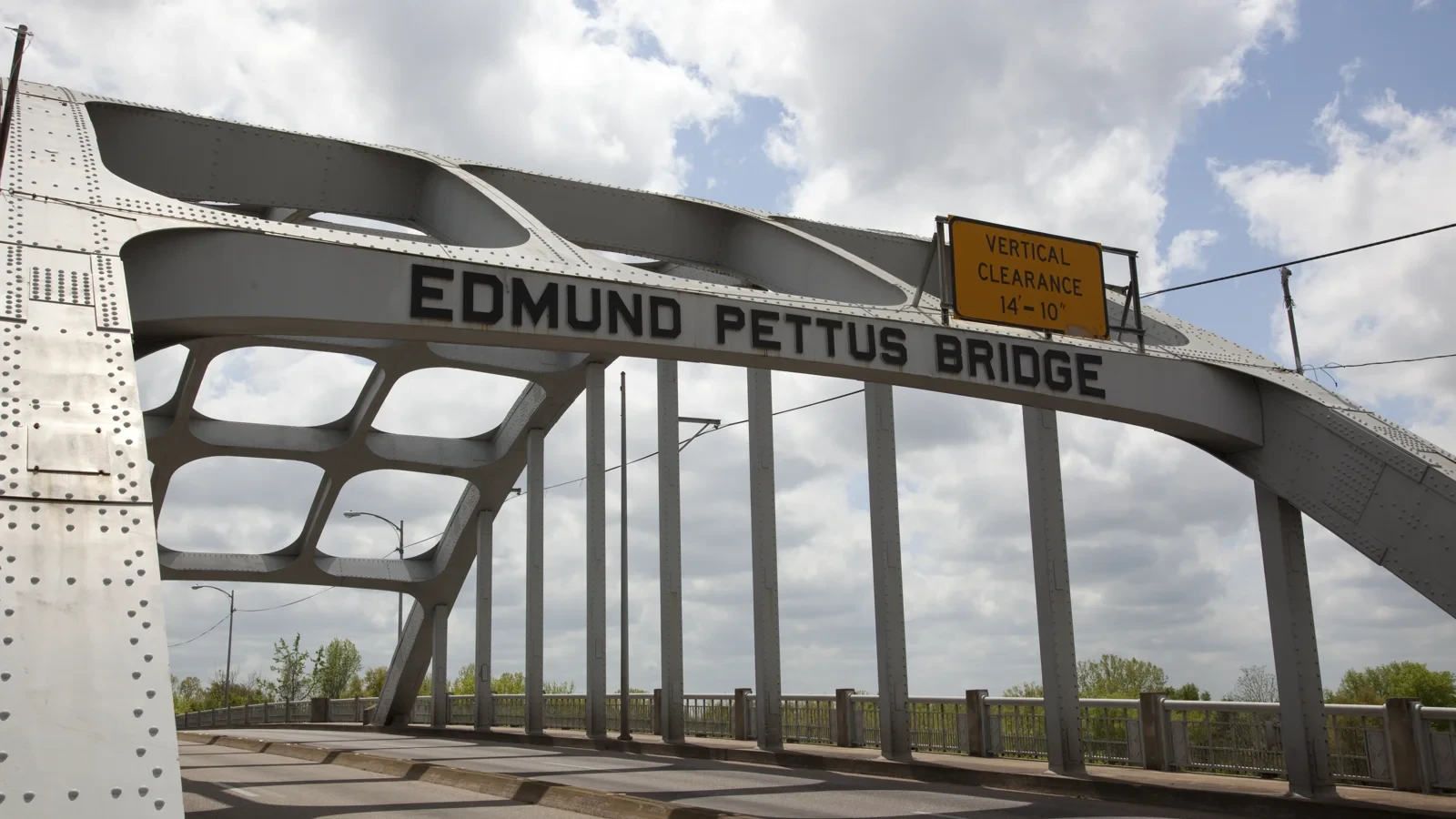
On Sunday, 7 March 1965, voting-rights marchers crossed the Edmund Pettus Bridge out of Selma, Alabama. At the far end, state troopers and local lawmen blocked their way. The officers attacked with clubs and tear gas, and mounted men pursued people retreating toward the city. The march to Montgomery had barely begun.
The assault became known as Bloody Sunday. It injured people who were demanding access to the vote and brought the campaign before a much wider public. Yet the familiar bridge scene can hide the work that put the marchers there—and the decisions still ahead. To understand what happened, follow three connected stories: local organising, the confrontation on 7 March and the struggle to make another march possible.
PLACE & TIME
One day at the centre of a longer campaign
Selma · Edmund Pettus Bridge
Alabama · Southern United States
7 March 1965 CE · aftermath through 25 March
Event setting
Why were people marching for voting rights?
The right to vote meant the ability to help choose the officials exercising power over daily life. For Black residents of Selma and surrounding Dallas County, exclusion was enforced through registration practices and intimidation. Registration was the gateway: before casting a ballot, an applicant had to get onto the rolls controlled by officials who could obstruct the process.
President Lyndon B. Johnson’s later address to Congress described registrars using application details and discriminatory tests to exclude Black citizens. The problem was not simply whether someone could read. An official could make a rule into an obstacle and decide who passed it. The campaign challenged that power to turn a constitutional promise into a practical refusal.
- Registration: getting your name accepted on the voter rolls.
- Voting: casting a ballot once entitled to do so.
- Political influence: using that vote to help choose those who govern.
Selma’s movement began before the television cameras arrived
Amelia and Samuel Boynton had worked with rural Black communities and encouraged voter registration for decades. They joined the Dallas County Voters League in the 1930s. Amelia’s work connected political participation with farming, education and economic independence. The networks through which people met and supported one another were part of the movement’s strength.
Churches supplied organising spaces as well as places of worship. The National Park Service identifies Marie Foster as a trainer in voter-registration work at Tabernacle Baptist Church. Preparation meant helping prospective applicants face an obstructive system. It also meant persuading people that acting together was possible when retaliation was a real danger.
In 1963, organisers Bernard Lafayette and Colia Liddell worked in Selma with the Student Nonviolent Coordinating Committee (SNCC). On Freedom Day, 7 October, hundreds of residents lined up at the courthouse to seek registration. People trying to bring them food and water were beaten and arrested. The Digital Gateway’s account places the 1965 campaign within this earlier struggle. A later national audience would see a crisis whose local foundations were already in place.
Local invitations brought national organisation into the campaign
The Southern Christian Leadership Conference (SCLC), led by Martin Luther King Jr., joined the Selma campaign in January 1965. Local organisers had invited it. The SNCC Digital Gateway describes staff from both organisations coordinating work in the city’s wards. Their cooperation did not require agreement on every tactic: voter education and demonstrations could receive different emphasis.
A coalition is easier to recognise when you look at those relationships than when you assign the whole campaign to one famous person. Local residents knew the registration barriers and bore the continuing risks. National organisations brought staff, connections and visibility. The partnership widened the campaign’s reach without making its participants interchangeable.
KEY THOUGHT
Bloody Sunday became nationally visible because people had already built a local movement capable of acting together.
A killing in Marion helped turn protest toward Montgomery
On 18 February 1965, police and state troopers broke up a nighttime demonstration in nearby Marion. In the violence, a trooper shot Jimmie Lee Jackson as he tried to protect his mother. Jackson died in a Selma hospital on 26 February. He was a 26-year-old father and church deacon who had been active in the voting-rights struggle.
His death helped prompt plans for a march to Montgomery, Alabama’s capital. The intended journey was about 54 miles, connecting the local struggle with the seat of state government. The National Park Service records plans for a rally and an attempt to meet Governor George Wallace. The marchers were making a demand beyond the registration office, rather than abandoning the demand for the vote.
Carol M. Highsmith · Library of Congress · Public domain · resized and jpeg encoded.
What happened on Bloody Sunday, 7 March 1965?
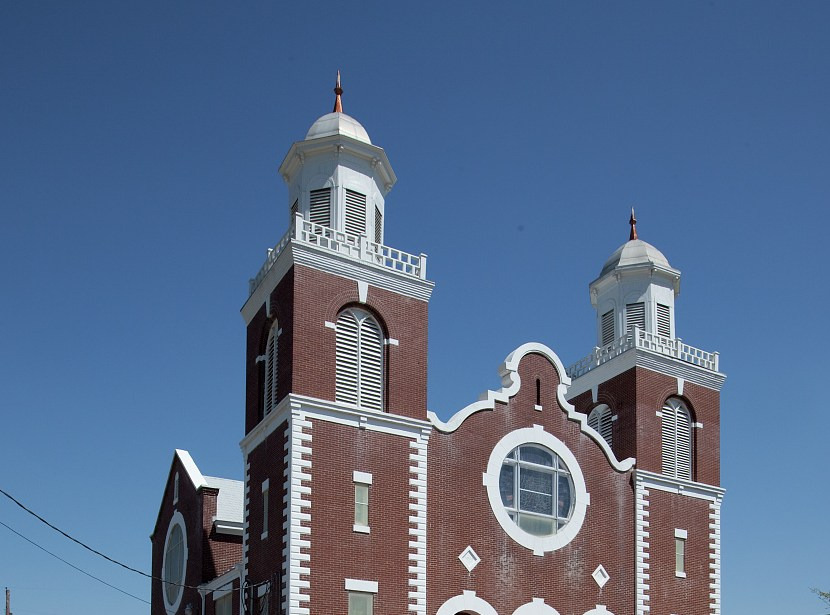
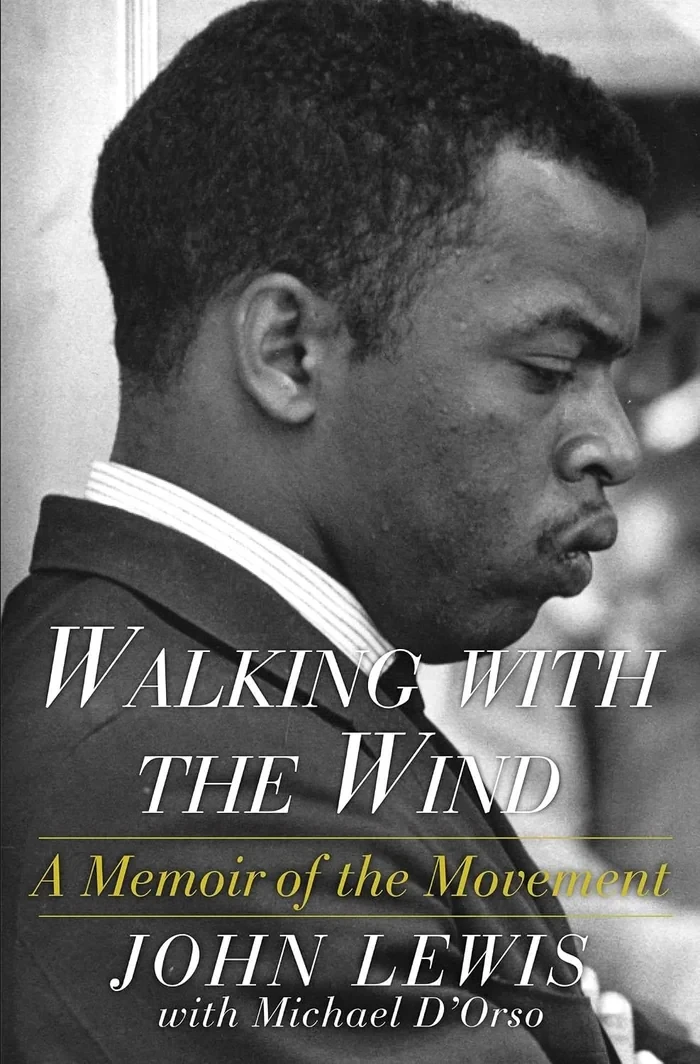
About 600 people took part. They set out from Brown Chapel African Methodist Episcopal Church and walked through Selma toward the bridge. Hosea Williams of SCLC and John Lewis, SNCC’s chairman, led the procession. King was in Atlanta. This was the first attempted Selma-to-Montgomery march, not the later journey he led all the way to the capital.
FOLLOW THE DAY
The march was stopped just outside Selma
- Sunday afternoon
Leave Brown Chapel
Marchers begin the intended journey to Montgomery.
- At the far end of the bridge
Encounter the blockade
State troopers and local lawmen stop the procession; Major John Cloud orders dispersal.
- During the confrontation
Officers advance
Clubs and tear gas are used against the marchers; mounted men pursue those retreating.
- After the assault
Return and seek care
Injured participants receive treatment in Selma; people regroup at Brown Chapel.
A sequence for 7 March 1965; not a minute-by-minute reconstruction.
Lewis described the encounter at a federal hearing within days of the assault. He said the line stopped after an announcement that the march would not continue. In his account, Williams tried to speak with Major John Cloud, who refused discussion and gave a two-minute warning. Lewis then described officers rushing forward, knocking people down and hitting him. His testimony is evidence from someone near the front, not an invented conversation added to the scene.
IN THE SOURCE
We stopped right then.
Nonviolent discipline did not protect people from injury
Lewis suffered a skull fracture. Amelia Boynton, whose organising had helped make the march possible, was beaten unconscious. Her story belongs on both sides of the bridge scene: as an organiser and as someone assaulted. Calling the demonstrators nonviolent describes their public method; it does not transfer responsibility for the violence away from those carrying it out.
Lewis’s role also reveals a disagreement within the movement. SNCC had voted against participating as an organisation, questioning the march’s effectiveness and danger. It allowed him to join as an individual. After the attack, SNCC staff responded and travelled to Selma. The person beside Williams therefore cannot stand in for a single, unanimous organisational position.
KEEP THE DISTINCTION
Participation and endorsement are different evidence
Lewis on 7 March
He helped lead the march and was attacked.
SNCC had not endorsed the march as an organisational action.
The meaning of a photograph
It can place a person in a visible scene.
It cannot establish the decisions of an entire organisation.
After the assault
Participants and supporters had to respond to immediate harm.
Earlier tactical disagreement did not rule out assistance afterward.
Film carried the attack beyond Selma—but a newsreel has a date
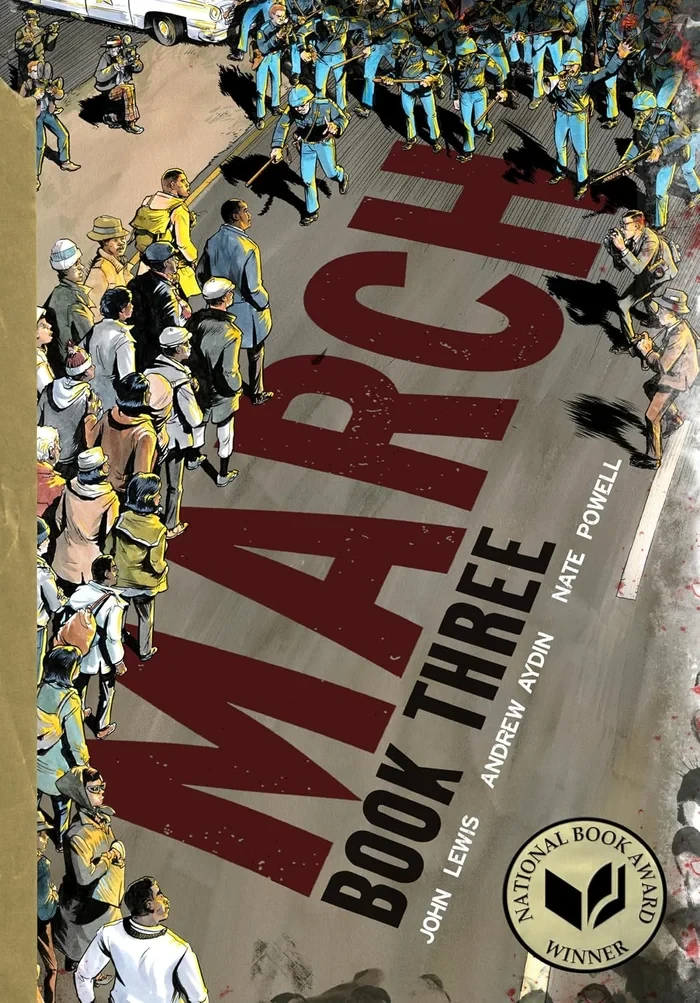
Television coverage brought the assault to viewers beyond Alabama and generated national outrage. The National Archives identifies surviving newsreel material that summarises the two interrupted marches and Johnson’s response. These images matter as evidence and as part of the campaign’s public impact. They still need to be read in their particular published form.
A Universal Newsreel released on 15 March 1965 is not a live broadcast from 7 March. It brings different events together in an edited report. If you follow the archive’s film link, check which march a shot shows, when the report appeared and what the narration adds. The camera’s proximity to an event does not make the finished sequence a complete record of the campaign.
Carol M. Highsmith · Library of Congress · Public domain · upper facade cropped and jpeg encoded.
The next march turned back; the final one reached Montgomery
King called for supporters to come to Selma. On 9 March, he led another procession to the bridge, where participants prayed and then returned to the city. A federal restraining order and the problem of securing protection shaped the decision. Some marchers criticised the turnback. It was another difficult choice, not the completion of the journey begun on Bloody Sunday.
That evening, white attackers beat James Reeb, a Unitarian minister who had come to support the campaign. He died two days later. The National Archives places his death among the events that widened national concern. The arrival of more supporters had not removed the danger.
THREE MARCHES
Keep the March dates separate
- 7 March 1965
Bloody Sunday
The first attempt is violently stopped after the bridge crossing.
- 9 March 1965
Turnaround Tuesday
King leads a second procession, which prays and returns to Selma.
- 21–25 March 1965
The march reaches Montgomery
A court-authorised journey proceeds with federal protection and reaches the capital.
The same campaign included three distinct attempts; photographs and film can show different stages.
Federal District Judge Frank M. Johnson Jr. ruled on 17 March that the demonstrators had a constitutional right to march. The National Archives connects the hearing testimony with that ruling and the protected departure on 21 March. Reaching Montgomery required legal work and arrangements for safety as well as renewed determination.
TEST THE EVIDENCE
Does this photograph show Bloody Sunday?
This crowd reached Montgomery during the march on 7 March 1965.
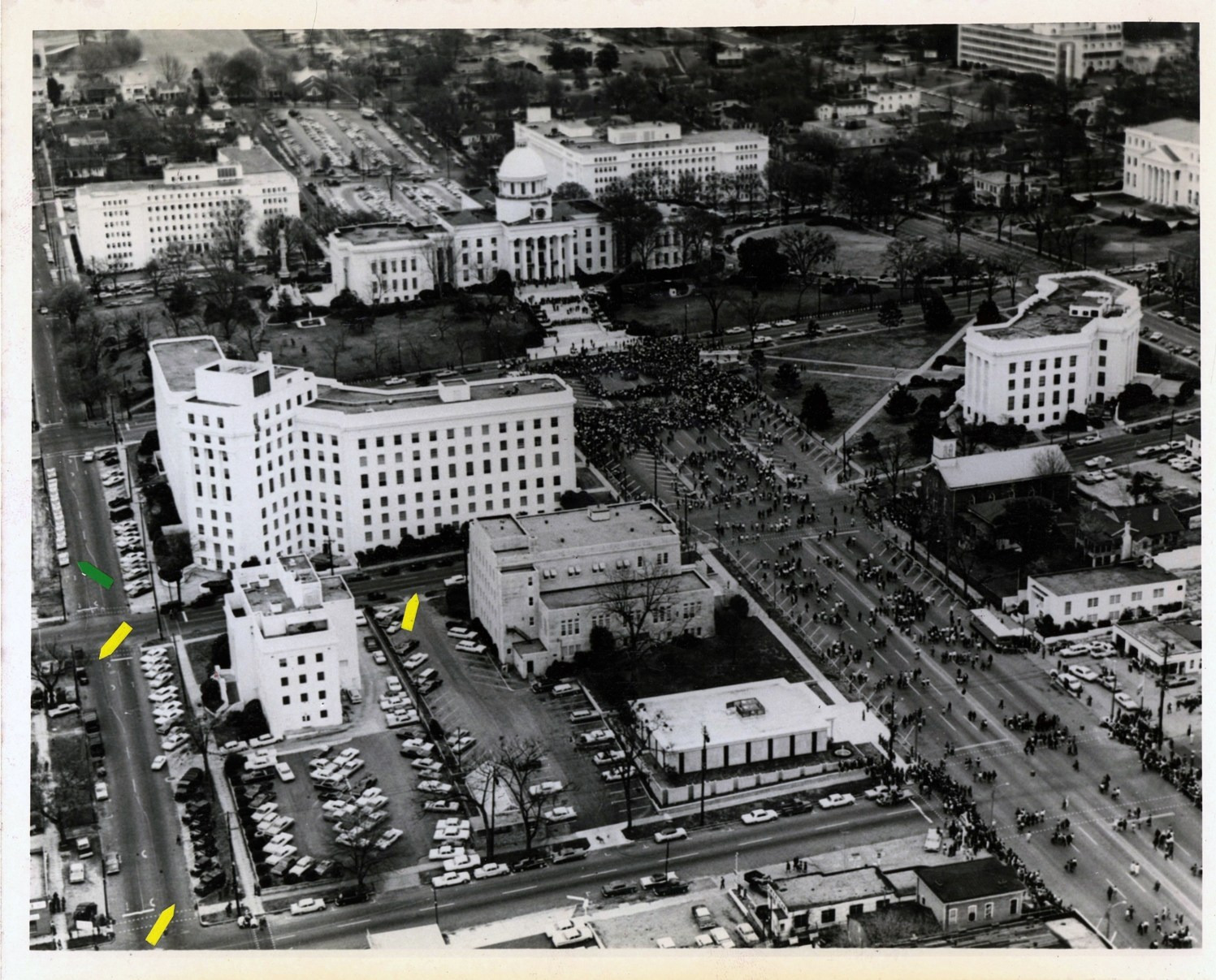
- SHOWS
- A procession and crowd on streets near the Alabama State Capitol, photographed from above.
- SUPPORTS
- The later march reached its destination; the archive supplies the identification.
- CANNOT PROVE
- It does not show the attack near Selma, the participants’ thoughts or the entire five-day journey.
A better-supported reading
The photograph belongs to the later, completed march—not the first attempt stopped outside Selma.
Photograph record: National Archives · 338-SE-022 ·
U.S. Department of Defense · National Archives · Public domain · resized and jpeg encoded.
Why did Bloody Sunday matter beyond the march?
On 15 March, President Johnson addressed Congress in support of stronger voting-rights legislation. His American Promise speech called for federal action against discriminatory barriers. He presented the vote as a national obligation, rather than something local officials could indefinitely obstruct.
The political conversation had not begun that week. The LBJ Library preserves a 15 January telephone conversation with King about voting-rights strategy. Bloody Sunday intensified an existing campaign and made refusal to act harder to defend. Images helped carry that pressure, while activists, lawyers and lawmakers still had work to do.
A turning point still had to become an enforceable change
Johnson signed the Voting Rights Act on 6 August 1965. The National Archives explains how it addressed discriminatory voting practices and provided federal enforcement mechanisms. The law followed the March campaign; it was not a measure passed on the day of the attack or a reward automatically produced by suffering.
Bloody Sunday exposed the distance between a right formally promised and a right people could exercise. Its significance becomes clearer when you keep the local movement, the attack and the subsequent decisions together. The next chapter asks what the Voting Rights Act changed in practice—and why legislation did not end the work of winning political power.