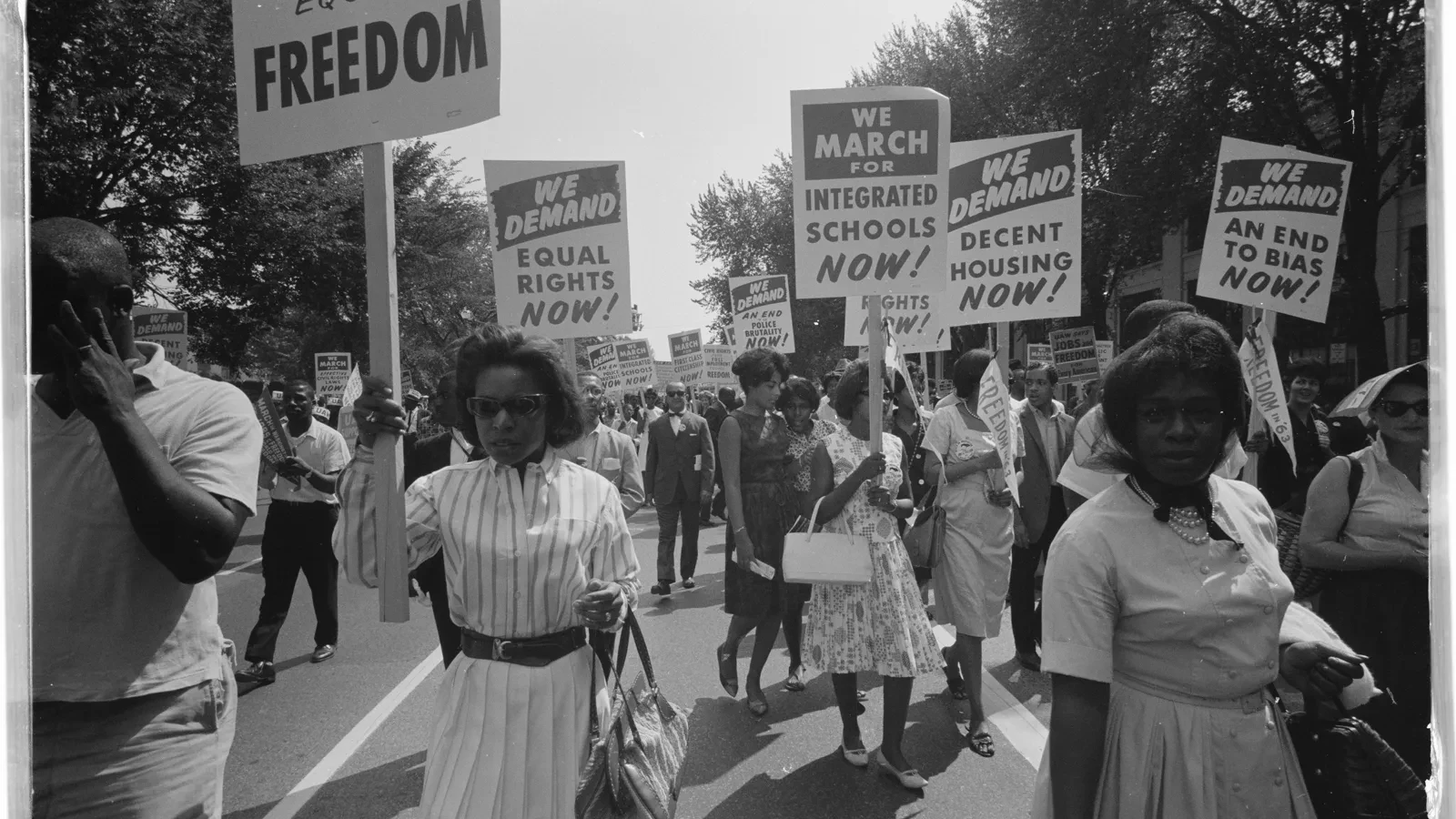
On 28 August 1963, people marching in Washington carried signs demanding integrated schools and decent housing. The photograph records a procession and some of its demands. It also offers a useful starting point for the end of this story path: the movement’s ambitions reached across public life, from a classroom or bus seat to a home, a job and a ballot.
How did the civil rights movement achieve change? Across the chapters, people made grievances public, built organisations, sustained collective action and pursued legal remedies. Their successes depended on connections between these activities. The achievements of 1964 and 1965 changed the conditions of struggle; enforcing rights and turning them into greater security and influence remained work to be done.
PLACE & TIME
A movement across places and generations
Washington, D.C.
United States · Southern local campaigns
About 1940–1968 CE
National meeting place
Change began before the famous moments
Jim Crow segregation joined rules, official decisions and everyday enforcement. Challenging it required more than announcing disagreement. A person seeking equal treatment might confront a driver, registrar, employer or police officer, while risking wages, housing or physical safety. The first chapter’s everyday encounters help explain why later campaigns needed practical support as well as a public demand.
Rosa Parks was already doing NAACP work in Montgomery in the 1940s. Her organising before December 1955 makes the bus refusal part of a longer political life. It also changes how you understand the response: people who knew one another and had worked on shared problems could help turn an arrest into collective action.
KEY THOUGHT
A refusal could become a campaign because people had relationships, experience and ways to mobilise others.
Montgomery joined daily survival to a legal challenge
The Women’s Political Council had challenged treatment on Montgomery’s buses before Parks’s arrest. Jo Ann Robinson helped distribute the call for a boycott on 5 December 1955. That afternoon, leaders formed the Montgomery Improvement Association. As the protest continued, its organisers built a carpool. Meetings, donations and volunteer journeys helped people remain involved while getting to work and meeting other needs.
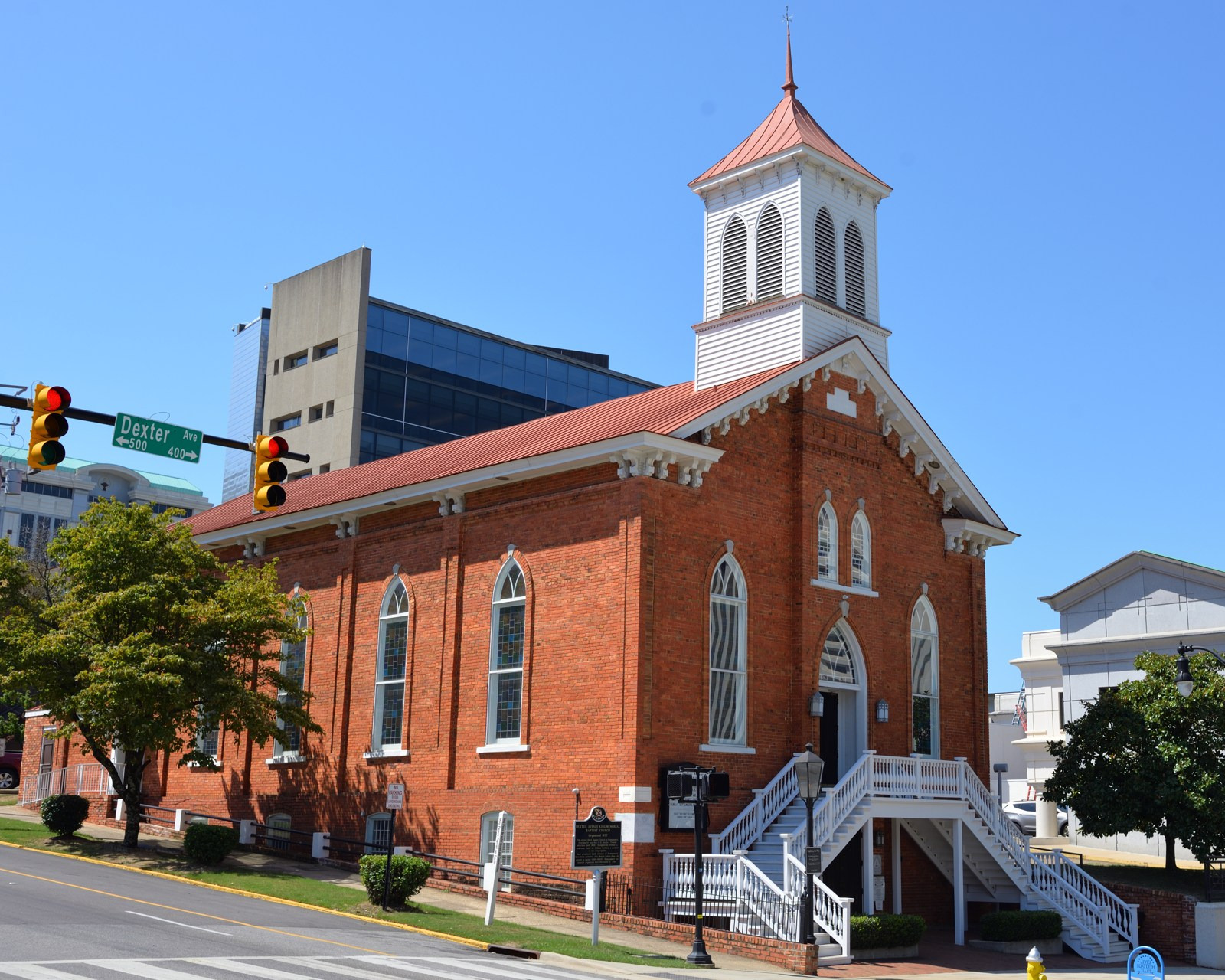
Legal work addressed a different part of the problem. Browder v. Gayle challenged the laws requiring bus segregation. Aurelia Browder, Susie McDonald, Claudette Colvin and Mary Louise Smith were the continuing plaintiffs; Parks was not a plaintiff in that case. The Supreme Court affirmed the district court’s decision in November 1956. The boycott ended after the desegregation order arrived in December, with integrated bus travel resuming the following morning.
The connection matters more than a choice of one winning tactic. Collective refusal sustained pressure and participation. Lawyers and plaintiffs obtained a ruling against segregation laws. The association then communicated when passengers should return. A court victory still had to become a change people could encounter on an ordinary journey. Neither legal procedure nor protest describes that whole process alone.
Warren K. Leffler · U.S. News & World Report / Library of Congress · Public domain · U.S. News & World Report rights dedication · resized and jpeg encoded.
SNCC built on local knowledge and developed new leadership
The Student Nonviolent Coordinating Committee emerged from the student protest movement in 1960. Ella Baker encouraged the students to form an independent organisation. She also connected younger organisers with experienced local activists. Her introduction of Bob Moses to Amzie Moore in Mississippi linked a new network with an older voting-rights struggle. Local people supplied knowledge, relationships and priorities that visiting workers could not bring with them.
Organising could develop people’s ability to set an agenda. The Freedom Schools of 1964 encouraged young Black Mississippians to examine their experience and express political demands. Students produced newspapers, and delegates developed a platform at a statewide convention. Education therefore belonged inside the movement’s political work: participants practised interpreting their circumstances and deciding what they wanted to change.
- Relationships made introductions possible: an unfamiliar organiser could enter a community through someone residents trusted.
- Education developed participation: explaining a form, discussing history or producing a newspaper created different opportunities to act.
- Communication connected local work with wider support: reports and fundraising helped sustain campaigns beyond a single town.
These activities also distributed responsibility. A famous speaker might draw attention, while a local organiser decided whom to visit and a student helped write a demand. Calling all of them “the movement” should not erase their different contributions. Nor did an organisation’s name guarantee agreement among its members about leadership, priorities or the use of limited resources.
Protest strategies were choices people debated
The chapter on nonviolent resistance showed preparation as well as courage. In Nashville, workshops helped activists practise responses to hostility before sit-ins. SNCC’s founding statement committed the organisation to nonviolent action. Such commitments could structure a campaign, while participants still differed over whether nonviolence was a lifelong principle or a strategy suited to particular circumstances.
That distinction prevents success from becoming a simple moral formula. Protest exposed participants to attacks, arrest and retaliation; disciplined conduct could not guarantee safety or victory. Decisions about direct action, registration work and self-defence were made by people assessing danger and opportunity. The path’s examples show particular strategies operating in particular conflicts, rather than one method inevitably solving every problem.
CONNECT THE METHODS
Different activities changed different relationships
Local organising
Build participation and identify community priorities.
Ways to confront authorities and obtain enforceable change.
Public protest
Disrupt routine and bring a demand before a wider audience.
Support that could sustain participants and political responses beyond attention.
Legal action
Challenge discriminatory rules and obtain stronger remedies.
Implementation, monitoring and people able to use the result.
Selma connected public attention with a demand for enforcement
On 7 March 1965, law-enforcement officers attacked marchers outside Selma at the Edmund Pettus Bridge. Bloody Sunday brought the violence against a voting-rights campaign before a national audience. The images mattered within work already under way: local registration organising, movement cooperation and demands for federal intervention. Television did not create that struggle from nothing.
Nor did the broadcast itself enact a law. Continued mobilisation, court proceedings, presidential action and congressional decisions were distinct parts of what followed. John Lewis’s later sworn account, examined in the Selma chapter, gives testimony about the attack; the enacted statute gives different evidence about the federal response. Keeping those sources separate helps you follow the connections without treating attention as automatic political change.
The laws of 1964 and 1965 were substantial achievements
The Civil Rights Act of 1964 established major prohibitions on discrimination, including in specified public accommodations and employment. It addressed important institutions through legal obligations. Its passage also depended on national political work: overcoming congressional resistance required supporters to assemble sufficient votes. Local pressure and federal decision-making were connected, but they were not the same activity.
The original Voting Rights Act of 1965 strengthened the means of confronting racial voting discrimination. Its nationwide prohibition stood alongside special remedies for covered jurisdictions, including suspension of specified tests and review of changes to voting rules. Federal examiners and observers supplied further tools under the Act’s conditions. These were changes in enforcement, not merely another declaration that discrimination was wrong.
Marion S. Trikosko · U.S. News & World Report / Library of Congress · Public domain · U.S. News & World Report rights dedication · jpeg re-encoded; full supplied frame retained.
Winning access did not settle every question about power
The preceding chapter followed the early effects of the voting law. Registration rose markedly, while organisers helped people connect a ballot with the powers of local offices. The U.S. Commission on Civil Rights’ 1968 investigation documented obstacles beyond registration, including intimidation, barriers to candidacy and election structures that could weaken Black representation. Its selected Southern counties did not constitute a complete survey of the country.
An accepted application, a ballot cast and an election won leave different evidence. A person could gain registration while still facing threats to a livelihood. A group could select candidates and lose a contest. Those distinctions let you recognise a real achievement without expecting it to prove every further outcome. They also explain why organising and enforcement continued after federal legislation.
Economic demands were already part of the struggle
TEST THE EVIDENCE
Did the movement discover housing only after 1965?
Housing demands entered the movement only after voting legislation passed in 1965.
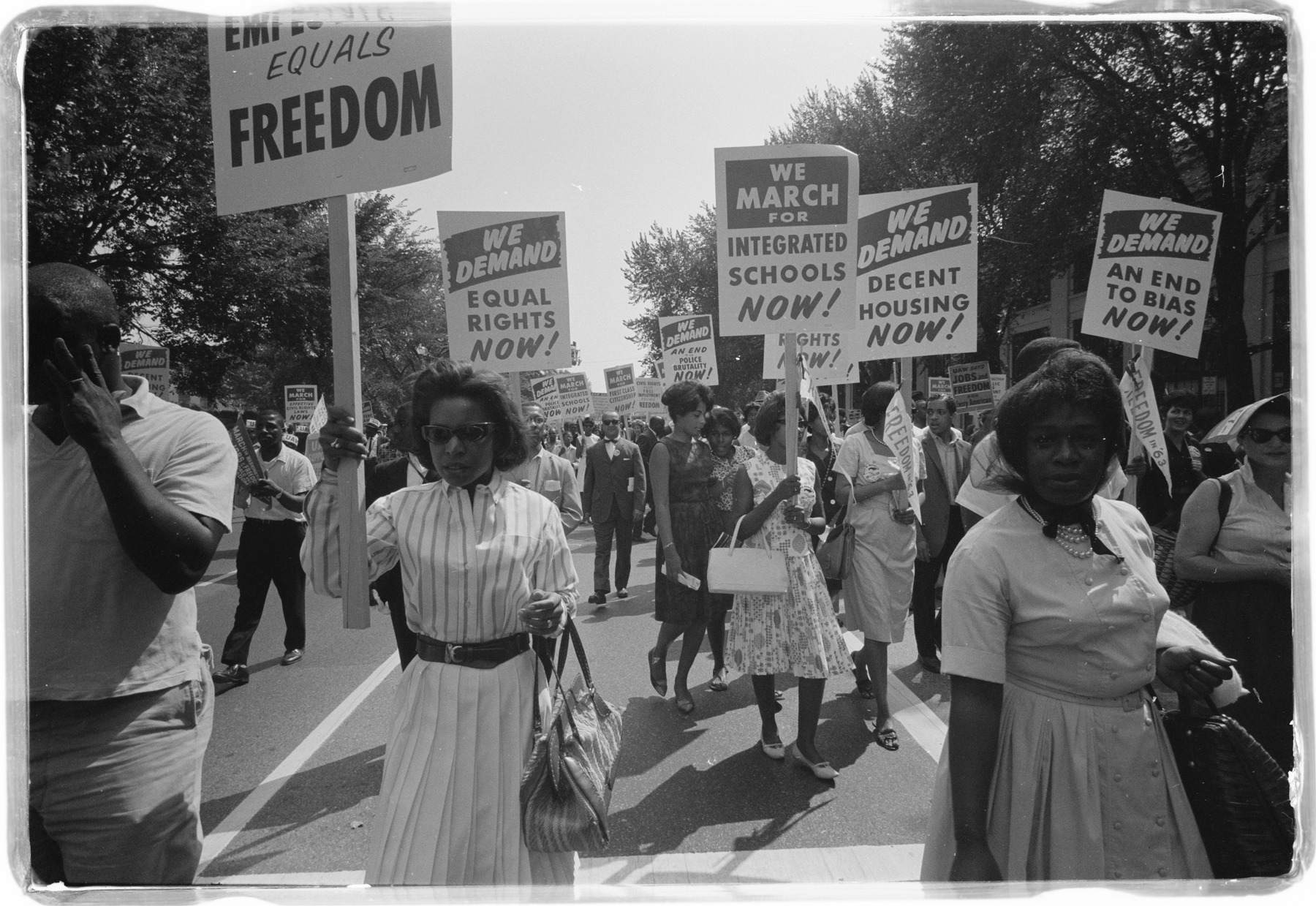
- SHOWS
- Marchers carrying placards for integrated schools, equal rights and decent housing.
- SUPPORTS
- This public action joined demands concerning several parts of everyday life.
- CANNOT PROVE
- Every participant’s beliefs, agreement across all organisations, or whether any demand was achieved.
The photograph challenges that chronology
A sign demands decent housing in this procession on 28 August 1963. Housing was visibly part of this earlier demonstration.
Photograph record: Library of Congress · ppmsca.03128 ·
Warren K. Leffler · U.S. News & World Report / Library of Congress · Public domain · U.S. News & World Report rights dedication · resized and jpeg encoded.
The 1963 demonstration’s name joined jobs with freedom. Political equality and material security were already connected concerns. That does not mean every organisation ranked them alike. It means the economic questions pursued later cannot be explained simply as subjects invented once voting rights had been won.
The Poor People’s Campaign carried the work into 1968
King and the Southern Christian Leadership Conference planned the Poor People’s Campaign in late 1967 around economic security. They sought a coalition crossing racial backgrounds. After King’s assassination in April 1968, SCLC continued under Ralph Abernathy. Demonstrators established Resurrection City on Washington’s National Mall and pressed federal agencies for action on poverty. The campaign secured limited concessions rather than its wider goals.
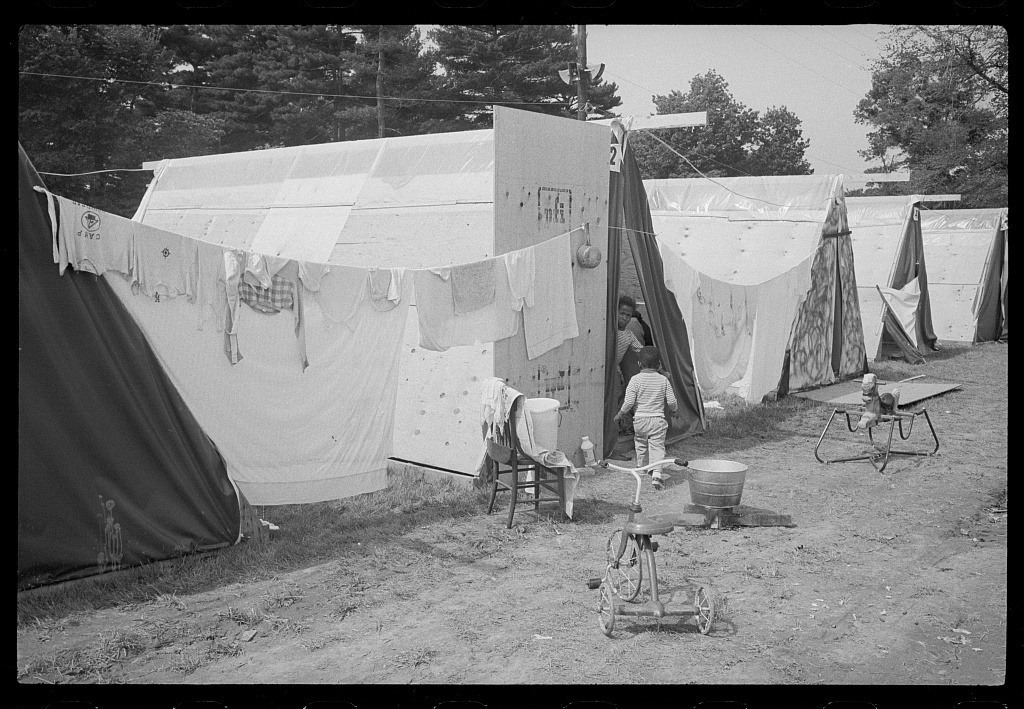
The encampment brings the path back to a practical problem: sustained protest needs somewhere to live, people to coordinate it and demands directed at institutions able to respond. Its existence after King’s death also prevents his biography from becoming the movement’s final date. People continued acting together, while facing disagreements, difficult conditions and achievements that fell short of their hopes.
Return to the chapters through their connections
- Jim Crow: everyday enforcement explains why a formal promise of equality could remain inaccessible.
- Rosa Parks: a public refusal sits within years of organising and relationships.
- Montgomery: rides, meetings and money connect collective action with a legal remedy.
- SNCC: local knowledge and education help participants develop their own leadership.
- Nonviolent resistance: preparation and debate reveal strategy as a choice under pressure.
- Selma: a local struggle reaches a national audience and intensifies demands for enforcement.
- After the Voting Rights Act: expanded access makes questions of representation and power more visible.
Together, these chapters explain change through people connecting different kinds of work. Organisations made participation more sustainable; protest challenged routine and attracted support; plaintiffs and lawyers attacked discriminatory rules; political decisions created stronger obligations and remedies. The balance varied by place and campaign. Nothing in the result made the risks, setbacks or eventual victories inevitable.
The story path closes with achievements that mattered and work that continued. Desegregated buses and stronger federal voting protections altered what people could do. They did not remove every threat, guarantee representation or supply economic security. When you revisit a milestone, look for the people who sustained it and the next barrier they confronted. That is how a celebrated event becomes part of a history of change.