In 1943, twelve years before the bus arrest that made her famous, Rosa Parks became secretary of the Montgomery branch of the NAACP. The date changes where her story begins. You meet a woman already taking responsibility within an organisation, rather than a passenger whose political life suddenly started on 1 December 1955. The Library of Congress’s chronology also records her work with young people from 1949.
Parks’s refusal to surrender her seat remains central to her life. But following only that moment leaves other work outside the frame: helping people pursue the vote, investigating racist violence, supporting younger activists and learning alongside other organisers. This portrait follows those connections in Alabama, chiefly from 1943 to 1956. It also asks what happened to the person who became a public symbol.
PLACE & TIME
An organiser in Montgomery
Montgomery · Alabama
Southern United States
About 1943–1956 CE
Main setting
Political experience began within relationships
Parks’s husband, Raymond, was a barber involved in efforts to defend the Scottsboro defendants, nine Black young men falsely accused of rape in 1931. They married in 1932. Historian Jeanne Theoharis places this early political environment within Parks’s longer life. The connection matters because the familiar image of a solitary passenger obscures the relationships through which people encountered political commitments.
An organisation offered ways to turn concern into a continuing task. Correspondence, information about a case and contact with other people could connect a local injustice to a wider campaign. Such work rarely supplies one dramatic picture. Its importance becomes clearer when you ask how a complaint could reach people able to respond, and how those people could stay involved after an initial meeting.
PEOPLE AND ORGANISATIONS
Three names behind the work
NAACP
The National Association for the Advancement of Colored People. Parks worked within its Montgomery branch.
E. D. Nixon
A Montgomery organiser whose work connected Parks with efforts to secure Black political participation.
Highlander Folk School
A Tennessee education centre where people could learn together across racial boundaries and discuss practical action.
Voting required more than recognising a right
In her 1985 interview for Eyes on the Prize, Parks recalled E. D. Nixon introducing her to the importance of voter registration. She described work through a voters’ league and meetings in people’s homes. Her account places political participation within a network of organisers and neighbours. It is testimony given three decades after the boycott, valuable as her recollection rather than a contemporary meeting register.
The distinction between a formal right and the ability to use it runs through this story path. Registration work addressed the encounter with officials and the knowledge needed to attempt it. You can see why a movement needed people willing to share information and keep returning to the problem. One person’s application could be part of a larger effort to change who exercised political power.
PARKS REMEMBERS
I had been working with NAACP since 1943.
Annemarie Schwarzenbach · Swiss National Library · Public domain · PD-old-70 · resized and jpeg encoded.
Investigating violence was civil rights work
In autumn 1944, the NAACP sent Parks to investigate the sexual assault of Recy Taylor, a Black woman in Abbeville, Alabama. The National Park Service traces Parks’s involvement and the campaign that followed. The case connected racial power with the ability of a woman to report violence and obtain justice. The case belongs within her organising history.
The campaign drew support from Black organisations, women’s groups and labour networks. A November 1944 emergency meeting in New York illustrates its reach beyond Alabama; it does not establish that Parks herself attended that meeting. Following the connections lets you see the work between an individual complaint and a public demand. A movement required people to carry information across places and institutions.
The records make several kinds of work visible
- Helping connect people with voter-registration efforts.
- Investigating a reported injustice and supporting a wider campaign.
- Working with the NAACP Youth Council from 1949.
- Learning with other organisers at a desegregation workshop.
These tasks involved different relationships: neighbours, a woman reporting violence, younger people and fellow organisers. They also asked for different kinds of attention. Gathering information is not the same task as deciding how to publicise it, and education is not the same task as a legal challenge. Calling Parks an activist becomes more useful when you can identify some of the work the word contains.
Highlander offered an experience of a different arrangement
In August 1955, Parks attended a two-week school-desegregation workshop at Highlander Folk School. Septima Clark was among the educators shaping her experience. The school brought people together across racial boundaries. Parks could encounter an integrated learning environment while segregation continued to structure public life at home. This was education for an existing organiser, not the discovery of politics by someone previously detached from it.
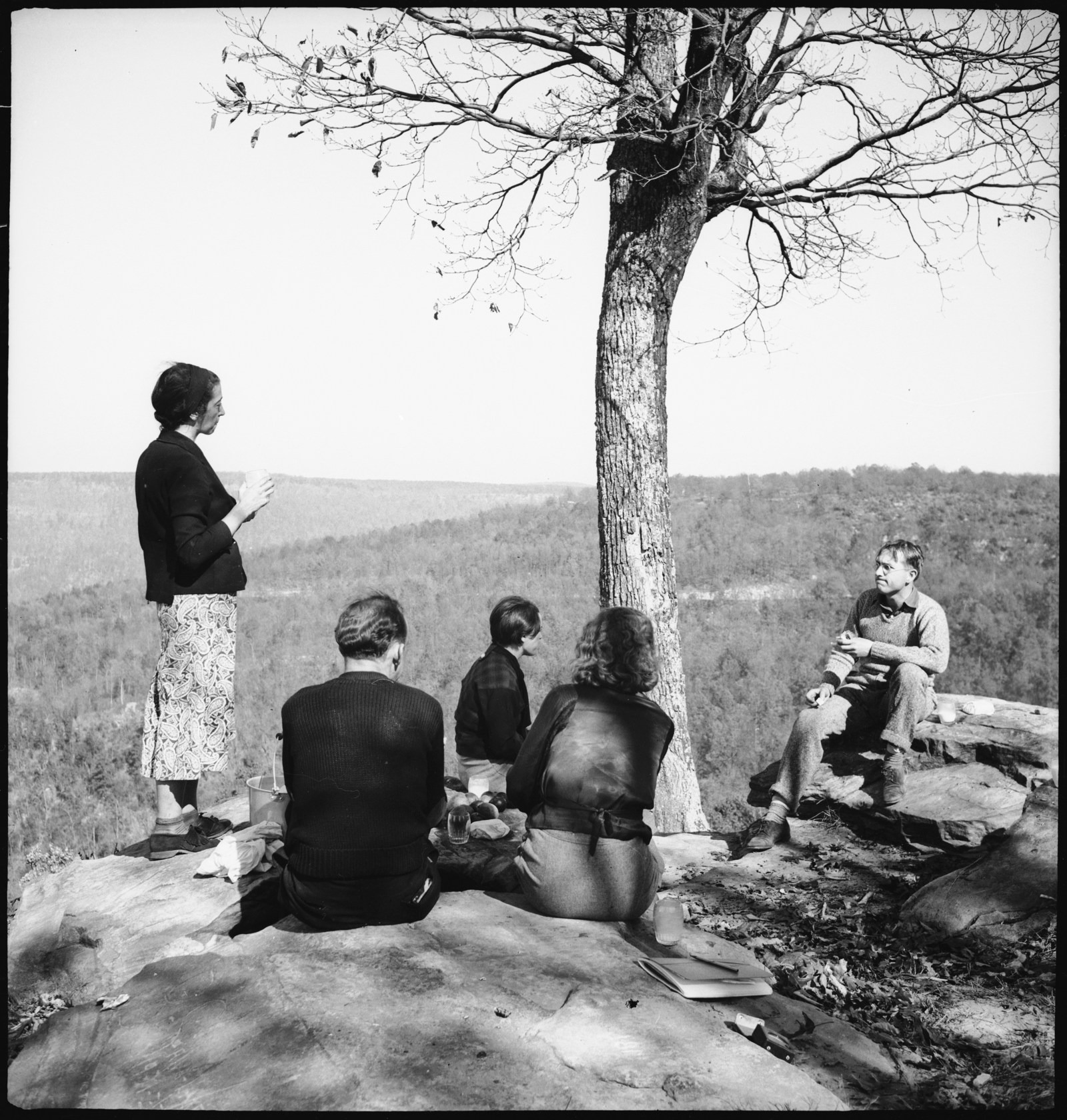
Annemarie Schwarzenbach’s photograph belongs to Highlander’s earlier history, around 1936–1938. It shows people gathered outdoors, well before Parks’s visit. The SNCC Digital Gateway’s account connects Highlander’s labour history with its later civil rights relationships. The picture supplies context for an institution with a longer life; it does not record the 1955 workshop or identify Parks among its participants.
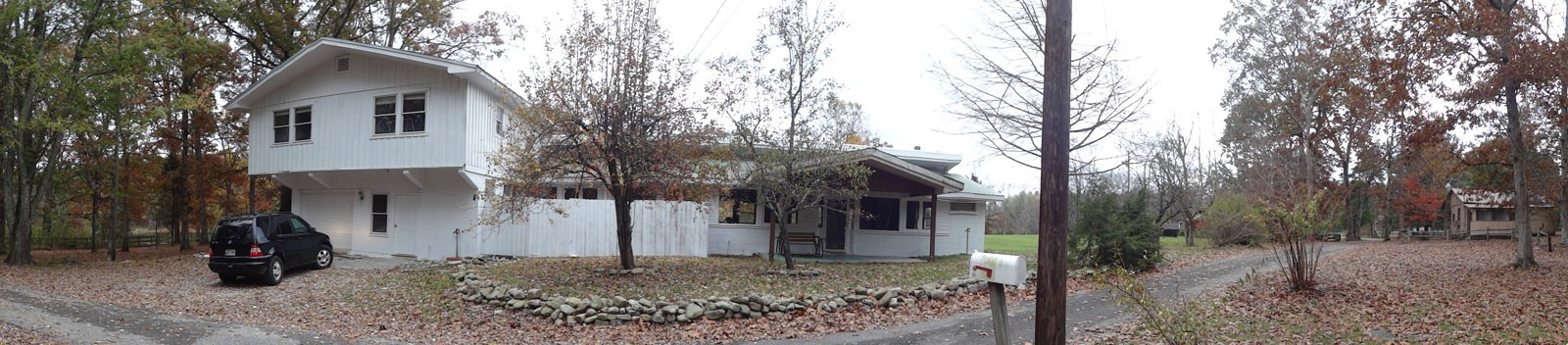
The later photograph shows the former Highlander site in 2014. Buildings can help you locate an institution’s history, but a modern exterior cannot reconstruct a lesson or tell you what a participant felt. For those questions, accounts of the workshop and Parks’s own testimony carry different kinds of evidence. Keeping them apart prevents an attractive image from doing more historical work than it can support.
Preparation did not make the bus encounter a script
On 1 December 1955, Parks refused a bus driver’s demand to surrender her seat and was arrested in Montgomery. The National Archives presents records associated with the arrest. The event mattered within a city already containing organisers and people with shared grievances. That context explains a capacity to respond; it does not by itself prove that the encounter had been arranged in advance.
A report of Parks’s remarks at Highlander in March 1956 makes this distinction especially clear. She described the incident as unarranged and connected her refusal with the question of human rights. She also related the response to humiliations other Black passengers had experienced. The contemporary conference report preserves this discussion, including other speakers’ interpretations; it is not a private diary or an unmediated recording of her thoughts on the bus.
WORK ACROSS THE YEARS
Four points in an organising life
- 1943
NAACP secretary
Parks takes an organisational role in Montgomery.
- 1949
Youth Council adviser
Her work includes younger people.
- August 1955
Highlander workshop
She attends a school-desegregation programme in Tennessee.
- January 1956
Lost employment
She loses her job as a tailor’s assistant at Montgomery Fair.
Selected dates from the Library of Congress finding aid; a chronology cannot describe every meeting or motive.
White House Photograph Office · Public domain · US government work · resized and jpeg encoded.
Becoming a symbol did not pay the household bills
Parks continued working after the arrest. Theoharis describes a period helping dispatch the boycott’s carpool and travelling in 1956 to raise awareness and funds. This is an important continuation of the portrait: she did not simply hand her experience to other leaders and leave the work. The next chapter examines how the wider boycott sustained transport and participation.
The personal costs also continued. The National Park Service records lost employment and death threats. Parks and Raymond moved to Detroit in 1957, beyond this chapter’s main period. A public reputation and a secure livelihood are different things. Admiration for an act of courage does not establish that its consequences were easy for the person or household involved.
TEST THE EVIDENCE
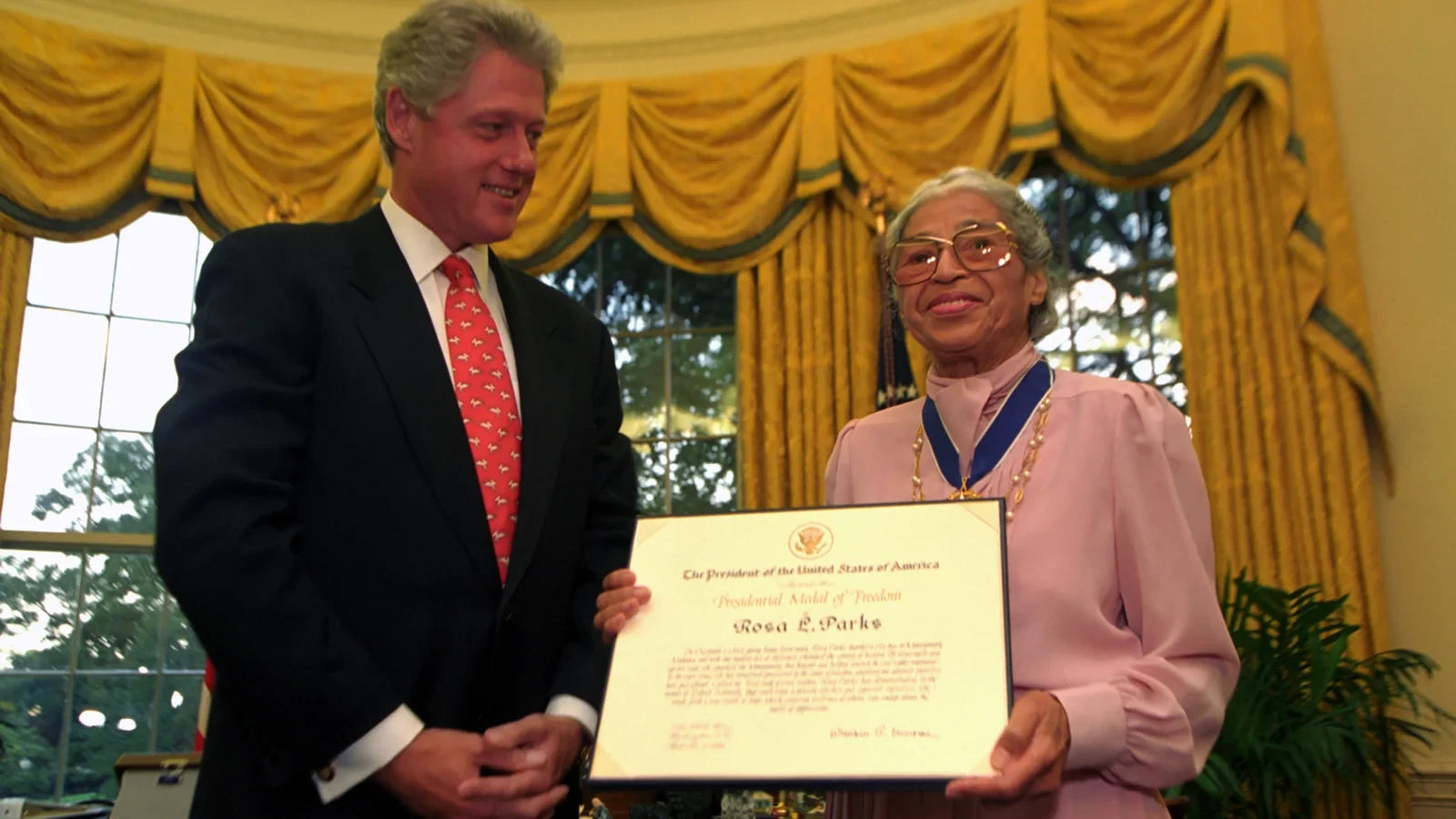
Can an honour photograph explain an organising life?
The familiar public image tells you how Parks became an activist.
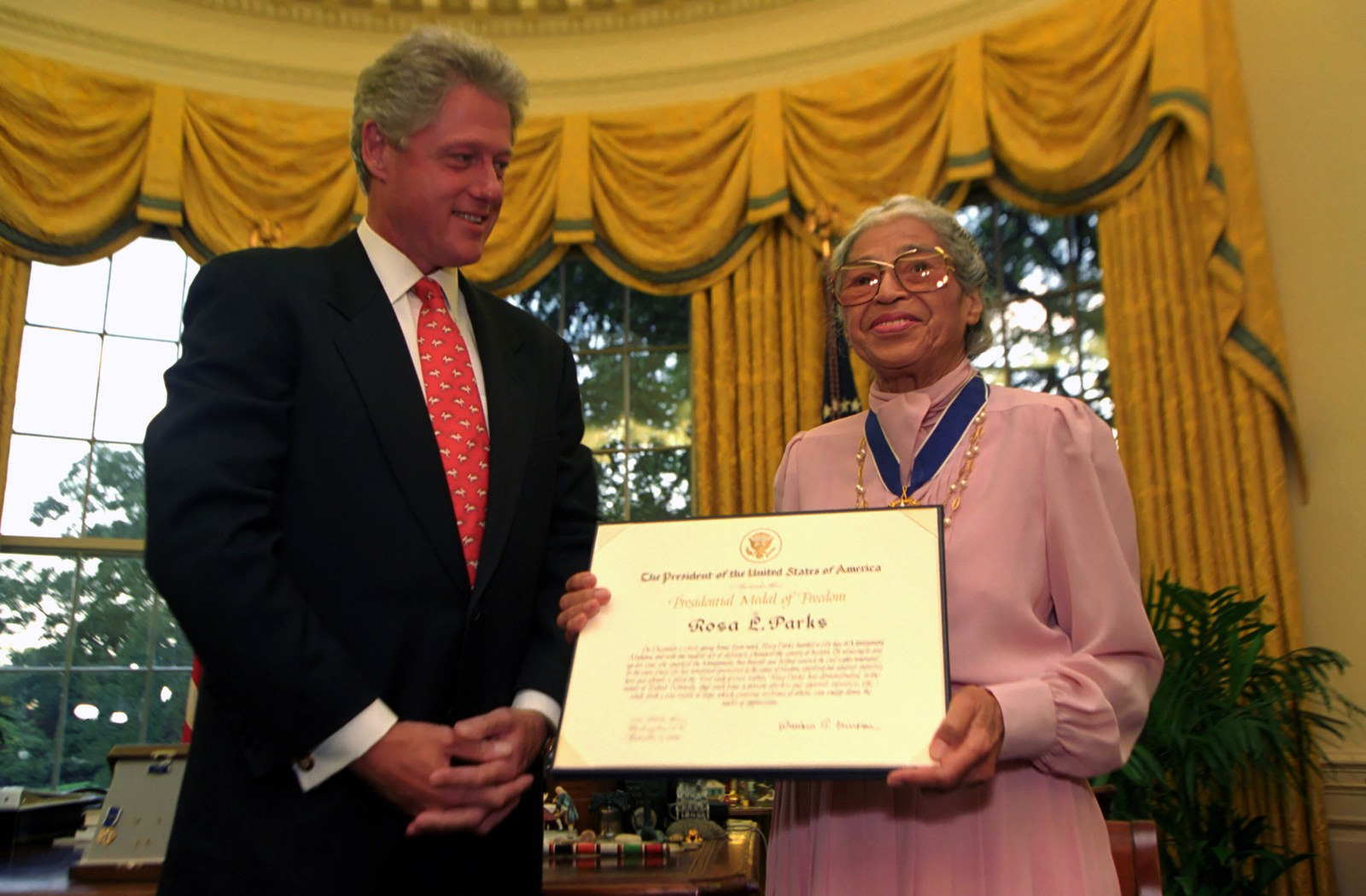
- SHOWS
- Parks holding an award certificate beside the president.
- SUGGESTS
- Her life had become an object of national recognition.
- CANNOT PROVE
- The image does not show the 1955 arrest, earlier organising or the household’s experience of retaliation.
A better-supported reading
The photograph documents honouring Parks in 1996. Earlier records establish the history of her work.
Photograph record: White House Photograph Office · 14 September 1996 ·
White House Photograph Office · Public domain · US government work · resized and jpeg encoded.
A longer life changes the portrait
Parks’s activism continued in Detroit. From 1965 to 1988 she worked in the office of Congressman John Conyers. These later years lie outside our main Alabama story, but they prevent the arrest from becoming the end of her political biography. You can acknowledge the bus refusal’s importance while still asking what she worked on before and after it.
KEY THOUGHT
Parks’s refusal became a turning point through the actions of many people. Her own years of organising belong inside that history.
To read this life closely, move between different records. A chronology identifies appointments and dates. An interview preserves a later recollection. A conference report places an explanation close to the event. An honour photograph records recognition decades afterwards. Together, with their limits intact, they reveal more than the image of a single spontaneous act: a person making decisions within a history of work, relationships and risk.