Telescopes, anatomy books and experiments changed knowledge in different ways. The harder question is how people made those changes believable—and who received the credit.
Bring the harbour, workshop, household, merchant community and civic institutions together to understand the uneven benefits of a prosperous medieval city.
A registered poem, a moving clandestine press and an order to burn books reveal the overlapping powers behind printing in Tudor and early Stuart England.
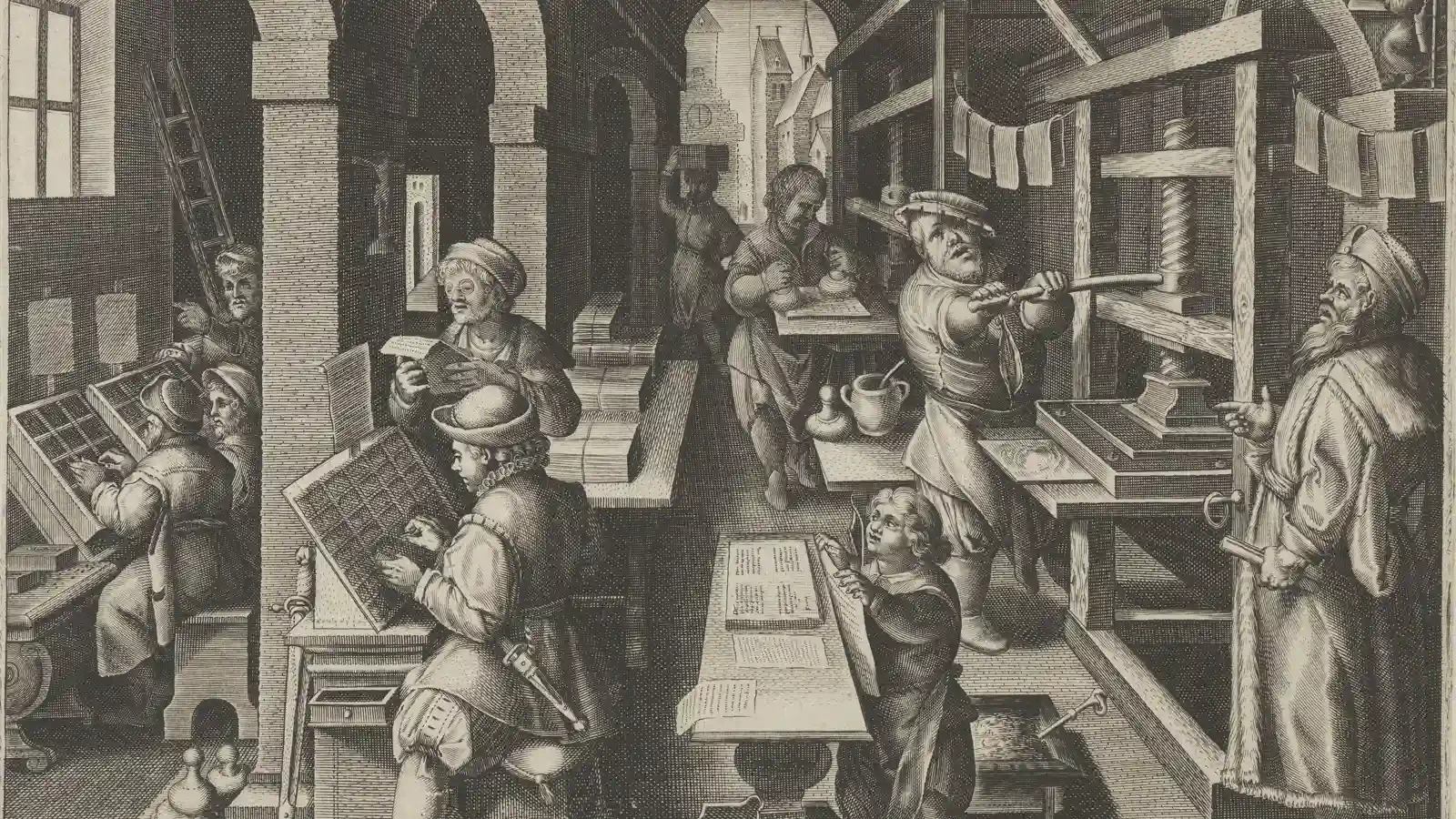
From a Buddhist scroll to European workshops and regulated presses, printing enlarged the possibilities for sharing knowledge. Who could use them remained a question of people, resources and power.