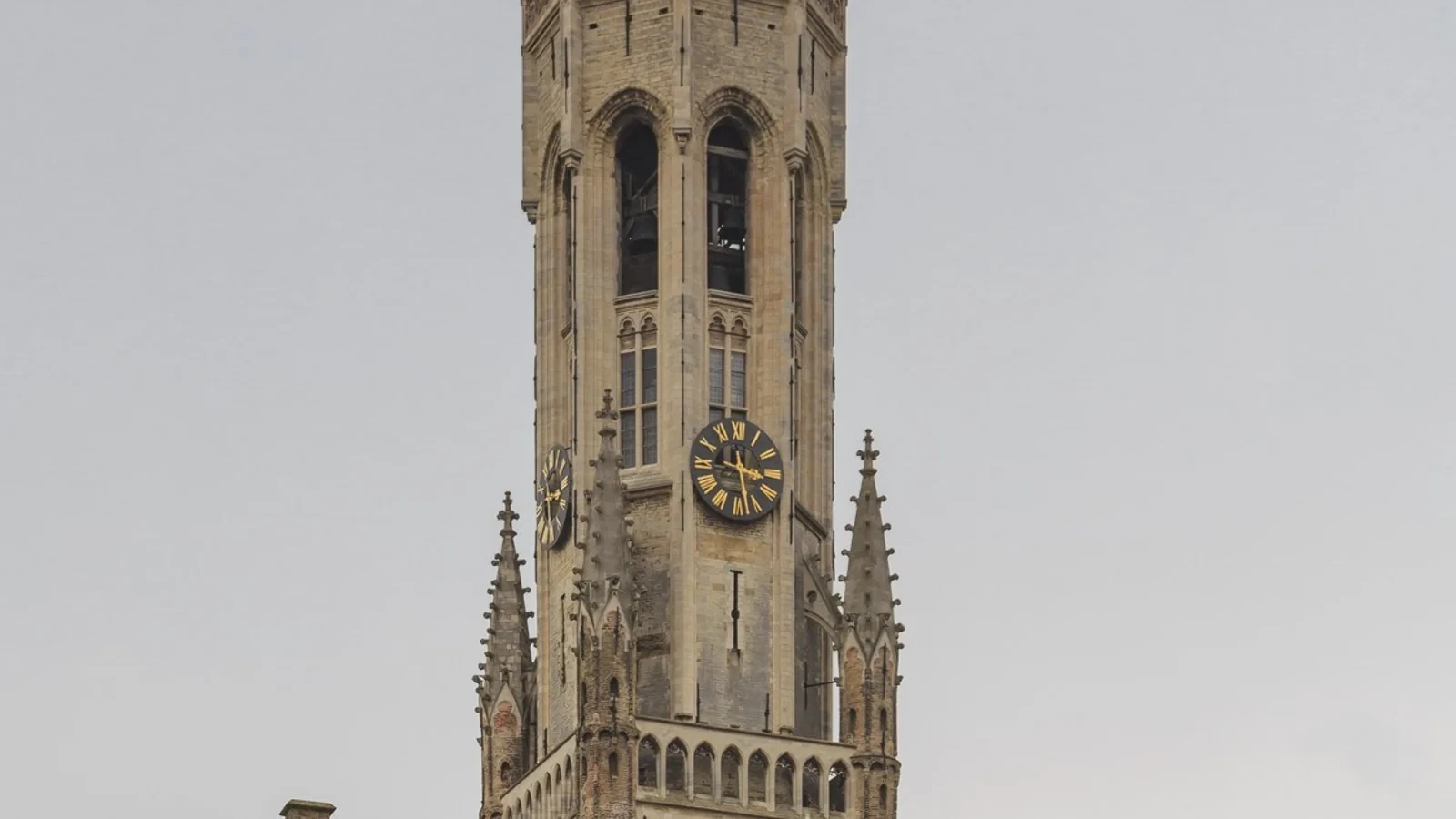
CEphoto, Uwe Aranas · CC BY-SA 3.0 · cropped
A Medieval City at Work: Bruges · Chapter 8 of 8

What Medieval Bruges Reveals About Wealth and Power

Bring the harbour, workshop, household, merchant community and civic institutions together to understand the uneven benefits of a prosperous medieval city.

WHERE?
Bruges · historical County of Flanders
TODAY
Brugge, Belgium
THE BIG QUESTION
What can one working city teach us about how prosperity and influence were shared?

Stand in Bruges and look up at the belfry. The tower gives civic wealth an unusually durable form. Now change the scale: picture the handover of yarn, a merchant looking for a local intermediary, or work at an outport beyond the famous centre. These less monumental connections are essential to understanding what the tower cannot tell us by itself.

This story path has followed a city through its places, jobs, organisations, images and conflicts. The chapters do not add up to a claim that medieval Bruges was prosperous in one uniform way. They reveal a concentration of opportunities that people could enter on different terms. Wealth and power were connected, but neither was distributed equally or held permanently.

PLACE & TIME

One city, several connected histories

Bruges and its connected settings

Historical County of Flanders · present-day Belgium

1200–1562 CE

Period and setting

First, wealth depended on connections that had to work

Bruges’ maritime importance reached beyond the city centre. The Zwin outports supplied facilities and communities with their own activities. Research at Hoeke identifies the practical setting of landing, repair and overwintering. The urban market could concentrate business while some of the physical work happened elsewhere.

This relationship changes the way we look at a wealthy city. Its success cannot be explained solely by the number of impressive buildings within its walls. Goods and information had to reach people able to use them. Maintenance, transport and practical coordination linked spaces that a view of the skyline separates.
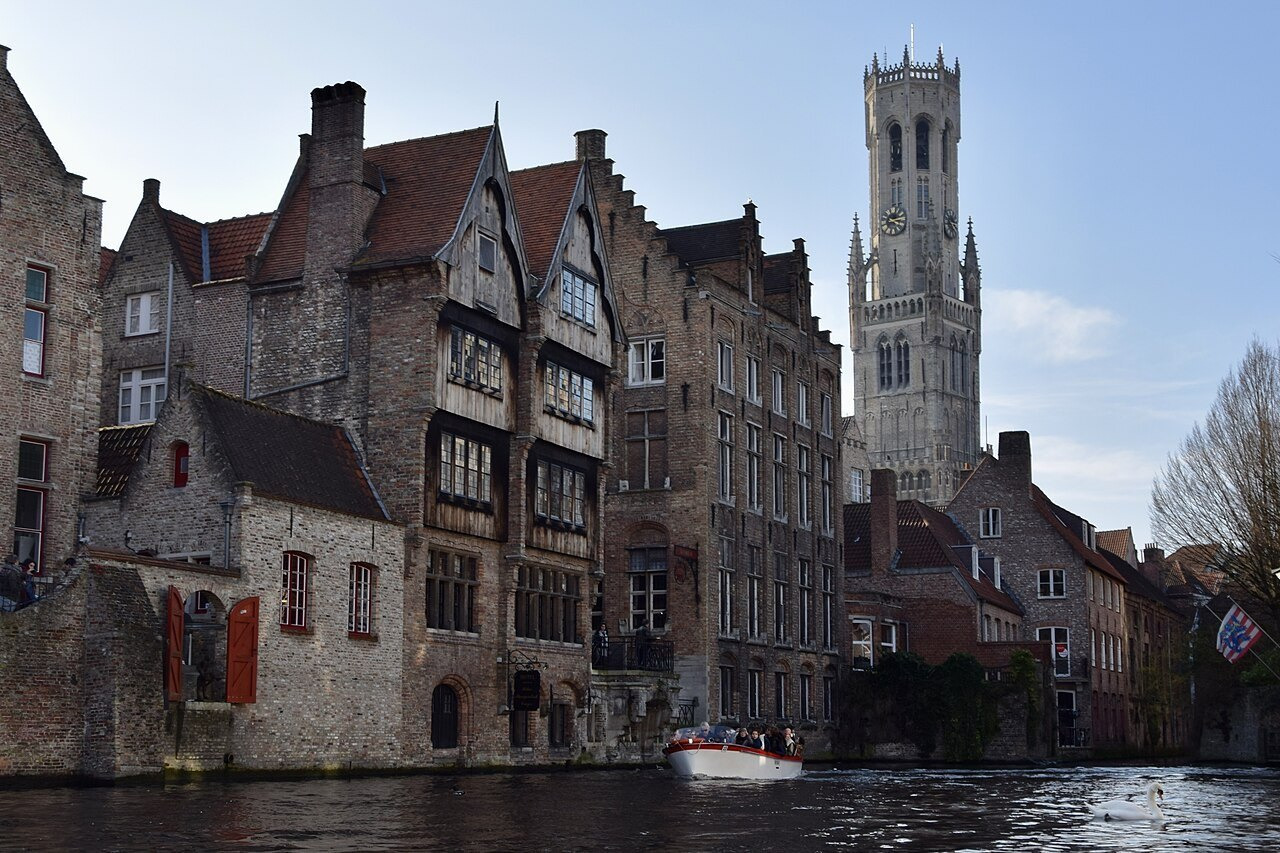
Water in front of brick buildings at the Rozenhoedkaai, with the Bruges belfry beyond.
Rozenhoedkaai and the belfry, photographed in 2015. This modern view locates surviving urban features; it is not a medieval harbour scene. Ank Kumar · CC BY-SA 4.0 · resized jpeg photograph.

KEY IDEA

Location became useful through the facilities, work and institutions linking it to other places.

The point is not that geography ceased to matter. Water depth and routes could impose real constraints. The question is how people responded to those constraints, and which connections remained effective. A city’s position was something they continually had to make usable, rather than a guarantee supplied once by a favourable map.

Second, organising a handover could create influence

Commerce required more than owning a cargo. Someone had to connect the visitor with a market, help form an agreement and support its settlement. The research on Bruges hostellers describes intermediaries with several commercial and legal roles. These functions helped trade proceed while giving particular people an important place in other people’s transactions.

We can see a related structure in the cloth industry. Making a needed product and controlling the relationships around its sale were different positions. A person with material, credit or customers could have opportunities that someone supplying a necessary task lacked. Essential labour did not automatically confer control over the completed transaction.

COMPARE

Four contributions, different questions about influence

Handling ships and goods

Contribution to the city

Made distant exchange physically possible.

Question about the terms of participation

Who obtained payment, and who financed the facilities?

Introducing trading partners

Contribution to the city

Connected a newcomer with a local market.

Question about the terms of participation

Who depended on the intermediary’s information or backing?

Producing cloth

Contribution to the city

Turned material and skill into something marketable.

Question about the terms of participation

Who controlled supplies, credit and the final sale?

Negotiating a privilege

Contribution to the city

Sought recognised rights for a community.

Question about the terms of participation

Who could use the right, and who bore the associated costs?

These questions explain why an account of urban prosperity should examine relationships rather than simply count products. The value created by several participants could be realised through arrangements controlled by fewer of them. Understanding those arrangements is a way of asking how the benefits of cooperation were shared.
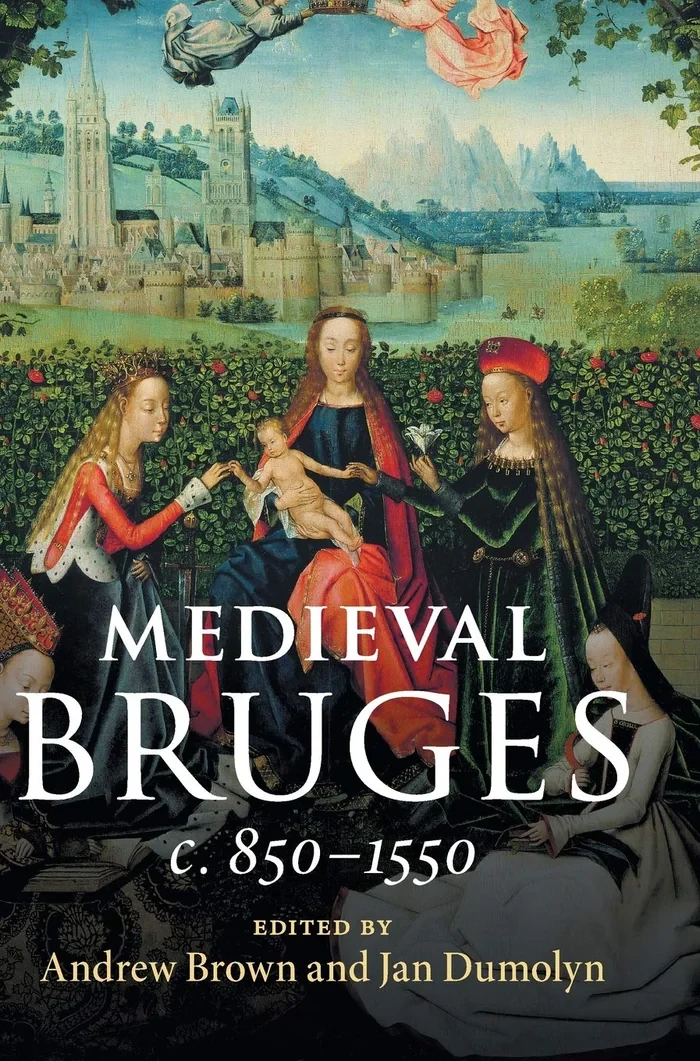
Medieval Bruges, c.850–1550
LEARN

Medieval Bruges, c.850–1550

Andrew Brown and Jan Dumolyn, editors

A substantial city history offers a wider framework for linking Bruges’ urban landscape, social groups and commercial development. Cambridge University Press hardback · 2018 · English · ISBN 9781108419659

Find book on Amazon
Sponsored link

CEphoto, Uwe Aranas · CC BY-SA 3.0 · resized jpeg photograph.

Third, the household belonged inside economic history

The chapter on everyday work brought spinning, yarn markets and household resources into view. Research on gender and specialised textile production makes those tasks part of the industry’s organisation. Home-based activity did not stand outside the commercial city simply because it was less conspicuous than a merchant’s public business.

Households also differed in what they could withstand. The selected confiscation inventories show markedly unequal material resources. Their official purpose and small sample limit generalisation, but they still prevent us from imagining that the industry’s importance meant the same daily security for everyone connected with it.

CHANGE YOUR VIEW

Three useful changes of scale

Ask what facilities, markets and institutions made Bruges useful to many participants.

Ask which interests a guild or merchant community could pursue collectively.

Ask what resources people had to support work and endure disruption. A city’s reputation does not answer this question.

Changing scale is not an excuse to abandon the larger story. It improves it. The city’s institutions relied on inhabitants’ work, while an individual household’s opportunities were shaped by institutions and markets it could not control alone. The relationship runs in both directions, although the capacity to influence it was unequal.

Fourth, collective rights and equal participation were different achievements

The Hanseatic community preserved documents concerning premises, privileges and disputes. Its Bruges archive records collective action in concrete forms. Guilds also made occupational identities visible through organisation and shared spaces. These were ways of making interests durable enough to be represented and defended.

Durable representation did not mean universal representation. A privilege might belong to a recognised body rather than every person whose labour supported the city. A guild building might embody both solidarity and internal hierarchy. Research on guild premises makes that double possibility explicit. The word collective describes a form of organisation; it does not settle who benefited most.

WORDS TO KEEP APART

The path’s three recurring distinctions

Wealth and security

A city’s commercial wealth and a household’s ability to withstand trouble are related but different measures.

Autonomy and equality

Room for a municipality to govern itself does not establish equal influence among its inhabitants.

A source and a claim

A surviving record or image supports particular observations; wider explanations require context and comparison.

The confrontation with Maximilian made another scale of power visible. Municipal actors could resist territorial authority, but resistance in the city’s name did not establish complete agreement inside it. Asking who could speak for Bruges remains necessary even when the account uses a collective noun such as citizens.

Fifth, the images of prosperity were themselves selective
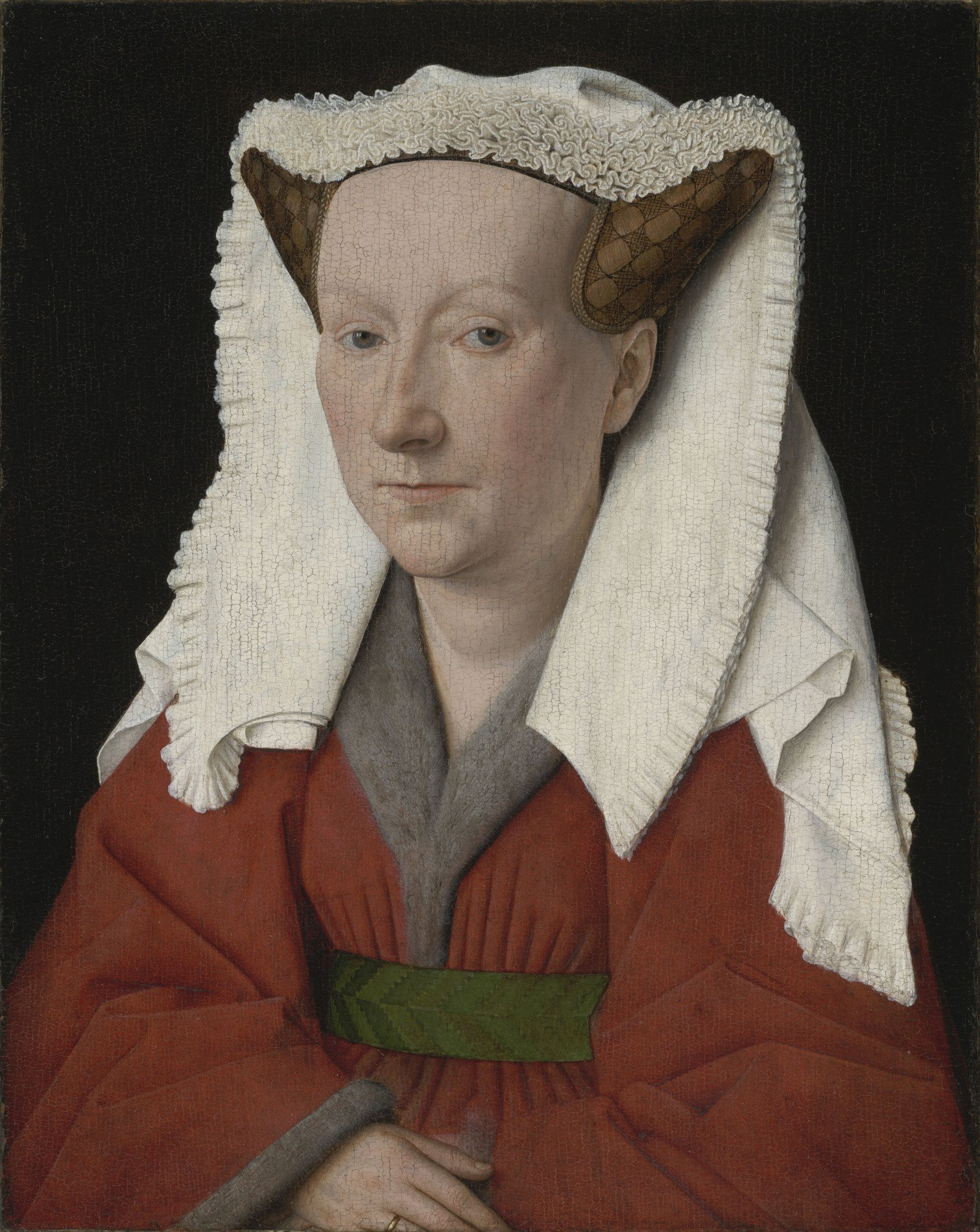
Margaret van Eyck faces the viewer, wearing a white head covering, red clothing and a fur collar against a dark background.
Jan van Eyck, Portrait of Margaret van Eyck, 1439. The reproduction shows the likeness; the museum record supplies the date, inscription and wider object context. Jan van Eyck · Public domain · resized jpeg reproduction.

Van Eyck’s work connected exceptional skill with court service and patrons able to support expensive painting. His documented career belongs to those relationships. A portrait offers a carefully made presentation of a person. It does not provide an average household, and its vividness cannot recover every life that left no comparable painted likeness.

The same caution applies to the surviving urban landscape. UNESCO describes the persistence of streets, plots and institutions in Bruges. That survival is valuable, but preservation has a history. Restoration and later use help shape what a visitor now encounters. Buildings can guide inquiry without supplying a complete social record.

  • Use a portrait to examine a particular presentation, not a whole population.
  • Use a monument to locate institutional presence, not to infer universal participation.
  • Use a map to investigate its represented place and its purpose.

Those are active ways of reading evidence. They ask for more than admiration or suspicion. A beautiful image can be informative and selective at once. A precise-looking map can preserve useful detail while making a case for the future its commissioners wanted.
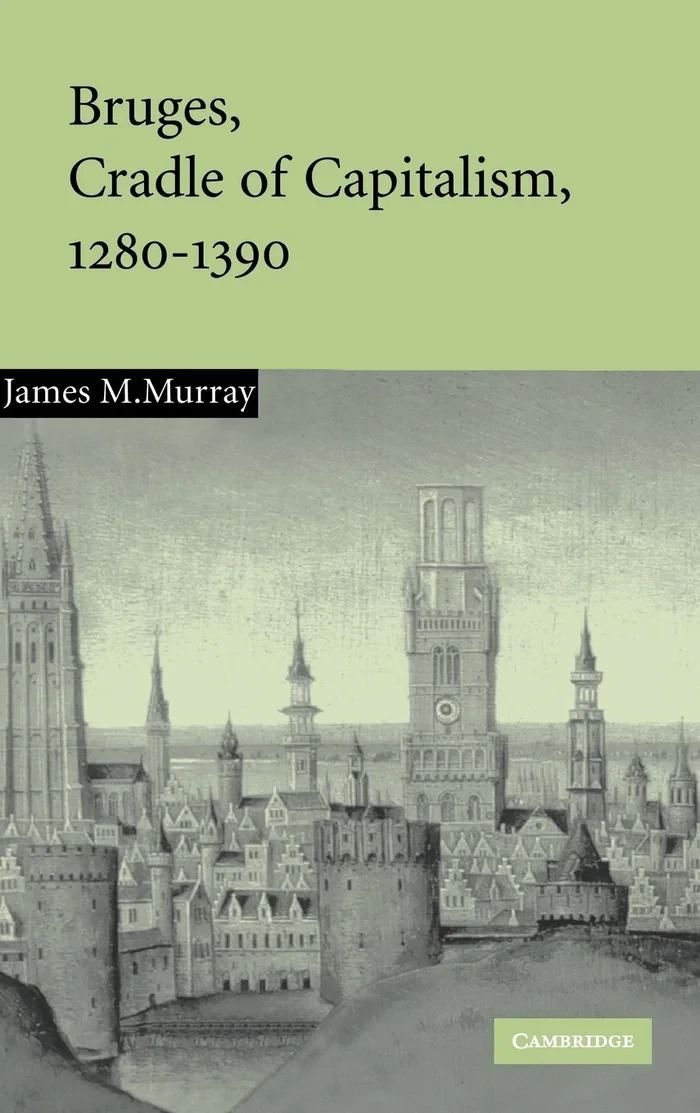
Bruges, Cradle of Capitalism, 1280–1390
LEARN

Bruges, Cradle of Capitalism, 1280–1390

James M. Murray

A focused commercial history develops the relationships between Bruges merchants, services and institutions in the late thirteenth and fourteenth centuries. Cambridge University Press hardback · 2005 · English · ISBN 9780521819213

Find book on Amazon
Sponsored link

CEphoto, Uwe Aranas · CC BY-SA 3.0 · resized jpeg photograph.

Finally, opportunities could move more easily than people

The change chapter showed why Bruges’ loss of commercial leadership cannot be reduced to one dramatic event. Evidence for Antwerp’s earlier business places later crises in a longer transition. Different kinds of trade and different participants did not necessarily move on one timetable.

Some people could redirect commercial relationships towards another market. Others depended more closely on local property, skills and suppliers. That difference gives adaptation a social meaning. The possibility of changing course was itself a resource, and the costs of a city’s changing position were unlikely to be identical for everyone.

KEY IDEA

Bruges could remain an active city while its role and the security of particular inhabitants changed.

The later study of selected Bruges houses challenges a simple story of urban disappearance. It does not tell us that all losses were avoided. A surviving city and a vulnerable livelihood can be part of the same history. That is why the conclusion to a commercial story needs people as well as buildings.

What the path leaves you able to ask

When another city is described as rich, begin with the connections that made its wealth possible. Look for the work performed away from its most visible centre. Then ask who controlled handovers, who could negotiate rights and which households had the resources to survive a disruption. Finally, check which of those lives the surviving evidence actually records.

Bruges gives those questions a concrete setting. Its water, workshops, merchant organisations, paintings and civic conflicts show prosperity being produced, represented and contested. The city’s wealth was a shared achievement in the sense that it depended on many contributions. The power to shape that achievement, and the security gained from it, remained uneven.
A closer look

Frequently asked questions

Prosperity depended on many connected contributions, while control over opportunities and security remained uneven. City wealth, corporate rights and household welfare are distinct questions.

No. The path develops questions from a particular city and selected evidence. Applying them elsewhere requires investigation of that place’s institutions, work and sources.

The change chapter deliberately follows the city beyond its medieval peak to examine continued efforts and urban life. The later map is labelled by date rather than treated as medieval evidence.

Resources

Keep exploring.

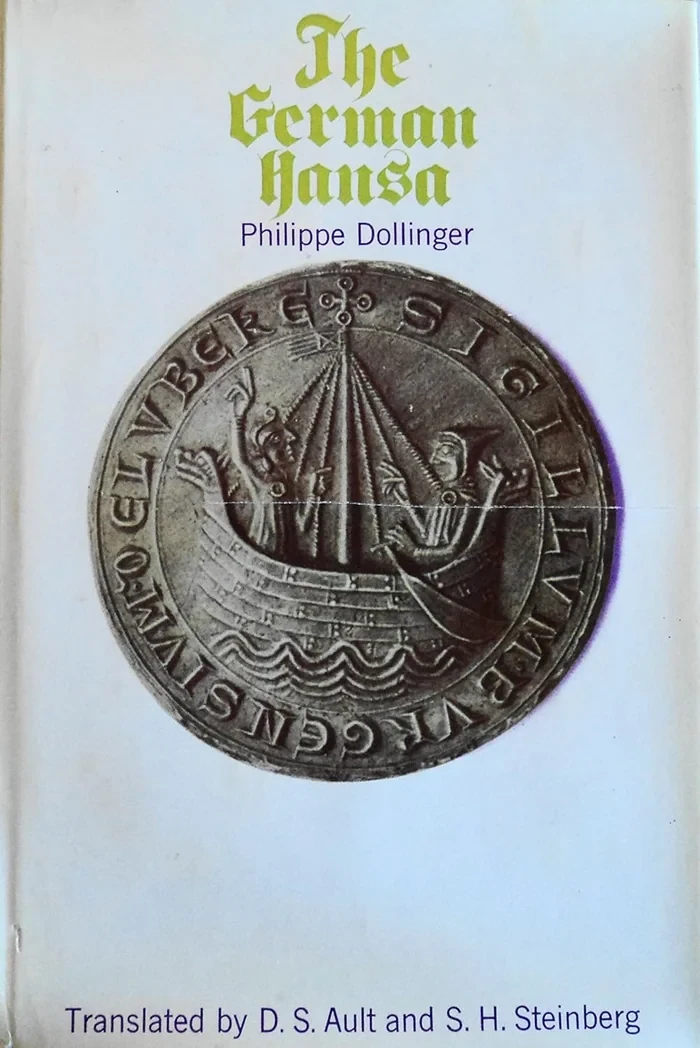
  1. The German Hansa
    Book

    The German Hansa

    Philippe Dollinger

    An older broad study situates the Hanse in a larger northern European history. Read it alongside current research and the specific Bruges documents. Stanford University Press revised edition · 1970 · English · ISBN 9780804707428

    Find book on Amazon — The German Hansa (opens in a new tab)Sponsored link

Follow the evidence

Sources and evidence

The following records support the chapter’s central claims and identify the dates and limits of its images. Access limits are stated in the individual notes.

  1. UNESCO · Historic Centre of Brugge

    Description; Outstanding Universal Value; integrity and authenticity; coordinates

    Institutional heritage account. Surviving urban fabric includes later adaptations and restoration. UNESCO’s centre coordinate is used as a rounded city anchor, not a medieval workshop location.

  2. Ghent University Zwin Project · Hoeke

    Written evidence for quays; repair, overwintering and archaeological indicators

    Project synthesis combines written and material evidence. Possible sheltered basin and metalworking features remain interpretations, not certainties.

  3. The Medieval Review · review of Murray, Bruges, Cradle of Capitalism

    2005 review · hostellers, commercial and legal functions; women’s participation

    Complete public review consulted. This is an account of the book’s research, not independent inspection of the paid book or original account books.

  4. Shennan Hutton · Organizing specialized production: gender in the medieval Flemish wool cloth industry, c.1250–1384

    Urban History 45(3), 2018, pp.382–403 · DOI 10.1017/S0963926817000566 · spinning regulations and yarn markets

    Public full text consulted. Bruges-specific regulations and market examples are distinguished from evidence concerning other Flemish towns. Gender patterns are not a claim that every woman had one occupation.

  5. Dumolyn, Ryckbosch and Speecke · Did inequality produce medieval revolt?

    Accepted manuscript · Social History 46(4), 2021, pp.372–405 · inventories of 1383–1384, especially manuscript pp.16–19

    Open accepted manuscript consulted. The detailed sample comprises 26 selected confiscation inventories, 15 connected with textile work; it is not a random city census. Named household examples come from that sample.

  6. Mathijs Speecke · The spatial politics of craft guilds in fourteenth-century Flanders

    2022 publication record and public abstract · Bruges and Ghent, fourteenth century

    Public abstract supports guild investment in halls, hospices and chapels and the connection with hierarchy. Full text behind restricted access was not read.

  7. UNESCO Memory of the World · Documents on the history of the Hanse

    Nomination dossier · section on 26 charters of the Bruges Kontor, 1458–1502

    Institutional archival description consulted. Collection dates are not the organisation’s founding and dissolution dates. The dossier describes records; it is not a full transcription of each medieval document.

  8. Lorne Campbell · Jan van Eyck, National Gallery catalogue

    1998 catalogue, online version · documented career, Portugal journey, Bruges and workshop assistants

    Scholarly museum catalogue consulted. Birth date remains uncertain; dated activity is distinguished from a reconstructed full biography.

  9. Bolton and Guidi Bruscoli · When did Antwerp replace Bruges?

    Economic History Review 61(2), 2008, pp.360–379 · DOI 10.1111/j.1468-0289.2007.00397.x · public abstract

    Public abstract consulted. Its 1438 ledger evidence supports significant earlier Antwerp activity; it does not measure every market or establish one universal replacement date. Paid article and original ledger were not read.

  10. Vrije Universiteit Brussel · Bruges did not shrink after its golden age

    2021 university account of Heidi Deneweth’s research · about 150 houses in three neighbourhoods

    Institutional research summary consulted. The study extends into the early modern period and concerns selected areas. Continued urban activity is not a claim of equal prosperity or unchanged livelihoods.

  11. Image record · belfry

    The belfry seen from Burg Square in 2014. The modern photograph shows the tower in the surviving city; it does not date every visible structure to the same period.

    Resized JPEG photograph. The view has its own stated date and is not a medieval reconstruction.

    Image credit

    CEphoto, Uwe Aranas

    CC BY-SA 3.0

  12. Image record · hero48

    The belfry seen from Burg Square in 2014. The modern photograph shows the tower in the surviving city; it does not date every visible structure to the same period.

    Cropped to 16:9, resized and WebP encoded. The view has its own stated date and is not a medieval reconstruction.

    Image credit

    CEphoto, Uwe Aranas

    CC BY-SA 3.0

  13. Image record · margaret

    Jan van Eyck, Portrait of Margaret van Eyck, 1439. The reproduction shows the likeness; the museum record supplies the date, inscription and wider object context.

    Resized JPEG reproduction. Public-domain artwork reproduced faithfully.

    Image credit

    Jan van Eyck

    Public domain

  14. Image record · water

    Rozenhoedkaai and the belfry, photographed in 2015. This modern view locates surviving urban features; it is not a medieval harbour scene.

    Resized JPEG photograph. The view has its own stated date and is not a medieval reconstruction.

    Image credit

    Ank Kumar

    CC BY-SA 4.0

FOLLOW THE TRAIL

Continue A Medieval City at Work: Bruges

Continue in sequence, or jump to another chapter in the path.

View full Story Path
Chapter1

NEXT CHAPTER

Medieval Bruges: A Trading City Built Around Water

Explore medieval Bruges through its waterways, outports and working spaces, and discover why its famous skyline tells only part of the story.

Chapter2

NEXT CHAPTER

How Trade Worked in Medieval Bruges

Follow the practical links between hostellers, moneychangers, local markets and merchant privileges that made trade possible in medieval Bruges.

Chapter3

NEXT CHAPTER

Working in Medieval Bruges: Cloth, Markets and Households

Look beyond the finished cloth to the spinning, weaving, selling and household resources that shaped working life in medieval Bruges.

Chapter4

NEXT CHAPTER

The Hanseatic Merchants of Bruges

Explore the Hanse’s Bruges trading community through privileges, surviving charters and a dispute involving an extraordinary cargo.

Chapter5

NEXT CHAPTER

Jan van Eyck: An Artist Between Court and City

Follow the painter’s documented career, examine two portraits and separate what a painting shows from what later viewers have assumed.

Chapter6

NEXT CHAPTER

Who Ruled Bruges? Guilds, Merchants and Burgundian Power

Examine Bruges’ civic rights, inequalities within its organised crafts and the confrontation with Maximilian in 1488.

Chapter7

NEXT CHAPTER

Why Bruges Lost Its Lead in European Trade

Trace the interaction of changing waterways, competing markets and political conflict, then read the city’s later map as an argument for its future.

Other chapters in this pathRead in any order
1Medieval Bruges: A Trading City Built Around WaterTrade · Urbanism · Water Management
2How Trade Worked in Medieval BrugesAdministration · Social Status · Trade
3Working in Medieval Bruges: Cloth, Markets and HouseholdsCraft Production · Social Status · Women and Gender
4The Hanseatic Merchants of BrugesAdministration · Politics · Trade
5Jan van Eyck: An Artist Between Court and CityArt and Patronage · Craft Production · Social Status
6Who Ruled Bruges? Guilds, Merchants and Burgundian PowerAdministration · Politics · Social Status
7Why Bruges Lost Its Lead in European TradePolitics · Trade · Urbanism