
Story path
A Medieval City at Work: Bruges
How did trade and work make Bruges wealthy, and who gained influence from that prosperity?
Follow medieval Bruges from its waterways and outports to the transactions, households, merchant communities and artistic work that sustained its prosperity. Then examine civic conflict and commercial change to ask how opportunity and power were shared.
Explore the chapters
The reading path
Follow the work. Widen the picture.
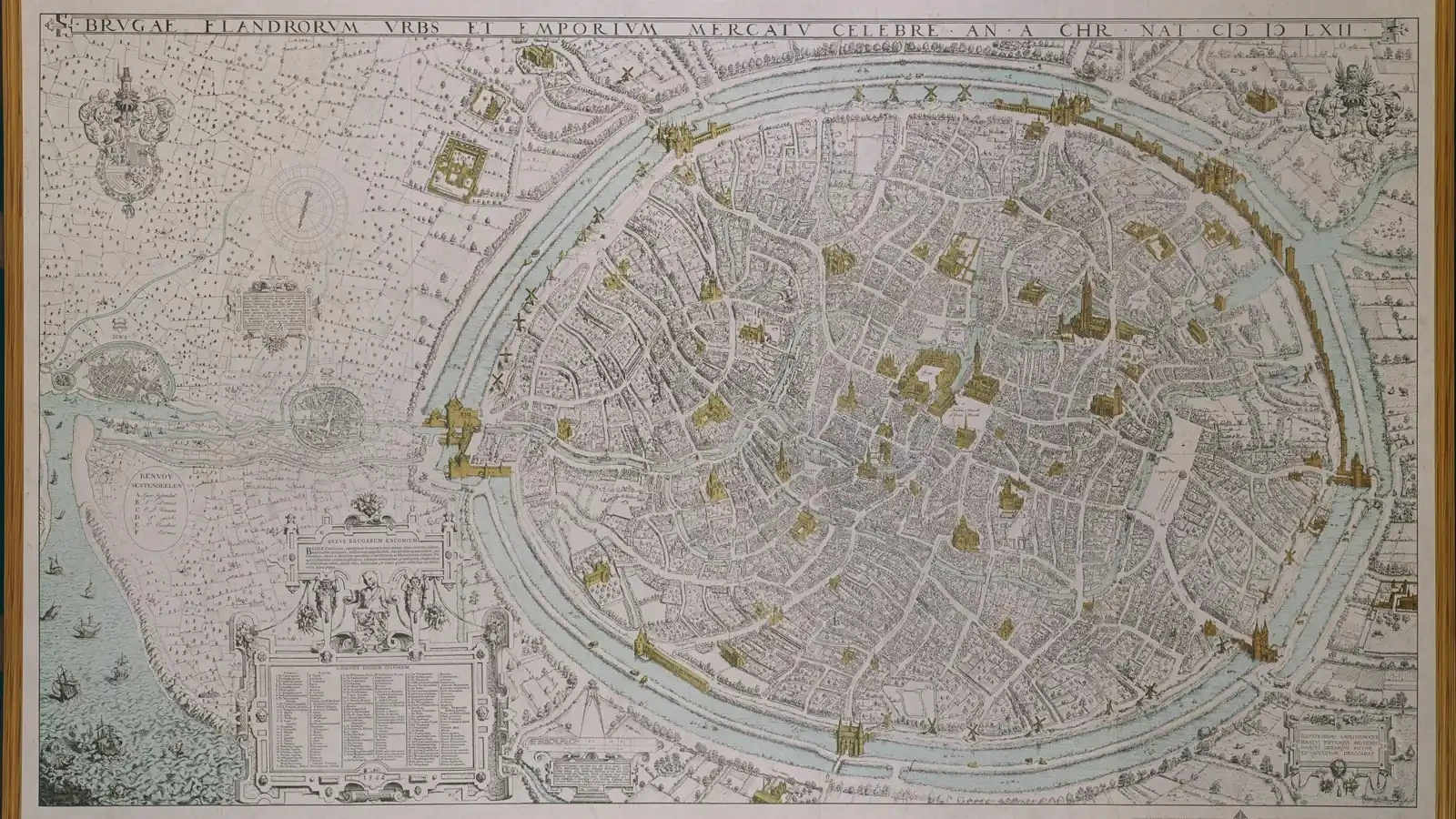
Read the eight chapters in order for a connected argument, or choose a chapter’s question as an entry point. The main setting is Bruges around 1200–1500; the change chapter deliberately follows the city to its 1562 map. Images and later evidence carry their own dates.
The chapters for this path will be published soon.
Keep exploring
There is more beyond this path.
Explore another reading path, or find a new connection in the Atlas.