
A merchant could arrive in Bruges with valuable goods and still face several unsolved problems. Who would introduce a buyer? Where could goods be stored? How would payment work when customers used different money? What would happen if an agreement failed? Getting to the city was the beginning of commerce, not its completion.
Medieval trade in Bruges worked through people who connected these separate tasks. In the fourteenth and fifteenth centuries, hostellers, brokers, moneychangers and organised merchant communities helped newcomers deal with a local market. Their work made distance more manageable. It also created dependencies: access to a useful intermediary could affect who obtained information, credit and trustworthy introductions.
PLACE & TIME
Follow the transaction into the city
Bruges and its connected settings
Historical County of Flanders · present-day Belgium
1280–1450 CE
Period and setting
The hosteller offered more than a bed
An inn sounds like a place to recover from a journey. In Bruges it could also be a commercial address. James Murray’s research, discussed in The Medieval Review, places hostellers at the intersection of local markets and international business. They could connect a visiting merchant with brokers, storage, financial services and information.
That combination made practical sense. Someone arriving from abroad did not need only shelter. The visitor needed to know where goods could be sold and whose promises were dependable. A host familiar with the city could reduce the time spent finding these connections. Hospitality and business assistance could occupy the same setting without being the same service.
FOLLOW THE CONNECTIONS
From arrival to an agreement
Find local assistance
A hosteller or broker could introduce a visitor to the market and help with practical arrangements.
Identify the transaction
Goods, buyers and terms had to be brought together. Information about quality and reliability mattered.
Arrange payment and responsibility
Money, credit and the parties’ obligations had to be clear. A sale and its settlement were distinct stages.
Keep a usable record
Accounts and legal documentation made obligations easier to trace. They did not remove the possibility of a dispute.
This is a simplified explanation of connected tasks, not a surviving checklist followed by every merchant. Different commodities and communities used different arrangements. The essential point is that local knowledge formed part of trade’s infrastructure. A quay could move a cargo ashore, but it could not tell its owner which buyer was solvent.
Reputation had a practical job
The hosteller’s role also involved responsibility. The published review of Murray’s study describes hosts assisting with agreements and, in some circumstances, standing as sureties or representatives. Those roles made a local person’s standing relevant to a visitor’s business. Reputation mattered because it could be connected with an obligation, not merely because medieval merchants preferred familiar faces.
There is a useful difference between trust and the absence of rules. Trust could rest on a record of previous dealings, a known associate or an agreement that other people could enforce. Rules and relationships reinforced one another. Calling the market “personal” should not make it sound like an informal world without accounts, legal claims or consequences.
KEY IDEA
The person who introduced a deal might also help make its promises usable.
Nor were these connections limited to men. Women appear in the business networks described by Murray, including the management of hostels and moneychanging enterprises. Their presence does not establish equal opportunity across the market. It does show why the familiar image of a male merchant meeting another male merchant leaves some of the city’s commercial work out of the picture.
Berit Wallenberg / Swedish National Heritage Board · Public domain · resized jpeg photograph.
A moneychanger could become part of a banking relationship
Coins introduced another problem. Exchanging money and settling an obligation were related activities, but they were not identical. Raymond de Roover’s study of Collard de Marke’s account books describes Bruges moneychangers accepting deposits and making loans by the mid-fourteenth century. Their work extended beyond replacing one sort of coin with another.
A deposit created a continuing relationship: someone entrusted money to a business that would have to account for it. A loan added a different obligation, involving repayment and an assessment of reliability. These operations help explain why a changer’s books are evidence for the market’s organisation, not simply a list of exchange rates.
COMPARE
Three financial jobs, three different questions
Exchange
Make money usable in another monetary setting.
Which coins and valuations apply?
Deposit
Entrust money to someone who keeps an account of it.
Who is responsible for returning or applying it?
Credit
Allow an obligation to be settled later.
Who owes whom, and on what terms?
The distinctions are more useful than declaring medieval Bruges a modern financial centre in miniature. The mechanisms had their own institutions, restrictions and risks. You can recognise a deposit or a loan without assuming deposit insurance, a national currency or modern banking regulation. Similar tasks do not imply identical systems.
Goods travelled with information about people
Foreign merchants were not all isolated visitors. Research on Lucchese merchants in Bruges between 1390 and 1430 examines their social networks and properties. People connected with the Italian city of Lucca acquired a presence in a northern market. Buildings and relationships helped turn repeated visits into more durable participation.
A merchant community could make introductions easier, but the community itself still had to work with Bruges’ inhabitants and institutions. Overseas ties and local ties were both necessary. Thinking only in terms of national groups meeting one another makes the commercial city too tidy: people also dealt across those boundaries, through neighbours, hosts and financial partners.
WORDS TO KEEP APART
The people around a transaction
Hosteller
An innkeeper whose services could also include commercial assistance.
Broker
An intermediary who helps connect parties to a transaction.
Surety
Someone who takes responsibility for another party’s obligation under an arrangement.
Merchant community
An organised or socially connected group of traders; not a modern national government.
The household deserves a place in this account too. A business could depend on property, family connections and work that an individual’s occupation did not fully describe. A ledger’s named customer is a starting point for research, not necessarily the whole economic unit behind the entry. Family and business were connected, although their relationship varied from case to case.
Berit Wallenberg / Swedish National Heritage Board · Public domain · resized jpeg photograph.
Even a ship’s ballast belonged to the trading system
Large-scale commerce also depended on easily overlooked material tasks. Research in the Zwin region identifies stones brought as ships’ ballast and exchanged for local sand. Ballast helped make a ship stable. The stones found around former ports therefore provide evidence for voyages that was not deliberately created as a record of trade.
This material evidence complements the written accounts. A ledger can preserve a named obligation; a stone can help identify a geographical connection. Neither supplies the whole journey by itself. Together, different sources make it possible to connect the financial world inside Bruges with the work performed on ships and in its outports.
- Moving goods required more than the goods themselves.
- An account records what its keeper needed to remember or establish.
- Archaeological traces can reveal activities that written records treat only briefly.
Privileges mattered when cooperation broke down
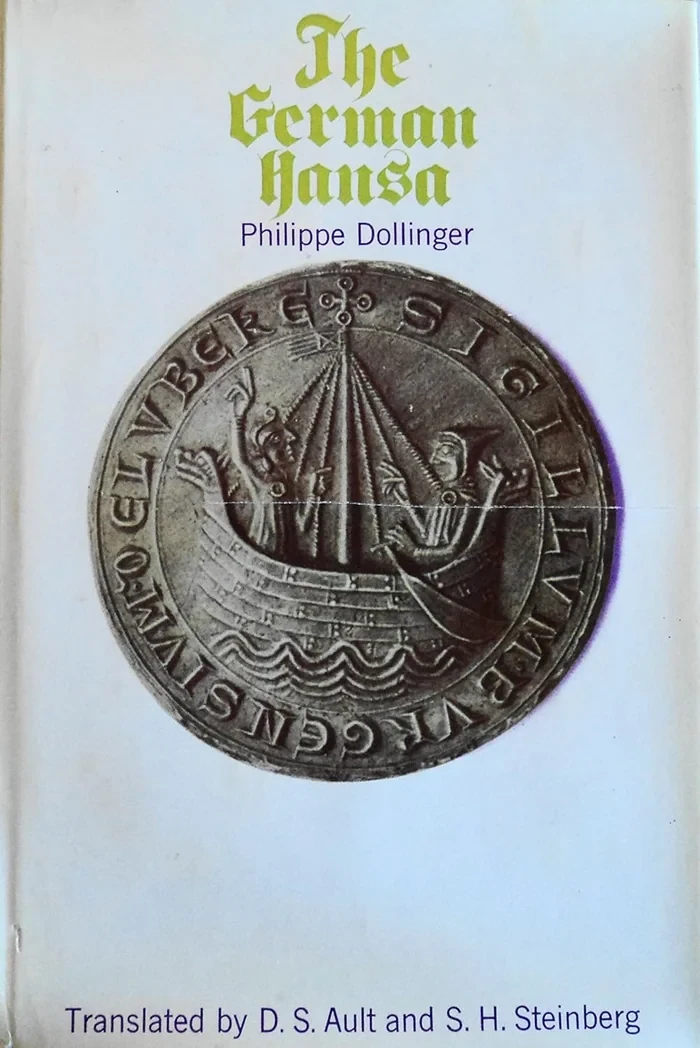
Trade operated within negotiated rights. The Hanseatic merchants’ surviving Bruges documents include confirmations and disputes, rather than only celebrations of successful exchange. The archive’s later fifteenth-century material shows how carefully access and responsibility could be contested. Those records make sense in a market where agreements could fail and competing groups could exert pressure.
A privilege might give a community a valuable position, but its existence did not eliminate bargaining. Someone still had to recognise it, interpret it and act on it. The next chapter on the Hanse will examine that organisation directly. Here, the important point is that rights formed part of the work required to keep a commercial relationship going.
KEY IDEA
Arrival, introduction, agreement and settlement were different achievements.
What made Bruges commercially useful?
The city offered more than a location on a trading route. It brought visiting merchants into contact with people who knew local markets, handled money and helped give agreements a workable form. That concentration could make Bruges attractive even when part of a cargo’s handling took place elsewhere in the harbour system.
Its success was therefore social as well as spatial. But a completed transaction tells you little about how its gains were distributed. The next chapter shifts from merchant services to the people making cloth and maintaining households: the work that a prosperous market needed, and the unequal lives behind its products.


.jpg)
