
On 18 April 1593, Richard Field entered Venus and Adonis in the Stationers’ Register. The record names the Archbishop of Canterbury and a Company warden. Before you reach Shakespeare’s poem, you meet the institutions around it: a printer’s claim, an ecclesiastical authority and a trade official.
The surviving entry opens a question larger than one famous author. Who could make a text into a book, and who could stop it? In England between 1557 and 1640, control involved overlapping powers. Permission to print a text, a claim against competing publishers and punishment after publication were related, but distinct.
PLACE & TIME
London and the English printing trade
London · with English provincial connections
England
About 1557–1640 CE
Main setting
The Company joined trade interests to royal authority
The Stationers’ Company had older roots, but Queen Mary’s royal charter of 1557 gave it incorporated status and powers to search premises for books considered heretical or seditious. A body of book-trade practitioners could therefore help enforce the Crown’s concerns. The work did not belong to a separate, modern censorship office.
The Company also regulated interests within the trade. Its registers recorded claims to print and circulate particular works. A publisher’s entry helped establish a position against other publishers. That makes the archive valuable for following a book’s commercial history, while warning you against assuming that every entry records an author’s ownership in the modern sense.
WHO DID WHAT?
Three overlapping centres of authority
Members entered works in its registers. Its Master and Wardens helped oversee the trade and could exercise search and seizure powers.
The Archbishop of Canterbury and Bishop of London were central licensors. Their authority reached beyond works that looked narrowly theological.
Royal grants protected printing privileges. The Privy Council and Star Chamber connected political authority with regulation and enforcement.
A printing privilege was not a licence to say anything
A royal printing privilege could reserve profitable works or categories of books to particular printers. A licence concerned whether a text was allowed to be printed. The first answered a commercial question about who could supply a work; the second concerned its acceptability. Possessing an exclusive claim did not remove scrutiny of what a book said.
The interests could reinforce each other. Ronan Deazley’s account of the 1586 decree connects religious controversy with disputes over privileged printing. Protecting selected printers and restricting dangerous texts could appeal to different participants for different reasons. A printer challenging another printer’s monopoly was not necessarily campaigning for unrestricted religious or political expression.
WORDS OF CONTROL
Four terms that should stay distinct
Licence
Authorisation to print a text, subject to the relevant authority’s review.
Printing privilege
An exclusive grant protecting the printing of a work or category of works.
Stationers’ copy
A trade claim associated with a particular work, recorded and regulated within the Company.
Censorship
Intervention in what could be printed or circulated, including suppression after publication.
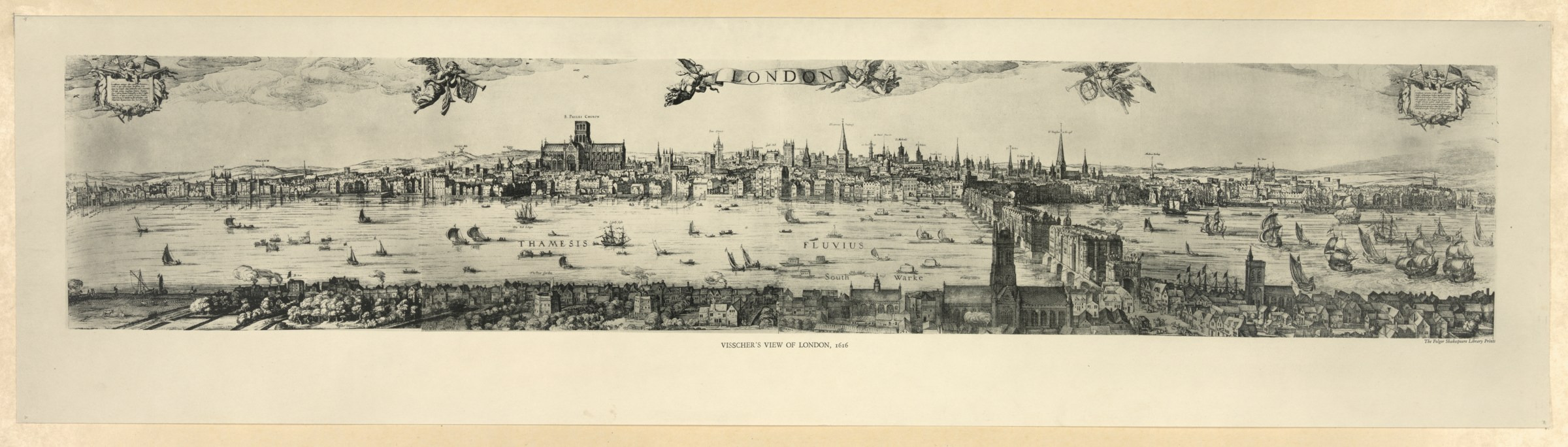
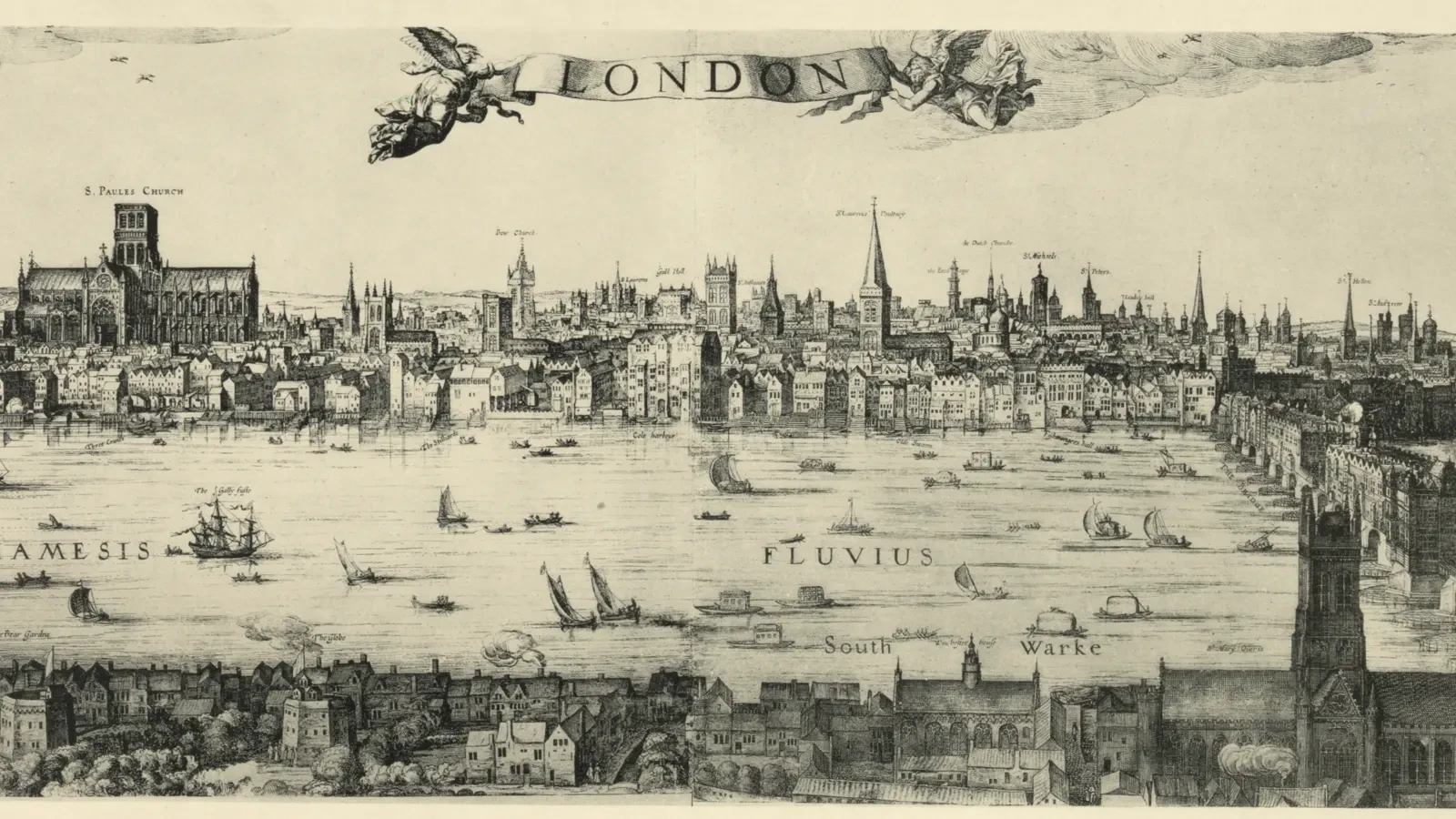
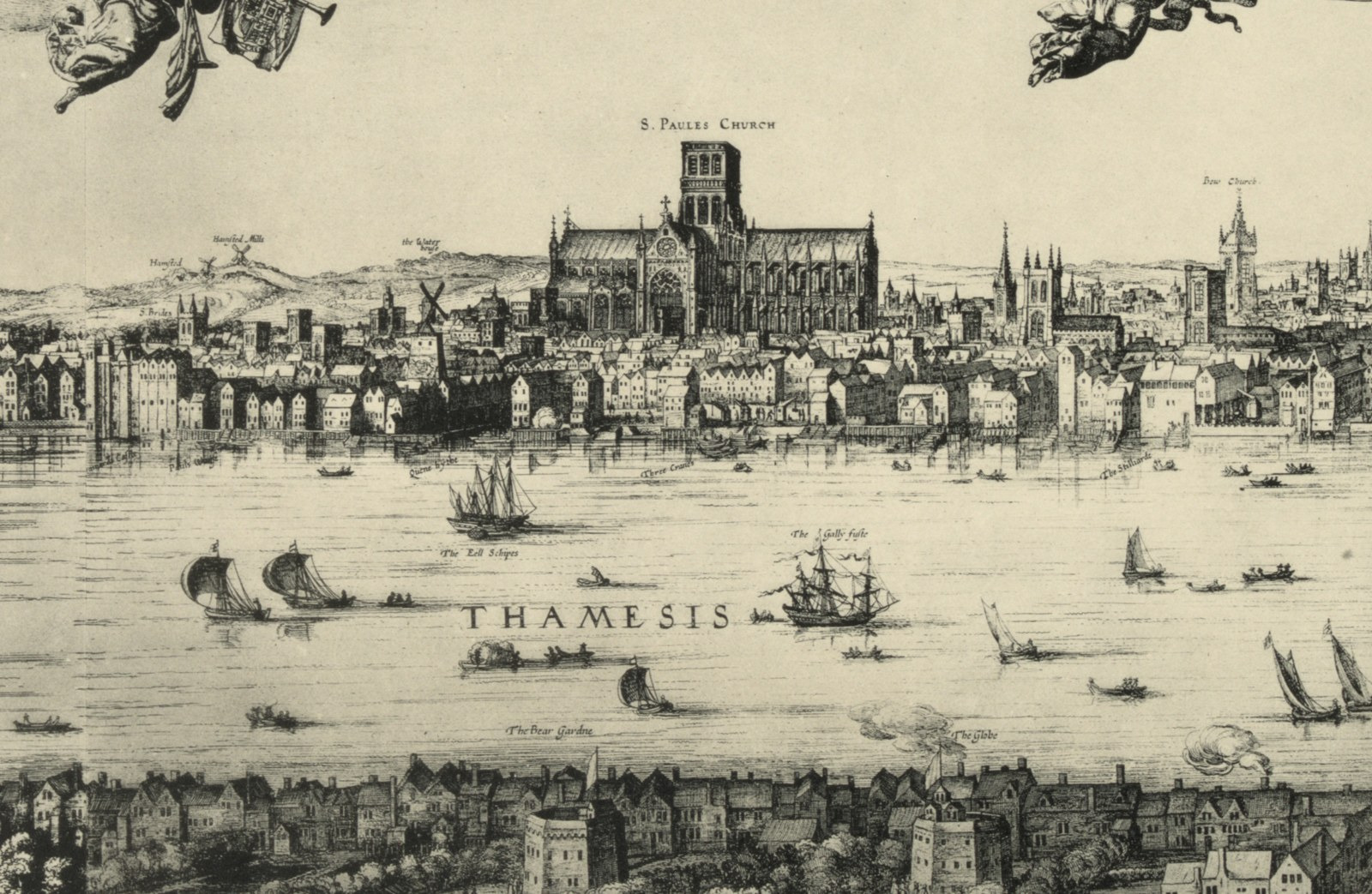
The panorama offers a setting for these relationships: a dense city linked by streets and the Thames. It supplies no register of compliant printers. The Folger explains that Visscher probably worked from older images rather than visiting London. Even a detailed historical view needs to be read as a constructed representation.
Claes Jansz. Visscher · later reproduction via Library of Congress / Wikimedia Commons · Public domain · resized and jpeg re-encoded.
The 1586 decree reached the press itself
The Star Chamber decree required presses to be registered and restricted their establishment to London, with exceptions for Oxford and Cambridge. It strengthened controls over the equipment and organisation of printing, as well as texts. The Company’s own accepted ordinances also gained the backing of the state.
Search and seizure could reach offending books, presses, type and other printing instruments. The rules provided for the destruction of equipment. You can see why enforcement threatened more than an edition’s sales: losing the means of production could interrupt the printer’s livelihood. These are provisions of a decree, however, not evidence that every search found a book or destroyed a press.
An entry and a published copy answer different questions
Field’s 1593 entry recorded Venus and Adonis “Entred for his copie”. Heather Wolfe’s account identifies a separate indication of publication: Richard Stonley recorded buying it on 12 June. Registration and a purchaser’s diary establish different things. The April date should not simply be relabelled the publication day.
TEST THE EVIDENCE
Does the title page prove official approval?
The imprint itself proves that all permissions were obtained.

- SHOWS
- A title, printer, sales location and year.
- SUGGESTS
- A traceable commercial publication.
- CANNOT PROVE
- This page alone does not document the approval process.
A better-supported reading
Read the imprint alongside the surviving administrative evidence.
Register context: Shakespeare Documented · Field’s entry ·
William Shakespeare · Richard Field, printer · reproduction via Barney Jenkins / English Wikipedia · Public domain · title page cropped and jpeg re-encoded.
A further register note records Field assigning the work to John Harrison, Senior, in June 1594. A claim could change hands. For you as a reader, this shifts attention from a single author’s name to the people who financed, printed and circulated texts—and to the records through which they defended their positions.
A hidden press depended on an open network of people
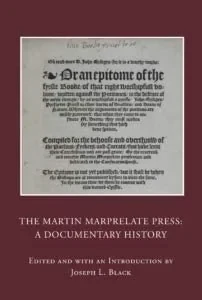
The Marprelate campaign tested these controls from another direction. In 1588–1589, pamphlets attacking the bishops appeared under the name Martin Marprelate. Joseph L. Black’s chronological account follows the clandestine press through evidence gathered during the investigation. Robert Waldegrave printed its first tract at Elizabeth Crane’s house in East Molesey, Surrey.
After the Epistle was completed, Crane wanted the press removed. In early November 1588, it moved to Fawsley Hall in Northamptonshire. Avoiding discovery meant finding hosts and transporting equipment. Secrecy required practical cooperation: the words still needed type, paper, labour and routes to their readers.
TWO DIFFERENT RECORDS
Rules and investigations reveal different things
Main question
What should printers and officials do?
What did witnesses say people had done?
Material focus
Registered equipment, permitted locations and sanctions.
Households, transport, printing and distribution.
Limit
A rule does not establish universal compliance.
An investigation does not provide a neutral account of every participant.
Crane was later fined and imprisoned. The documentary account does not establish how long she remained in prison or whether her fines were remitted. Those gaps matter. Records made to identify and punish participants tell us a great deal about the network, but they were not created to preserve its members’ lives evenly or sympathetically.
William Shakespeare · Richard Field, printer · reproduction via Barney Jenkins / English Wikipedia · Public domain · title page cropped and jpeg re-encoded.
Control could come after the sheets were printed
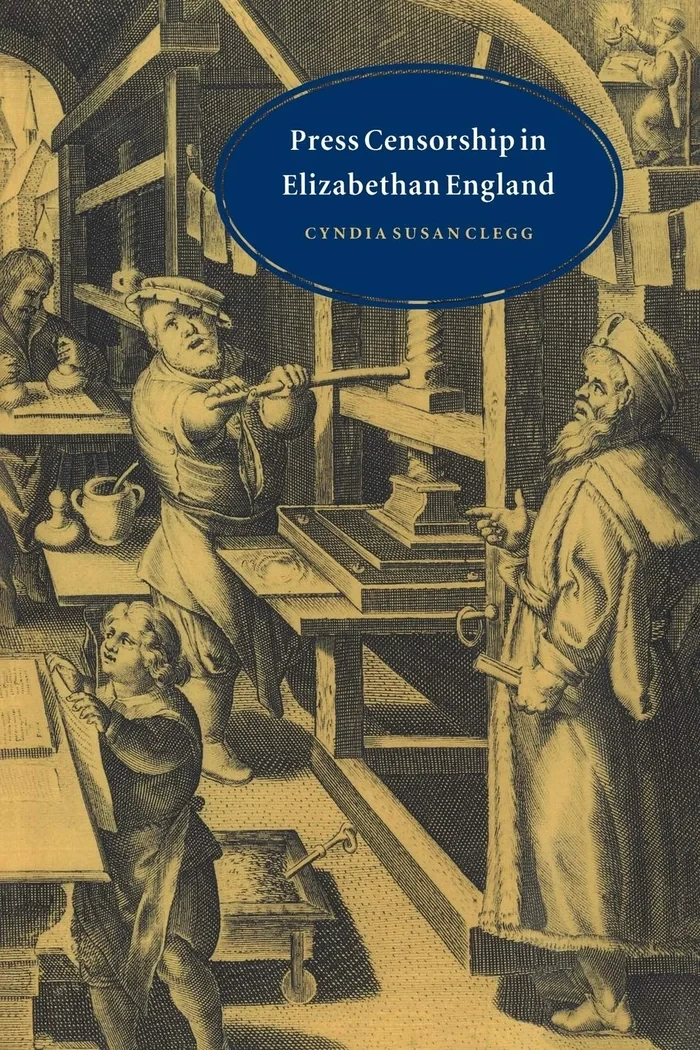
On 1 June 1599, Archbishop John Whitgift and Bishop Richard Bancroft ordered the Stationers to call in specified books and restrict further printing. The order included satires and epigrams, works by Thomas Nashe and Gabriel Harvey, and requirements for the authorisation of histories and plays. Cyndia Susan Clegg’s chapter summary separates this order from the record of its execution.
An entry three days later recorded the burning of seven of nine named works. These included John Marston’s The Scourge of Villanie. Joseph Hall’s Virgidemiarum and Thomas Cutwode’s Caltha Poetarum, initially called in, were reprieved. Suppression could be selective, and a listed prohibition did not produce an identical outcome for every title.
FOLLOW THE CHANGES
Control at different points in a book’s life
- 1557
Royal incorporation
The Company received a charter and search powers.
- 1586
Equipment and trade rules
The decree joined control of presses to licensing and Company ordinances.
- 1588–1589
A clandestine campaign
The Marprelate press moved between supportive households.
- 1599
Books called in
An order and a later execution record show intervention after production.
- 1637
More detailed requirements
A new decree elaborated authorisation, registration and import controls.
Selected moments; neither a complete list of regulations nor a smooth progression toward stronger control.
The 1637 rules made the divisions more explicit
Under Charles I, a new Star Chamber decree distinguished licensors by subject. Common-law books went to senior judges; histories to the principal secretaries of state; heraldry to the Earl Marshal’s office. Other books, including divinity and poetry, remained within ecclesiastical oversight. Deazley’s account describes this more elaborate scheme.
Registration with the Company became compulsory alongside the licensor’s authorisation. The decree also required printed material to name its printer and author and imposed controls on imports. It attempted to make responsibility and entry into the market more traceable. Those formal demands should not be mistaken for a surviving, complete record of every book’s route through them.
Approval was a relationship, not a permanent shield
The uncertainties extended to negotiation over texts. Daniel Starza Smith discusses a petition written in 1648 by John Donne’s son about the publication of his father’s sermons in 1640. The younger Donne claimed that Archbishop Laud’s chaplains demanded cuts which he refused. This is a later, interested account of a dispute, not an unqualified report from a licensor.
The example reminds you to ask who made a statement and why. A petition seeking advancement might present its writer as wronged; an examination might seek incriminating answers; a register might preserve a trade claim. Reading across such records gives a stronger history than treating any one of them as an all-seeing account of control.
KEY THOUGHT
Who owned a printing claim, who approved a text and who could suppress it were separate questions.
There was real coercive power here, alongside competing interests and uneven enforcement. Clegg’s research questions the idea of a routine, consistent mechanism operating identically on every publication. That does not make the threats harmless. It makes particular texts, authorities and circumstances necessary to explaining what happened.
Return to Field’s entry. A few lines place a poem within a trade and a structure of authority. Follow a moving press or a burning order and other connections emerge. Printing multiplied opportunities to circulate words; people and institutions shaped which opportunities could be used. The final chapter asks who gained access to the resulting books, and who still faced barriers.






.jpg)