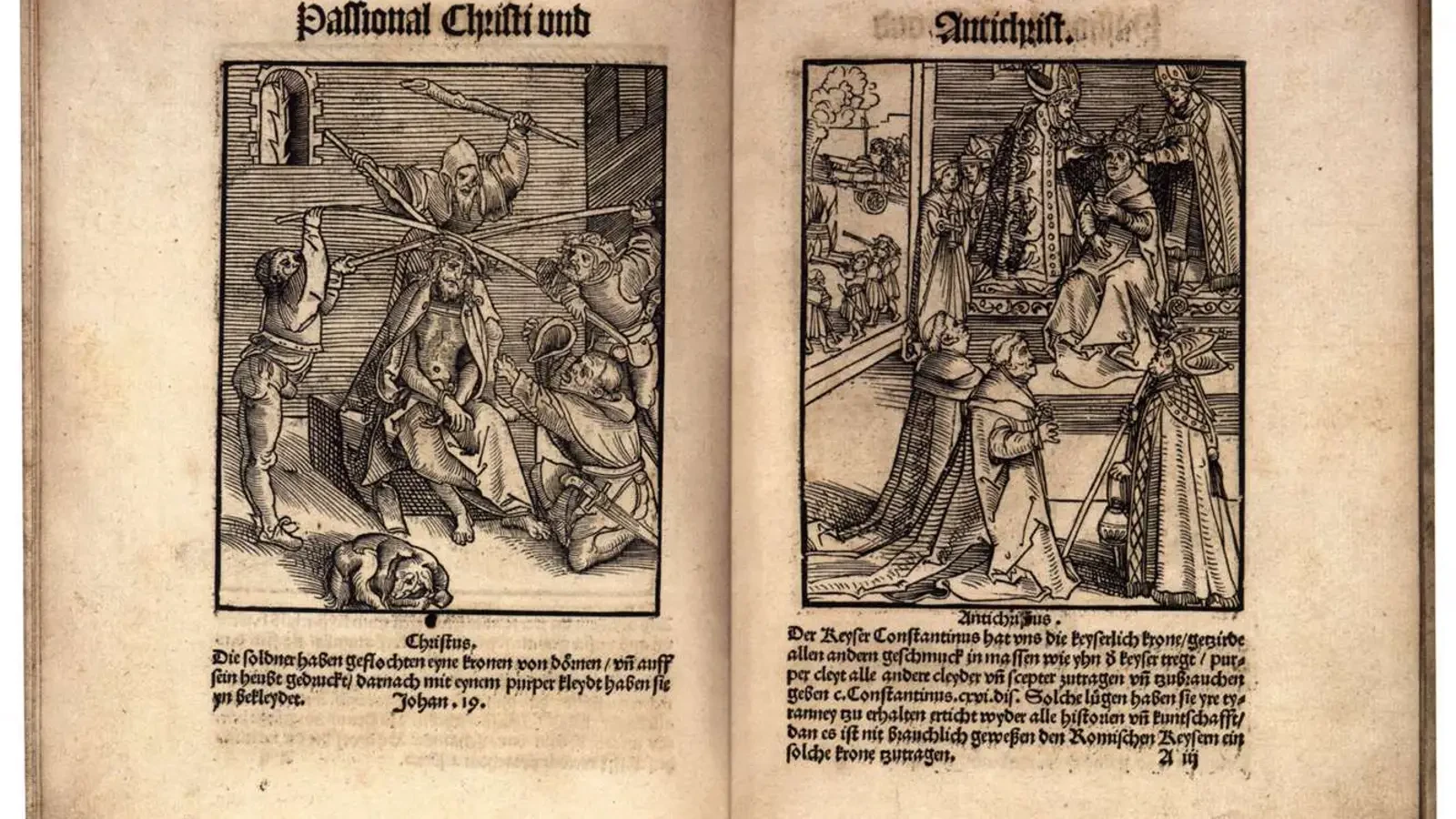
Place two printed scenes beside each other. In one, Christ wears thorns while men mock him. In the other, the pope receives a tiara and kneeling homage. You do not need to begin with a long theological treatise to notice the invitation: compare humiliation with honour, then judge the difference. This is an argument arranged for the eye.
The pair belongs to the Passional Christi und Antichristi of 1521, a publication associated with Luther’s movement. It offers one way into a larger question. How did religious controversy move beyond the people who could meet a reformer or attend an academic debate? Printing helped arguments travel, but their language, shape and interpretation mattered too.
PLACE & TIME
Wittenberg and a network of printing towns
Wittenberg and connected printing towns
German-speaking Europe
About 1517–1525 CE
Main setting
The argument began within a shared religious world
Luther’s early controversy concerned indulgences. In Catholic teaching, these related to the remission of temporal punishment for sins, not a simple permission to sin. The dispute raised questions about repentance, pastoral authority and what Christians should trust. Calling it merely a battle between old superstition and new information misses the religious concerns that gave the words urgency.
The Ninety-Five Theses were written in Latin for academic discussion. Surviving print editions from 1517 show the text reaching other towns. The Library of Congress identifies editions associated with Leipzig, Nuremberg and Basel. A printed argument could acquire a wider life than its original setting, without becoming easy reading for everyone.
WORDS IN THE CONTROVERSY
Four terms for following the exchange
Indulgence
In Catholic teaching, remission of temporal punishment for sins already forgiven; a central subject of Luther’s early criticism.
Vernacular
A language used locally, here German, in contrast with scholarly Latin.
Pamphlet
A short printed work, often circulated without the substantial binding of a larger book.
Polemical
Written or pictured to argue against an opponent, rather than to give a neutral description.
A short German text made the question more direct
In 1518, Luther’s Sermon on Indulgences and Grace presented the controversy in German. The Taylor Institution’s digital edition records a Basel printing by Pamphilus Gengenbach. That physical example matters: it makes circulation visible through a particular edition, rather than through a vague assertion that the whole of Europe immediately read Luther.
The sermon works through twenty numbered points. In point sixteen, the reader faces a practical choice: giving to someone in need takes priority over contributing to a building or obtaining an indulgence. The appeal connects a religious dispute to the use of a gift. You can follow the decision even before you know every scholarly disagreement behind it.
IN THE TEXT
to a neighbour in need
Numbering gives the argument small units that can be found, repeated and answered. Addressing the reader makes it sound closer to instruction than to a remote list of propositions. These are observations about this text’s structure. They do not prove that every person who encountered it accepted its advice, or that speaking German removed all barriers to understanding.
Lucas Cranach the Elder and workshop · Statens Museum for Kunst · CC0 · jpeg re-encoded.
Printers helped a name become recognisable
Reprinting carried texts beyond Wittenberg. Drew Thomas’s study of pamphlet borders at the John Rylands Library describes printers elsewhere copying Wittenberg designs. An ornate frame could distinguish a short work among other publications. A reader might recognise a visual connection before examining the sentences inside.
Woodcut decoration cost money, and borders could be reused. The arrangement joined commercial calculation with the movement’s growing visibility. Yet resemblance raises a useful question for you as a reader: does a familiar design establish where a book was printed, or who approved it? Recognising a style is different from verifying an edition’s origin.
The picture argued through a contrast
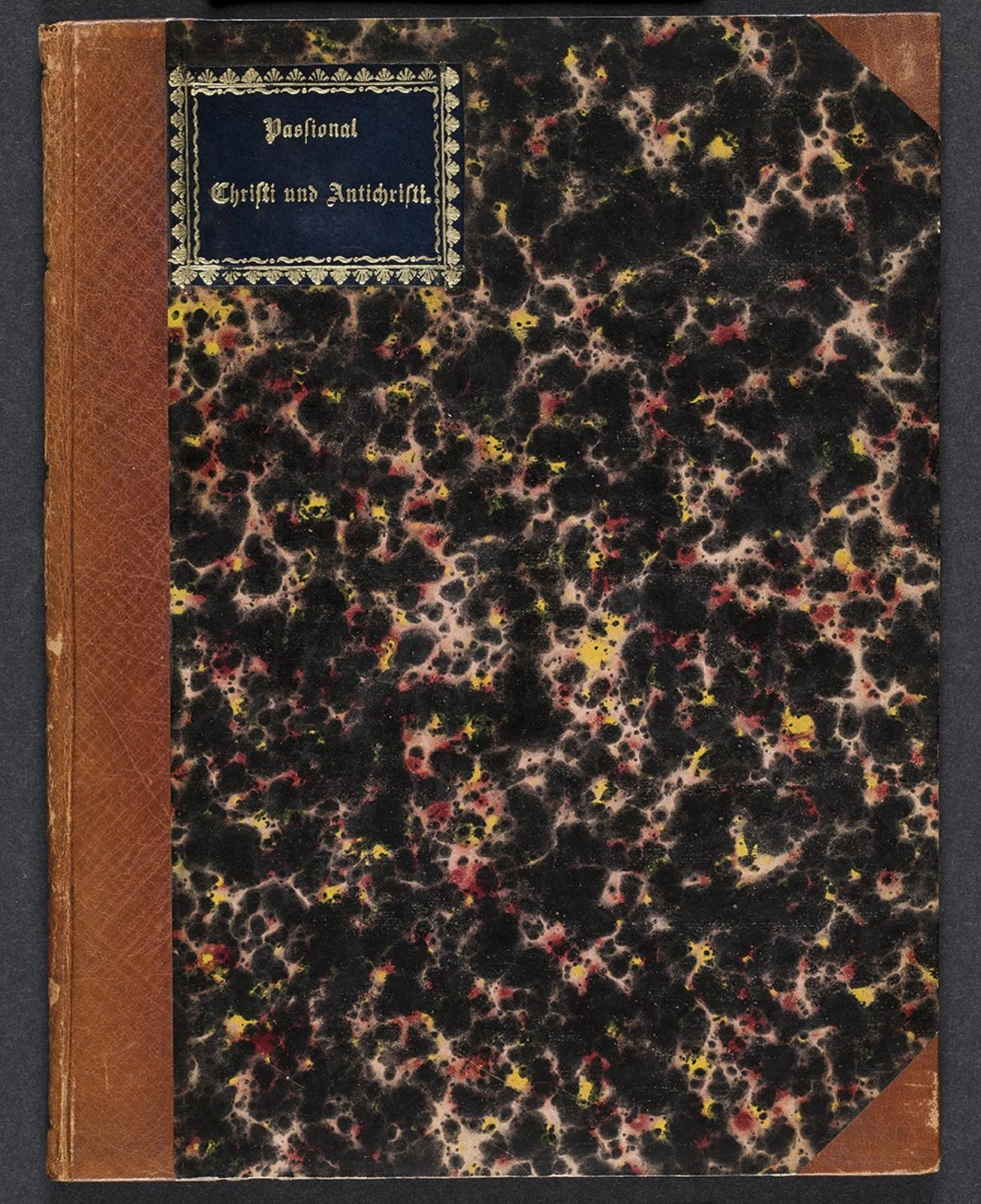
The Passional extended persuasion through paired images and commentary. Oxford’s account describes thirteen contrasts between Christ and an Antichrist identified with the pope. Melanchthon and Johann Schwertfeger supplied explanatory texts beneath the woodcuts. Image and words directed attention toward the same accusation.
TEST THE EVIDENCE
Does this pair record what a pope did?
The woodcuts give a neutral record of papal conduct.

- SHOWS
- Two arranged scenes with contrasting crowns, gestures and positions.
- SUGGESTS
- The reader is invited to measure papal honour against Christ’s humiliation.
- CANNOT PROVE
- The image does not establish a particular papal event or any viewer’s response.
A better-supported reading
The pair is evidence for the producers’ polemical strategy.
Publication context: Oxford · Passional Christi und Antichristi ·
Lucas Cranach the Elder · reproduction via Wikimedia Commons · Public domain · jpeg re-encoded.
The comparison is powerful partly because it supplies the standard of judgement inside the spread. The reader sees one scene through the other. But the meaning depends on recognising Christian stories, symbols and the hostile identification of the pope. Pictures could widen an argument’s routes; they were not a universal language requiring no explanation.
KEEP THE DISTINCTION
Two ways to make a claim accessible
Starting point
A sequence of German statements about indulgences and good works.
Paired scenes and commentary contrasting Christ with the pope.
Invitation
Follow a practical argument about a Christian’s choices.
Compare the scenes and judge the opposition they construct.
Evidence limit
The words show the advice offered, not whether readers followed it.
The arrangement shows an accusation, not an eyewitness event.
A German New Testament changed the object of reading
Another publication brought a different kind of text into the exchange. Luther’s German New Testament appeared in September 1522, printed in Wittenberg by Melchior Lotter. UNESCO identifies the first edition through a surviving copy. The title page shown below makes the language conspicuous: Deutzsch, German.
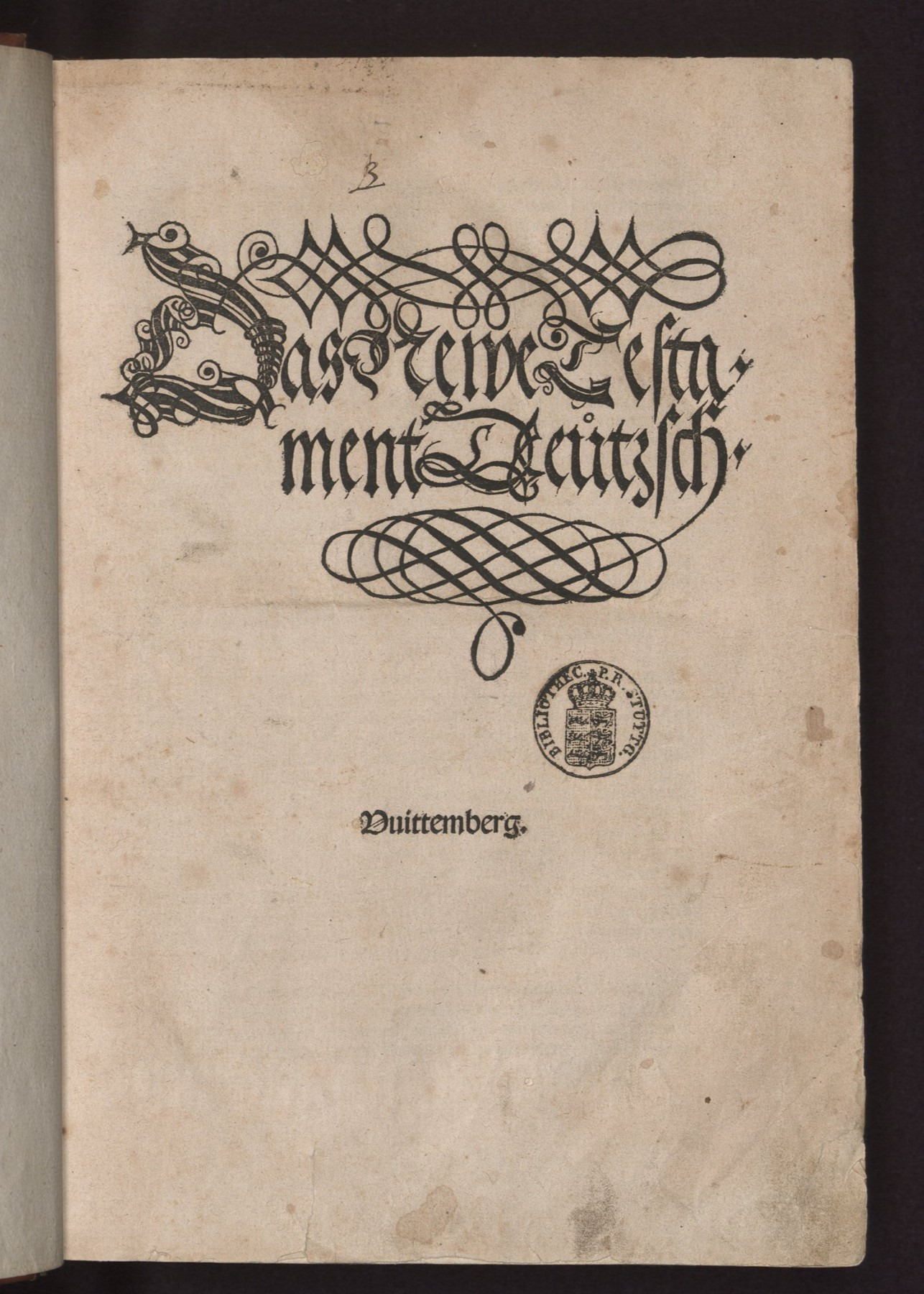
This was not the first German Bible, and it was not yet Luther’s complete Bible. Pitts Theology Library explains the use of Erasmus’s Greek New Testament as a basis and the illustrated character of the publication. Translation here was also an argument about access to Scripture and the sources from which it should be rendered.
FOLLOW THE PUBLICATIONS
Different texts, different invitations
- 1517
Latin theses
A proposed academic discussion travelled through printed editions.
- 1518
A German sermon
Numbered points connected the indulgence dispute with practical religious choices.
- 1521
Paired woodcuts
The Passional presented accusation through visual contrasts and commentary.
- 1522
German New Testament
The September Testament brought a translated scriptural text into the movement.
These dates mark particular publications, not a complete timetable of the Reformation.
A copy could reach more than one reader
Books did not circulate only between a printer and a solitary purchaser. Mark U. Edwards’s study treats oral sharing as part of the campaign: members of the reading public could pass arguments to a larger group. Reading aloud and discussion make it possible for the reach of a text to exceed the number of people reading its pages themselves.
That connection also complicates the story. A listener encounters words through another person’s selection, explanation and emphasis. A sermon can frame what a pamphlet means; a song can carry a memorable claim. Andrew Pettegree’s research places print alongside preaching, drama and song. The point is cooperation among forms of communication, rather than the replacement of speech by paper.

Martin Luther · Württembergische Landesbibliothek reproduction via Catrin · CC BY-SA 3.0 · resized and jpeg re-encoded; derivative under cc by-sa 3.0.
Circulation is easier to count than conviction
Edwards compares printings and reprintings to show Luther’s striking prominence among early evangelical writers. Such evidence measures publishing activity. An edition is not a head count of believers: print runs varied, copies could have several audiences, and a buyer might read to criticise. The distinction matters whenever a large total is offered as proof that an argument succeeded.
KEY THOUGHT
A surviving edition establishes that a text was produced. It does not tell you what every reader believed.
Luther’s opponents used print as well. Edwards examines Catholic responses as part of the same contested exchange. The press could carry objections, competing explanations and attacks. Its ability to reproduce a page supplied neither a single meaning nor a guaranteed winner. Studying the medium requires attending to what different writers tried to make it say.
An argument still needed people to carry it
The strongest explanation joins the material and the religious. Short German points made one controversy easier to approach; visual contrasts made another accusation easier to grasp; reprinting moved works across towns. None of these steps describes a reader’s response by itself. Together they show how a movement could create repeated occasions for its arguments to be encountered.
Return to the two crowns. You can now see more than a dramatic picture: a selected comparison, a publication and an invitation to judge. Printing gave that invitation a portable form. What happened next depended on readers and listeners—and on the people and authorities who decided which texts could be produced, sold or challenged. That is the next chapter’s question.