The important moment in movable-type printing comes when a page stops being a page. Once enough copies have been printed, its characters can be separated, sorted and assembled into different words. The arrangement disappears; the pieces remain useful. That possibility changes the work before and after an impression, not just the instant when ink meets paper.
To understand how movable type works, follow those pieces rather than a famous inventor’s name. Someone has to make them, find them, arrange them and eventually put them away. Examples from eleventh-century China, fourteenth-century Korea and fifteenth-century Mainz show different ways of solving these problems. They also explain why a reusable character did not make a carved wooden page pointless.
PLACE & TIME
Different materials, a shared problem of reuse
China · Korea · Mainz
East Asia and the Rhineland
Selected examples, 11th–15th centuries CE
The selected examples
The page is assembled before it is printed
A woodblock holds a whole arrangement together. As Columbia University’s account of Chinese printing explains, craftspeople carved the page into wood, inked the raised surface and brought paper against it. Repeating that contact produced more impressions. The important reusable object was already the page: if its block survived, the arrangement remained ready to print again.
Movable type separates the arrangement into smaller printing units. A character carried on its own piece can join other pieces in a line, then leave that line for another job. This does not eliminate preparation. It changes what preparation produces: a supply of characters that can serve changing texts, rather than a stock of particular pages.
LOOK CLOSELY
Loose pieces become ordered lines
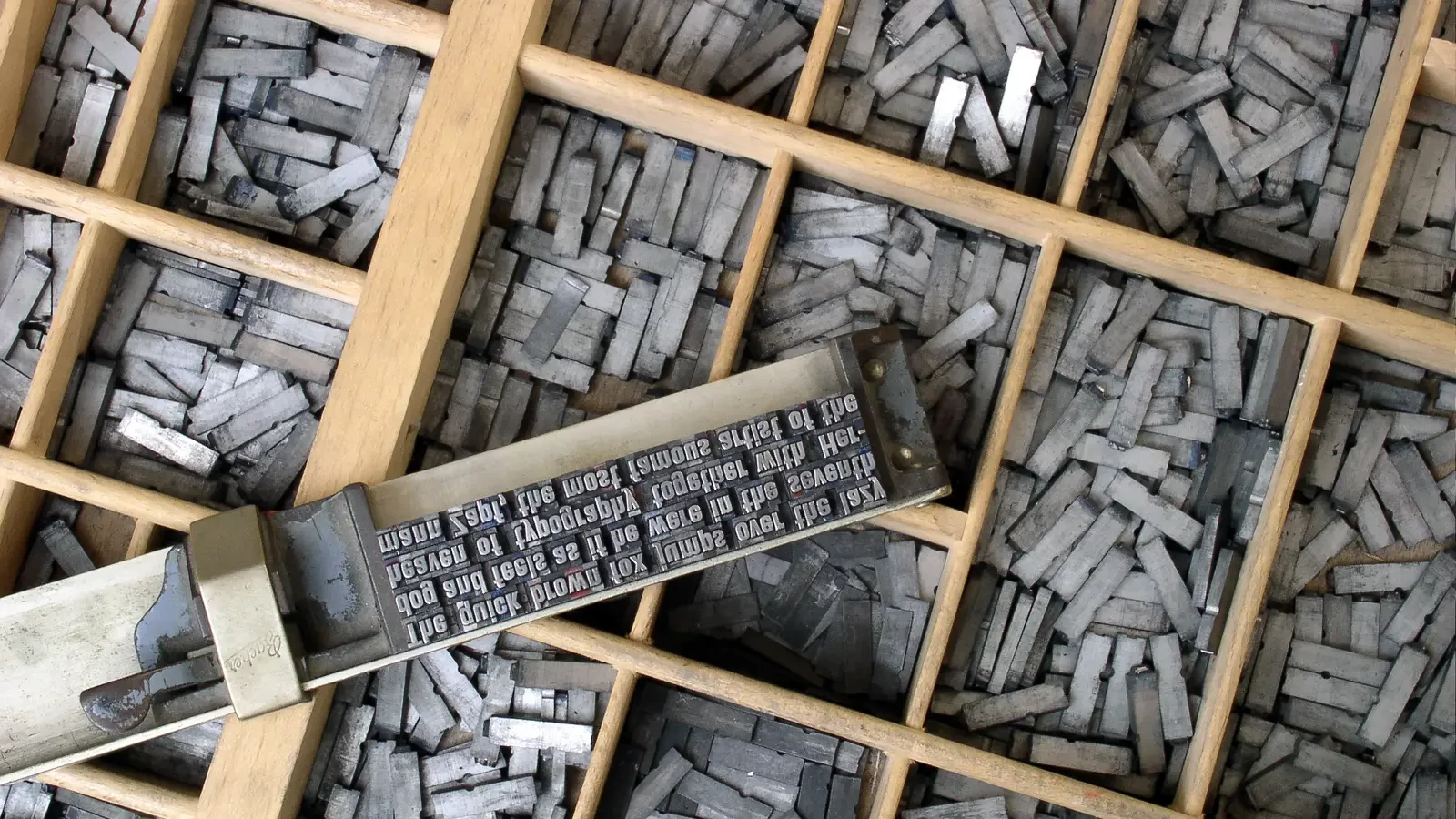
Separate bodies
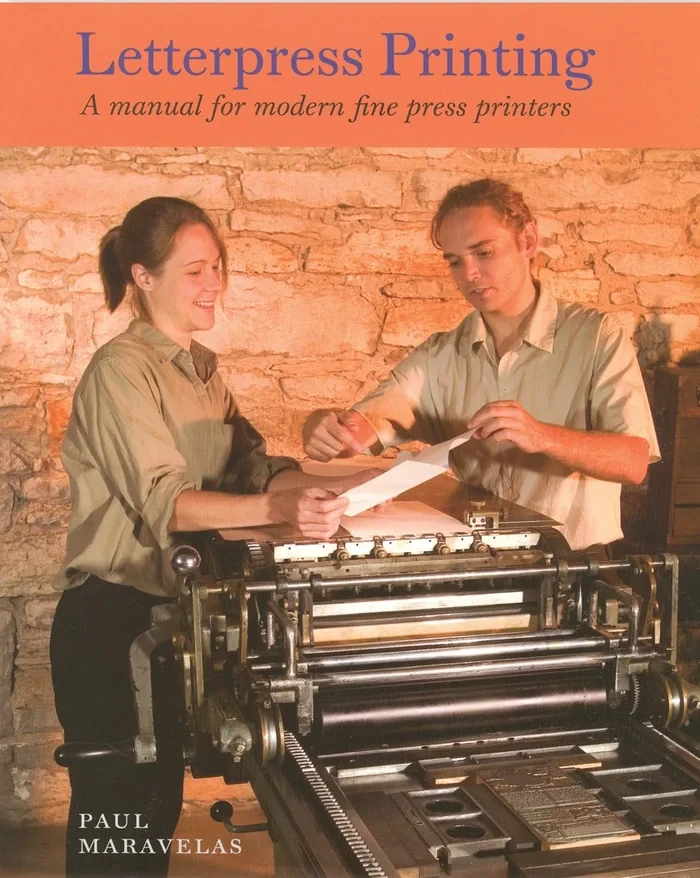
The compartments contain individual metal sorts. A printed word requires selecting and arranging more than one piece.
An assembled surface
The composing stick holds several lines together. Their raised faces carry reversed letters, ready to transfer an image to paper.
Keep the photograph in its own time
This 2004 photograph shows modern hand-typesetting equipment. It explains a mechanical relationship, not the exact layout of Gutenberg’s shop.

A modern hand-typesetting photograph, taken in 2004. The equipment illustrates a technique, not a surviving fifteenth-century Mainz workshop.
Think of a sentence with several repeated letters. Knowing every different letter is not enough: the printer needs multiple pieces of the same character to hold all those repetitions at once. A usable collection is therefore more than an alphabet. It must contain enough duplicates, and its organisation must let the person setting the text find them.
WORDS FOR THE WORK
Three terms that keep the jobs separate
Sort
An individual piece of movable type carrying a character or other printing element.
Composition
Selecting and arranging type into the text that will be printed.
Forme
An assembled printing arrangement secured so that its pieces can be inked and printed together.
Bi Sheng’s clay type made reuse a materials problem
The Chinese scholar-official Shen Kuo recorded a movable-type method attributed to Bi Sheng during the Qingli era, 1041–1048. A scholarly study of this passage in the Dream Pool Essays describes characters carved in clay and fired to harden them. An iron frame, a prepared plate and heat helped secure and level the pieces. This is a written account of a technique, not a surviving photographed workshop.
The material mattered because separate pieces had to act as one printing surface. A piece sitting too low could fail to make contact; one standing too high could receive disproportionate pressure. “Movable” describes their capacity for rearrangement. While printing, they needed to stay in place and present a usable surface together.
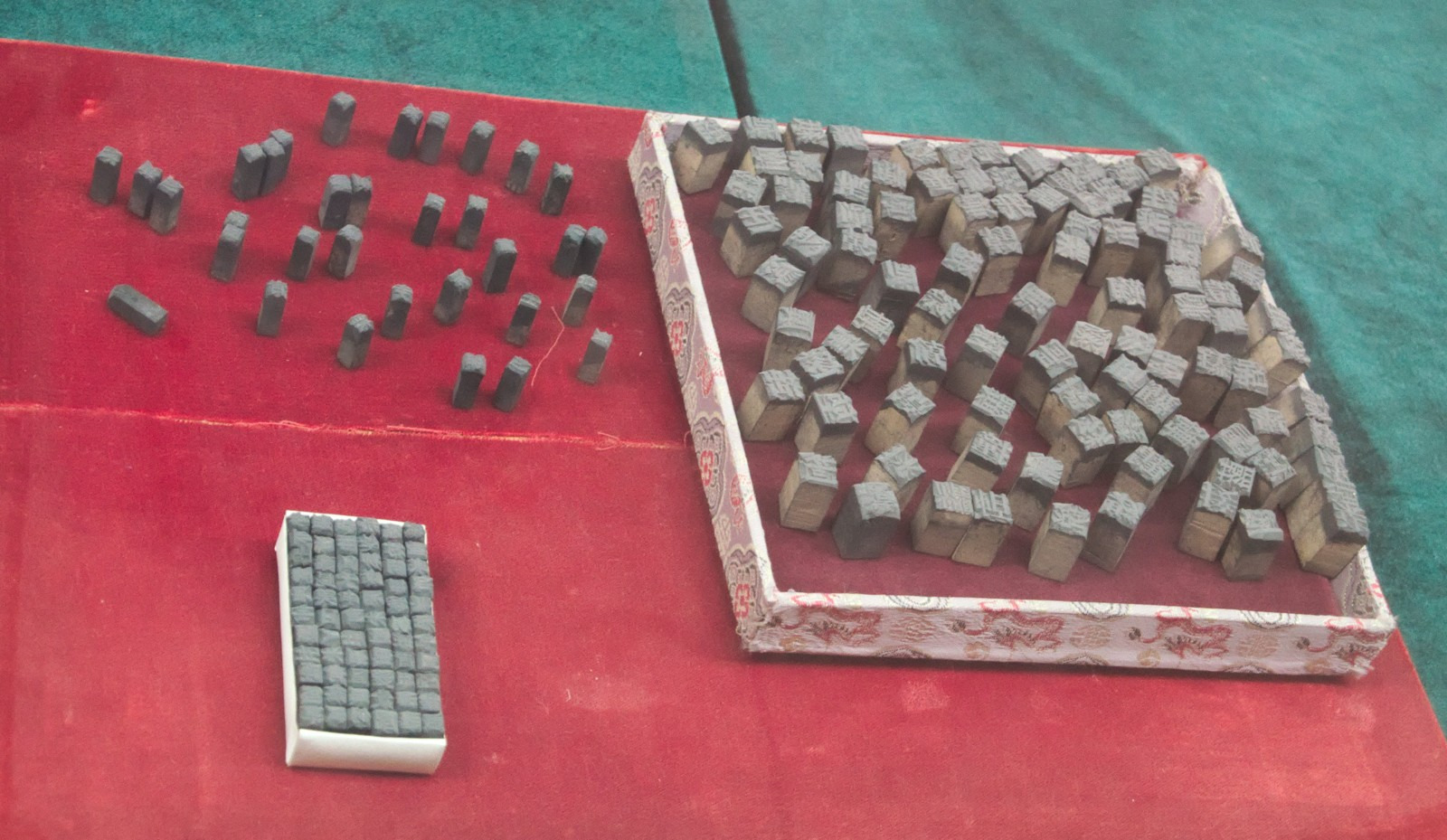
The modern museum display above makes the physical distinction visible: individual wooden bodies carry individual Chinese characters. It does not show Bi Sheng’s clay type. Wood, clay and metal are different answers to the problem of making and maintaining separate printing units; the shared principle should not erase their different preparation and handling requirements.
THE PRACTICAL CHANGE
A reusable character is useful only when it can be found, combined and held in place.
Willi Heidelbach · CC BY 2.5 · resized.
In Mainz, casting supplied the pieces
By the middle of the fifteenth century, Gutenberg’s project in Mainz was printing books from movable metal type. The city’s technical account explains the familiar punch–matrix–mould sequence: a steel punch carried a raised character; striking it into softer metal made a matrix; a hand mould used that matrix to cast type. This made supplying repeated characters a task of metalworking as well as text preparation.
FOLLOW THE WORK
From a supply of characters to another page
Make the printing units
Prepare individual characters. In the conventional European casting account, a matrix and hand mould allow a character to be cast repeatedly.
Select and assemble
Choose the required sorts, arrange the text and secure the printing surface. Repeated letters need repeated physical pieces.
Ink and take impressions
Bring ink, the prepared surface and paper together. The assembled arrangement is reused while copies are printed.
Release the pieces for reuse
When the arrangement is no longer needed, separate its type. The characters can serve another text; the original page must be assembled again if required.
That sequence is an explanation of the reusable-type principle, not a blueprint for every early press. The University of Utah’s Jikji–Gutenberg project identifies uncertainty about Gutenberg’s precise casting method. The conventional account is valuable for understanding how casting works, but it should not be presented as a complete record of exactly how every piece in his workshop was made.
A press was another part of the system. The International Printing Museum identifies its own Gutenberg-style press as a modern replica and notes that Gutenberg’s actual press has not survived. A reconstruction can demonstrate pressure and repeated impressions without turning its dimensions or fittings into direct evidence for the original machine.
KEEP THE DISTINCTION
What is kept ready for the next job?
Preparing the surface
Carve a particular page arrangement into a block.
Prepare separate pieces, then assemble the required page.
Changing the text
The existing block retains its arrangement; changes require work on the block or another block.
Pieces can be replaced or rearranged, but someone must set the new arrangement.
Returning to the same page
A preserved block keeps that page available.
Once type has been dispersed, that page must be composed again.
The Jikji shows that two methods could coexist
In Cheongju, Korea, the Buddhist text known as the Jikji was printed with movable metal type in 1377. The surviving second volume is held by the Bibliothèque nationale de France. The BnF also records a woodblock edition of the complete text from 1378. A change of method followed after just one year; the earlier metal-type edition did not make woodblock printing obsolete.
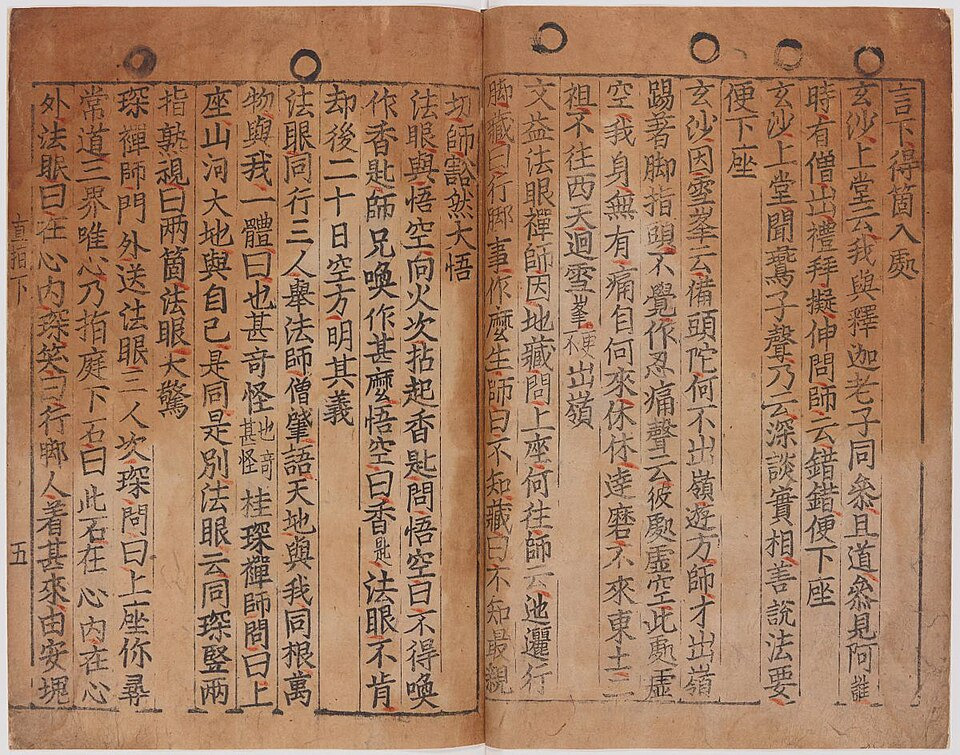
The University of Utah describes a broader Korean practice in which expensive metal-type production could be supported by the government. Approved texts could be printed for rapid circulation to provincial officials, who arranged for woodblocks to be cut for wider distribution. The stored blocks then supported later reprinting. Different stages of circulation could benefit from different reusable objects.
This supplies a better question than “Which method won?” A printer preparing changing texts might value a reusable supply of characters. Someone keeping an established text available for later impressions might value its carved pages. Those are different jobs. The 1378 Jikji edition establishes coexistence; it does not, by itself, reveal every cost or decision behind that particular publication.
SELECTED EXAMPLES
A chronology of evidence, not a transmission route
- 1041–1048 CE
Clay type in a written account
Shen Kuo attributes a movable-type method to Bi Sheng in Song China.
- 1377–1378 CE
Two editions of the Jikji
A metal-type edition is followed by a woodblock edition in Korea.
- Around 1455 CE
The Mainz example
Gutenberg’s Bible demonstrates European book production with movable metal type.
These examples identify places and techniques; their order does not prove direct technical contact.
Finding a character was part of the technology
Writing systems affect the size and organisation of a type collection. Chinese texts draw on many different characters; a Latin alphabet starts from a much smaller set of basic letters. But it would be misleading to imagine Gutenberg’s printers working with only a few dozen pieces. Each common letter needed duplicates, and the printed forms included more than basic letters.
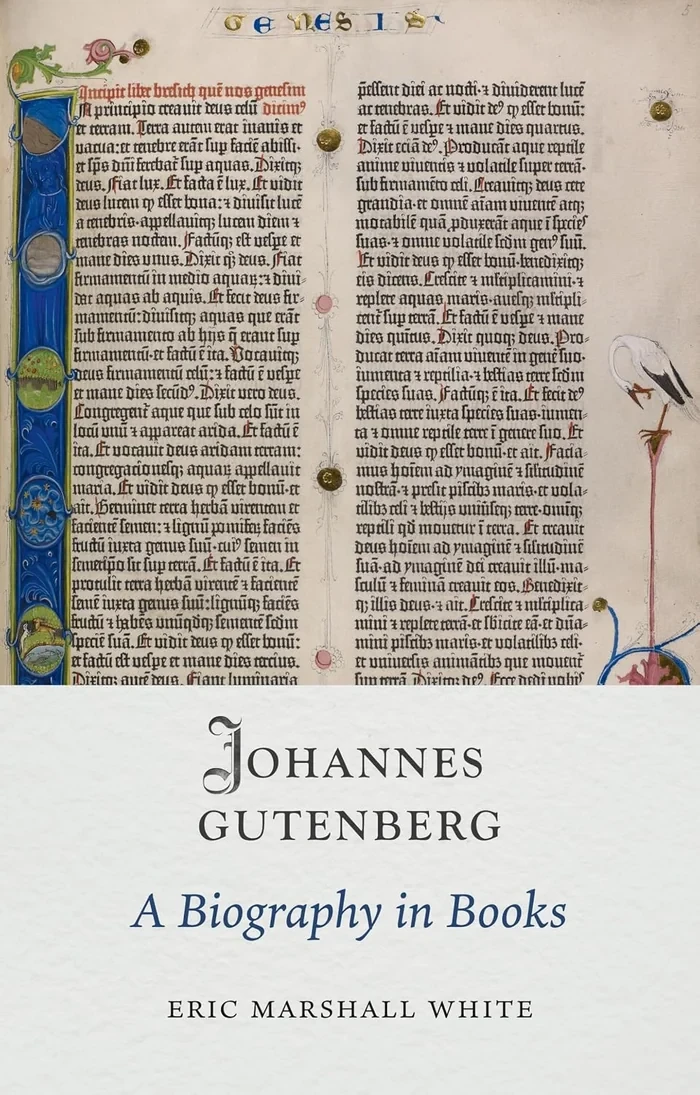
The Library of Congress points to ligatures and abbreviation sorts in Gutenberg’s Bible. A ligature joins letters in one printed form; an abbreviation sort represents a shortened expression. These forms followed scribal habits familiar to readers. The inventory answered the text and its desired appearance, rather than a modern schoolroom alphabet.
MORE THAN AN ALPHABET
The question is not only how many characters exist, but which pieces a particular text needs at the same time.
Willi Heidelbach · CC BY 2.5 · resized.
Printing multiplied impressions, not effortless books
A later European workshop makes the distinction between making type and setting it especially concrete. The Museum Plantin-Moretus describes workers selecting letters, using composing sticks and assembling a surface for the press. Its collections come from a later printing house, so they are evidence for that setting rather than a complete inventory of fifteenth-century Mainz. They nevertheless make clear why “the printer” hides several kinds of skilled work.
A printed sheet was not always a finished reading object. The Gutenberg Museum explains that coloured initials and symbols in the Bible were added afterwards. Printing could repeat the main text while other hands still completed parts of the page. Reusable type changed text production; it did not remove every earlier craft from the book.
FOLLOW WHAT CHANGED
New possibilities came with continuing work
Another text
The same characters can enter a new arrangement.
Choose, order and secure the pieces again.
More copies
A prepared arrangement can produce repeated impressions.
Handle the surface, ink and sheets for the printing job.
A finished book
The main text can be reproduced without writing out every copy.
Complete whatever finishing the intended object requires.
Movable type’s central innovation was a different relationship between a text and its printing surface. The page could become temporary while its characters remained a working resource. That flexibility mattered, but so did keeping a fixed page ready for another printing. Woodblocks and type organise labour around different forms of reuse.
The next chapter turns from those operations to Gutenberg’s enterprise: the people and resources behind the European project. Understanding the technical jobs gives that history a firmer starting point. A stock of letters is potential. Making it into books requires people to put that potential to work.