At Matthew Boulton’s Soho works in Birmingham, a steam engine helped keep a waterwheel working. Installed in 1777, Old Bess pumped water back towards the wheel so that it could be used again. Steam did not sweep waterpower aside. It made an existing source of power more useful when the available flow was insufficient.
That arrangement is a better starting point than a line of triumphant inventions. The steam engine of the Industrial Revolution changed what businesses could do, but its value depended on the work, the site and the alternatives. Follow three places—Soho, a London brewery and Quarry Bank in Cheshire—and factory power becomes a set of practical decisions rather than a single replacement story.
PLACE & TIME
Three workplaces, one question about power
Soho · Whitbread · Quarry Bank
Great Britain · present-day England
c. 1760–1850 CE
The setting
What changed inside the engine?
Watt’s important contribution was not the first steam engine. Earlier engines already performed useful work. His separate condenser addressed a costly problem: repeatedly cooling the working cylinder to condense steam, then heating it again. A separate vessel allowed condensation to occur away from the cylinder, reducing that repeated loss of heat. The Science Museum’s account follows the idea from experiments in 1765 to the patent of 1769.
The improvement makes sense if heat is treated as something a business pays for. Burning more fuel to recover lost heat adds to the cost of producing useful motion. Better use of heat therefore matters even when an engine performs the same task as before. Innovation can change the price of familiar work before it creates a completely new kind of workplace.
IN THE SOURCE
A new method of lessening the consumption of steam and fuel in fire-engines
A surviving experimental condenser also reminds us that an invention develops through objects, trials and alterations. The museum identifies its 1765 example as Watt’s second separate condenser. A working principle and a dependable installation are different achievements. A factory owner needed equipment that could be installed, maintained and connected to the rest of the business, not simply an ingenious idea.
WORDS THAT HELP
Keep the parts of the system separate
Boiler
The vessel where water is heated to produce steam.
Cylinder and piston
A chamber and moving part through which the engine produces back-and-forth motion.
Condenser
A vessel in which steam is cooled into water; Watt separated this function from the working cylinder.
Transmission
Equipment carrying mechanical motion from a power source to the machines doing the work.
The engine was only one part of the factory
A boiler did not spin cotton simply by producing steam. The engine had to create useful motion, and that motion had to reach the machinery. In a rotative arrangement, a piston’s movement could be transferred through a beam, connecting mechanism and gearing into a turning shaft. The distinction between producing power and distributing it is essential: buying an engine did not supply a complete production system.
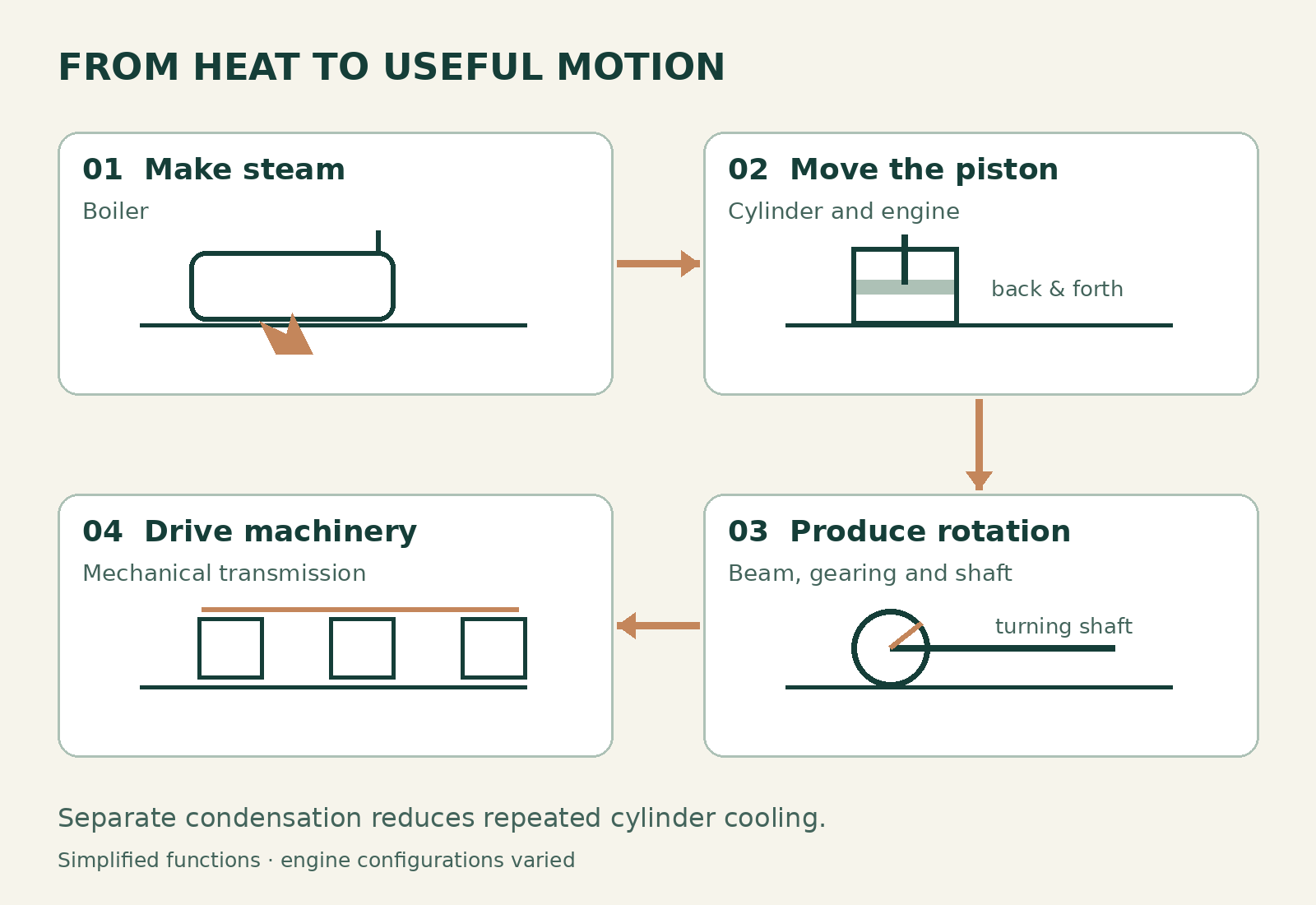
The diagram separates functions rather than reconstructing one installation. Engines differed, and their fittings changed. It deliberately does not show every valve, pipe or operating stage. Its useful question is where one task ends and another begins: making steam, producing motion, turning a shaft and delivering power to machinery. Condensation belongs to the engine’s heat cycle, not to the machinery’s productive task.
At Whitbread’s London brewery, a Boulton and Watt engine built in 1785 supplied rotary power for work including crushing malt and pumping water. The Powerhouse object record traces its long service and alterations. The preserved engine is evidence of an evolving installation: later changes included double-acting operation and other replacement parts. Its present appearance cannot simply be labelled the exact machine of 1785.
Steam could strengthen the system already there
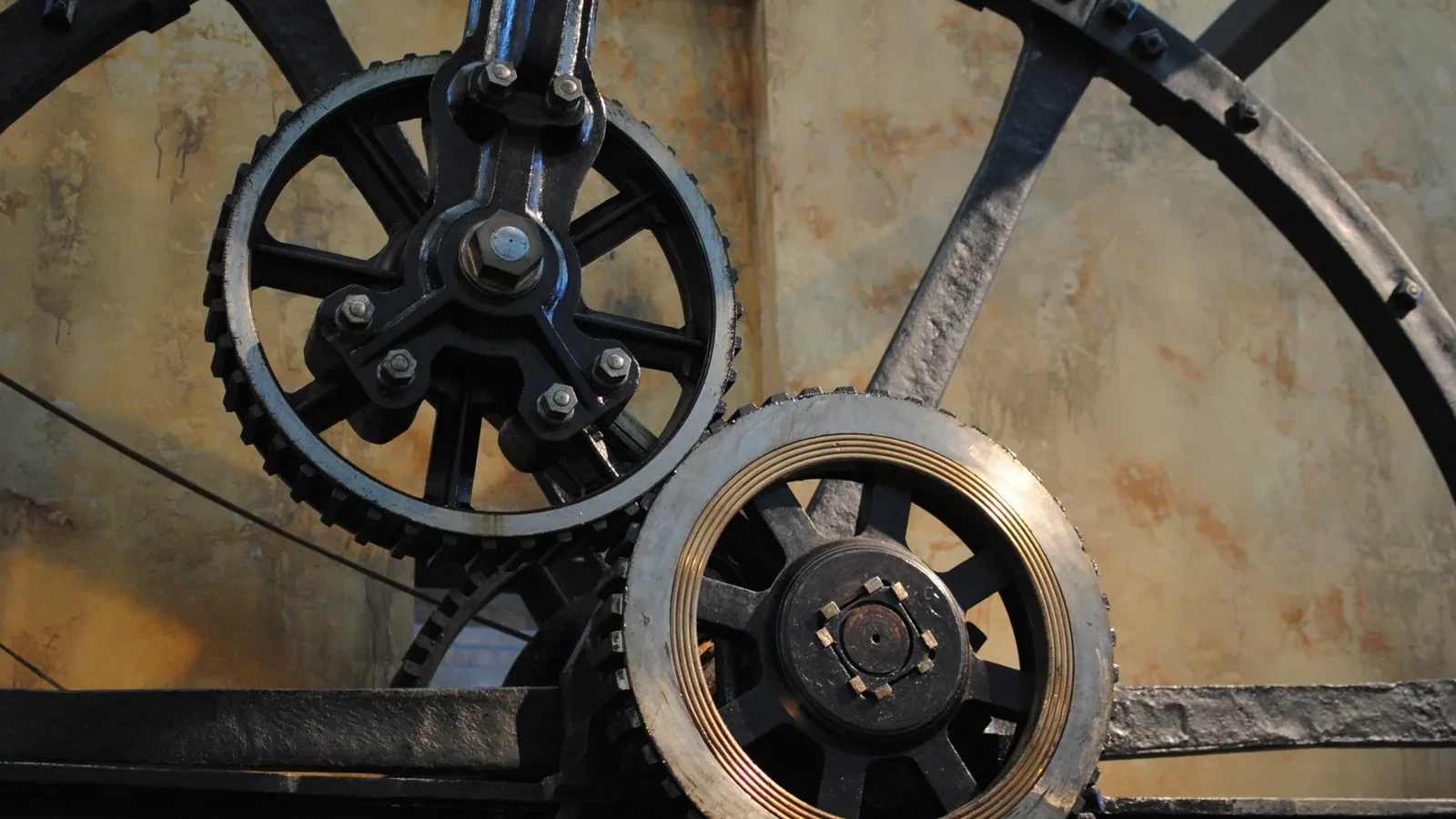
Old Bess gives us a different connection between engine and workplace. The Science Museum’s record explains that the Soho waterwheel struggled when the water supply was inadequate; horses had also been used to help. Pumping water back allowed steam power to support the wheel instead of replacing its place in the manufacturing system. The energy reached the work through a chain of connected equipment.
LOOK CLOSELY
Old Bess: a machine with a missing landscape
Notice the beam
The large overhead beam makes the engine’s transfer of movement visible.
Look beyond the display
The original waterwheel and water circuit are not reconstructed by this museum photograph.
Follow its actual job
At Soho, the engine pumped water back. Its purpose is established by the object record, not inferred from its appearance.
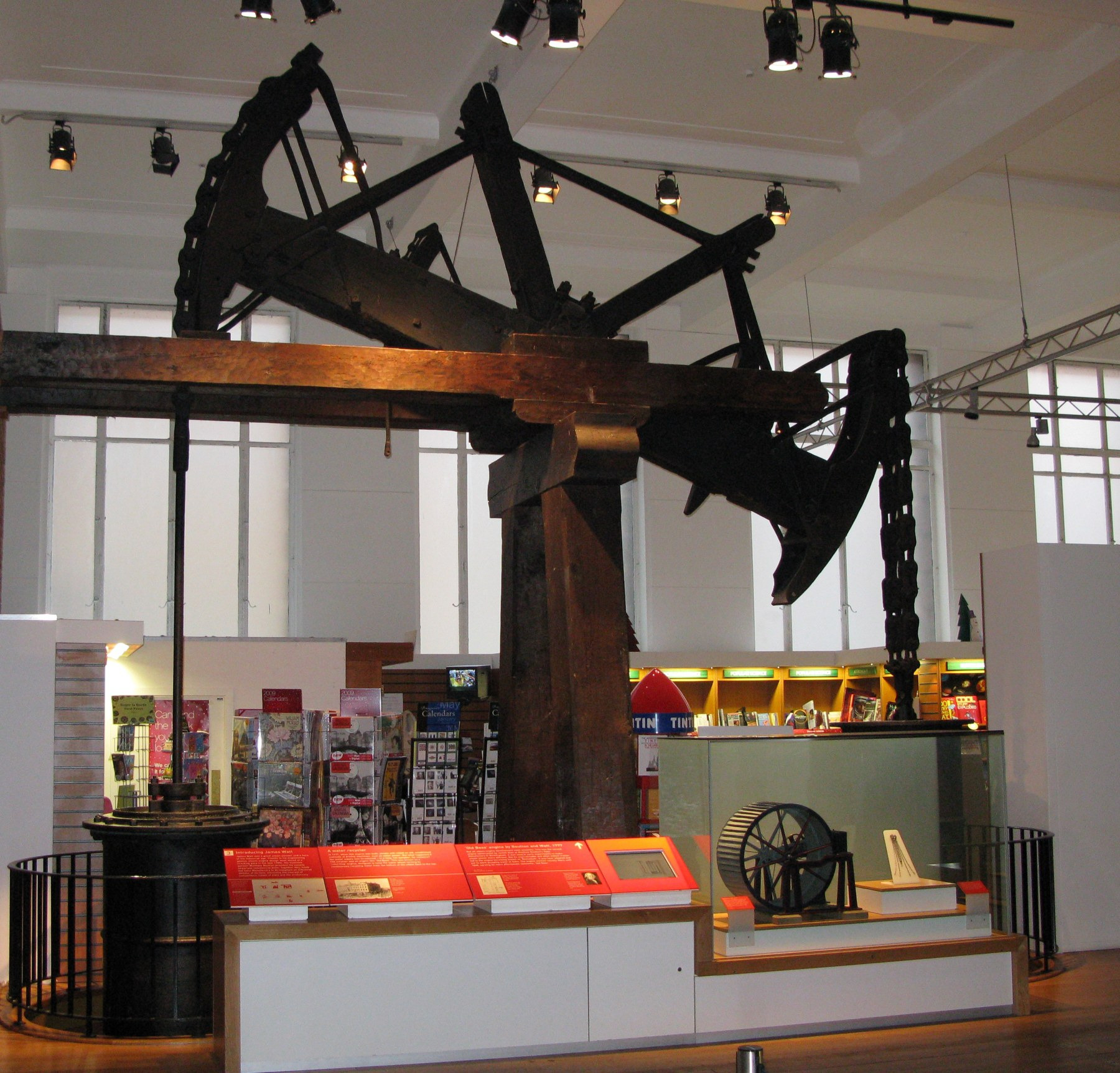
Old Bess, built in 1777, preserved in the Science Museum. The display does not show its original Soho water network.
This is an important limit on reading machinery as evidence. A photograph can show a beam or cylinder, but the equipment’s original purpose may depend on a written record and a vanished setting. Remove the engine from its water network and the relationship becomes easy to miss. The impressive object survives; the less conspicuous connection explains what it was doing.
Why keep a waterwheel?
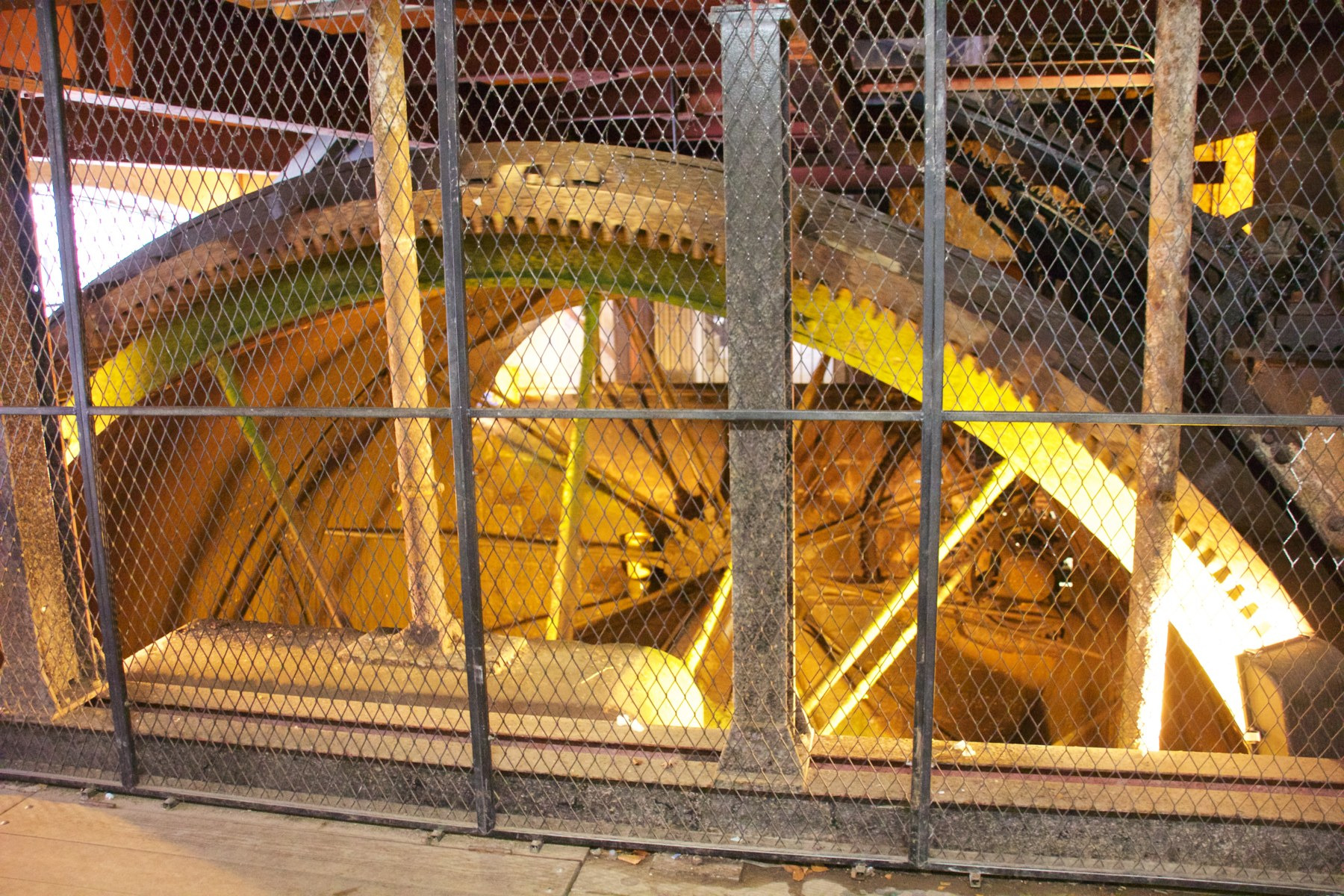
Quarry Bank makes the persistence of waterpower concrete. The mill stood beside the River Bollin, with water driving its machinery. The National Trust dates the introduction of steam to 1810 and describes it as supporting waterpower. That was decades after Watt’s early experiments. A business could adopt steam without treating its earlier investment as useless.
For an owner, the meaningful comparison was between workable arrangements at a particular site. A useful flow of water and an existing wheel might remain valuable. Steam brought fuel deliveries, installation and maintenance into the calculation. Neither source was detached from infrastructure. The choice involved the whole workplace and its surroundings, not only a comparison between two machines on paper.
KEEP THE DISTINCTION
Two power sources, different conditions
Waterpower
Useful mechanical power where a suitable flow and wheel were available.
The site, available flow and the equipment connecting wheel to work.
Steam power
Power that did not require a river to provide the driving force.
Fuel, water supply, installation, repairs and transmission.
A combined system
Steam could support existing water equipment rather than displace it.
How the parts worked together, and whether retaining them made economic sense.
A better engine did not guarantee a better investment
Efficiency is an engineering achievement; adoption is also a commercial decision. Fuel saved has a value that depends on its price and on how much an engine works. Existing equipment has a history of investment behind it. Replacement can therefore bring costs alongside gains. A machine that looks preferable in isolation may be less attractive when connected to a real business.
Commercial terms could matter too. At Whitbread, the Powerhouse record describes later negotiations over engine capacity and payments. The manufacturer’s premium for rotative engines was linked to power rather than the fuel-saving calculation used for pumping engines. The example shows why “more powerful” and “cheaper to run” are different questions. It does not establish one standard price for British steam power.
LAYERS OF CHANGE
Innovation and adoption did not share one date
- 1765
Experiments with condensation
Watt developed the separate-condenser principle.
- 1769
A patent about fuel
The patent’s title emphasized reducing steam and fuel consumption.
- 1777
Steam helps a wheel
Old Bess was installed at Soho to pump water back.
- 1785
Rotary power at Whitbread
A Boulton and Watt engine was built for the London brewery.
- 1810
Quarry Bank adds steam
Steam supported the mill’s waterpower.
Selected British examples; no single date marks the replacement of waterpower.
Historical research extends the comparison beyond these installations. Nuvolari and Verspagen’s study of 1800–1850 contrasts Cornish developments with choices in Lancashire. Greater fuel efficiency did not produce immediate, uniform adoption of the same engine type elsewhere. Different business conditions could sustain different technical choices. The most advanced solution by one measure was not necessarily everyone’s next purchase.
What did this change for people?
Rotary power gave businesses another way to organize mechanical work, while supporting systems could keep existing equipment useful. That opened possibilities for location and production without freeing factories from supplies, skilled maintenance or investment. Steam moved some constraints; it did not remove the need for connections. A factory still depended on people and materials outside the engine house.
It is also too simple to make the engine itself the cause of every factory rule. Water-powered mills already brought machinery and workers together. Engines explain a source of motion, not the legal or social terms on which people worked. To understand hours, supervision or children’s employment, we need evidence about workplaces and institutions as well as their equipment.
KEY IDEA
A new source of power changed the possibilities. People and businesses decided how to use them.
The scale of change matters as well. Nicholas Crafts’s growth-accounting research describes a delayed contribution of steam to economy-wide productivity. That is an interpretation of aggregate growth, not a claim that an individual engine made no difference. A dramatic change inside one brewery and a slower shift across a national economy can both be true.
Return to Old Bess and its waterwheel. Steam power’s importance lies partly in this flexibility: it could enter an existing system, improve a task or become a direct source of rotary motion. Research on its early diffusion finds a geography of adoption rather than one simultaneous national switch. The next question in Industrial Lives is therefore about the people inside these changing workplaces—and the different choices they were allowed to make.