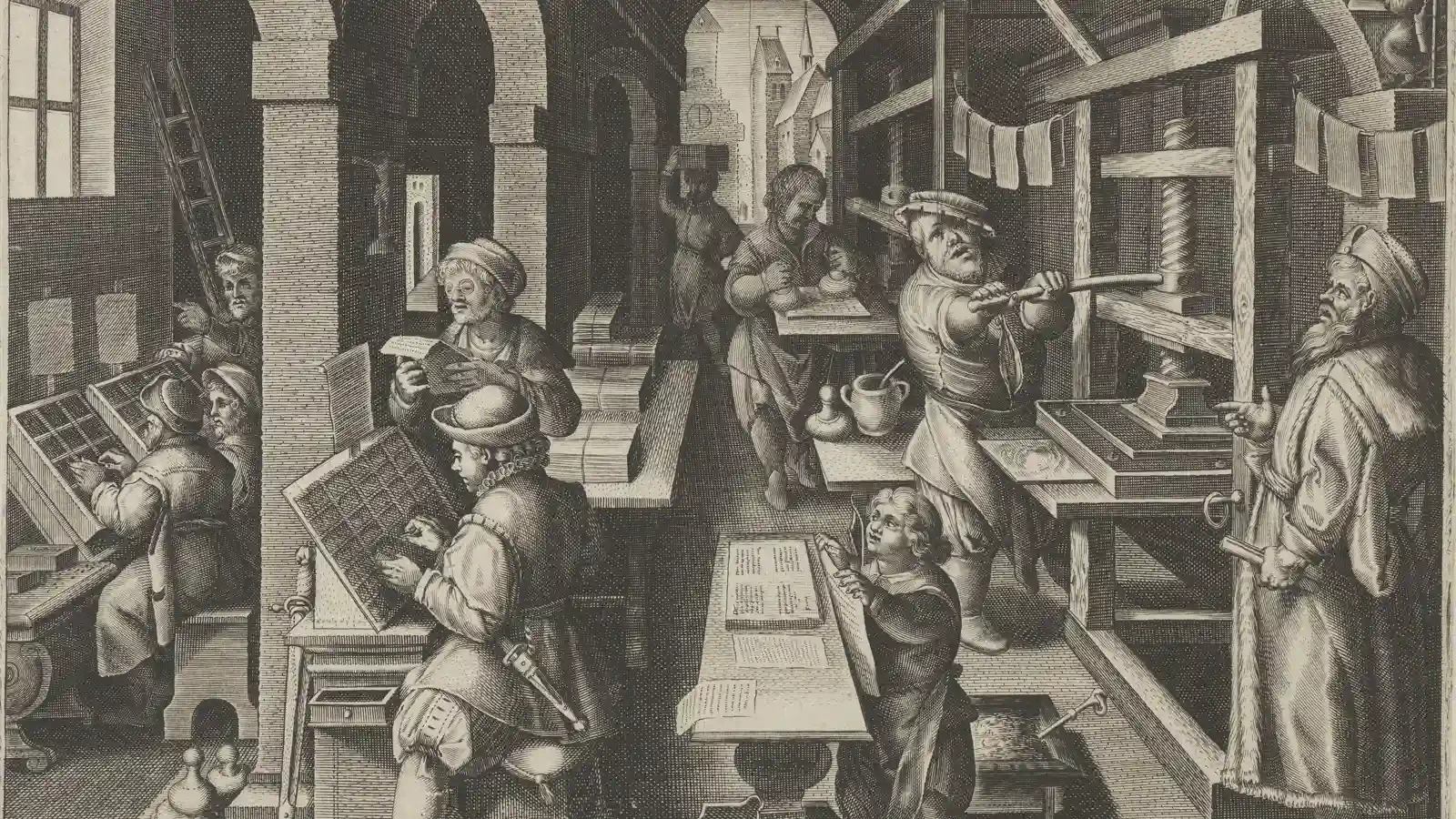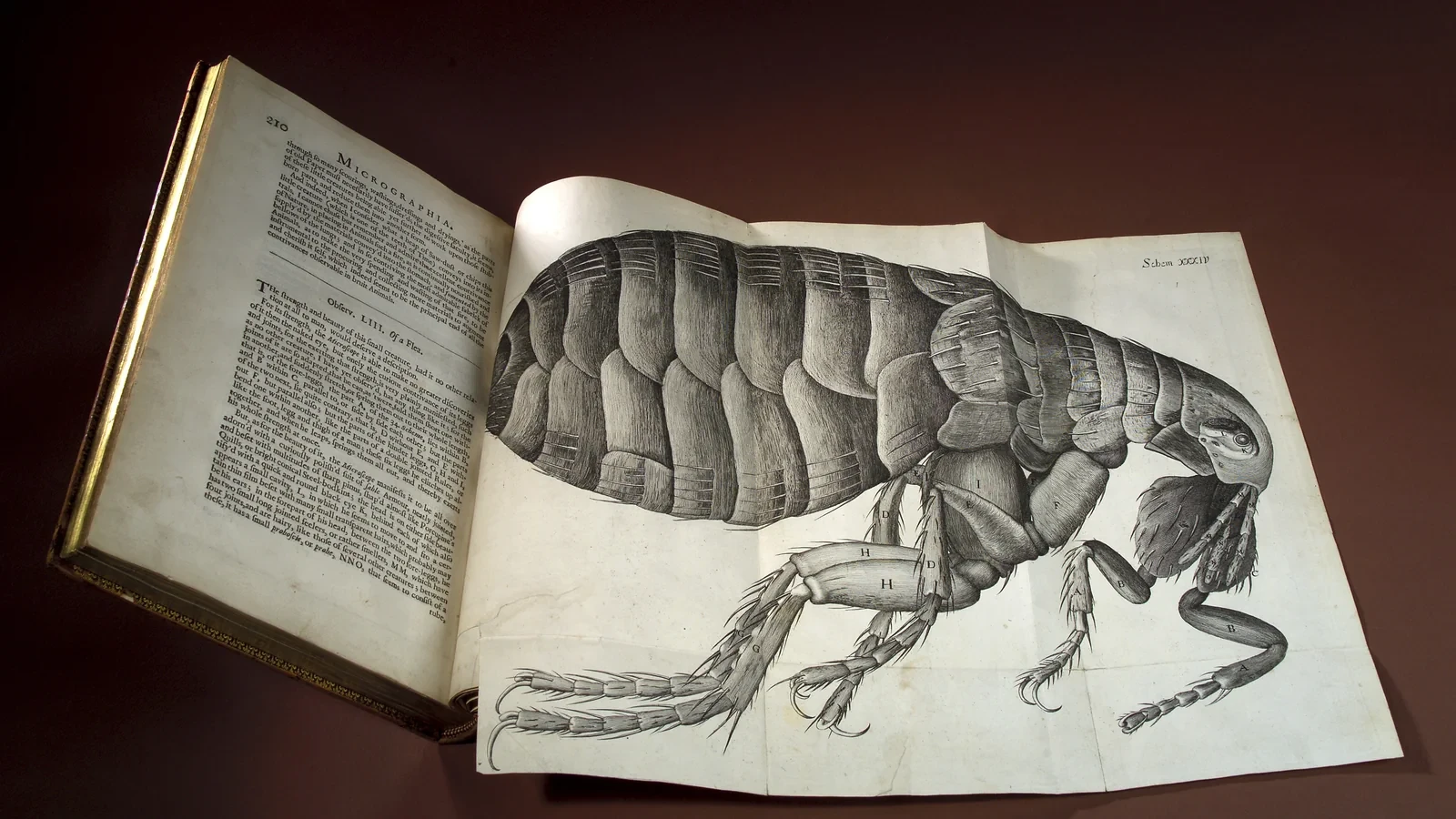
A flea sprawls across a fold-out page, its legs bristling and its body divided into hard, overlapping plates. In Robert Hooke’s Micrographia, published in 1665, a familiar nuisance became something readers could inspect at astonishing scale. Yet the image was not simply nature speaking for itself. Someone had to prepare the insect, look through a microscope, turn observations into a drawing and carry those details onto a printed page. The book made that work visible.
This looks like the Scientific Revolution: new instruments revealing a new world. But put Hooke’s flea beside an anatomy book, a telescope or a study of Surinamese insects, and the story becomes less tidy. Different investigators asked different questions, used different skills and persuaded different audiences. Important changes happened. Whether they add up to one revolution is the question that opens this Story Path.
PLACE & TIME
Several centres, connected investigations
London · one reference point
European centres and colonial connections, including Suriname
1543–1705 CE
The selected span of this Story Path
Start with a label worth testing
The Scientific Revolution usually names major changes in European knowledge of nature during the sixteenth and seventeenth centuries. Think of moving the Earth around the Sun, examining bodies, using magnifying instruments and organising experiments. The label groups these developments together; it was not the name of a single organisation or a programme everyone followed. Historians disagree about its unity, boundaries and meaning.
IN THE SOURCE
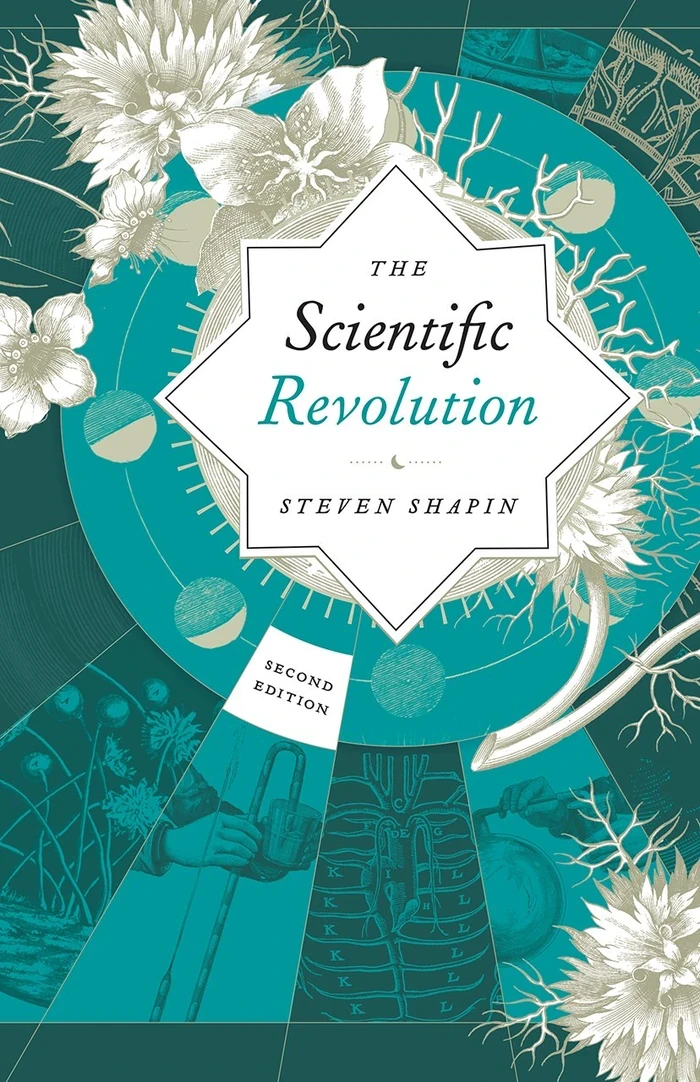
There was no such thing as the Scientific Revolution, and this is a book about it.
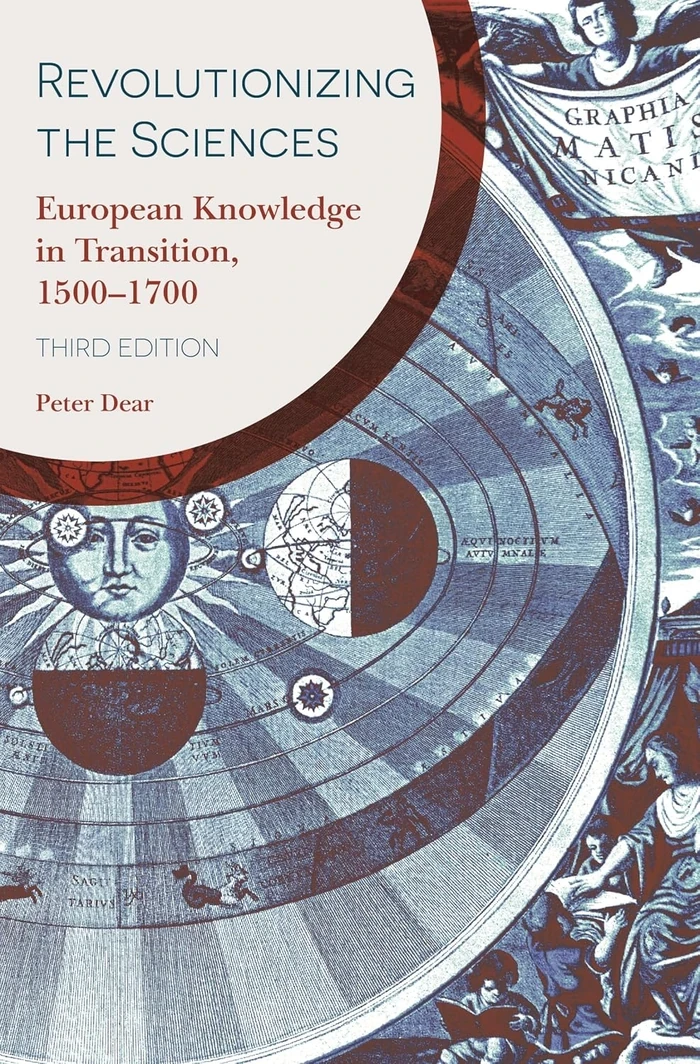
Shapin’s provocation does not mean that discoveries were imaginary. It challenges the idea of one coherent event that suddenly made everyone modern. A better starting question is practical: what changed when people tried to establish a claim about nature? Peter Dear’s history follows changing relationships between explaining the world and doing useful things within it. These were related ambitions, not interchangeable activities.
SELECTED TURNING POINTS
A long span, not one starting gun
- 1543
Anatomy in print
Vesalius publishes the Fabrica, combining anatomical description with extensive illustration.
- 1609–1610
A telescope turns skyward
Galileo develops telescopes and reports celestial observations; the instrument already has a Dutch history.
- 1660–1665
A society and its publications
The Royal Society begins meeting in 1660; Philosophical Transactions and Micrographia appear in 1665.
- 1705
Insects across an ocean
Merian publishes her illustrated study of Surinamese insects in Amsterdam.
These dates mark selected publications and institutions, not the beginning of observation or a timetable followed by every society.
Anatomy changed through books—and bodies
In 1543, Andreas Vesalius published De humani corporis fabrica, an extensively illustrated account of the human body. His dissections allowed him to challenge some accepted claims associated with Galen, the influential ancient physician. But this was not the first time a European had examined a human body. The National Library of Medicine’s timeline places Mondino’s medieval dissection manual centuries before the Fabrica. The contrast is not between people who only read and people who finally began to look.
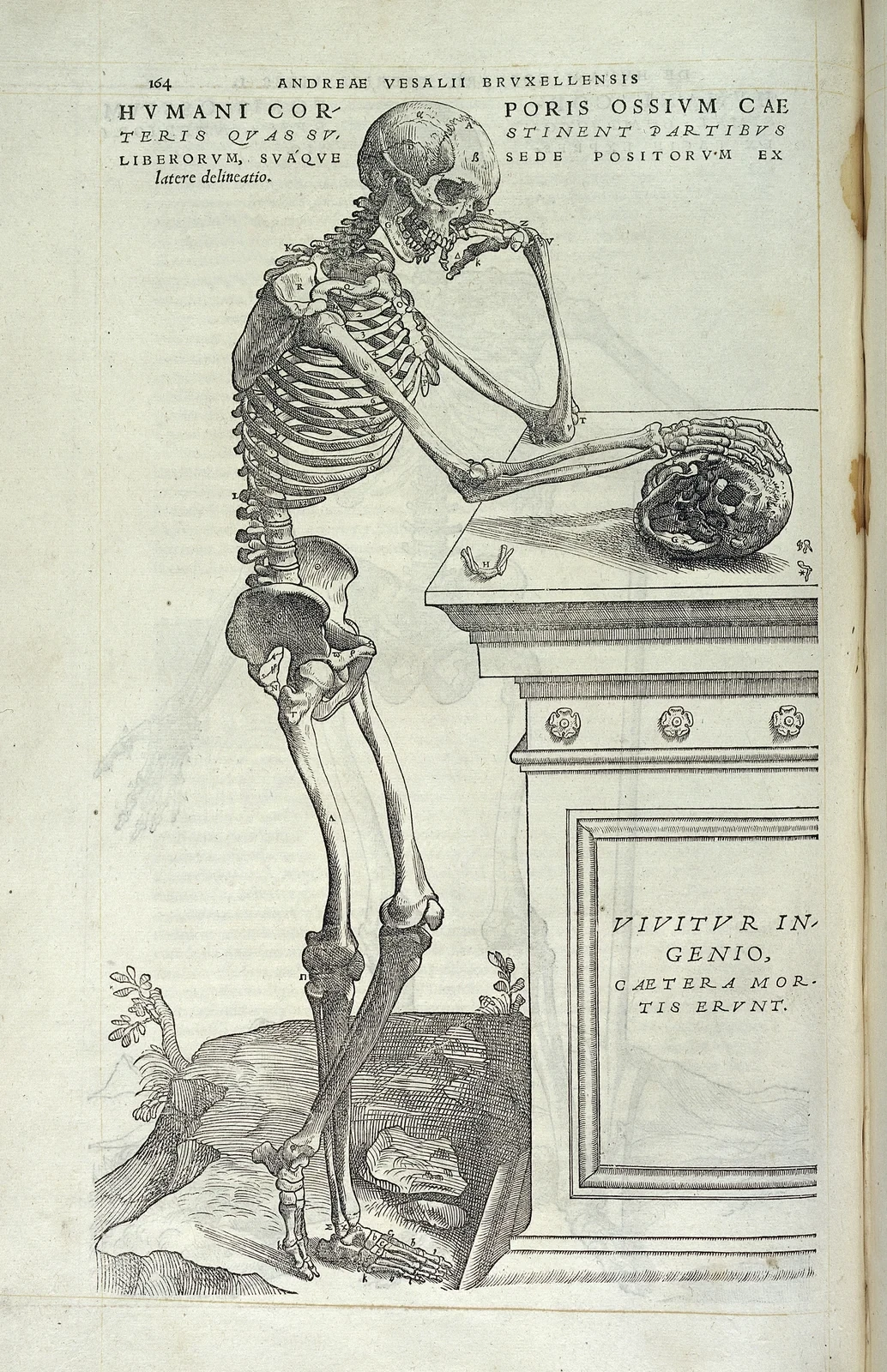
Look at the skeleton leaning on a pedestal. The pose helps a reader follow the body’s structure, while the labels connect visible parts with explanation. This is a crafted representation, not an untouched specimen. Choosing a viewpoint, arranging a body and making an image reproducible were part of communicating anatomical knowledge. A reader could examine the page far from a dissection, but still needed reasons to trust the relationship between the image and the body.
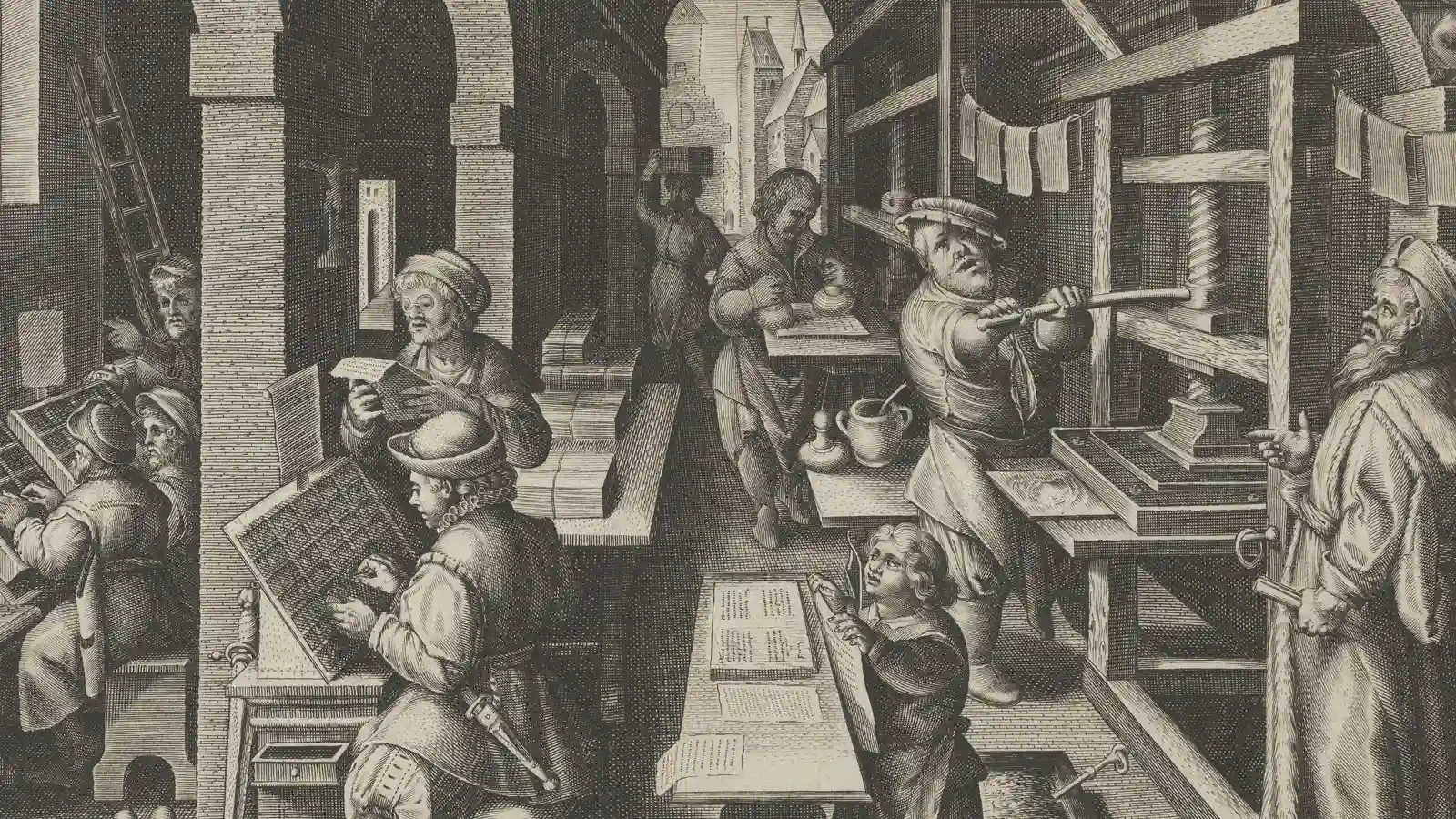
That makes the people behind the page important. Drawing, cutting, printing and handling materials required skilled work. In Pamela H. Smith’s account of artists and artisans, practical knowledge helped shape investigations of nature. The history therefore runs through workshops as well as learned books. A famous author’s name on a title page does not identify everyone whose labour made the claim possible.
Seeing something new did not settle every question
The telescope makes this especially clear. Galileo did not invent an instrument out of nothing: telescopes emerged in the Netherlands before his astronomical work. He built improved examples and used them to investigate the heavens. The surviving instruments in Museo Galileo remind us that observation depended on particular lenses and tubes. They were tools people made and learned to use, not neutral windows onto everything above them.
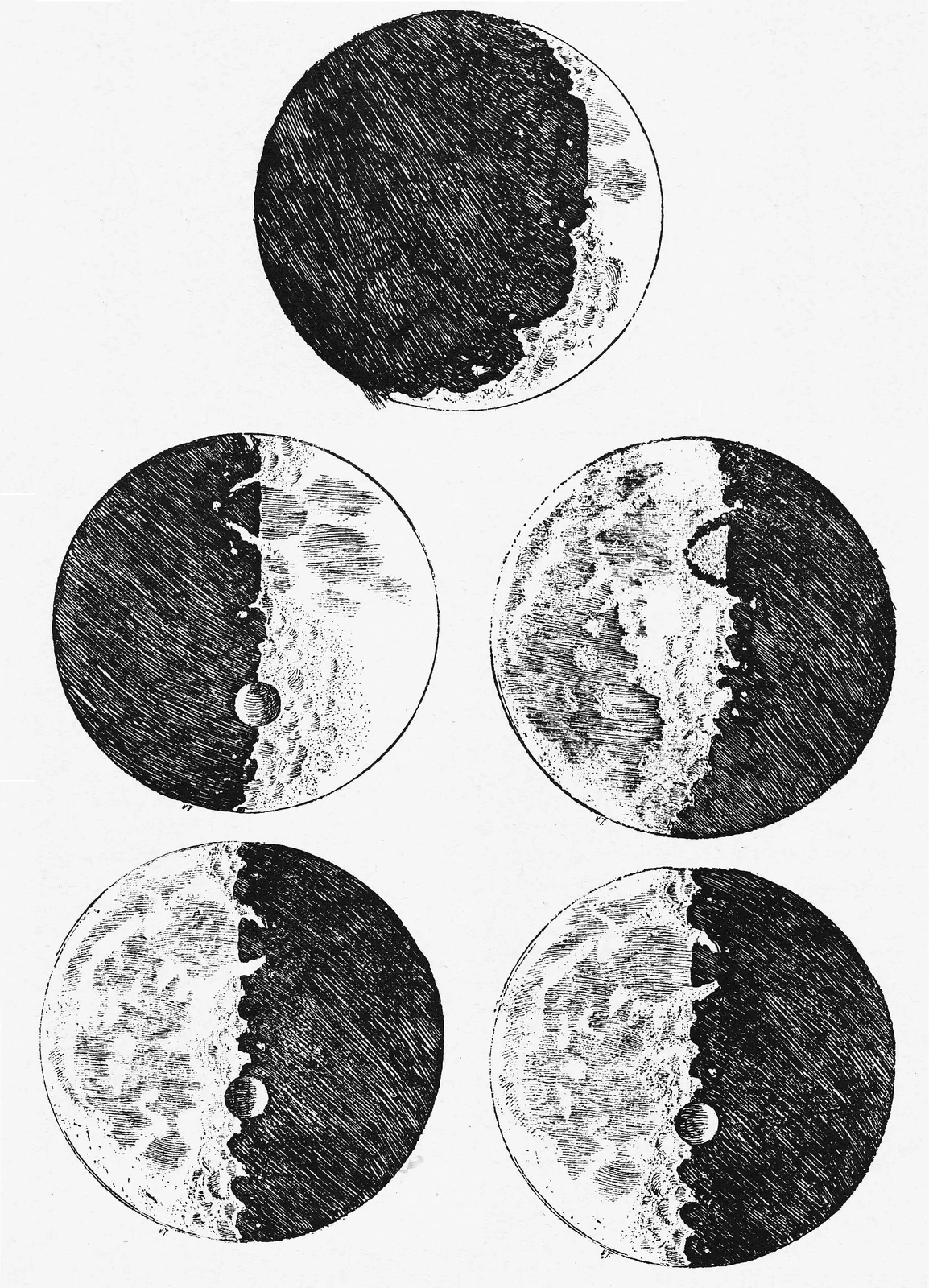
Galileo’s lunar illustrations draw attention to changing light, shadow and an uneven surface. They help make an argument about a Moon with relief rather than a perfectly smooth celestial body. But a persuasive observation can leave more than one explanation standing. In 1610, the observed phases of Venus challenged the usual Ptolemaic arrangement. They also fitted Tycho Brahe’s alternative, in which the planets circled the Sun while the Sun circled a stationary Earth.
KEEP THE DISTINCTION
An observation and the conclusion drawn from it
Lunar light and shadow
The Moon can be investigated as a surface with irregularities and relief.
The observations do not by themselves establish how Earth moves.
The phases of Venus
Venus’s changing appearance challenges the standard Ptolemaic arrangement.
The phases fit both Copernican and Tychonic systems; they are not a stand-alone proof of a moving Earth.
This distinction matters beyond astronomy. Finding a problem in an established explanation is not the same as proving every part of its replacement. Observations gain force when investigators connect them with other observations and arguments. The story is more interesting when we follow that work than when we imagine one look through a telescope instantly ending a debate.
Experiments needed audiences as well as apparatus
A different way of organising inquiry took shape in meetings, demonstrations and correspondence. The Royal Society began meeting in London in 1660. Its members observed nature, discussed experiments and exchanged reports. In 1665, Henry Oldenburg established Philosophical Transactions, while Hooke published Micrographia. These activities offered several routes by which a claim could reach people who had not made the original observation.
A demonstration and a printed report solved different problems. People in a room could inspect an apparatus and question its operator; distant readers needed descriptions and representations. Neither setting automatically guaranteed agreement. The condition of a device, the observer’s competence and the account’s detail all mattered. Ask how an audience could examine a result, rather than assuming that publication transformed it into a settled fact.
- Who could inspect the instrument or repeat the observation?
- Which details reached someone who was not in the room?
- Who had the time, money or standing to make their account heard?
Nor was this a community open on equal terms. The early Royal Society’s Fellows were men drawn from professional and aristocratic groups. Making a claim public within that circle was not the same as giving everyone access to it. The institution helped organise inquiry while also reflecting the hierarchies of its society. Credibility had social conditions as well as intellectual ones.
Knowledge travelled farther than recognition
Maria Sibylla Merian offers a different route into the same question. She travelled to Suriname in 1699 and published Metamorphosis insectorum Surinamensium in Amsterdam in 1705. Her work linked the study of insects with drawing and attention to their food plants. Following living creatures through change required a different rhythm from a brief experimental demonstration.
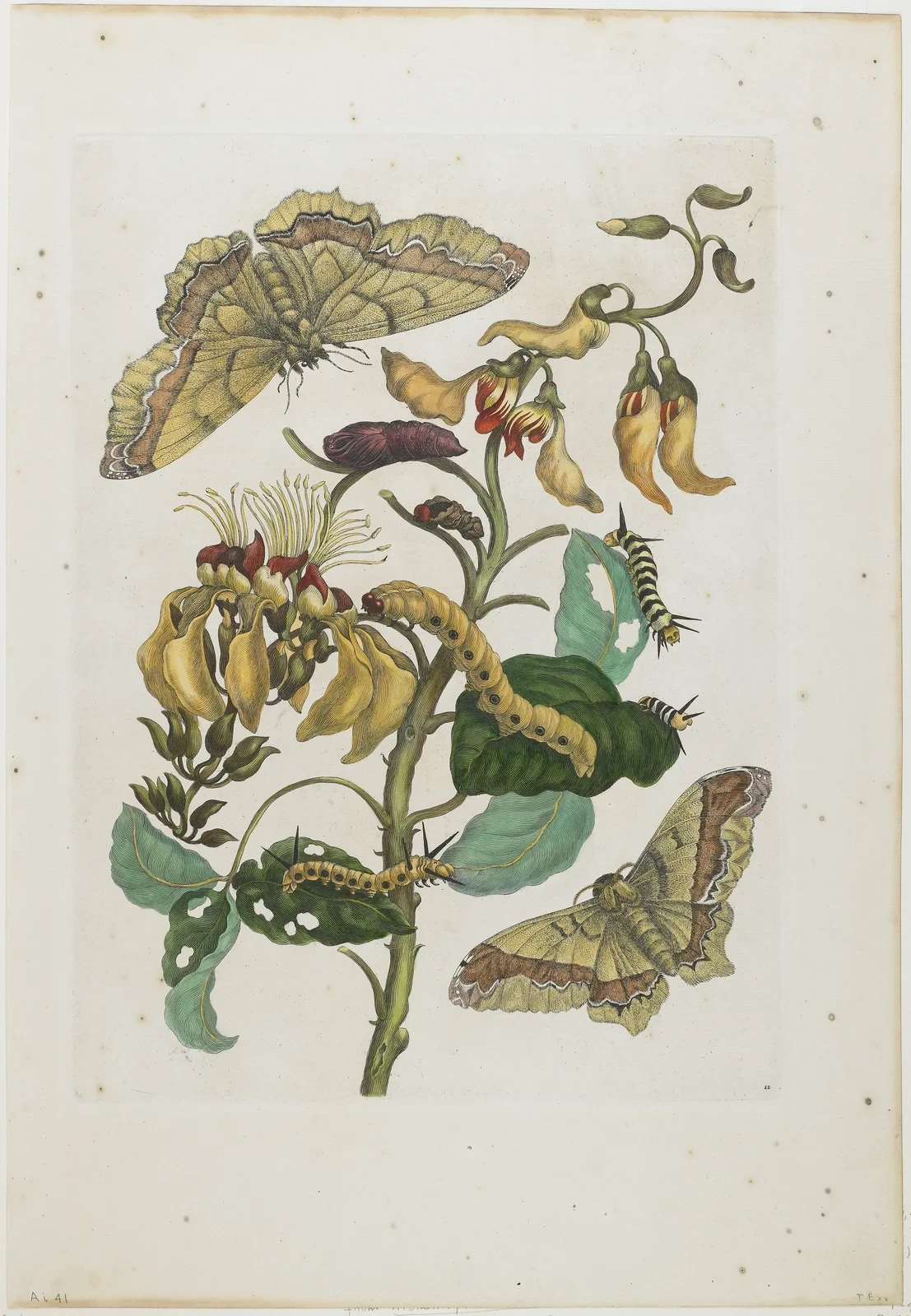
The illustrated plate brings caterpillars, winged insects and a plant into one view. It makes relationships available for inspection, but the composition should not be mistaken for a single moment seen outdoors. Images can combine stages that occur at different times. Reading them as evidence means asking what has been brought together and why, rather than treating detailed depiction as a promise of photographic immediacy.
The colonial setting also belongs inside the account. Merian’s text records knowledge from Indigenous inhabitants and enslaved people in Suriname. Their contributions complicate a story told only through a celebrated European author. Information could travel into an Amsterdam publication without recognition, control or reward travelling equally back to its contributors. Recovering those relationships changes whom we count as a maker of knowledge.
Change did not mean leaving the past behind
It is tempting to collect these examples into a clean passage from authority to evidence, or from religion to reason. Yet the people involved did not divide their interests along all our present boundaries. Isaac Newton’s religious writings, preserved and studied by the Newton Project, show how seriously he investigated scripture and religious history alongside his other work. A simple tale of abandoning religion would make an important participant harder to understand.
KEY IDEA
A new way of establishing one claim did not replace every older way of knowing.
Continuity does not cancel change. Bodies could correct received anatomical descriptions; instruments could challenge familiar celestial arrangements; meetings and publications could organise new kinds of scrutiny. But each development had its own conditions. Treating them as one universal method hides differences between watching an insect develop, producing a persuasive image and arranging a demonstration for witnesses.
What can the word “revolution” still explain?
The term remains useful if it directs attention to substantial, connected changes without pretending that they happened everywhere at once. It works less well as a clean border between an unthinking past and a rational present. This Path follows selected European practices and their wider connections from 1543 to 1705. Those boundaries define our investigation; they are not the lifetime of inquiry across the world.
TAKE THIS WITH YOU
Follow how a claim became believable
Look at the work
Instruments, images, materials and skilled labour made observations communicable.
Follow the audience
A claim needed people able to inspect, debate or use it; access was unequal.
Keep the boundaries visible
European institutions and famous authors do not encompass every contributor or tradition.
The next chapter narrows the view to the telescope: an instrument made useful through construction, adjustment and practice. Before asking what it revealed, we need to understand what someone had to do to see through it. That moves us from a grand label to a specific historical problem—and gives us a firmer place to begin.