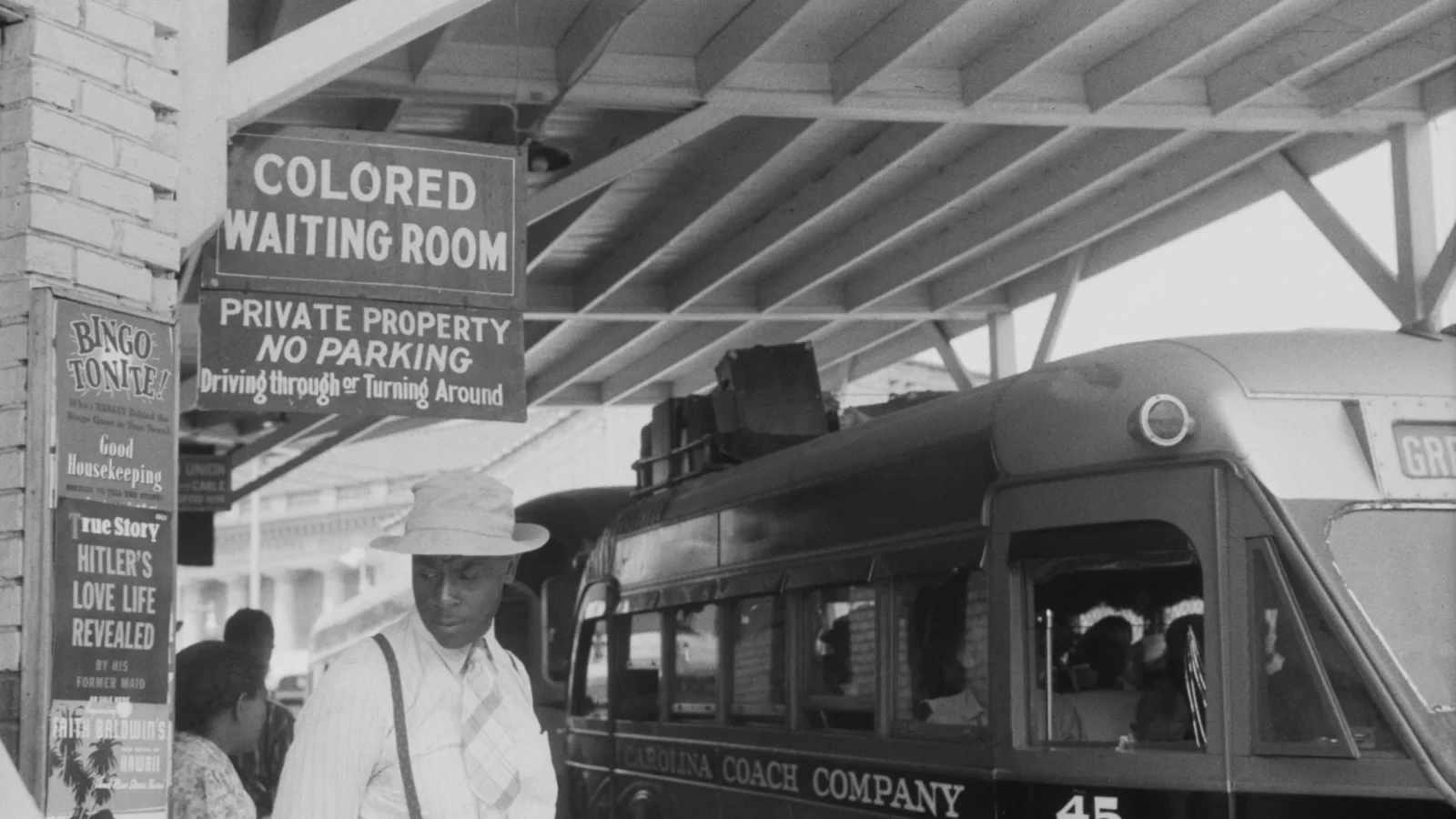
Above people waiting at a Durham bus station in May 1940, a sign identifies a waiting room for Black passengers using the segregation-era label “Colored”. Jack Delano’s photograph records the sign, people nearby and a bus. You can see a boundary made ordinary: the choice of where to wait was being assigned by race.
The sign is an entry into Jim Crow, the system of racial segregation and exclusion that privileged white people and restricted Black Americans. To understand how it worked, follow more than the lettering. Laws, decisions by institutions, control over livelihoods and the threat of violence could reinforce one another. Changing a rule did not automatically remove the people and practices enforcing that boundary.
PLACE & TIME
Everyday boundaries in the US South
Durham · Clarendon County · Belzoni · Little Rock
Southern United States
About 1940–1960 CE
Selected settings
A system could work through several kinds of power
The name Jim Crow covers related practices, rather than one statute with identical instructions everywhere. The Library of Congress traces legal segregation and barriers to Black political participation. The details differed by state, locality and institution. This chapter examines selected Southern cases; racial discrimination also operated elsewhere in the country.
WORDS FOR THE SYSTEM
Four distinctions to keep in view
Segregation
Enforced separation by race, here part of a hierarchy that denied Black people equal treatment.
Disenfranchisement
Preventing people from exercising the vote, including through rules and their discriminatory administration.
Economic retaliation
Using someone’s dependence on income or customers to punish or discourage a challenge.
Desegregation
Dismantling enforced separation. A formal decision and its implementation are different parts of that work.
These mechanisms were connected. A school authority could assign children to separate institutions. A registrar could obstruct political participation. An employer’s response could make a legal challenge costly to a family. Threats could discourage people from using a right that existed on paper. Following these connections helps you see why campaigns needed organisation as well as a persuasive argument.
A bus journey exposed the limits of a state rule
On 16 July 1944, Irene Morgan was travelling from Gloucester County, Virginia, toward Baltimore, Maryland, when she refused to surrender her bus seat to a white passenger. She was arrested and convicted under Virginia’s segregation law. The Library of Congress describes her appeal and the Supreme Court’s decision of 3 June 1946.
The Court invalidated the Virginia statute as applied to interstate passengers on interstate motor vehicles because it burdened interstate commerce. The distinction matters: this was a ruling about travel across state lines, not a decision abolishing every segregated bus arrangement. A passenger’s route and the legal basis of a challenge could change what protection a judgement supplied.
DISTINGUISH THE POWERS
A rule, its operation and its challenge
Transport
A state statute prescribed racial separation.
A passenger encountered an instruction and arrest; the interstate route mattered to the appeal.
Schooling
Authorities maintained separate schools.
Assignments, equipment and transport shaped children’s opportunities.
Voting
The Constitution prohibited racial denial of the vote.
Restrictive requirements and intimidation could obstruct political participation.

Jack Delano · FSA · Public domain · US government work · resized and jpeg encoded.
Separation was also a question of public resources
In Clarendon County, South Carolina, parents challenged conditions in a petition dated 11 November 1949. They alleged that schools serving Black children lacked adequate facilities, library and science equipment, heating and running water. They also complained that white children received school buses while Black children did not. The National Park Service reproduces their petition. These are the petitioners’ documented allegations, not a budget audit reconstructed from the photograph below.
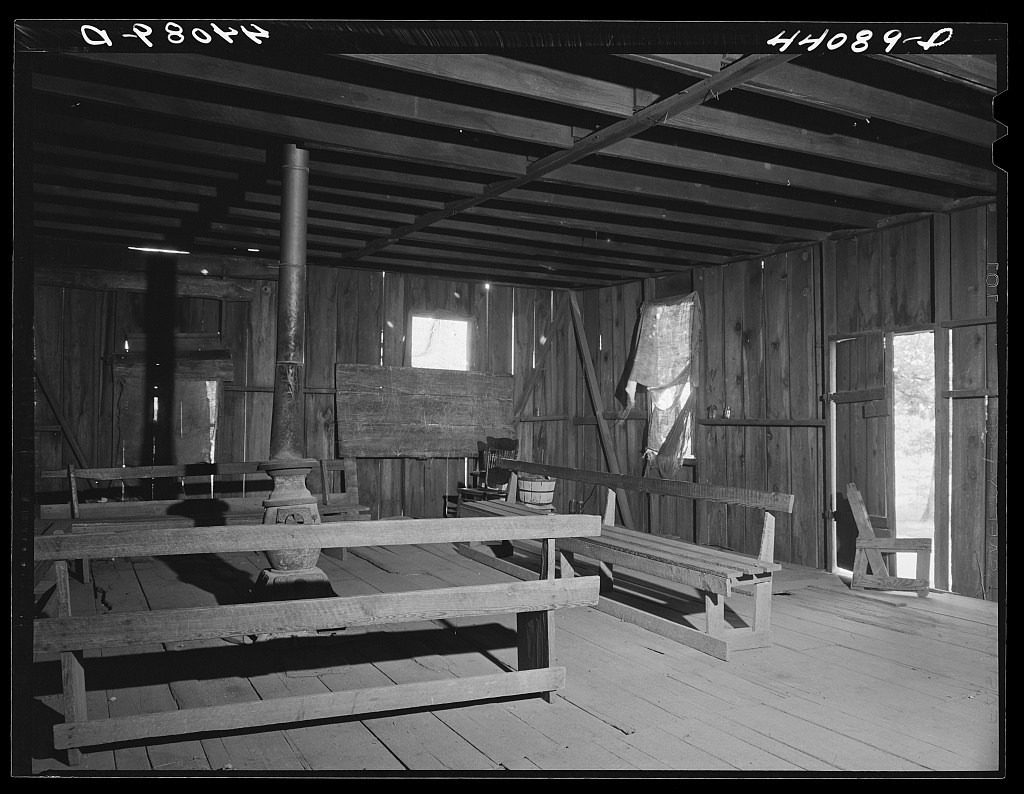
The distinction between an image and a complaint helps you ask better questions. This classroom was photographed in Georgia in 1941; it does not show the South Carolina schools named in the petition. You can examine the visible benches and room, while the petition identifies particular grievances elsewhere. A complete comparison would need records of both school systems, their resources and the decisions allocating them.
South Carolina responded to the challenge partly through a school equalisation programme beginning in 1951, investing in separate facilities. Better buildings could address some material inequalities while retaining racial separation. The parents’ demand and the state’s response therefore raised different questions: how much support a school received, and whether children should be excluded from another school because of race.
A constitutional decision challenged the principle
On 17 May 1954, the Supreme Court decided Brown v. Board of Education. In public education, the Court rejected the idea that racial separation could supply equal protection simply by offering separate institutions. The opinion did more than request repairs to an inadequate classroom: it challenged the constitutional basis of segregated schooling itself.
IN THE JUDGEMENT
Separate educational facilities are inherently unequal.
A judgement could change the governing principle without opening every school door that morning. You still need to ask who controlled admission, whether officials complied and what protection students received. The difference between a recognised right and the ability to exercise it is central to the story of civil rights action.
Jack Delano · FSA · Public domain · US government work · resized and jpeg encoded.
Officials could resist; other authorities could intervene
At Little Rock Central High School in September 1957, Arkansas governor Orval Faubus deployed the National Guard, which blocked Black students’ entry. Later that month, President Dwight Eisenhower federalised the Guard and sent federal troops. The National Park Service records the Little Rock Nine entering under Army escort on 25 September.
The school entrance became a confrontation between different public authorities, with students’ safety at stake. This example makes enforcement concrete. A court’s decision, a governor’s action and a president’s intervention were not interchangeable parts of a single government response. Understanding who held which power explains both resistance and the means used to overcome it.
Challenging a school could threaten a family’s income
The cost of action extended beyond the courtroom. In a 2001 oral-history interview, Nathaniel Briggs recalled his father losing his job after involvement in the Briggs school case. He also remembered difficulty obtaining a fair price for the family’s cotton. His account connects the challenge with pressure on the household’s livelihood.
This is retrospective testimony: a son recalling family experiences decades later, not a contemporary payroll or sales ledger. Its value lies in making economic retaliation visible as part of the struggle. A household facing lost income needed support as well as a legal claim. The possible consequences of speaking out could reach everyone dependent on that income.
TEST THE EVIDENCE
Does a separate entrance establish equal provision?
Separate waiting rooms meant that passengers received equal treatment.
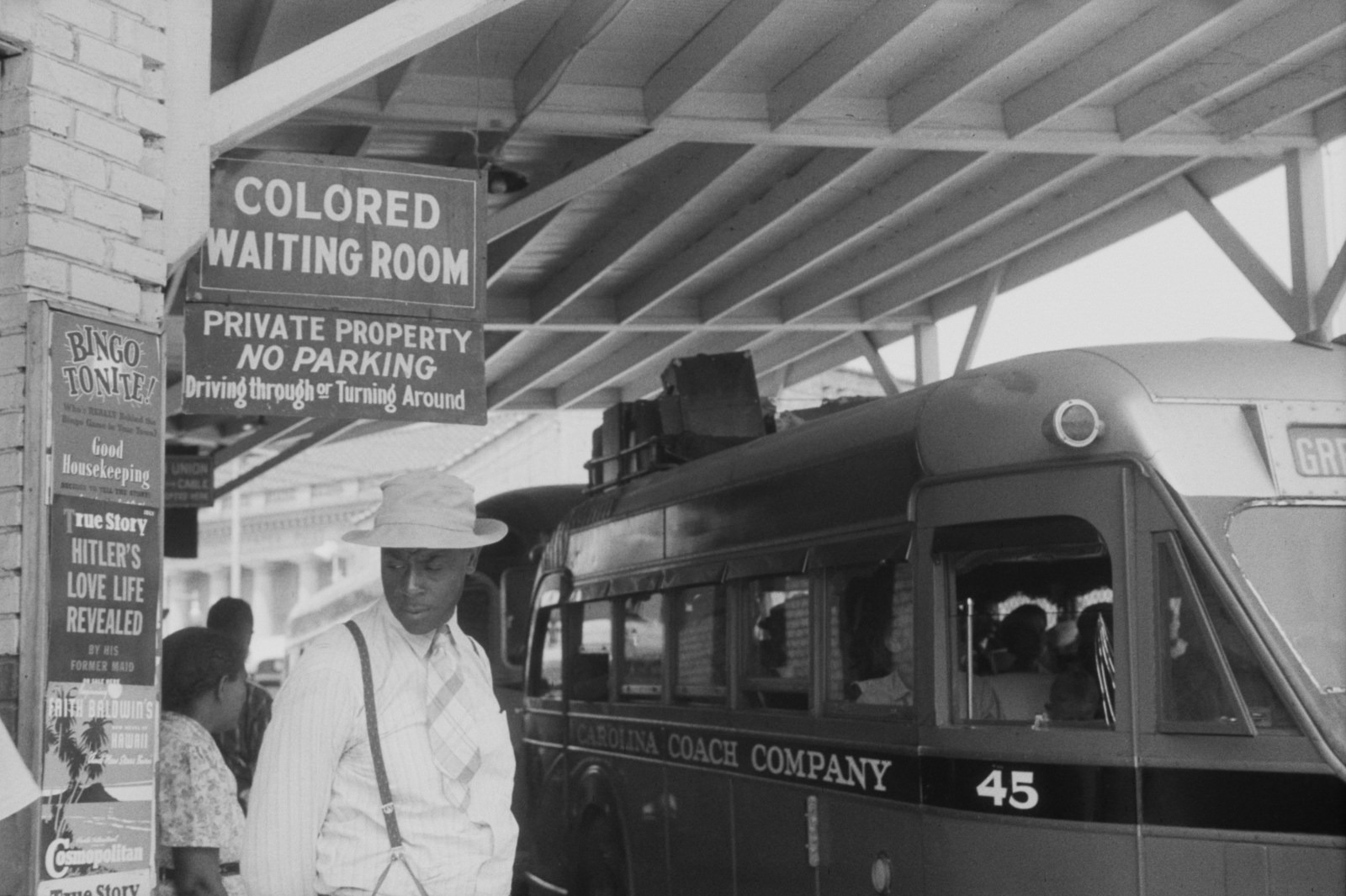
- SHOWS
- A racially designated waiting-room entrance and people nearby.
- SUGGESTS
- Separation was built into the arrangements of an ordinary journey.
- CANNOT PROVE
- The frame cannot compare both rooms, identify passengers’ thoughts or establish every rule being enforced.
A better-supported reading
The photograph records racial separation. Equality of provision would require additional evidence.
Photograph record: Jack Delano · Durham, May 1940 ·
Jack Delano · FSA · Public domain · US government work · resized and jpeg encoded.
Political exclusion made other boundaries harder to challenge
The Fifteenth Amendment prohibited denial of the vote on grounds of race, colour or previous enslavement. Yet states used poll taxes, literacy tests and other restrictions to obstruct Black participation. The Library of Congress places these barriers within the long struggle for enfranchisement. A constitutional protection and access to an actual ballot could remain far apart.
Political exclusion mattered beyond election day. People unable to vote had less direct influence over the officials making and administering public decisions. This is one connection between the school, the bus and the ballot: unequal treatment was harder to challenge when the people affected were obstructed from using political power. The legal question and the administrative encounter belong together.
Violence could reinforce the warning
In Belzoni, Mississippi, Reverend George Lee worked on voter registration. He was shot and killed on 7 May 1955. A later Department of Justice investigation summarises his activism and death. The record documents a lethal attack in this setting; it does not supply a criminal conviction establishing a perpetrator’s guilt.
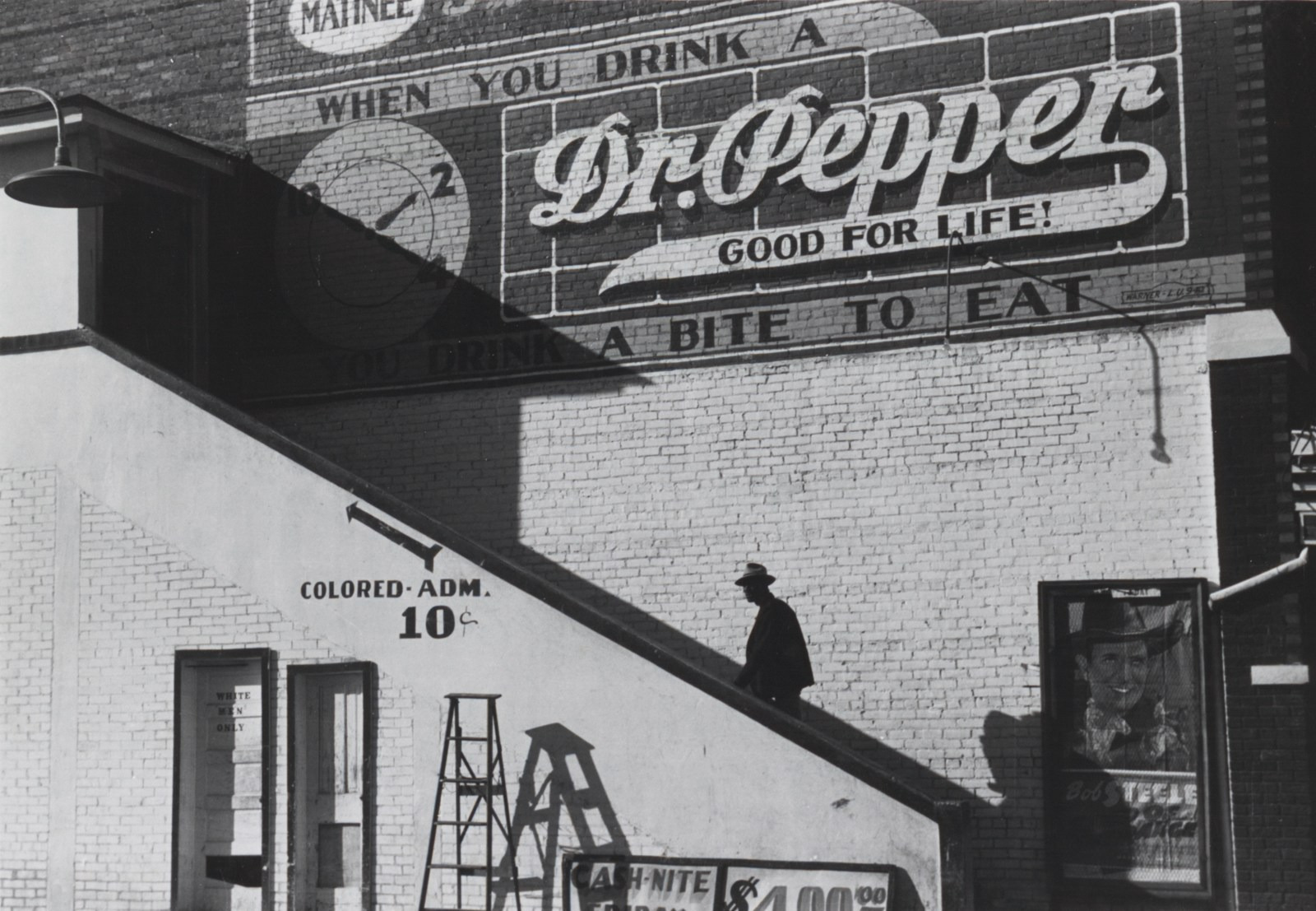
The cinema photograph comes from the same town, but from October 1939, before our main period. It records a separate entrance, not Lee’s life or his killing. Keeping those dates apart lets you connect the town’s everyday racial boundaries with a later struggle without pretending that one photograph explains an entire community or establishes responsibility for a crime.
A threat need not be carried out against every person to affect whether others feel able to act. Violence, economic pressure and administrative obstruction could increase the risks of organising. The strength of the system lay partly in these overlapping consequences: a demand for a right might expose a person to penalties that the formal rule did not name.
Black communities built ways to act within these constraints
People were not simply waiting for the system to change. The school petition, Morgan’s appeal and Lee’s registration work show challenges taking different forms. Another response made travel more manageable. Victor Green’s travel guide, first published in 1936, listed businesses serving Black travellers, including lodging, restaurants and fuel stops.
The Green Book helped travellers plan and directed customers toward welcoming businesses, including Black-owned enterprises. It offered practical knowledge and choices within a discriminatory country; it did not abolish discrimination. The National Park Service’s account also reminds you that travel barriers extended beyond the South. Our selected Southern cases should not become a claim that exclusion stopped at a regional border.
CHANGES WITH DIFFERENT REACH
Three moments, three enforcement questions
- 1946
Morgan v. Virginia
The interstate journey helped define the reach of a transport ruling.
- 1954
Brown v. Board of Education
The Supreme Court rejected racial segregation in public education.
- 1957
Little Rock
Student entry required confronting resistance and providing federal protection.
These are selected milestones, not the date on which Jim Crow disappeared.
Why changing the system required organised action
KEY THOUGHT
Jim Crow worked through rules, institutions, economic dependence and coercion. These powers could support one another.
Return to the Durham doorway. Its sign was one visible part of a larger arrangement. The cases here show why removing boundaries required attention to who assigned places, controlled resources, administered rights and punished challenges. That is the starting point for this path: how organised action could turn demands for equality into changes people could use in daily life.