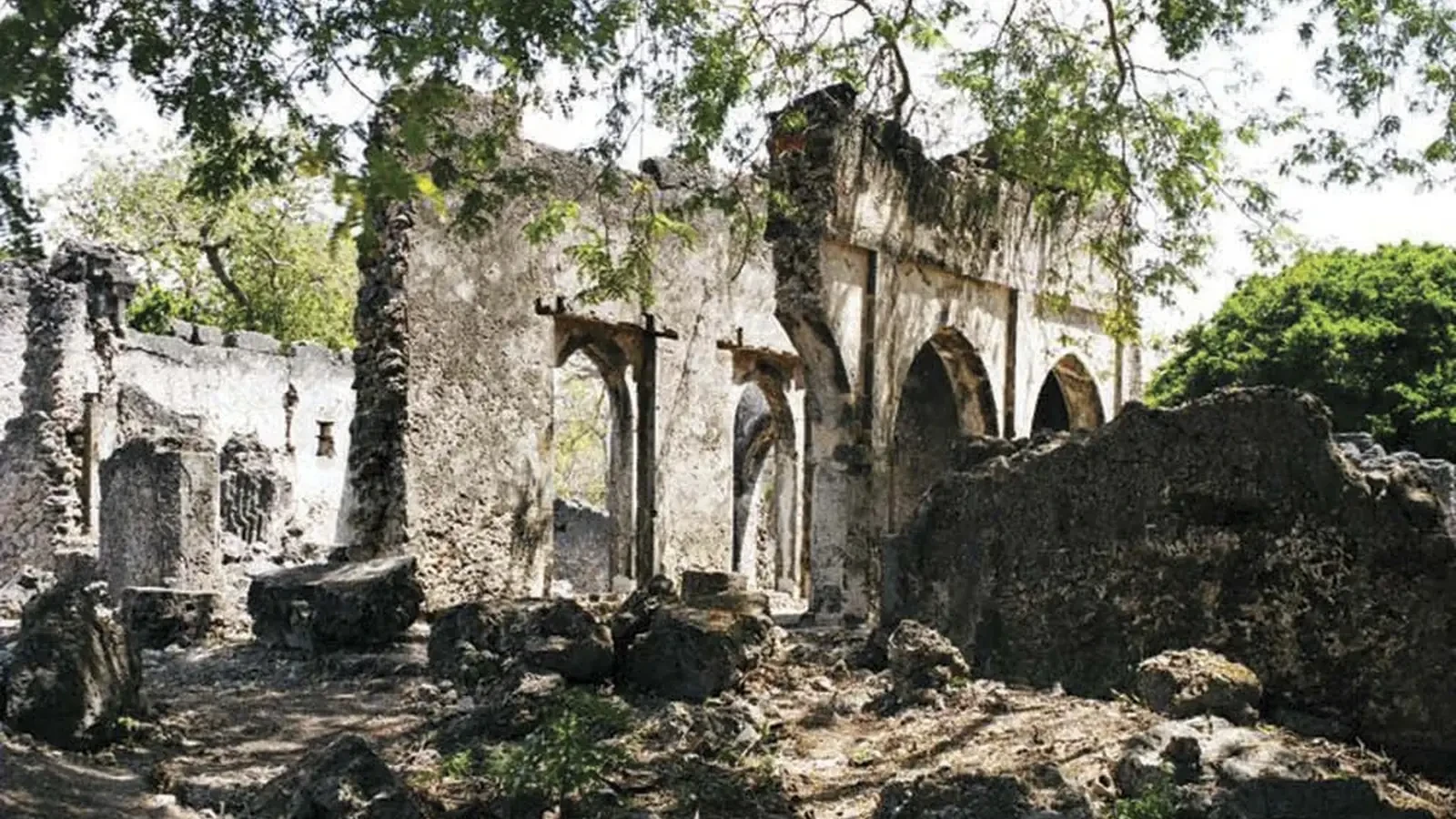
A trading town needs more than traders. Someone must grow food, obtain water, maintain buildings, prepare meals and care for household possessions. Religious gatherings and relationships with the dead give places social meaning. Much of this activity does not enter a traveller’s account. Archaeology at Songo Mnara, an island settlement near Kilwa in Tanzania, offers a different route into the coastal world: repeated practices rather than one visitor’s memorable encounters.
Songo Mnara was occupied mainly from the late fourteenth to the early sixteenth century. That relatively bounded history makes it especially useful for studying how activities were distributed across a town. It does not make the settlement typical of every Swahili community. The following account stays with evidence from this place, distinguishing observed traces from interpretations and resisting the temptation to invent a complete ordinary day for an imaginary resident. 1
PLACE & TIME
Place the evidence
Songo Mnara
Tanzania · East Africa
c. 1380–1520 CE
Orientation
Houses were more than private boxes
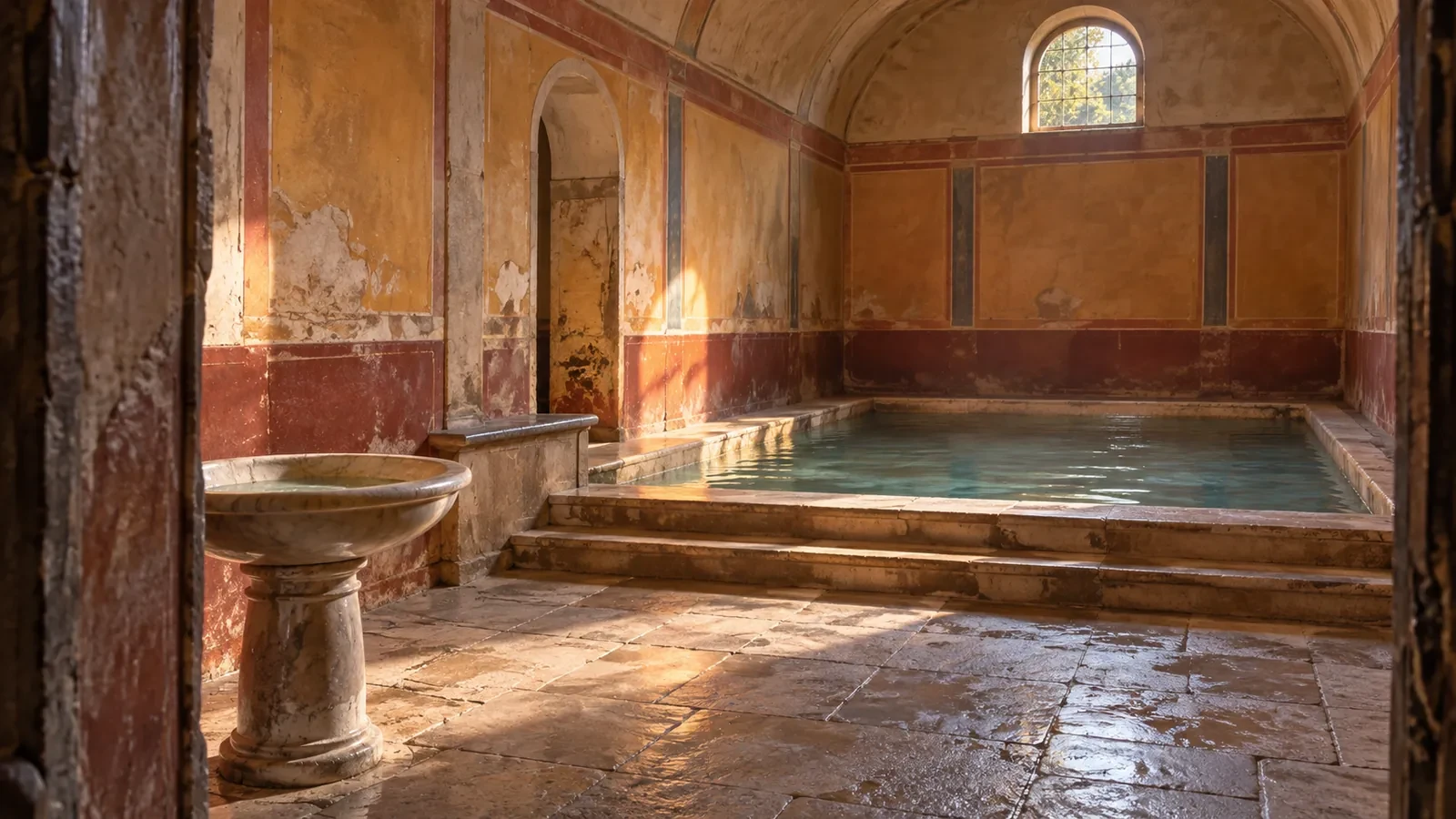
Stone houses dominate the visible remains, but their significance goes beyond sturdy construction. Rooms, entrances and the arrangement of objects affected who could move through a household and what could be displayed. Hospitality could make a dwelling part of public relationships even while access remained controlled. The modern opposition between a private home and a public city is too rigid to capture these possibilities. 1
Archaeologists examine such relationships through architecture and finds together. A room’s position can suggest how movement was organized, but its label should not predetermine every activity. Objects can be moved, rooms can serve several purposes, and use can change. The most useful reconstruction asks how a space participated in household life rather than assigning it one timeless function from its shape alone.
COMPARE
Two kinds of trace
Strength
Movement, scale and building relationships.
Objects and activity traces in investigated contexts.
Selection
Durable stone remains unusually visible.
Sampling and preservation filter recovery.
Limit
House form is not a full biography.
A sample is not the whole town.
Earthen or daub structures add another important part of the picture. Excavations identified occupation that standing stone walls can easily overshadow. Building material is relevant to status, but it is not a complete social biography. A person living in an earth-built dwelling should not automatically be assigned one occupation, income or legal position. Material differences require interpretation through the wider context of activities and possessions. 2
Keeping both kinds of dwelling visible changes the imagined town. It becomes a place with varied settings and overlapping relationships, not an elegant ruin inhabited only by prosperous merchants. The surviving houses show ways of organizing space. They do not recover every resident’s name, gender or authority, and those gaps should not be filled by stereotypes about who must have performed a task.
- Combine architecture with associated finds.
- Avoid assigning one social biography to a building material.
- Look beyond the most visible stone remains.
Food reveals connections close to home
Research combining plant remains, animal bones, pottery residues and isotopic evidence has produced a more complex picture of food at Songo Mnara. Cultivation, livestock, fishing and the use of wild resources all contributed. The town’s participation in overseas exchange did not detach residents from the surrounding landscape. Everyday subsistence linked households to marine habitats, agricultural spaces and the people managing those resources. 2
Plant evidence includes African cereals such as millet and sorghum alongside Asian crops, including rice, and a range of pulses and fruits. Those combinations point to adaptation within an established food world. Imported crops did not simply replace an African pantry. Their adoption could occur gradually and differently across contexts, producing cuisines shaped by local choices as well as wider connections.
- Identify which food remains were recovered and how they were preserved.
- Compare contexts before turning one household’s finds into a town-wide diet.
- Distinguish the presence of a crop from its share of everyone’s meals.
These questions also prevent anachronism. Foods prominent in modern East African cooking cannot automatically be projected into a fifteenth-century town. Maize, cassava and chilli peppers belong to histories of movement that require their own dates. An evocative description of dinner should be built from evidence relevant to the period, not from a modern menu supplemented with a few medieval vessels.
Fish bones do not equal a percentage of dinner
Fish are abundant in the recovered animal remains, but archaeological abundance is not the same thing as dietary proportion. Different foods leave different traces. Recovery methods affect which small bones are collected, while preservation and disposal affect where they remain. A count of fish bones answers a question about an assemblage before it answers a question about how much nutrition residents obtained from fish. 2
The study’s other methods complicate the picture usefully. Human isotopic evidence from a small sample does not simply mirror the striking quantity of fish remains. That is not a reason to discard one dataset. Bones in deposits, residues in pots and chemical signals in human remains register different processes and timescales. Agreement can strengthen a conclusion; disagreement can reveal that the initial question was too simple.
EVIDENCE CHECK
Test the claim
Question
Do plentiful fish bones measure everyone’s diet?
No. Assemblage abundance and nutritional contribution are different quantities.
Evidence
Recovered animal material in sampled archaeological contexts.
Fishing contributed to town life and differed across investigated settings.
Boundary
Recovery, deposition and sample size prevent a simple dietary percentage.
Read the source record: Quintana Morales and colleagues: Diet, economy, and culinary practices at the height of precolonial Swahili urbanism
A pot residue provides evidence for material processed in that vessel, subject to the limitations of the method and sample. A human isotopic signal reflects aspects of consumed food over a different interval. Neither offers a complete menu. The strongest account explains what each method measures before bringing their results together, rather than selecting whichever gives the most vivid description.
The social distribution of food also matters. The research associates some fish consumption with higher-status spaces and particular vessels, while evidence of dairy use crosses architectural settings. These are patterns in the investigated material. They should not become rules such as “all rich people ate fish” or “all poor people drank milk.” A pattern invites an explanation without identifying every household’s routine. 2
Milk turns attention towards husbandry
Evidence suggesting cattle management for milk adds a relationship that a list of exported commodities would miss. Dairy production requires care of animals and access to resources over time. It connects consumption to husbandry, water, grazing and labour. The presence of milk-related residues in ordinary pottery therefore opens a history of repeated local work behind a seemingly simple foodstuff. 2
That work cannot be assigned to a particular category of person merely because we recognize the product. We may have evidence for practices without knowing who performed them in a given household. Gendered or age-specific tasks might be plausible in some societies, but plausibility is not a substitute for documentation at Songo Mnara. A careful article can show the importance of labour without inventing its personnel.
FOLLOW THE CONNECTION
A food history needs several links
Resources
Plants, animals and marine habitats make ingredients available.
Labour
Cultivation, husbandry, fishing and handling require repeated work.
Preparation
Vessels and residues reveal selected cooking practices.
Recovery
Deposits and sampling determine which traces researchers can investigate.
Rice likewise connects a household meal to several possible scales of activity. It could be grown, obtained and prepared within arrangements that differed from those supplying other staples. Its Asian history matters, but so do its local conditions of use. Calling it foreign should not make its coastal users appear to be merely borrowing someone else’s cuisine. Plants acquire new histories where people cultivate and cook them.
The practical lesson is to separate origin from dependence. A crop can originate far away and become part of local production. An imported vessel can serve locally obtained food. A trading town can be connected to distant suppliers while meeting essential needs nearby. Everyday life involved combinations that a simple division between “African” and “overseas” fails to explain.
- Follow food preparation back towards local production.
- Distinguish a crop’s origin from its later place of cultivation.
- Avoid inventing the gender or identity of an unnamed worker.
Craft activity crossed household boundaries
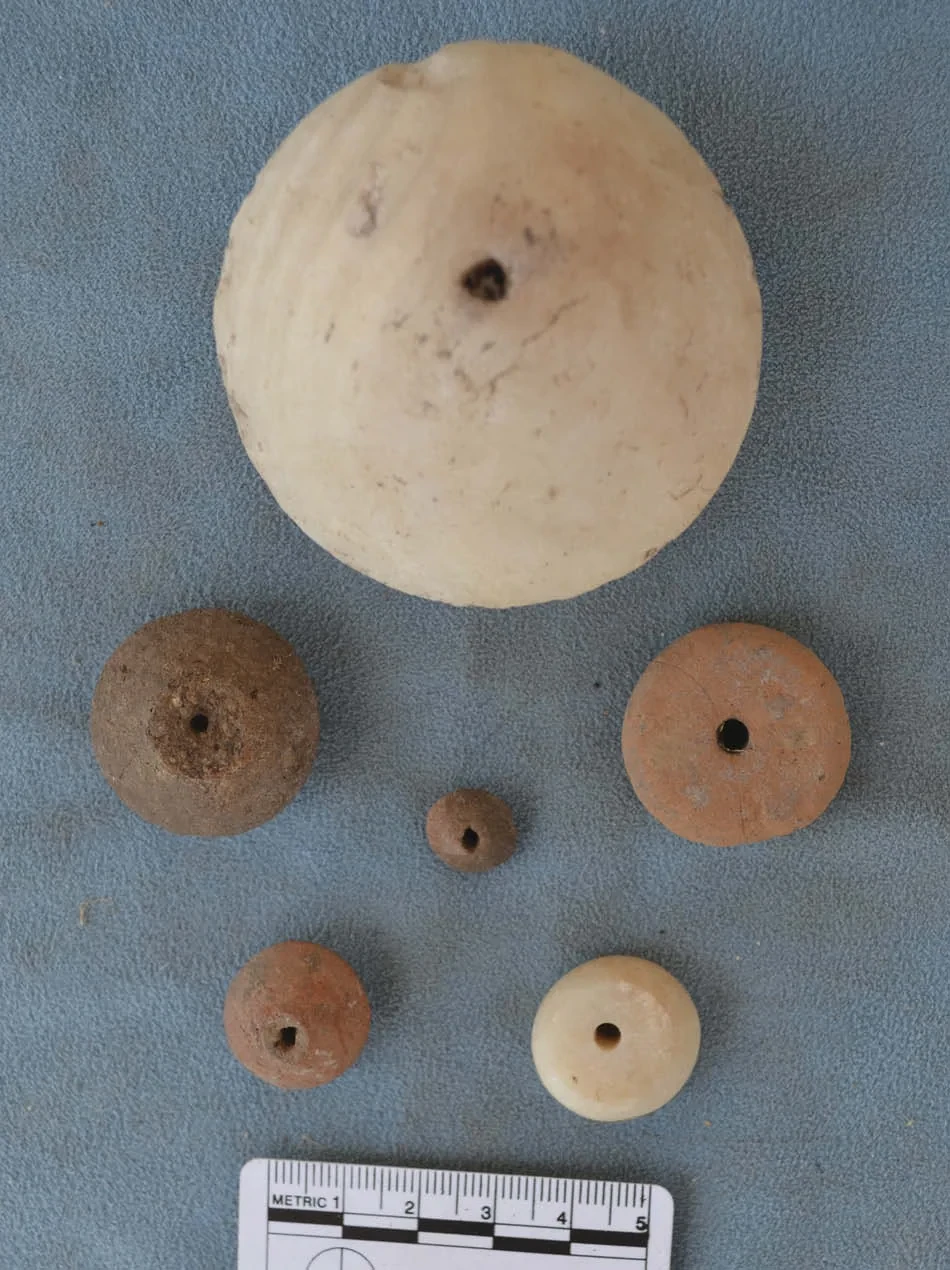
Spindle whorls at Songo Mnara provide material evidence associated with spinning. Their distribution invites questions about textile-related activity across the settlement rather than confining work to one clearly marked workshop. Cotton and the objects used to process fibres link domestic spaces to production. A house could therefore be a setting for making things as well as storing, receiving and consuming them. 1
A spindle whorl does not tell us exactly who spun, how many hours they worked or whether the resulting thread was used within the household or exchanged. Those are different questions. Distribution and associated finds can help refine the possibilities. The secure claim is that productive activity belonged within the lived town, not that the excavation has recovered a complete industry with named workers.
KEY IDEA
A house could receive guests and produce goods
This alters the relationship between trade and everyday life. Residents did not spend their time simply waiting for distant goods. Local production helped sustain households and connections among them. Some activities could cross differences in house form or apparent wealth. The town’s social geography therefore cannot be reduced to one division between prestigious stone houses and everyone outside them.
Work also extended beyond the built settlement. Marine resources and cultivated areas linked residents to territories that a plan of walls and rooms leaves out. A town boundary was not a boundary around all economic activity. Following tasks outward helps show how an urban community depended on places and people beyond its most visible architectural centre.
- Look for production within households.
- Follow tasks beyond the town’s architectural boundary.
- Test social divisions against activities that cross them.
Open spaces had histories of their own
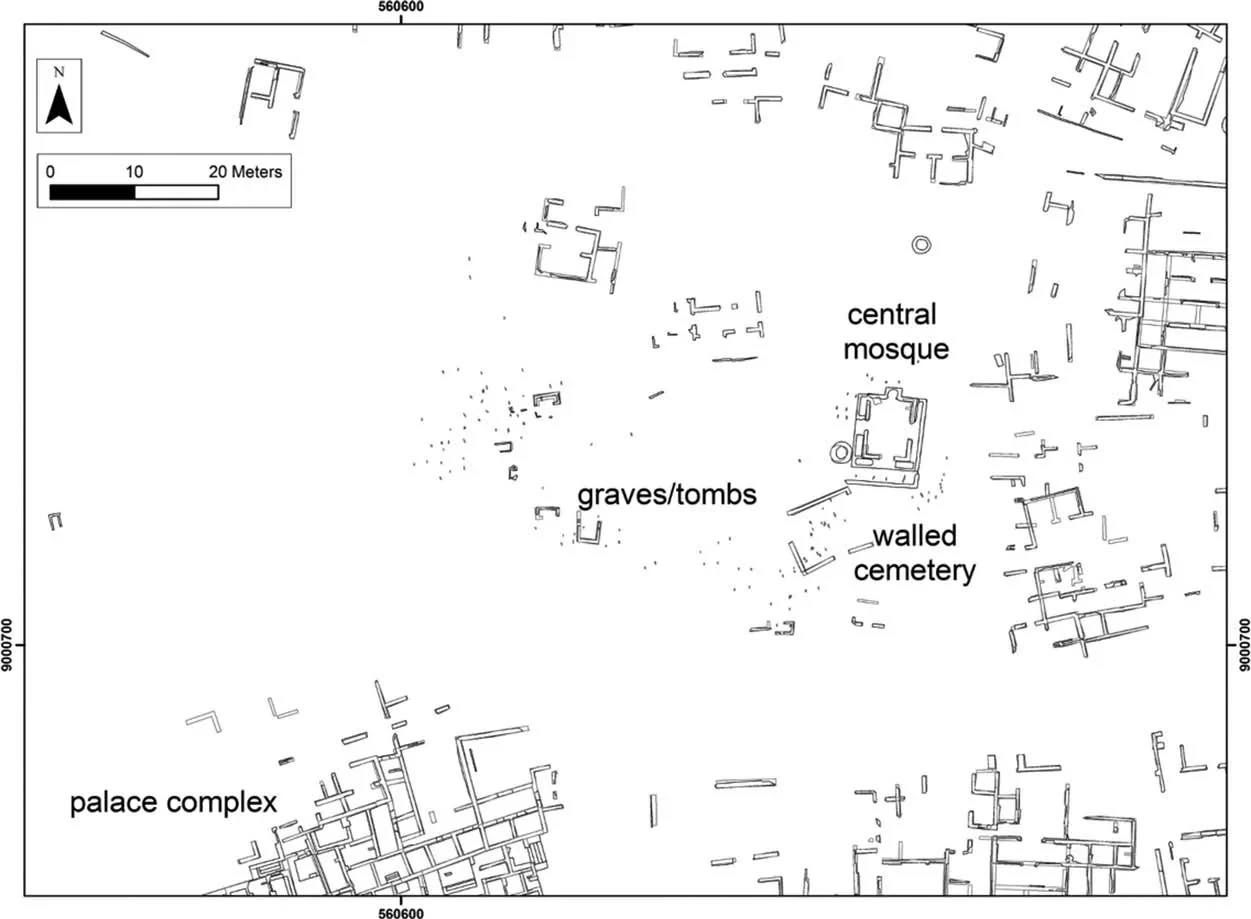
Excavations and spatial study at Songo Mnara show that areas between buildings were not simply unused gaps. Cemeteries, paths, gathering places and activity traces contributed to the town’s organization. The living moved through a landscape in which the dead remained present. Architecture directed attention and movement, while repeated practices renewed the meanings of particular locations. 1
The central cemetery is especially important to this interpretation. Research indicates that a walled burial area preceded an associated mosque, whose construction involved adjustment of a wall. That sequence complicates an assumption that all institutions emerged together within a ready-made town plan. Places could accumulate significance, and later buildings could respond to earlier claims rather than erase them.
TIME
A sequence with boundaries
- Late 14th century
Occupation begins
The site develops within the wider Kilwa archipelago.
- Occupation period
Places accumulate meaning
Buildings and community practices organize lived space.
- Early 16th century
Occupation ends
The site’s short history aids spatial comparison.
- Modern research
Different traces combined
Excavation and scientific methods investigate selected contexts.
A bounded settlement history
Offerings and material traces at graves support interpretation of continuing engagement with burial places. Their particular meanings require care, but they show that memorial space was active within urban life. Different forms of commemoration could also express differences among families or individuals. A shared cemetery did not mean identical recognition, any more than a shared marketplace meant equal commercial power.
This is an everyday history in a fuller sense. Daily life includes maintaining relationships, remembering and belonging, not only eating and earning. The town’s material organization helped people locate themselves socially. A grave, a mosque and a house could each express attachment, while doing so in different ways and admitting different people into their practices.

Mosques connected residents and visitors
The placement of mosques helped give the town an Islamic public identity. Some structures addressed the shore and entrance, making religious institutions part of how visitors encountered the settlement. Their orientation and accessibility support questions about the relationship between residents and newcomers. The precise experience of an individual visitor remains unknown, but the built arrangement is meaningful in its own right. 1
Religious space could create familiarity without abolishing boundaries. A visitor might recognize practices of prayer while lacking access to particular houses or family relationships. Communal institutions and controlled household interiors operated at different scales. Their coexistence helps explain how a port town could participate in wider networks while sustaining local distinctions about invitation, belonging and authority.
- Shared religious practice could help a visitor orient themselves.
- An accessible community space did not grant entry to every household.
- Local ties could remain important within an internationally connected town.
The distinction also cautions against describing all contact as tolerant or harmonious. Buildings indicate institutions and possibilities, not a complete record of interpersonal relations. Cooperation and exclusion could coexist. To identify a conflict or a particular rule, we need evidence appropriate to that claim rather than inferring universal behaviour from a town’s Islamic architecture.
How far can one settlement speak?
Songo Mnara’s short occupation and substantial surviving architecture make it unusually suitable for studying activities across space. Those advantages are also reasons to keep its representativeness open. Other Swahili towns had longer histories, different environmental settings and different social arrangements. A finding here can generate a question elsewhere without already supplying the answer. 1
The excavated sample imposes another boundary. Investigated houses, deposits and human remains do not constitute a complete population. Methods have different recovery strengths, and interpretations can change as more contexts are studied. That does not reduce the research to guesswork. It locates conclusions at the scale the evidence can support, allowing secure patterns and remaining uncertainty to coexist.

Living in a Swahili trading town meant inhabiting several connected worlds at once: household, neighbourhood, religious community, working landscape and maritime network. At Songo Mnara, food remains, craft tools, graves and architecture make some of those relationships visible. They recover practices more readily than full biographies. The resulting picture is richer than an invented day, because it shows how daily life was organized through repeated work and attachments that a traveller might scarcely notice.