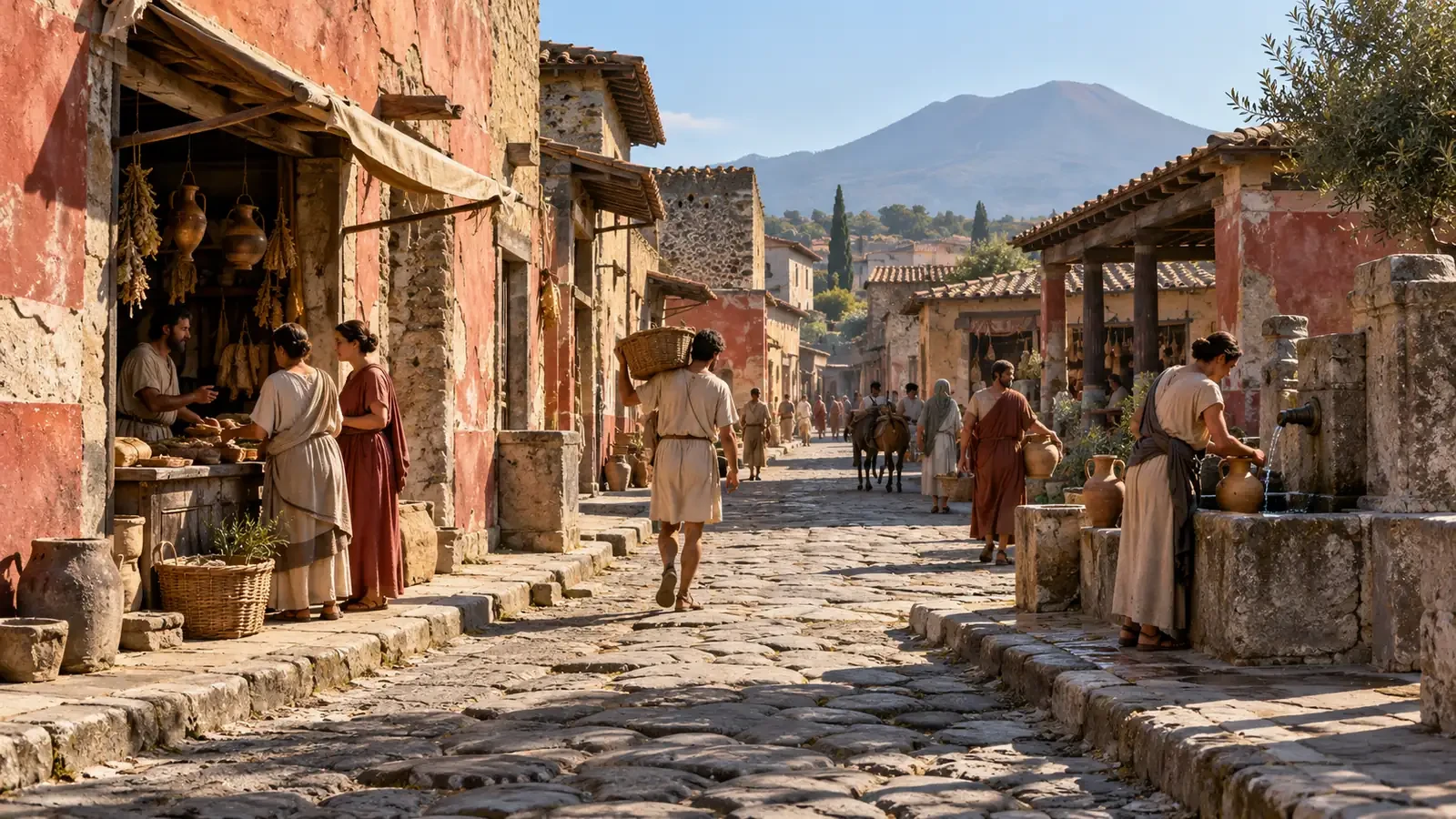
Before Now · AI historical illustration
Everyday Lives: Pompeii · Chapter 8 of 8

One Town, Unequal Lives: What Pompeii Can Tell Us About Rome

A courtyard could be a place to relax or a place to work. Pompeii reveals how ordinary activities connected people whose freedoms were far from equal—and why one town cannot tell the whole Roman story.

WHEN?
First century CE · before the eruption of 79
WHERE?
Pompeii · Bay of Naples
TODAY
Pompei, Campania, Italy
THE BIG QUESTION
How did space, work and status shape everyday life in Pompeii, and how far can one town speak for the Roman world?

Stand in a Pompeian courtyard and two histories come into view. There is the pleasure of a painted wall, an open space and a carefully framed garden. Then there is the work required to keep that setting useful: handling water, cleaning, carrying, preparing and maintaining. The same place could offer comfort to one person and demands to another.

That difference connects this story path’s meals, houses, baths, workshops and public walls. Pompeii lets us place activities near one another, sometimes within the same property. It does not make the people performing them equal. Its deepest lesson is a relationship: ordinary life depended on shared spaces and services, while control over those spaces and over one’s own labour remained uneven.

PLACE & TIME

One town, many positions within it

Pompeii

Bay of Naples · present-day Italy

First century CE · before the eruption of 79

The setting

Follow the task, and the town becomes connected

A meal looks different when we follow what made it possible. Bread and street food brought us to ovens, counters and ingredients. The workplaces behind the town’s services brought bodies and repetitive tasks into that picture. Food was something to eat, but also something to produce, move and sell. A counter links the customer’s convenience with another person’s working environment.

The same shift happens in the baths. A warm room was not simply a room with an attractive floor. Heating, water and maintenance made bathing possible. Archaeological study of the Stabian Baths traces changes to the complex, reminding us that infrastructure was adapted rather than delivered once in a finished form. Looking behind the service changes the question from “What did Romans enjoy?” to “What sustained that enjoyment?”

KEEP THE DISTINCTION

A place, a task, a question about power

Food counter

What people did there

Prepare, sell and buy food or drink.

What the space alone cannot settle

Who controlled the business, and which workers could leave it?

Household courtyard

What people did there

Receive visitors, move goods and maintain the property.

What the space alone cannot settle

Who owned it, who belonged to the household, and on what terms?

Bath complex

What people did there

Bathe, heat rooms, manage water and maintain equipment.

What the space alone cannot settle

How were tasks assigned, and what freedoms did individual workers have?

Public wall

What people did there

Present a recommendation or record an honour.

What the space alone cannot settle

Did the named person possess voting rights or hold office?

Home and work were not separate worlds

Our chapter on houses challenged the idea that an impressive domestic plan tells us everything about its occupants. An atrium or garden describes architecture; it does not identify every activity performed there. Penelope Allison’s contextual study of household finds asks what objects and their distribution add to such labels. A room name is a starting point, not a complete inventory of use.

The Fullonica of Stephanus makes change especially tangible. A property with domestic spaces became a cloth-processing workplace. In its rear courtyard, masonry installations direct attention towards washing and handling textiles. This is more than a curious exception to a neat division between home and business. It shows why that division needs testing against the building’s material history.

LOOK CLOSELY

A courtyard with work built into it

  1. Follow the installations

    The surviving basins help identify cloth-processing tasks within a former domestic setting.

  2. Keep the older setting in view

    Painted walls and courtyard space belong to a property whose uses changed. “House” does not mean exclusively residential.

  3. Leave the people unassigned

    The photograph does not identify workers, establish their legal status or tell us their daily hours.

A Pompeian courtyard contains surviving masonry basins beside painted walls.

The former garden area in the Fullonica of Stephanus, photographed in 2019. The house’s rear space became part of a cloth-processing workplace.

Proximity did not mean equal freedom

An owner, a customer, a hired worker, a freed person and an enslaved person might all participate in a town’s economy. These are not interchangeable positions. Nor does “worker” name one legal category. The same task could be performed under different conditions; equipment records activity more readily than it records a person’s rights or bargaining power.

The bakery in IX 10, 1 offers a particularly severe case. Its confined production layout and circulation form part of the Park’s interpretation of coercive labour. That argument depends on a combined architectural and material setting. It is not a licence to identify every baker, fuller or person found near a tool as enslaved. Recognizing exploitation and identifying an individual require different kinds of support.

WORDS WITH CONSEQUENCES

Do not turn an activity into a legal identity

Enslaved person

A person held in slavery. A work installation alone cannot establish that status for a particular individual.

Freed person

A formerly enslaved person who had been freed. Freedom did not erase every social distinction or obligation.

Worker

Someone performing work: an activity-based description, not a single legal status.

Public visibility also came in different forms

Eumachia’s inscription and statue put a woman’s name into the town’s monumental record. The dedication joins her public benefaction to her son and to civic religious language. The fullers’ honour adds another connection. It makes her visible in ways that many people doing the town’s physical work are not. Yet a dedication cannot recover her private motives or every detail of that relationship.

The election recommendations examined in women and public voice create a different visibility. A woman named in a recommendation could publicly back a candidate without possessing the municipal vote. Endorsement, benefaction and office-holding are separate actions. Putting them together reveals participation beyond the ballot; merging them would invent equality that the evidence does not show.

KEY IDEA

The same street connected people whose choices were unequal.

The practical consequence is a better way of imagining everyday life. Instead of inventing one typical Pompeian and giving that person a complete day, ask how an activity depended on other people. Who prepared, supplied, maintained or authorized it? Some answers remain anonymous. Anonymity is part of the surviving record; it does not make the work historically unimportant.
Pompeii: An Archaeological Guide by Paul Wilkinson — book cover
LEARN

Pompeii: An Archaeological Guide

Paul Wilkinson

An illustrated archaeological guide to Pompeii’s public spaces, houses and everyday buildings, with maps, plans and explanations of the surviving remains.

Find book on Amazon
Sponsored link

The eruption preserved a town already in motion

The eruption chapter restored a sequence to the disaster: conditions changed as material fell, buildings failed and later currents arrived. But change also preceded it. The bakery in IX 10, 1 was under renovation; a mill component had been temporarily placed in the atrium. An object’s final position could therefore record building work rather than its normal working location.

After burial, the record changed again. Disturbance, excavation, removal and conservation shaped what remained and what became visible. The Park’s account of the Forum granary explains that its stored objects came from numerous houses, shops and workshops. Their modern proximity is a collection arrangement, not proof that those objects originally belonged together.

MORE THAN ONE MOMENT

How a trace reaches us

  1. Before 79 CE

    Use and change

    Buildings were altered; possessions could be moved, stored, repaired or discarded.

  2. The eruption

    Destruction and burial

    Changing hazards affected structures, objects and people in different settings.

  3. After burial

    Recovery and selection

    Disturbance and excavation altered contexts; finds entered stores and museums.

  4. Today

    Conservation and interpretation

    Maintained remains and new methods influence the questions we can ask.

These stages can overlap, and survival differs by object and building. This is a history of evidence, not an exact timetable.

Beautiful survival is not a balanced census

A decorated reception room is easy to notice. An inscription supplies a name. A repeated task may leave installations without a named worker. These kinds of visibility differ before we even begin writing a history. The most memorable surviving evidence should not automatically define the average person, household or working experience.

The casts make that temptation particularly strong. Their visible forms invite intimate stories. Yet the DNA research considered in the preceding chapter challenged assumed sex and biological kinship in selected cases. It did not identify emotional relationships. A vivid trace can narrow a question while leaving other questions open; feeling close to a person is not the same as possessing their biography.

  • A building can support an activity without identifying everyone who performed it.
  • A name can establish public presence without proving occupation, wealth or voting rights.
  • Objects displayed together need their original find contexts before they can become a household story.
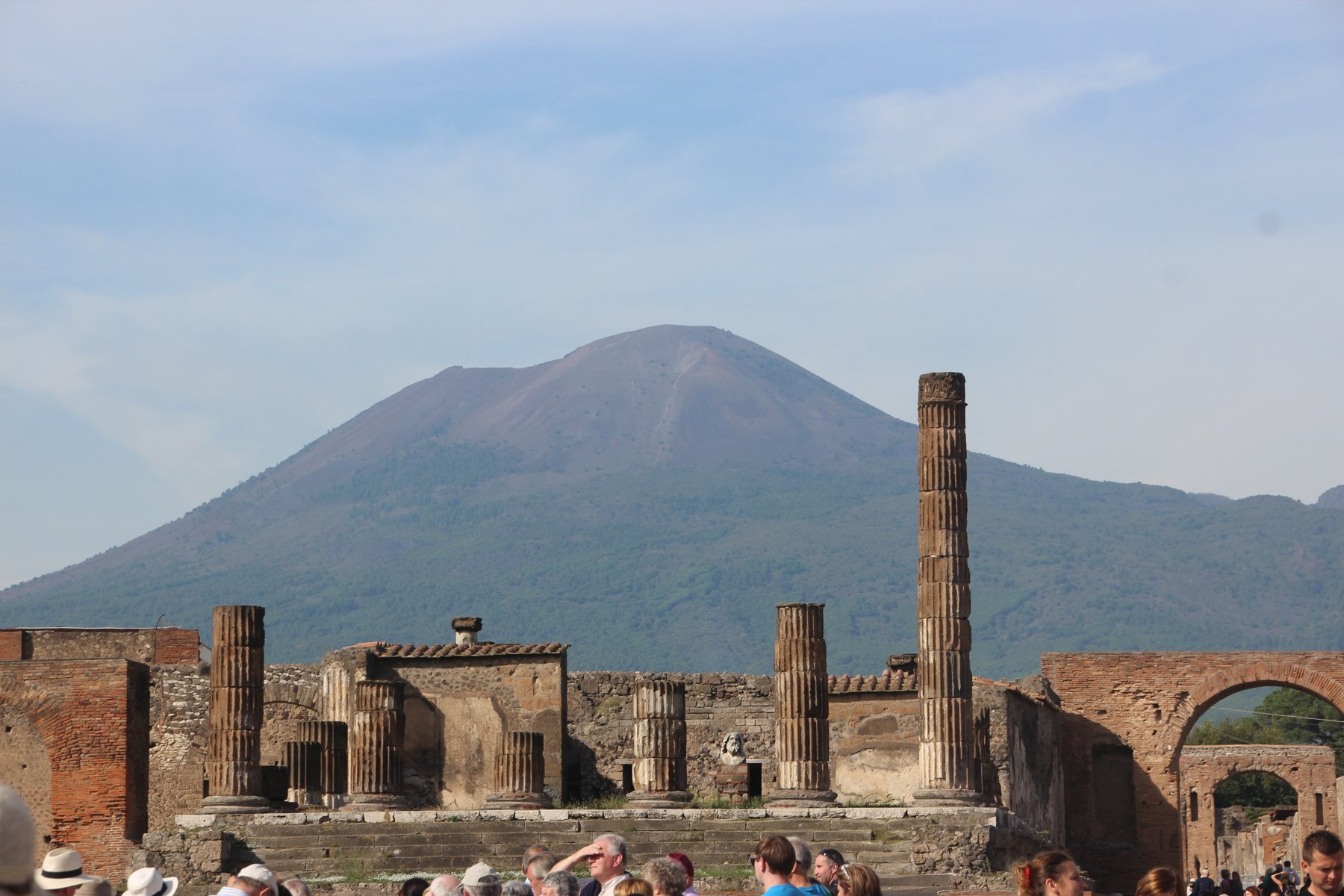
Columns and brick remains in Pompeii’s forum stand before the modern profile of Vesuvius, with visitors in the foreground.
Pompeii’s forum with Vesuvius beyond, photographed in 2015. The excavated ruins and modern mountain profile are not a reconstruction of the town in 79 CE. John Englart / Takver · CC BY-SA 2.0 · resized

How far can one Italian town take us?

Pompeii’s strength is the opportunity to connect different traces within an urban setting. A property has a street frontage; a workplace has neighbouring buildings; a recommendation occupies a public surface. That connected evidence helps us think about Roman social relationships. It is much richer than a catalogue of isolated curiosities.

Its limits are equally concrete. This is one town in Italy, examined especially through material surviving at the end of its first-century life. A rural household, a frontier settlement, another province or another century may present different arrangements. Findings here become questions to test elsewhere: how were spaces shared, who sustained services, and how did status shape choice? They do not become automatic answers for the entire empire.
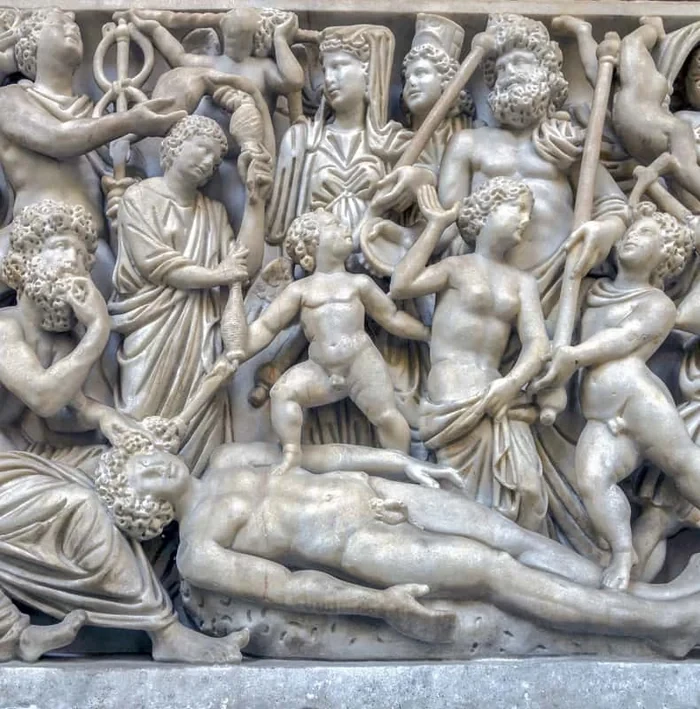
Take the objects into the story
VISIT

Take the objects into the story

Pair Pompeii’s spaces with a visit to Naples’ National Archaeological Museum. This admission offer includes a Naples city audio app, not a museum audio guide; check current gallery openings before booking.

Explore the museum visit
Sponsored link

Leave with a way of looking

Choose one place from the path: a counter, courtyard, bath or public wall. First identify the surviving feature. Then ask what activity it supports, which other tasks made that activity possible and what evidence actually identifies the people involved. Keeping those questions separate makes the eventual connections stronger.

TAKE IT WITH YOU

Four questions for any historical place

  1. Notice the trace

    Begin with a feature, object or text that actually survives.

  2. Follow the activity

    Ask what happened there and which supporting tasks it required.

  3. Ask about control

    Separate use from ownership, work from freedom and visibility from rights.

  4. Test the reach

    Check the context before extending a local pattern to other lives or places.

At the beginning, a meal might have seemed a small subject. By the end, it connects buildings, labour, resources and unequal choices. That is what Pompeii offers: enough detail to see ordinary activities as relationships. The eruption explains why so many traces survived. The lives that made the town work explain why those traces matter.
A closer look

Frequently asked questions

Its connected streets, houses, workplaces and inscriptions let us relate activities to physical settings. The strongest conclusions join several kinds of evidence rather than treating a building label or isolated object as a complete description of someone’s life.

No. Wealth, legal status, gender, work and household position shaped people’s opportunities. Sharing a courtyard or street did not imply equal freedom, ownership or political rights.

The eruption preserved remarkable material, but some properties were being renovated and objects could already have been moved. Destruction, later disturbance, excavation and conservation also shaped the evidence now visible.

It provides a detailed case from one Italian town, especially around its final first-century phase. Other periods, regions, settlements and livelihoods require their own evidence. A pattern observed here is a question to test elsewhere, rather than an automatic empire-wide rule.

New excavations, better documentation and methods such as contextual artifact study and DNA analysis can challenge earlier assumptions. Revision changes the interpretation of specific traces; it does not make every conclusion equally uncertain.

Resources

Keep exploring.

Follow the evidence

Sources and evidence

This conclusion reconnects evidence examined across the seven preceding chapters. Buildings, inscriptions, objects and excavation records answer different questions; interpretation is identified where it goes beyond a surviving trace.

  1. Penelope M. Allison: Pompeian Households

    Publisher scope and open-access study; evidence, room use and occupancy discussions.

    Contextual distribution of finds and limits of architectural room labels. Reconnects the checked house chapter; no claim that thirty studied atrium houses represent all residents.

  2. Pompeii Archaeological Park: Roman Housing

    Institutional introduction to houses and villas.

    Architectural framework; an atrium/peristyle house is not assigned to every household.

  3. Freie Universität Berlin: Bathing Culture and Urban Space

    Research-project summary, results for the Stabian and Republican Baths.

    New excavations revise the older archaic-origin account; use the late second-century BCE foundation and distinguish subsequent remodelling from the first-century focus.

  4. Eumachia’s building dedication: CIL X 810

    Latin transcription, rear entrance inscription; Cooley 2004 E42 cited on the page.

    Ancient text checked for her father, priesthood, son, named architectural parts, dedication and personal expenditure. Photographs on this documentation site are not reproduced.

  5. Eumachia inscriptions: statue base and tomb

    Lefkowitz & Fant, Women’s Life in Greece and Rome, selection 196; CIL X 810 and 813, tomb text.

    Translated ancient texts consulted. Older introductory claims about guild headquarters and family business are not treated as established by the short inscriptions.

  6. Pompeii Archaeological Park: excavation guide

    Printed pp.16 and 98: Fullery of Stephanus and Bakery of Popidio Prisco.

    Fixed installations, converted atrium house and mill mechanism checked. Guide’s proposed identification of the entrance victim as Stephanus and its blanket staff-status claim are not adopted as established facts. Guide is not a current opening schedule.

  7. Miko Flohr: The Social World of Roman Fullonicae

    TRAC 2008, published 2009, pp.173–185; selected pp.174–181, especially process pp.175–177 and Stephanus pp.179–181. DOI 10.16995/TRAC2008_173_185.

    Downloaded primary open-access PDF consulted. Workflow, different tasks, household/workspace overlap and spatial communication model; seven rear work positions are hypothetical maximum capacity, not a census. No fixed gender allocation or individual legal status inferred.

  8. Emily A. Hemelrijk: ancient inscription texts

    Companion to Women and Society in the Roman World, Chapter 6, section V; CIL IV 7873 and related electoral texts.

    Accessible Latin collection, with editorial conventions and corpus references. Short ancient Latin extract checked; translations in this article are our own. Not claimed to be a new critical epigraphic edition.

  9. Heidelberg Materiale Textkulturen: Pompeian inscriptions

    CIL IV 7873: Ceium Secundum / IIv(irum) i(ure) d(icundo) Asellina rog(at); IX.11.3, east of entrance.

    University research catalogue record consulted through search index; site fetch failed. Confirms text and location beside the bar, rather than treating every notice as painted on its doorway.

  10. Pliny the Younger: eruption letters

    Epistulae 6.16 and 6.20; this anthology’s letters LXV and LXVI. William Melmoth translation, revised by F. C. T. Bosanquet.

    Both letters consulted. Misenum viewpoint, cloud analogy, rescue expedition, Stabiae decisions, tremors, escape and darkness. Retrospective letters to Tacitus, not a Pompeian diary. Quoted translation differs from the recommended Penguin edition.

  11. Pompeii Archaeological Park: The Casts

    Cast-making technique, Fiorelli from 1863, surviving bones and history of display.

    Formation and excavation method only. Page’s blanket instant thermal-death account is not adopted as the explanation for all victims.

  12. Pilli and colleagues: ancient DNA and cast interpretations

    Current Biology 34, 2024, pp.5307–5318.e7; abstract and study summary, DOI 10.1016/j.cub.2024.10.007.

    Genetic results challenge assumed sex and biological kinship for selected casts. No exact personal identity, emotional relationship or citywide ancestry percentage derived from the small sample.

  13. Pompeii Archaeological Park: bakery in IX 10, 1

    E-Journal 8, 8 December 2023, pp.1–6: production layout and refurbishment.

    The building was undergoing renovations; a mill component had been temporarily placed in the atrium. Ensemble interpretation of coercive labour is not an identification of every individual’s legal status.

  14. Pompeii Archaeological Park: Storage areas

    Institutional account of collections and the Granai del Foro.

    Objects brought from different houses, shops and workshops into storage: modern display location is not original find context.

  15. UNESCO: Pompeii geographical data

    Component 829ter-001.

    Site marker; approximate first-century interval 1–79 CE, not a claim that every cited building dates to year 1.

  16. Alison E. Cooley: Pompeii, second edition

    Bloomsbury Academic, paperback, 5 October 2023, ISBN 9781350125216.

    Publisher identity and contents checked: excavation history, scientific methods and reconstruction. Book not read in full; not confused with 2003 first edition or PDF ebook.

  17. GetYourGuide: Naples National Archaeological Museum ticket and audio app

    Current activity listing inspected 8 October 2026.

    Admission and city audio app; not a guaranteed live museum guide. Check selected option and current gallery openings; no guaranteed display of specific Pompeian objects.

  18. MANN: official hours and tickets

    Official visitor information, checked 8 October 2026.

    Museum information and changing opening arrangements; unofficial similarly named affiliate site not used as official authority.

  19. Mary Beard: Pompeii: The Life of a Roman Town

    Publisher metadata for specified English paperback.

    Identity and scope checked; full book not read. Amazon ISBN search is not a verified current seller offer.

  20. Alison E. Cooley and M. G. L. Cooley: Pompeii and Herculaneum: A Sourcebook

    Publisher metadata for specified English paperback.

    Identity and scope checked; full book not read. Amazon ISBN search is not a verified current seller offer.

  21. Robert C. Knapp: Invisible Romans

    Publisher metadata for specified English paperback.

    Identity and scope checked; full book not read. Amazon ISBN search is not a verified current seller offer.

  22. The former garden of the Fullonica of Stephanus

    The former garden area in the Fullonica of Stephanus, photographed in 2019. The house’s rear space became part of a cloth-processing workplace.

    Previously inspected Commons photo and commercial licence; local image reused with compact attribution.

    Image credit

    Carole Raddato

    CC BY-SA 2.0

  23. Pompeii’s forum and modern Vesuvius

    Pompeii’s forum with Vesuvius beyond, photographed in 2015. The excavated ruins and modern mountain profile are not a reconstruction of the town in 79 CE.

    Previously inspected Commons photo and commercial licence; local image reused with compact attribution.

    Image credit

    John Englart / Takver

    CC BY-SA 2.0

FOLLOW THE TRAIL

Continue Everyday Lives: Pompeii

Continue in sequence, or jump to another chapter in the path.

View full Story Path
Chapter1

NEXT CHAPTER

What Did People Eat in Pompeii? Bread, Street Food and Status

Bread, fish sauce and a meal at a street counter bring Pompeii’s everyday world into focus. Follow food from bakery to dining room—and discover whose work made eating possible.

Chapter2

NEXT CHAPTER

Pompeii’s Houses: Where Home, Work and Status Met

A garden could impress guests. An atrium could become a washing basin. Follow three Pompeian properties to see how home, work and status shared the same streets.

Chapter3

NEXT CHAPTER

How Roman Baths Worked: The Hidden Machinery of Pompeii

The warm floor was only the beginning. Beneath Pompeii’s baths lay furnaces, pipes and a chain of work that turned fire and water into an everyday pleasure.

Chapter4

NEXT CHAPTER

Eumachia of Pompeii: A Woman’s Power Written in Stone

A woman’s name on Pompeii’s Forum was more than a signature. Eumachia’s inscriptions and statue reveal how money, religion and public honour could make a life visible.

Chapter5

NEXT CHAPTER

Who Kept Pompeii Running? Bakers, Fullers and Enslaved Labour

A loaf and a clean garment each depended on a chain of work. Pompeii’s mills, ovens and fulleries reveal those processes—and force us to ask who could leave when the work was…

Chapter6

NEXT CHAPTER

No Vote, Still a Voice: Women and Elections in Pompeii

Asellina’s name appeared beneath a candidate’s on a Pompeian wall. She could not cast a vote, but her recommendation belonged to the campaign. What kind of political voice did that make possible?

Chapter7

NEXT CHAPTER

Ash, Earthquakes and Escape: Pompeii’s Eruption in 79 CE

Pompeii was not destroyed in one instant. As pumice accumulated, buildings failed and ash-rich currents arrived, the danger changed. Letters and buried layers reveal the sequence—and its limits.

Other chapters in this pathRead in any order
1What Did People Eat in Pompeii? Bread, Street Food and StatusEveryday Life · Food and Drink · Social Status
2Pompeii’s Houses: Where Home, Work and Status MetEveryday Life · Social Status · Urbanism
3How Roman Baths Worked: The Hidden Machinery of PompeiiEveryday Life · Technology · Water Management
4Eumachia of Pompeii: A Woman’s Power Written in StonePolitics · Religion · Social Status
5Who Kept Pompeii Running? Bakers, Fullers and Enslaved LabourCraft Production · Social Status · Work and Labour
6No Vote, Still a Voice: Women and Elections in PompeiiPolitics · Women and Gender
7Ash, Earthquakes and Escape: Pompeii’s Eruption in 79 CEArchaeology · Natural Disasters