A loaf bought in Pompeii was the end of a chain of work. Grain had to be moved, ground and turned into dough before anyone could carry bread away. A clean garment had its own journey through wet stalls, rinsing water and finishing. The finished goods were ordinary; the effort behind them occupied rooms, equipment and people whose names have often disappeared.
In this Roman town in Campania, buried by Vesuvius in 79 CE, workshops preserve more than evidence of clever machinery. They preserve arrangements that shaped working lives: where a person stood, who could see them and which doorway led out. Following bakers and fullers means asking two questions together. What did the work require? And how much choice did the person doing it have?
PLACE & TIME
A town supplied by repeated work
Pompeii
Campania · present-day Italy
1st century CE · before the eruption of 79 CE
The setting
A job title does not tell you whether someone was free
“Baker” and “fuller” describe occupations. They do not settle whether a person was freeborn, formerly enslaved or still enslaved. An owner, a manager and someone doing strenuous repetitive work could belong to the same business while occupying very different positions. Neither a shop sign nor a surviving machine gives us their complete relationships.
Roman slavery made those differences consequential. Enslaved people were legally owned and vulnerable to sale and coercion. They worked in many settings, including skilled roles; responsibility could coexist with unfreedom. A worker’s expertise therefore cannot be taken as proof of independence. Conversely, strenuous work alone is not enough to identify its performer as enslaved. The legal distinction needs evidence of its own.
TERMS TO KEEP
Occupation, place and legal status
Pistrinum
A mill or bakery establishment. At Pompeii, milling and bread-making could be combined in one working complex.
Fullonica
A workshop for cleaning and finishing garments. It does not automatically imply spinning or weaving cloth.
Freed person
Someone released from enslavement. Freedom could bring new possibilities while obligations to a former owner continued.
Before the oven, someone had to keep the mill moving
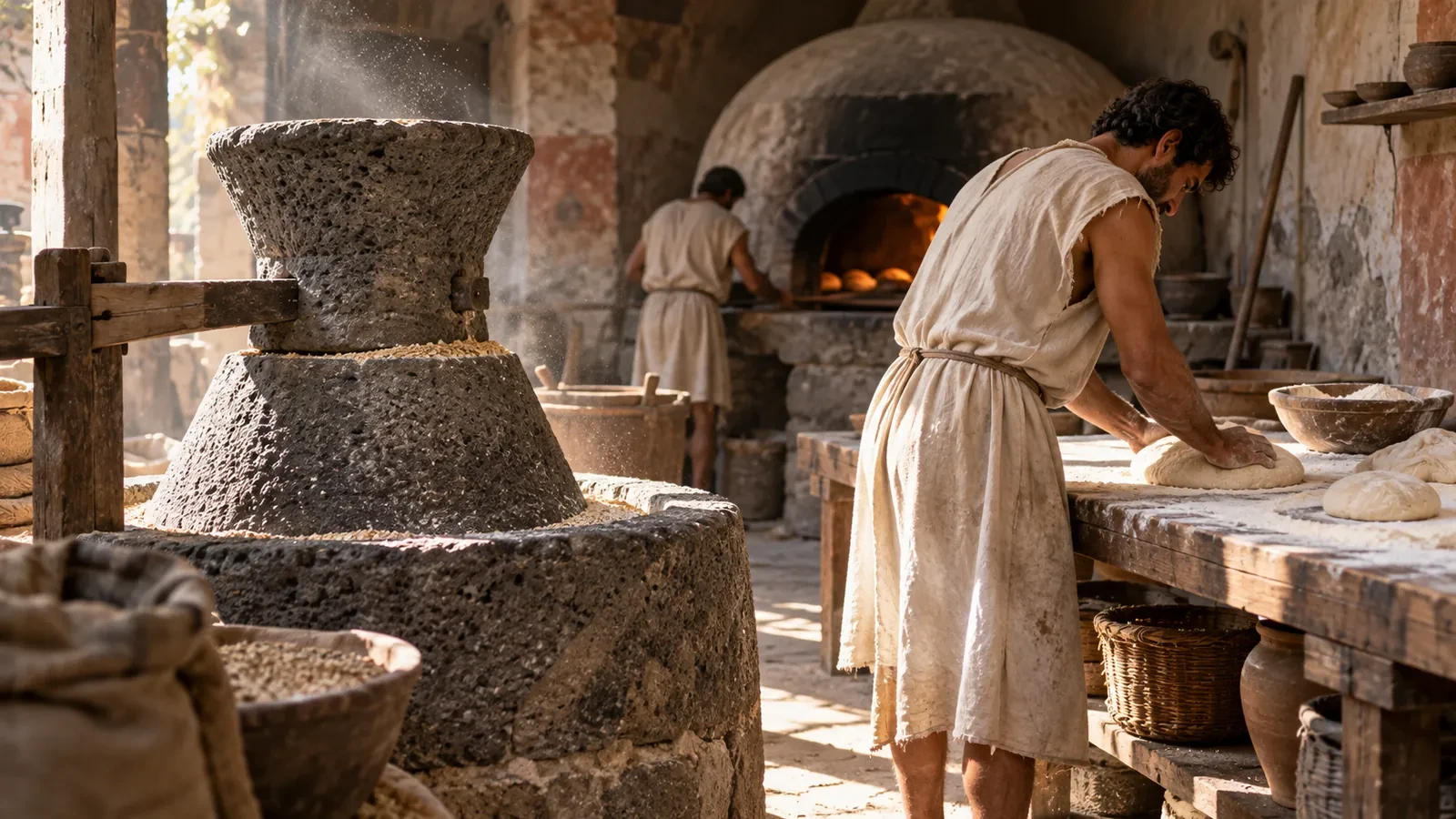
The bulk of a Pompeian mill makes the first stage difficult to overlook. The Park’s guide describes two working stones: a conical lower part, the meta, and an hourglass-shaped rotating upper part, the catillus. Grain entered above and was ground between them. Rotation depended on power supplied by people or animals, rather than an electric motor hidden behind the stone.
The mechanism joined several demands in one place. Grain needed supplying, the upper stone needed turning, and flour needed collecting for the next stage. A mill is therefore more than a picturesque object beside an oven. It marks a recurring claim on bodily effort. Its survival tells us about a task and its equipment; identifying a particular person at its handle requires another kind of evidence.
LOOK CLOSELY
Read the bakery from front to back
Cones in the foreground
These lower stones belonged beneath rotating upper stones. Their present exposed form is not a complete working mill.
An upper stone farther back
The hourglass profile helps explain how grain entered the mechanism. Wooden fittings and motive power must also be considered.
The oven beyond
Milling and baking share a working setting. The photograph does not identify its workers or document the newly studied Regio IX property.

Millstones and an oven in a Pompeian bakery. The Commons record does not identify its address; this photograph is not evidence for the 2023 Regio IX excavation.
Bread-making also needed a sequence that moved material forward. Flour had to become workable dough, portions had to be prepared, and the oven had to receive and cook them. The arrangement of benches, water installations and openings helps archaeologists reason through those connections. A surviving room is not a recorded shift, however: we cannot assign every movement to a named baker or state how many hours each person worked.
FOLLOW THE PROCESS
From grain to a finished loaf
Grind
Keep the mill supplied and turning so that grain becomes flour.
Prepare
Combine ingredients and work the dough; benches and water installations help locate this stage.
Shape
Prepare portions for baking and move them towards the oven.
Bake
Manage the oven and transfer bread for distribution. Surviving equipment does not supply a complete recipe.
A workshop could also restrict the people inside
One bakery brings freedom of movement sharply into view. In December 2023, the Archaeological Park published an excavation report on house IX.10.1, often described as a “prison bakery”. Its authors connect restricted access and barred openings with the control of enslaved labour. They argue from an arrangement of spaces, not simply from the presence of bread-making equipment.
The productive sector had no direct street exit; movement out passed through the house’s atrium. The stable also lacked its own street access. Cuts in paving around the mills are interpreted as helping coordinate animal and human movement. These features make the working setting troubling in a specific way: organising an efficient process could also mean constraining the bodies that powered it.
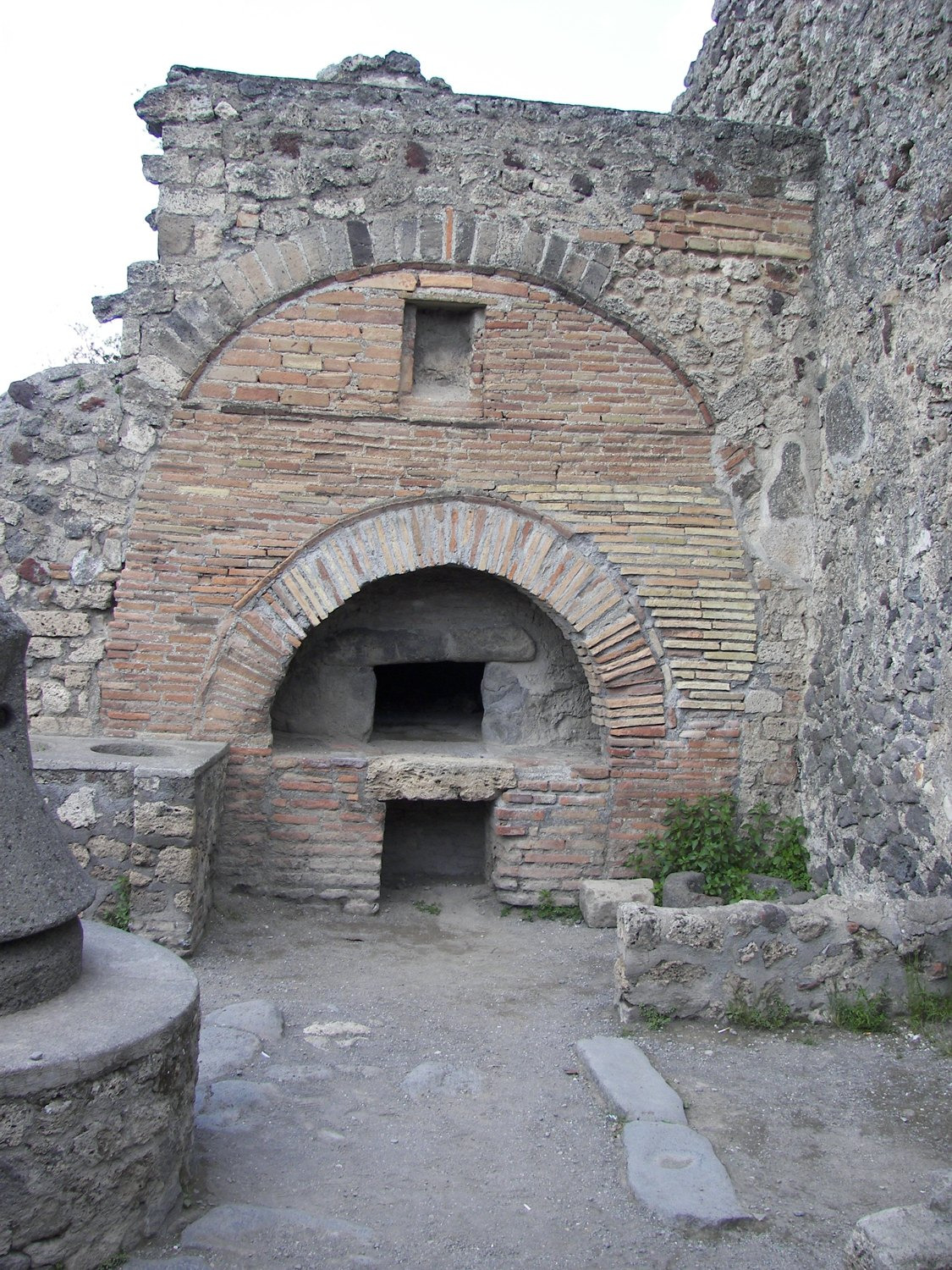
The oven above belongs to another bakery, at VI.6.17. Keeping the addresses separate matters. One property can show a surviving type of equipment without illustrating another property’s restricted exits. Photographs are evidence for what they actually depict, not interchangeable scenery for every striking claim about the town.
An ancient novel supplies a comparison, not a witness
Apuleius offers a disturbing literary picture of mill work. In his second-century novel, the narrator Lucius has been transformed into a donkey and sold to a miller. He describes injured workers, exhausted animals and flour-covered faces. This is a crafted fictional episode, written after Pompeii’s destruction; it cannot report the staffing or timetable of a Pompeian bakery.
IN THE SOURCE
some had their backes striped with lashes
Read beside the excavation, the passage helps explain why scholars take coercion seriously rather than treating mills as charming workshop furniture. Yet the sources must remain distinct. A novelist’s description gives an ancient representation of harsh labour. An archaeological report gives a particular arrangement of rooms and fittings. Agreement between them strengthens a question; it does not turn fiction into a missing employee register.
There is another boundary at IX.10.1: the report describes renovation at the time of the eruption. People were present, and three victims were found in one room, but this does not establish that bread production was running normally that day. Nor does their location identify their jobs or legal status. The building’s working history and its final moment are related questions, not identical ones.
Clean clothes needed a different kind of bodily work
Fullers worked on garments that people wore and wanted to maintain. Their workshops belong to the history of textile care and finishing, not automatically to the whole chain of cloth manufacture. Miko Flohr’s analysis separates cleaning, rinsing and finishing. That sequence helps us look beyond the familiar anecdote about urine and notice the full range of work required.
Cleaning involved treading and handling textiles in liquid with alkaline agents. Rinsing removed that mixture; finishing could include drying, brushing, shearing or pressing. These tasks made different demands on strength, attention and technique. A garment could move between several people before returning to its customer, with the result of one stage affecting the work of the next.
FOLLOW THE PROCESS
From soiled garment to finished surface
Clean
Tread and handle textiles in cleaning liquid, using the body as part of the treatment.
Rinse
Remove cleaning agents and loosened dirt with water; installations differ between workshops.
Dry
Move the wet garment into a suitable drying space.
Finish
Treat its surface through appropriate brushing, shearing or pressing. Not every method is attested in every fullery.
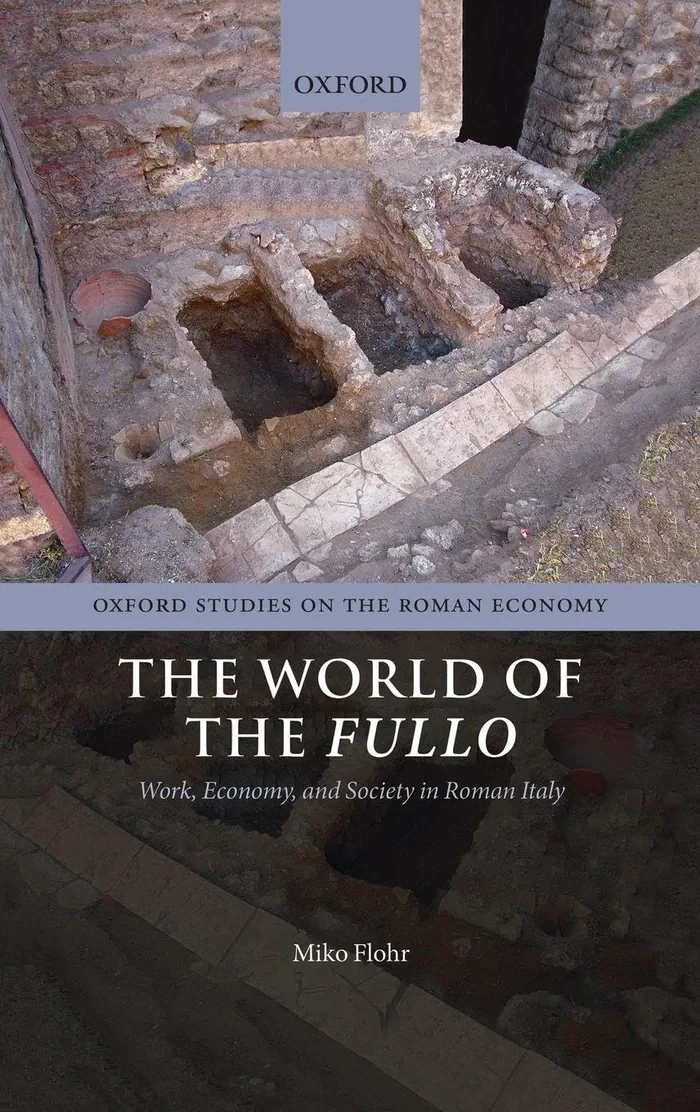
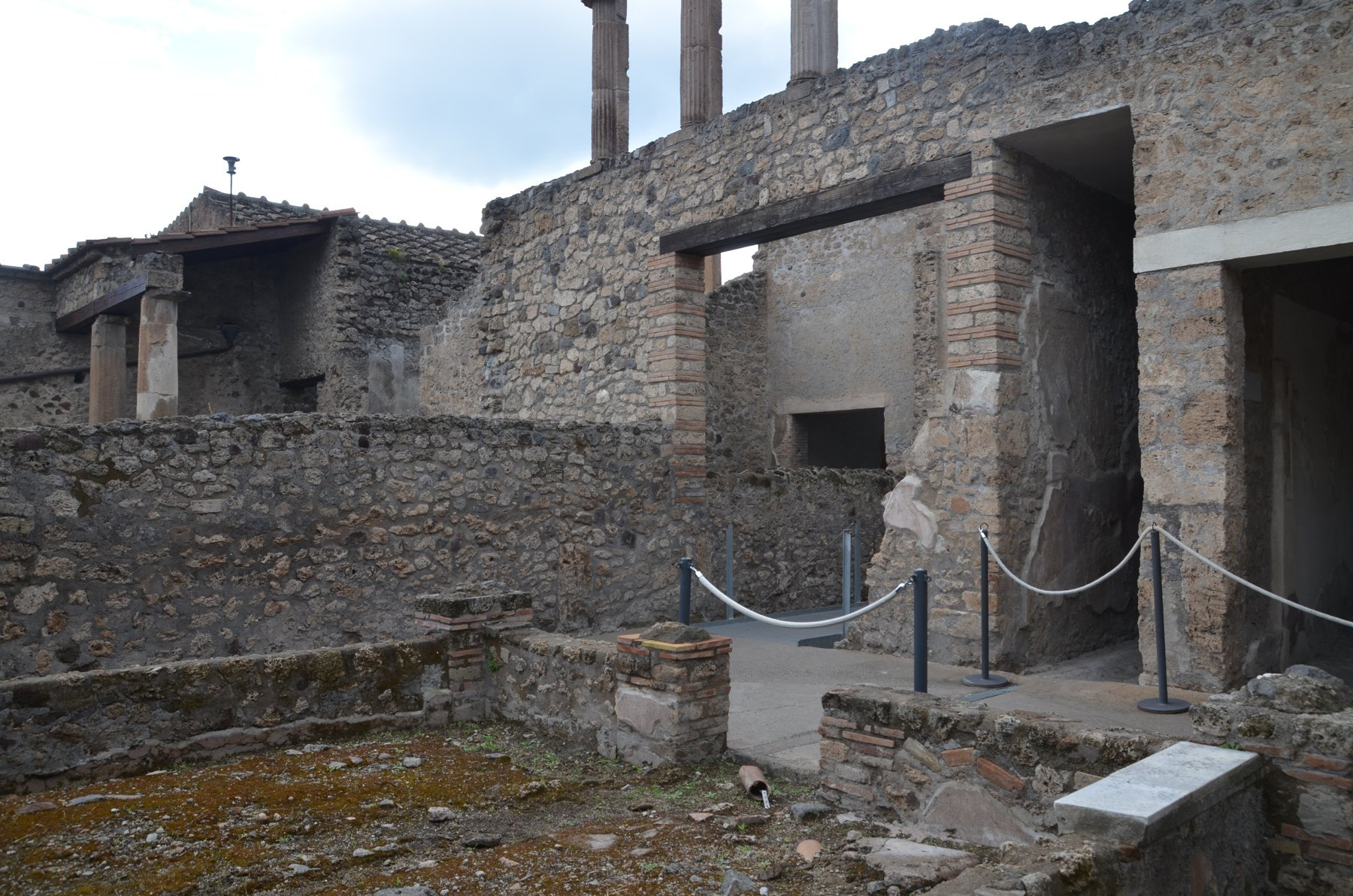
At the Fullonica of Stephanus, I.6.7, work occupied a converted house. The rear area contained five treading stalls and three rinsing basins; other activities took place towards the front. This was a place where domestic and commercial spaces met. Its layout brings a question into focus that a finished garment hides: which people shared the same working environment, and which activities kept them apart?
The room organised contact as well as tasks
Standing in a stall or beside a basin meant occupying a particular position among other workers. Flohr models how proximity and sightlines could shape communication at Stephanus’s fullery. People close together could notice one another’s condition; different positions connected them with different parts of the house. The arrangement makes interaction thinkable, even though no actual conversation survives.
His model considers space for seven workers in the rear area at maximum capacity. That number is useful for exploring a layout, but it is not a payroll. We do not know that seven people always worked there, or that each stayed with one task throughout their life. A fixed installation survives more readily than a changing assignment, an absence or a disagreement.
KEEP THE DISTINCTION
A working space is not a staff list
A mill or stall
A task required particular equipment and bodily movements.
The legal status, name and complete experience of each worker.
Possible work positions
A layout can suggest capacity and patterns of contact.
An exact daily headcount or permanent assignment to each position.
Restricted exits
The IX.10.1 report argues for deliberate control of movement.
An identical regime in every Pompeian bakery or the status of every eruption victim.
Skill and recognition did not cancel dependence
The previous chapter followed Eumachia, whose statue was dedicated by the fullers. That honour reveals an occupational group making itself visible in public. It does not tell us that everybody doing textile work shared equally in that visibility. A group named on stone and an anonymous person standing in cleaning liquid belong to the same history, but the inscription does not explain their individual relationship.
Freedom could change a person’s opportunities, yet manumission was neither automatic nor a reward that every worker could expect. Freed people might still owe duties to former owners. Successful commemorations leave a more visible record than people who remained enslaved and unnamed. We should therefore resist reading the best-attested upward journeys as the normal ending of a working life.
KEY IDEA
A town’s comfort depended on work its customers did not have to see.
Three questions to carry into the next room
A workshop becomes more legible when we ask about connections rather than admire a machine in isolation. The mill links stone with motion; the basin links water with a garment; the doorway links a working body with the world outside. Those connections bring ordinary labour into the story without pretending that its surviving traces answer every personal question.
- What repeated task did this installation require?
- Who could check, direct or depend on that work?
- What evidence tells us whether its performer could leave?
Pompeii’s working population cannot be reduced to cheerful craftspeople or an undifferentiated crowd of victims. The evidence reveals skill, contact and different forms of dependence, including enslavement. Following the work behind a loaf or a cleaned garment lets us recognise people as necessary to the town’s life while keeping their unequal choices in view. Next, the path returns to the street, where endorsements raise another question: who could influence an election without casting a vote?