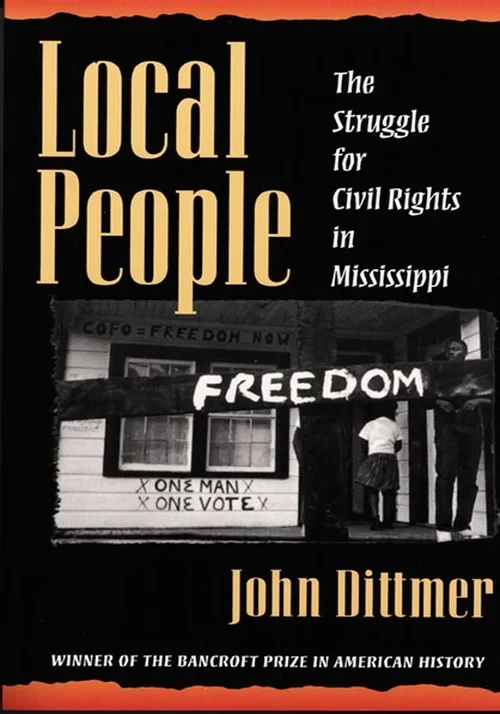
A voter registration form can look like a small piece of paperwork. Filling it out can also become a political action when officials seek to exclude the applicant. For young organisers working in Mississippi, helping someone approach that action involved more than explaining questions. It meant learning from people who knew the community and the dangers of challenging its authorities.
This is one way into the story of the Student Nonviolent Coordinating Committee, usually called SNCC and pronounced “snick”. Between its founding in 1960 and the campaigns of 1964, the student network became an organisation with full-time workers in southern communities. To understand SNCC in the civil rights movement, follow how it connected people—and how those connections could develop leadership beyond its own staff.
PLACE & TIME
An office in Atlanta, work across the South
Atlanta · Mississippi communities
Southern United States
About 1960–1964 CE
Main settings
Students created a space of their own
Student sit-ins against segregation spread across the South in early 1960. Ella Baker, then working with the Southern Christian Leadership Conference, brought protest leaders together at Shaw University in Raleigh, North Carolina, in April. The conference produced SNCC. Baker encouraged an independent student organisation rather than a student branch under an existing body’s direction.
Coordination connected protest groups that already existed. The name described a relationship among activists; longer field campaigns would change the organisation’s tasks.
WORDS FOR FOLLOWING THE NETWORK
Four terms you will meet
SNCC
Student Nonviolent Coordinating Committee; an independent organisation formed by student activists in 1960.
Field secretary
A SNCC organiser working in a community, often full-time, rather than only coordinating from an office.
Voter registration
The process required to join the electoral roll. Black applicants faced discriminatory tests, official obstruction and intimidation.
Local leadership
People in a community taking responsibility for decisions and collective action; not simply carrying out a visiting organiser’s instructions.
A common statement did not settle every disagreement
IN THE SOURCE
We affirm the philosophical or religious ideal of nonviolence
The statement expressed an aspiration for action and a just social order. Members nevertheless differed over whether nonviolence was a way of life or a tactic, and over which activities should receive scarce time and money. Reading the founding text beside later debates helps you distinguish an organisation’s declared purpose from agreement on every practical choice.
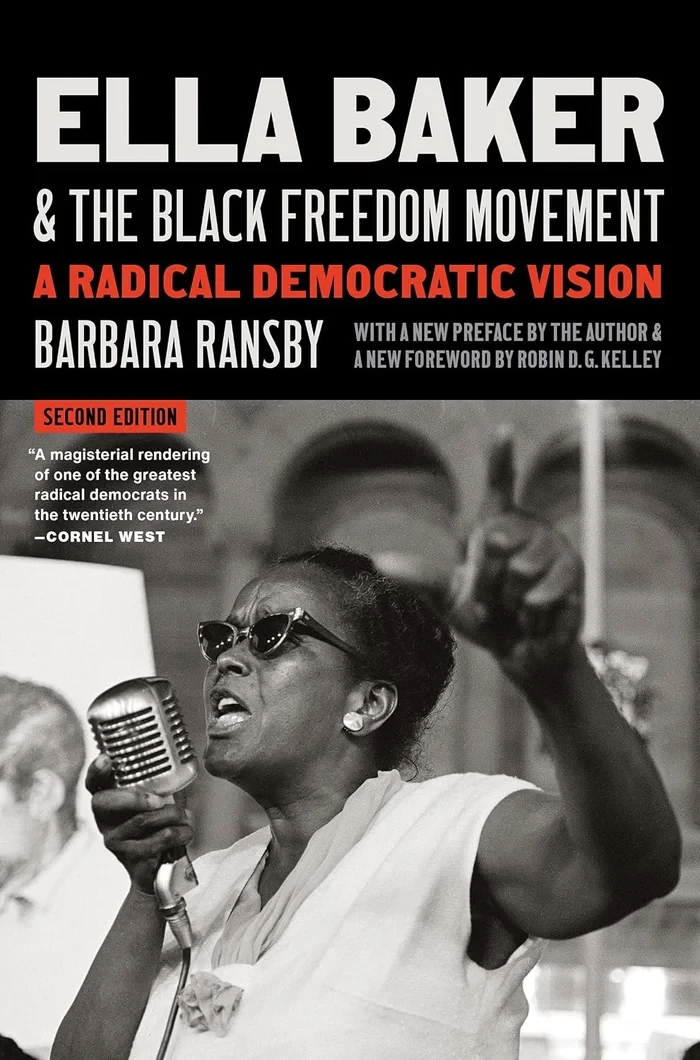
Marion S. Trikosko · Public domain · resized and jpeg encoded.
Experience travelled through introductions
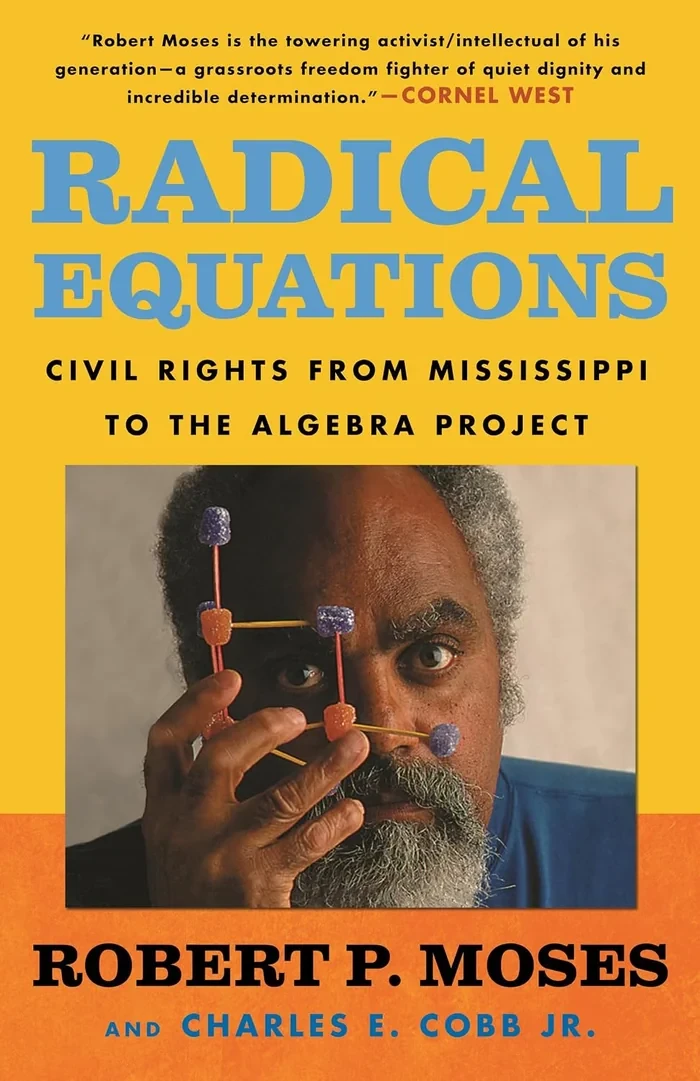
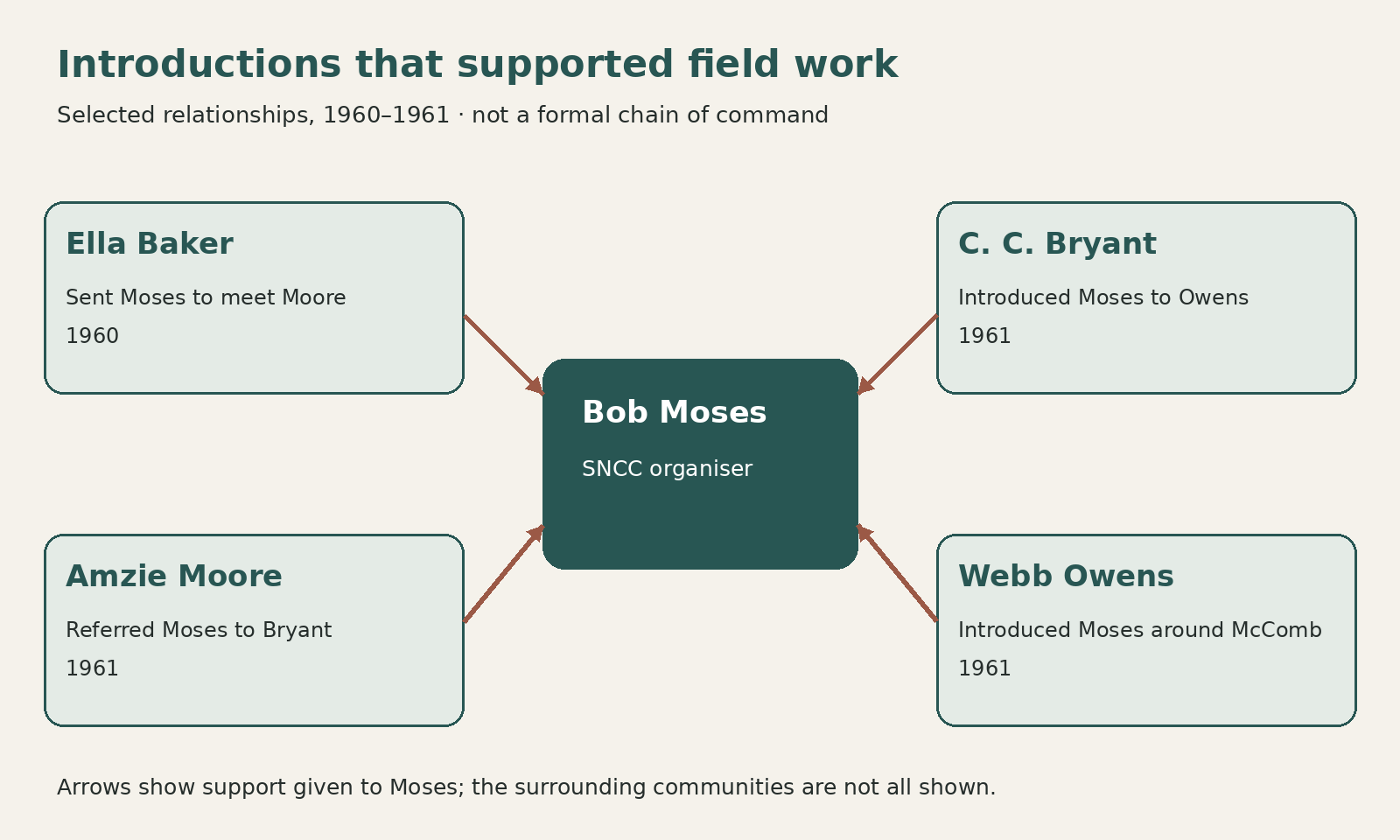
Baker brought more than a conference invitation. Her earlier NAACP work had connected her with experienced activists across the South. In 1960, she sent Bob Moses to meet Amzie Moore in Cleveland, Mississippi. That introduction joined a younger organiser to a much older local struggle. Moore urged SNCC to make voting rights central and offered connections that students could not learn from a training session alone.
In 1961, Moore referred Moses to C. C. Bryant, a local NAACP organiser in McComb. Bryant then introduced Moses to Webb Owens, a retired railroad worker who took him around the community. Before canvassing could begin, the organiser needed people who could introduce him as someone worth hearing.
Organising made a difficult action more approachable
In McComb, Owens also recruited local high-school students to help with house-to-house work. Moses showed residents a registration form and invited them to try filling it out at home. Classes offered further practice. These steps did not guarantee that the registrar would accept an applicant; they created ways to approach a process designed to discourage Black participation.
Understanding the form did not ensure registration or safety. Organising offered knowledge and support while confronting power that an educational exercise could not remove by itself.
KEY THOUGHT
SNCC’s young organisers could contribute energy and time because local activists connected them to people, knowledge and priorities already present.
Local priorities could change the assignment
A later interview with Wazir, formerly Willie B., Peacock gives another view. Recalling work with Frank Smith in Holly Springs, he described local civic leaders asking for help establishing a credit union. He also remembered collecting statements from people denied registration. His July 2001 interview follows work that moved between community needs and voting rights.
Recorded decades later, the interview offers remembered relationships rather than a precise daily log. Local people were making requests and helping set the agenda.
The organisation debated where its effort should go
At Highlander in August 1961, SNCC members argued over direct action and voter registration. Some feared that registration work encouraged by the Kennedy administration would draw the movement away from confrontational protest. Others believed voting offered a route to Black political power and answered local priorities. Baker proposed maintaining two programmes within one organisation.
KEEP THE DISTINCTION
Different routes to participation
Where to apply pressure
Challenge segregation through public confrontation.
Challenge exclusion from the electorate.
A central concern in the debate
Preserve independence and the force of protest.
Develop political participation and respond to local demands.
A shared danger
Participants could face arrest and violence.
Seeking registration could also provoke violent retaliation.
October 1961 staff minutes make the organisation’s practical change visible. They proposed an executive committee, financial reporting and a communications system as SNCC began initiating longer programmes. The minutes also described local leadership continuing when direct-action staff were jailed. These were plans and responsibilities recorded at a meeting, not proof that every proposed arrangement worked as intended.
An office could help a local story travel
SNCC’s national office in Atlanta supported field workers rather than replacing their work. It developed administrative, research and communications functions, while supporters elsewhere raised money. The Digital Gateway’s account distinguishes this supporting structure from the field projects. Decentralised organising still needed people to keep information and resources moving.
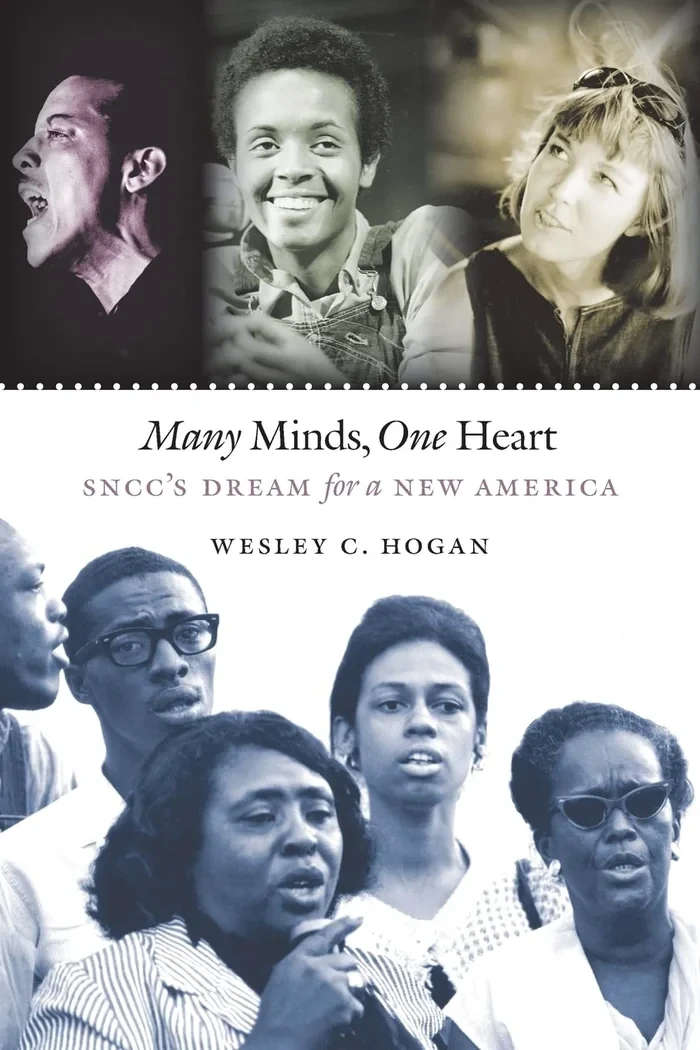
Julian Bond, Dottie Miller Zellner and Mary King helped turn reports from the field into press releases, newsletters and messages to supporters. The communications account describes telephone reports and the production of The Student Voice. Getting a local attack reported nationally could bring support and pressure. Attention offered no guarantee of protection, but silence left local organisers with fewer people hearing their account.
Warren K. Leffler · Public domain · resized and jpeg encoded.
Participation could produce a new public leader
Fannie Lou Hamer joined an effort to register in Sunflower County in August 1962. Afterwards, the plantation owner demanded that she withdraw her application or leave; she refused and was evicted. Her history shows the personal cost of seeking a political right. Singing and speaking helped her mobilise others, and SNCC workers listened to her arguments as her influence grew.
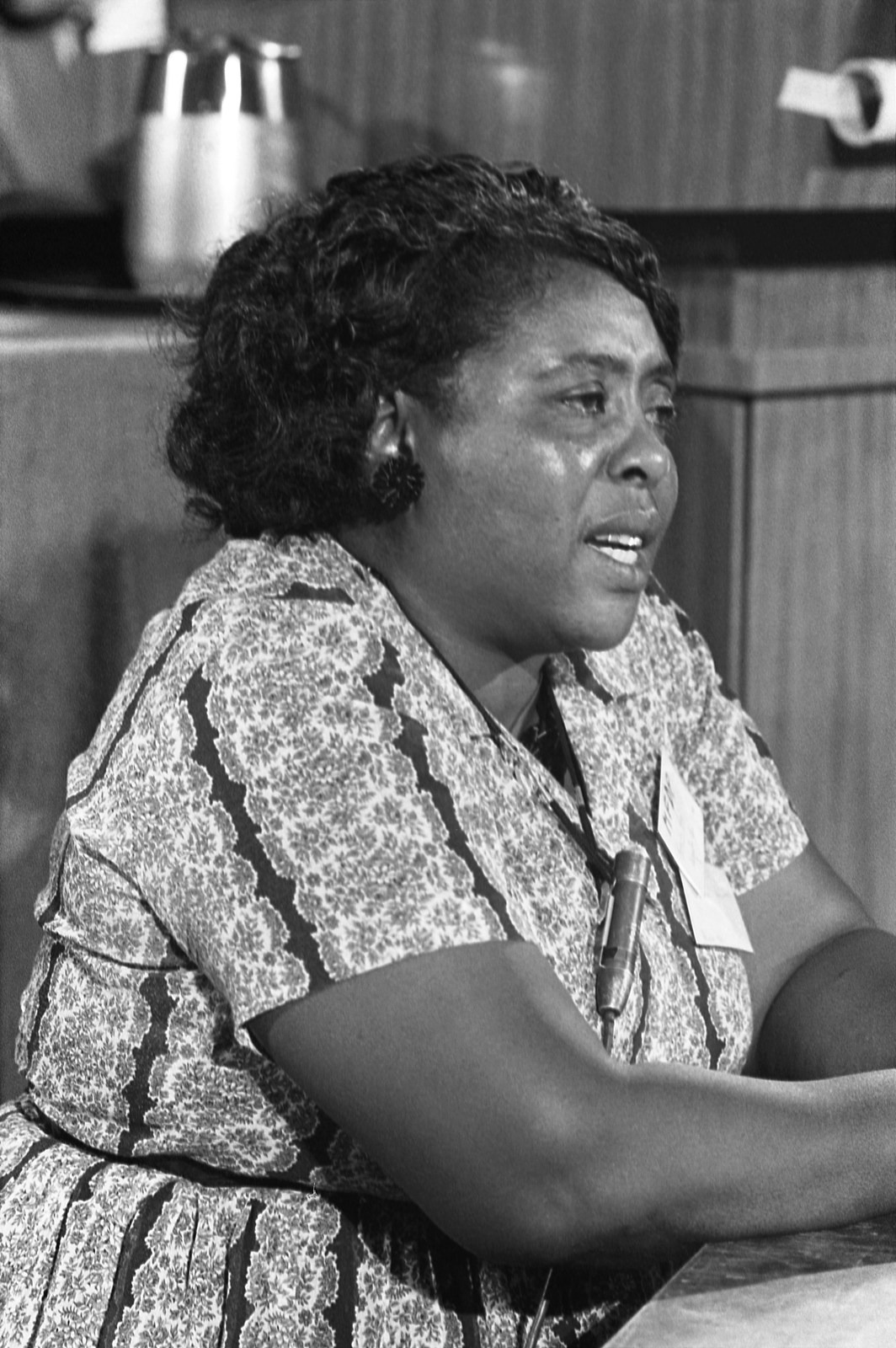
Hamer brought experience of the society being challenged. A network supported her participation; her speaking and organising helped reshape what that network could do.
Freedom Summer expanded support—and raised questions
The 1964 Mississippi Summer Project, or Freedom Summer, brought many outside volunteers into ongoing work. It was organised through the Council of Federated Organizations, or COFO, a coalition including SNCC, CORE, the NAACP and SCLC. It was a cooperative campaign, not a SNCC-only undertaking. Projects built on relationships with local Black leaders, while volunteers helped extend activities and national attention.
The campaign included registration work, community centres and Freedom Schools. The Digital Gateway records its varied projects and the violence directed against them. More workers could expand an organisation’s reach, but numbers alone did not resolve who should decide locally or how participants could be protected. Longstanding residents and short-term visitors entered the campaign with different experience and risks.
A CHANGING ORGANISATION
Four moments in the early network
- April 1960
Independent coordination
Students form SNCC at Shaw University.
- 1961
Longer field work
McComb organising and internal debate change the organisation’s tasks.
- 1962
Local participation grows
Hamer joins the registration struggle in Sunflower County.
- 1964
Education and political representation
Freedom Summer and the MFDP challenge widen the forms of participation.
These selected moments orient the chapter; they are not SNCC’s complete history.
Learning also meant practising a political voice
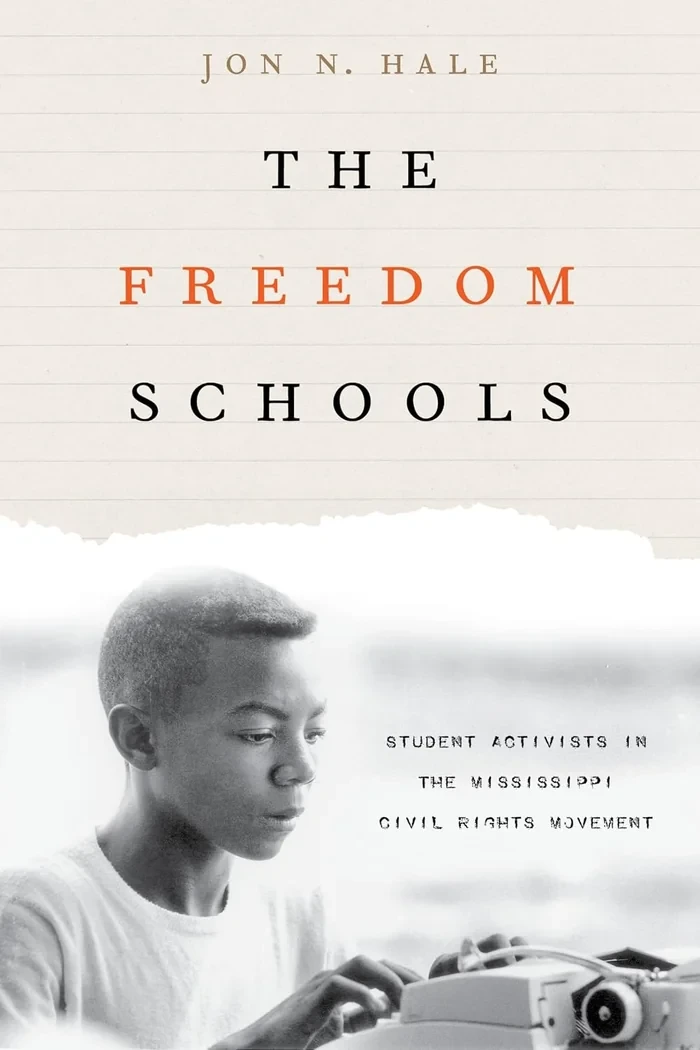
Freedom Schools created space for young Black Mississippians to study, question their surroundings and express their own ideas. Charlie Cobb proposed the programme in December 1963. Students later produced newspapers, and delegates gathered in Meridian at the summer’s end to develop a political platform. The education account follows this movement from classroom discussion to organised demands.
The schools suggest another meaning of building leadership. Learning could include producing information and deciding what changes to ask for. That did not give students control over state institutions, but it let them exercise responsibilities that segregated education often denied them. Political participation was broader than completing a registration form.
Local power met a national boundary
Founded in April 1964, the Mississippi Freedom Democratic Party was open across racial lines. With support from movement workers and volunteers, it built a parallel process of meetings and delegate selection. In August it challenged Mississippi’s regular delegation at the Democratic National Convention in Atlantic City. The party demanded recognition for participation that the state party excluded.
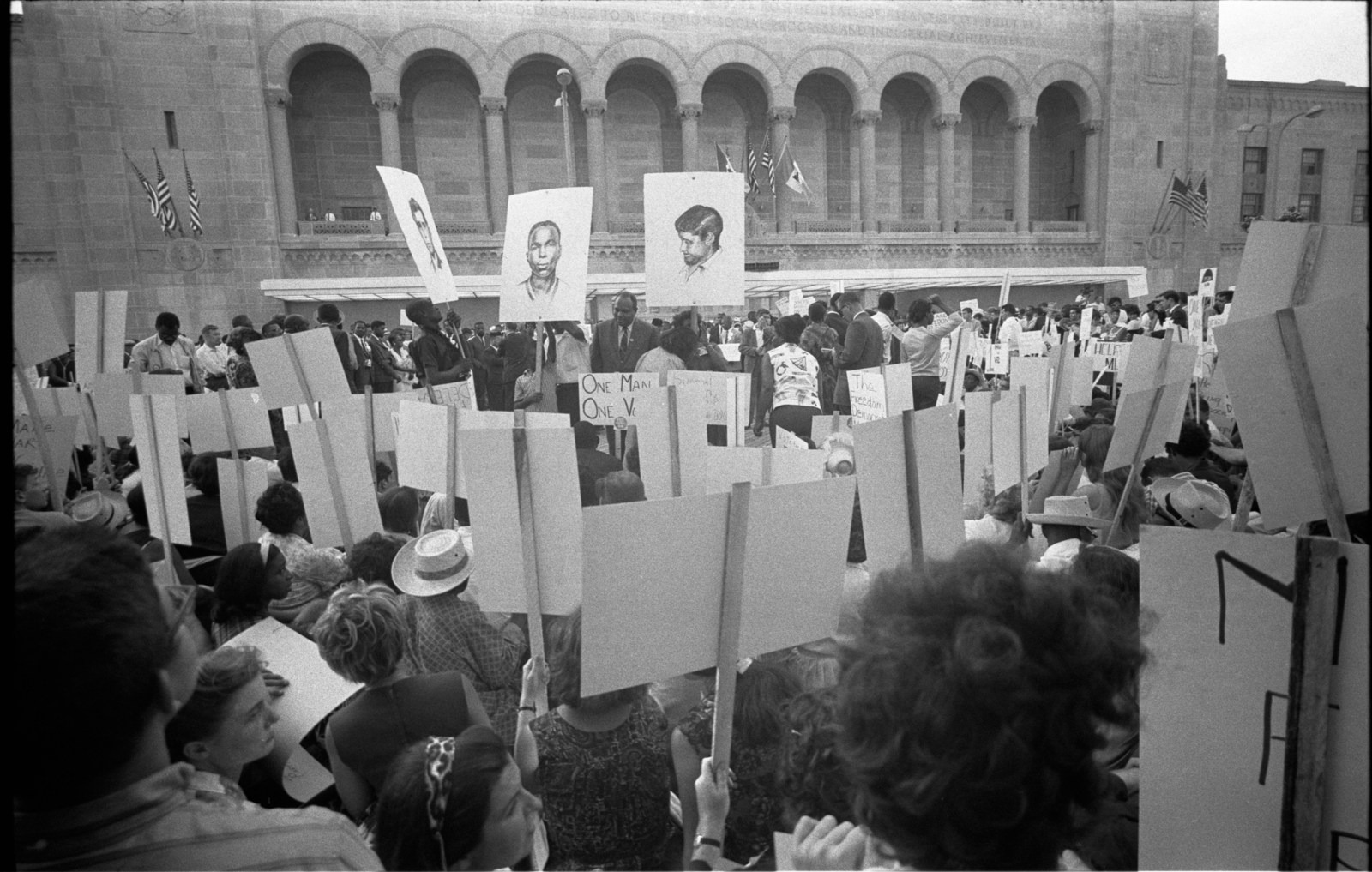
A proposed compromise offered two seats while seating the regular delegation. The MFDP rejected it. Its organisers had built a constituency and a delegation without gaining the recognition they sought at that convention. The outcome shows both the reach and the limits of the work: developing people’s capacity to act did not automatically make powerful institutions accept their claim.
A network’s achievement was also in who could act
SNCC supported local participation through introductions, sustained field work, education, information and cooperative campaigns. It also depended on local people directing, sheltering and challenging its organisers. Its early history makes little sense as one leader’s instructions flowing outward to obedient communities.
Return to the registration form. Around it stood people who could explain it, practise with it, gather evidence of refusal and decide on another action. That wider capacity was part of what SNCC helped develop, even when registration failed or a delegation was denied its seats. The next chapter follows a related question: how did nonviolent resistance work as a strategy, and why did activists debate it?