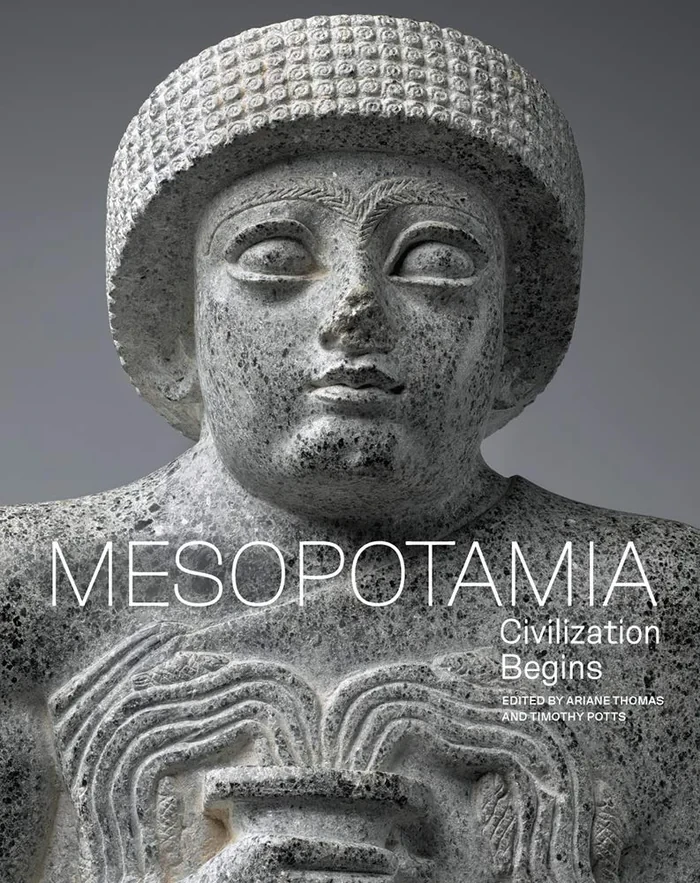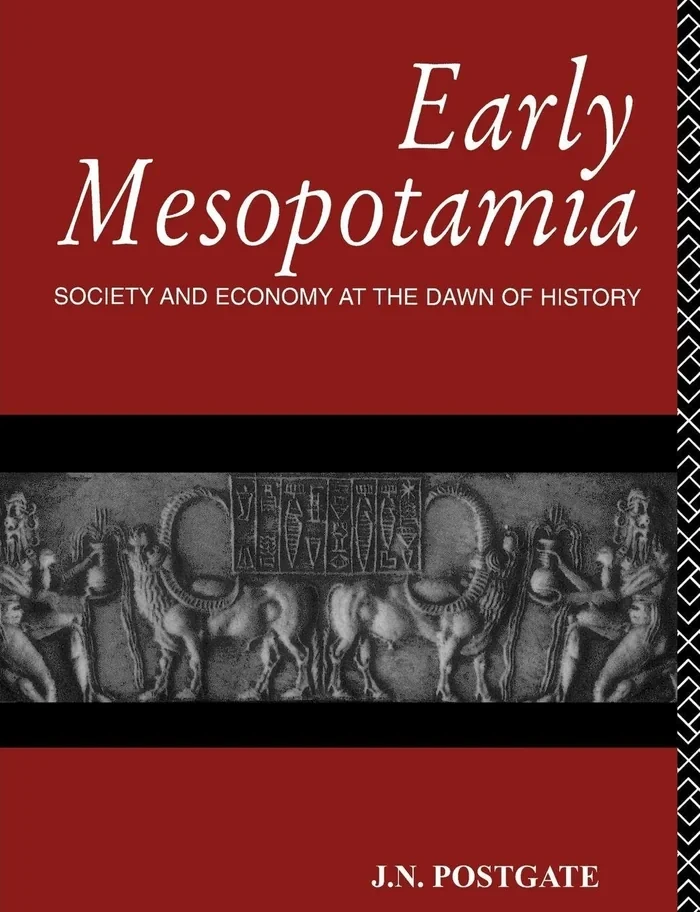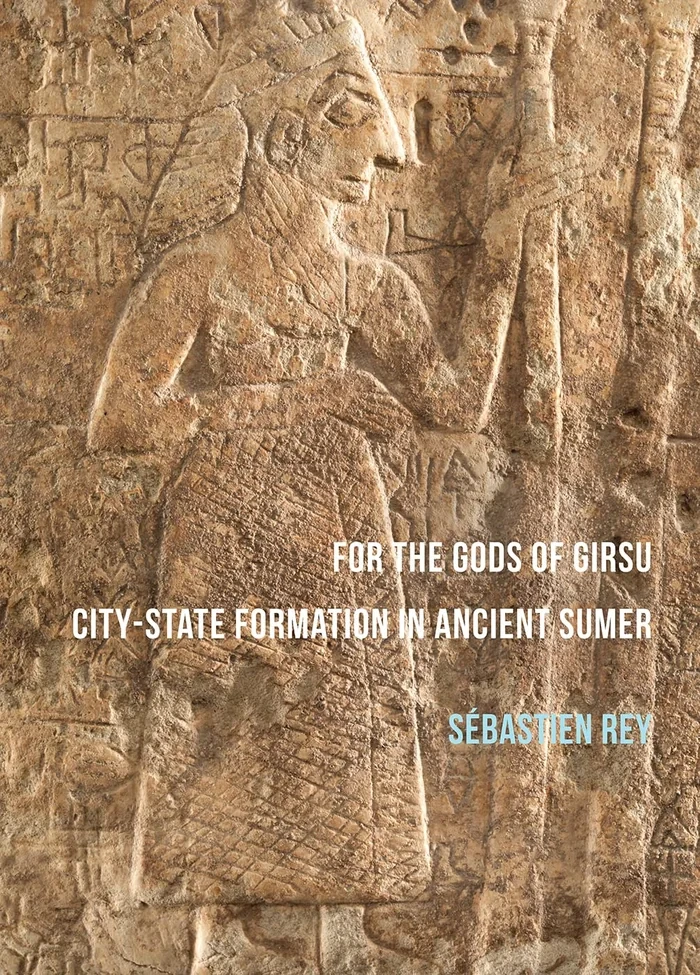
A king lifts a basket of building material. Soldiers advance behind another ruler. In a cemetery at Ur, a woman is buried with gold, lapis lazuli and a seal bearing her name. These are striking traces of power. How do we decide what kind of power each trace records?
In the Sumerian cities of the third millennium BCE, the evidence reaches us unevenly: a carved scene, an inscribed brick, the contents of a grave. Read together, they can identify rulers and the activities attached to their office. Each also leaves questions open. The useful first step is to separate wealth, a named position and evidence of action.
PLACE & TIME
Girsu, Ur and the cities of southern Sumer
Girsu / Tello · Kingdom of Lagash
Southern Mesopotamia · Present-day Iraq
c. 2600–2300 BCE
Approximate period covered
Three questions before naming a ruler
A valuable object shows that somebody could acquire, receive or be buried with costly things. A title attaches a person to a recognised position. A record of a building, military campaign or boundary dispute tells us what that position was understood to involve. These clues may occur together, but one does not automatically supply the others.
The cities in this article belong to the Early Dynastic world, before the later kingdom of Ur III. Their evidence comes from different places and decades, not one complete government archive. Girsu and Lagash also require care: the French archaeological overview identifies Girsu as a centre of the kingdom of Lagash. A reference to “Lagash” can therefore concern a political territory whose important sites included more than the city bearing that name.
TERMS TO KEEP
Three clues to read carefully
Royal inscription
A text naming a ruler and often commemorating a building, victory or dedication. Its wording records how royal authority was presented.
Cylinder seal
A small engraved cylinder whose design can be rolled onto clay. A surviving seal, its inscription and its findspot answer different questions.
Archaeological context
An object’s recorded position and relationship to a grave, building or other finds. A museum label alone cannot restore every lost detail of that relationship.
Ur-Nanshe: a ruler makes building visible
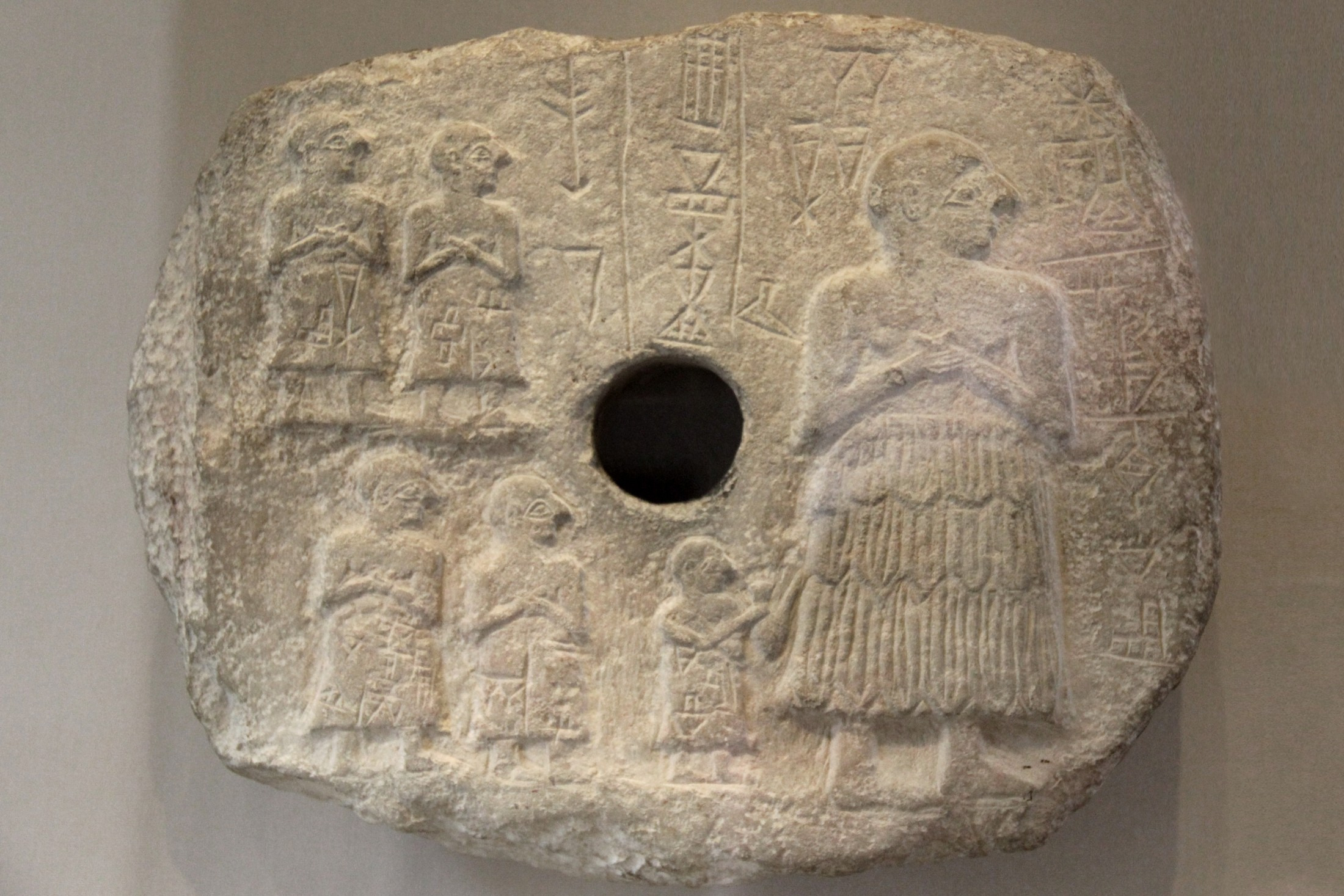
On the relief used as this article’s opening image, Ur-Nanshe appears twice. In the upper register he carries a basket on his head; below, he sits at a banquet. The smaller figures around him include members of his family, with names written beside or on the figures. The composition gives the king a conspicuous place in a named social group.
The Louvre’s record for the relief connects the upper scene with temple construction and identifies Ur-Nanshe as king of Lagash. The basket gives building a royal face. It presents the ruler as a participant in a religious project, bringing an activity that required material and work into the image of kingship.
A separate object adds another kind of trace: a foundation brick bearing Ur-Nanshe’s name, associated in the Louvre catalogue with a temple at Girsu. Here the connection between ruler and construction is carried by a building material intended for a foundation. A scene and an inscribed brick converge on royal involvement in temple building.
What the brick leaves to archaeology
To reconstruct the actual building, we would also want recorded walls, foundations, construction phases and the brick’s precise place among them. A royal name on a brick is useful evidence of sponsorship or dedication. It does not describe every worker’s task, the project’s cost or how far the building eventually extended.
That is why “the ruler built a temple” needs explanation. It can describe a king taking responsibility and credit for a project carried out by many people. The relief commemorates that role; its image cannot serve as a day-by-day account of the work. Archaeological context helps connect the commemorative claim to a particular structure.
Chronology matters as well. Girsu’s famous ruler Gudea belongs to a later period, around the twenty-second century BCE. His statues and building inscriptions can illuminate another episode of kingship, but they should not be folded into Ur-Nanshe’s own building record several centuries earlier.
Eannatum: authority on the battlefield
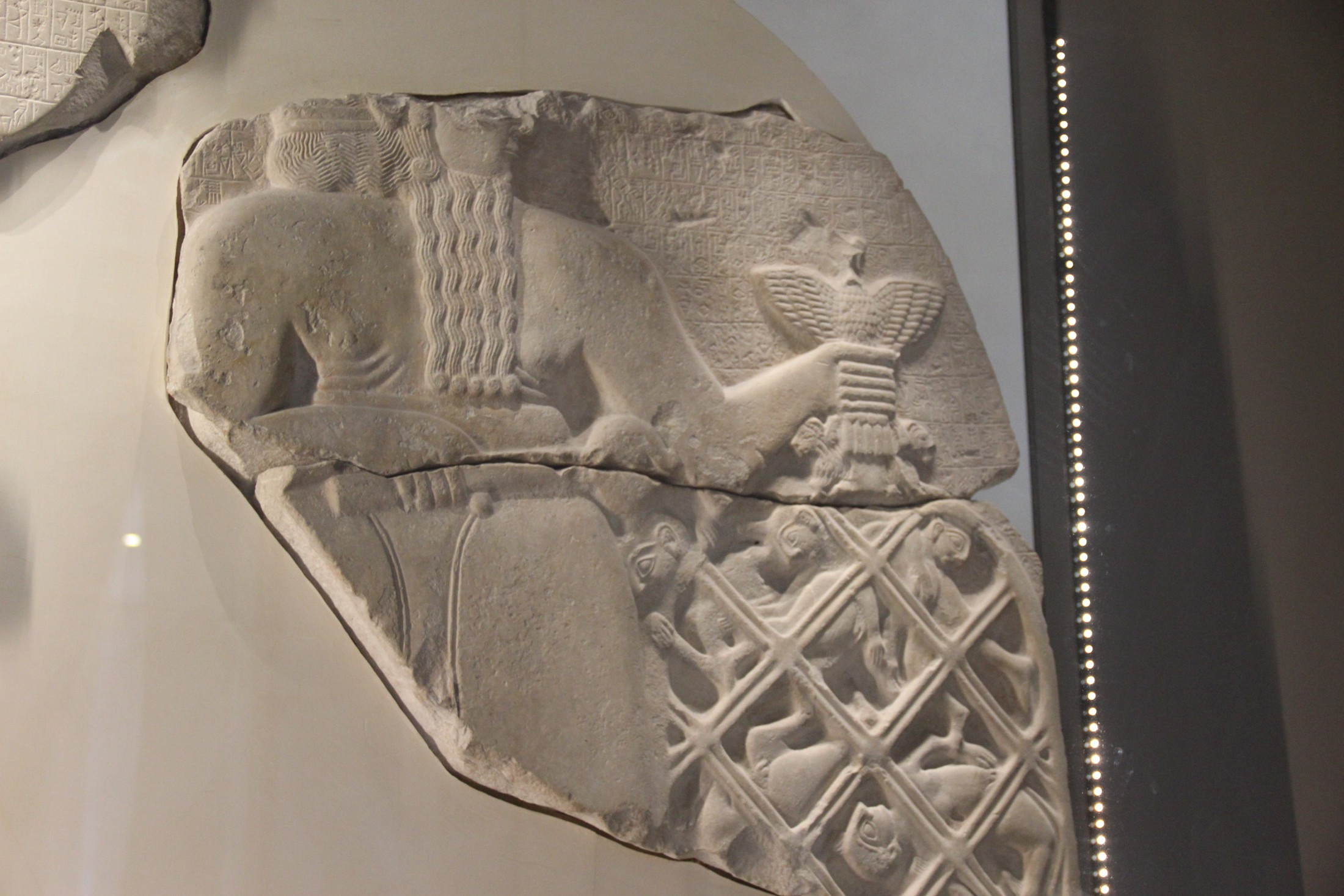
The Stele of the Vultures brings a different activity into view. Its surviving fragments show ranks of helmeted soldiers, shields and spears. Eannatum, a ruler of Lagash, appears as leader. The monument dates to around 2450 BCE; much of it is missing, as the modern museum mount makes clear.
The Louvre catalogue links its inscription to victory over Umma. The text and images connect a named ruler with collective military action. This is stronger evidence for a claim to command than the possession of a rich ornament would be: the monument explicitly makes leadership part of Eannatum’s royal identity.
A victory monument also has a purpose. It honours the victorious ruler and organises the conflict into a story worth preserving. Its carved formations help us understand that presentation. They do not independently establish the exact movement of each soldier, every loss or what people in Umma thought had happened.
A boundary is another form of political action
An inscribed clay cone associated with Enmetena, a later ruler of Lagash, carries another part of this conflict’s history. The Louvre describes Cone A, AO 3004, as recounting the boundary dispute between Lagash and Umma and its settlement. Its text makes territory and relations between neighbouring communities an explicit concern of rulership.
The two monuments ask us to look beyond the image of a powerful individual. Warfare and a recorded boundary settlement involved groups, land and obligations. They reveal what rulers claimed to do for their communities and against rivals. To recover how well any settlement worked over time, we would need further dated records and evidence from both sides.
They also show why surviving royal texts require careful reading. A named ruler and a stated action are firm starting points; the ruler’s explanation of the action remains a participant’s account. Political authority becomes more visible without every detail of political life becoming recoverable.
Ur: when a rich grave complicates the answer
At Ur, the starting point is burial. Leonard Woolley’s excavations uncovered a large cemetery, including sixteen graves he classified as royal. The Met’s cemetery overview sets those elaborate burials among many much simpler graves. The word “royal” belongs to an archaeological classification that needs to be explained, not treated as a title stamped on every object inside it.
Wealth alone did not settle that classification. P. R. S. Moorey’s reassessment notes that the richly furnished grave PG 755, associated with Mes-kalam-dug, was outside Woolley’s group of sixteen. The presence of stone chambers and additional human burials mattered to Woolley’s grouping. A spectacular collection of possessions and a particular type of tomb are different pieces of evidence.
SOURCE CHECK
Can a gold headdress identify a queen?
An elaborate gold headdress identifies a queen of Ur.
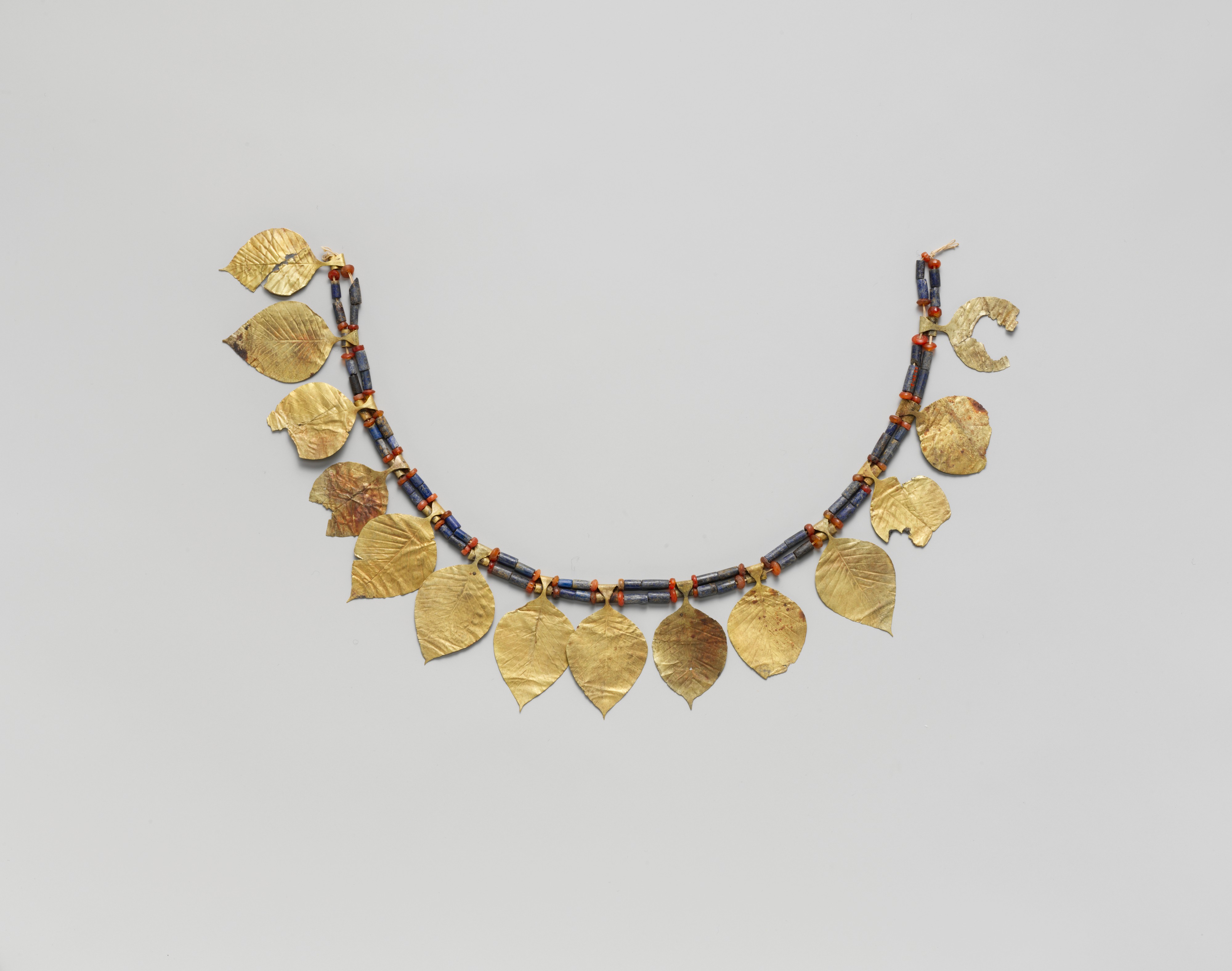
- What survives
- Gold ornaments with lapis lazuli and carnelian beads. Their materials and workmanship make the burial’s costly equipment visible.
- What it supports
- The person buried with them participated in an exceptionally elaborate funerary setting. The museum identifies her as a female attendant.
- What needs another clue
- Neither gold nor the shape of a headdress establishes a royal title or the power to command. Here, the recorded grave context supplies the identification.
Verdict
This headdress belonged to a female attendant in the King’s Grave. Precious ornaments alone cannot establish royal office.
Check the object record The Met: Headdress, 33.35.3 · The Metropolitan Museum of Art, Dodge Fund, 1933. Public domain.
The headdress offers a practical test. Before naming its wearer a queen, ask where it was found and what the catalogue actually identifies. The answer changes once its association with an attendant is taken seriously. Valuable objects could appear in more than one position within an elite funerary setting.
Puabi: a title survives with a name
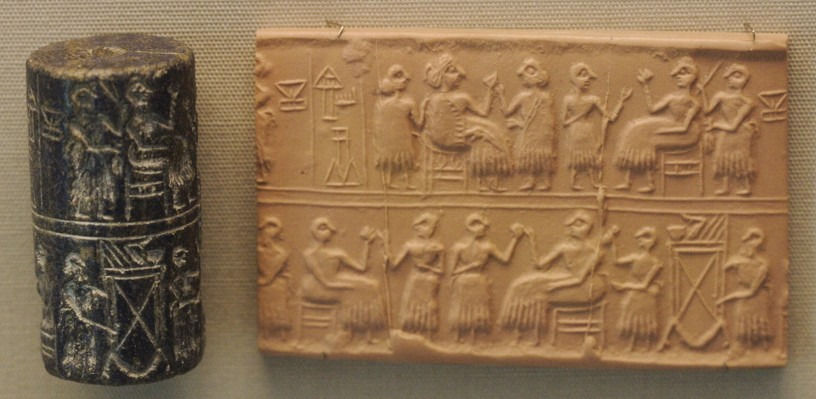
Puabi’s burial gives us something more specific than costly materials. Her cylinder seal bears her name and a royal title conventionally translated as “queen”, as the Met’s overview explains. Rolled into clay, the engraved cylinder produces an image and inscription; the pale surface beside it in the photograph is a modern impression made to display that design.
Hafford points out that the inscription does not identify Puabi through a husband. That is why scholars have considered the possibility that she ruled in her own right. Her name and title support a royal position directly; independent government is an interpretation that asks a further question about the powers attached to that position.
A stronger account of her rule would require additional evidence: dated administrative acts, an explicit record of decisions, or other contemporary texts connecting her to command. The seal does not provide that whole history. We can recognise a woman with a royal title while remaining precise about which responsibilities are documented and which are possible.
The deaths in the cemetery need careful words
Some of Ur’s elaborate graves contained additional human burials. Their circumstances are part of the evidence for hierarchy, yet the dead cannot simply be assigned the motives imagined for them. Woolley’s familiar reconstruction of willing attendants drinking poison should not be presented as an established account of every death.
A 2011 study by Aubrey Baadsgaard and colleagues used CT scans of two surviving skulls and argued for deliberate killing through blows from a sharp instrument. The publisher’s abstract is the basis for this statement. Its small sample supplies evidence against an unqualified voluntary-poison narrative; it cannot establish the manner of death of every person in the cemetery or name who gave an order.
Putting wealth, office and action together
The strongest answer comes from asking the same questions of different objects. The examples do not need to yield identical conclusions to be useful. They show precisely where a named office is visible, where action is recorded and where an attractive identification would run ahead of the evidence.
| Evidence | What it supports | What needs more evidence |
|---|---|---|
| Ur-Nanshe’s relief and inscribed foundation brick | A named king associated with temple construction. | The complete building plan, labour arrangements and extent of his control. |
| Eannatum’s victory stele | Royal representation of military leadership and victory over Umma. | An independent account of the battle and its effects on both communities. |
| Enmetena’s inscribed Cone A | Rulership concerned with territory and a boundary settlement. | How the settlement operated and whether it endured. |
| The attendant’s gold headdress | Costly burial equipment in an elite funerary setting. | A royal title or governing authority for its wearer. |
| Puabi’s inscribed seal | A named woman holding a royal title. | The precise responsibilities of her office and a documented independent reign. |
These are records of rulership, not a complete chart of Sumerian government. They are especially good at preserving the identities that rulers and their circles wanted remembered. People who made bricks, cultivated land or marched in armies usually occupy less space in these commemorations. Recovering their part requires other kinds of record.
Sébastien Rey’s published preview of For the Gods of Girsu explains another difficulty in its foreword: early excavations often recovered striking objects with inadequate records of their contexts. Names and inscriptions may survive when the relationships between object, room and building have become harder to reconstruct. That loss affects the questions we can answer today.
Who held power—and how can we tell?
At Lagash, inscriptions and monuments identify named rulers whose authority was expressed through temple building, warfare and territorial claims. At Ur, Puabi’s seal preserves a woman’s royal title, while the cemetery reveals an elaborate hierarchy whose individual offices are not all recoverable. We can identify several holders of royal status and some activities attached to rulership; precious possessions by themselves do not name the office.
The previous chapter followed copper, cloth and lapis through production and exchange. Those resources could also be concentrated and displayed around powerful people. This chapter adds the question that objects alone cannot settle: who could turn resources, recognised position and collective action into authority?
Keep that question for the next stop in The First Cities: Mohenjo-daro. There, streets, wells and other built remains invite us to ask how much a city can reveal when its written signs cannot yet be read with confidence.