A mark stamped on a cotton bale can connect a Manchester merchant to a South Carolina enslaver. The Global Threads project traced one such link through John Owens’s trading records. A small commercial detail opens a much larger question: whose work lay behind the cotton?
Following the fibre takes us beyond the factory gate. Plantation slavery and Lancashire’s mills belonged to connected markets, but the people working in them occupied profoundly different positions. This chapter asks how cotton joined those worlds without turning their distinct systems of power into one interchangeable story.
PLACE & TIME
One crop, an Atlantic connection
New Orleans · Liverpool · Lancashire
US South and north-west England
c. 1800–1865 CE
Period covered in this article
From an open boll to a spinning mill
Cotton is the fibre surrounding the plant’s seeds. Picking it, separating it from those seeds, packing it and turning it into yarn are different jobs. A machine that makes one stage quicker cannot stand in for the whole chain. That simple distinction helps explain why the spread of machinery could coexist with expanding forced labour.
The Lancashire firm McConnel and Kennedy provides a specific connection. Global Threads describes merchants shipping its cotton from Charleston, Savannah and New Orleans to Liverpool, then onwards to Manchester. It particularly valued long-fibred Sea Island cotton from coastal South Carolina and Georgia. Fibre quality mattered to the yarn a manufacturer could sell; different varieties also made different demands on the people harvesting them.
FOLLOW THE PROCESS
How raw cotton reached a Lancashire mill
Grow and pick
On US plantations, enslaved people cultivated and gathered the crop.
Separate and pack
Ginning removed seeds; cleaned fibre was compressed into transportable bales.
Trade and ship
Planters, brokers and merchants moved cotton through ports and across the Atlantic.
Prepare and spin
Lancashire mills cleaned and arranged the fibre before machinery twisted it into yarn.
The Liverpool–Manchester railway, opened in 1830, made an existing connection faster. The Science and Industry Museum’s guide describes cotton and cloth moving between the port and mills, alongside earlier roads and canals. The engine was only one part of a commercial system: ships, warehouses and workers handled the material at each transfer.
LOOK CLOSELY
Cotton at the New Orleans waterfront, 1860
Find the bales
Packed cotton occupies the foreground and quayside: the crop has become freight.
Find the next carrier
The line of steamboats shows the river transport serving this waterfront.
Keep the picture’s limits
This newspaper engraving depicts a busy port. It cannot identify everyone who grew the cotton or establish each dock worker’s legal status.
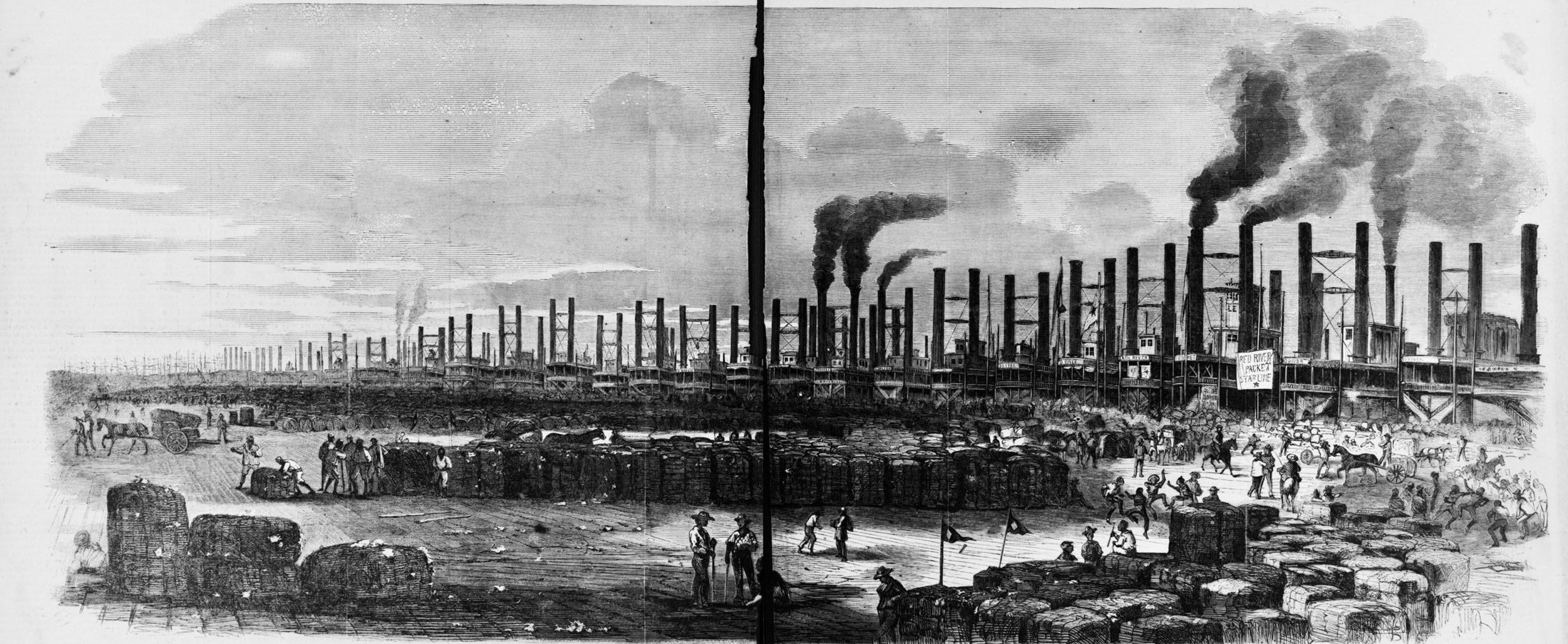
Wood engraving after an E. H. Nelson Jr. photograph, published 14 April 1860. This digital copy joins the newspaper panels.
A faster gin did not mean freedom in the field
Eli Whitney’s cotton gin, patented in 1794, separated fibre from seeds more efficiently. It did not pick the cotton. The National Park Service explains the consequence: more profitable processing encouraged greater production and demand for enslaved labour. A labour-saving device at one stage could increase the amount of labour demanded elsewhere.
That expansion depended on decisions about land, commerce and people, not a machine acting alone. Enslavers could seek a larger crop while manufacturers sought more raw material. Cotton demand and the power to compel work reinforced each other. Efficiency therefore needs a second question: who received its gains, and who bore the additional demands?
- Ginning: removing seeds from picked cotton.
- Spinning: twisting prepared fibres into yarn.
- Weaving: interlacing yarns to make cloth.
- A change in one stage does not automatically improve conditions at another.
What the weighing basket meant to Solomon Northup
Solomon Northup was a free Black New Yorker kidnapped in 1841 and sold into slavery. The Historic New Orleans Collection places him on a surviving ship manifest arriving in New Orleans that year. His 1853 narrative, written after his rescue, describes life on Louisiana plantations from someone who remembered having been free.
In chapter XII of Twelve Years a Slave, cotton picking ends with weighing. Northup describes an initial assessment used to impose subsequent tasks, with violence for falling short. The basket measured more than output: it could determine punishment. Producing more could also raise the next demand, rather than earning the picker control over the work.
IN THE SOURCE
At night it is weighed, so that his capability in cotton picking is known.
Northup distinguishes people’s picking abilities, including his own and Patsey’s, rather than giving one uniform requirement. His figures should not become a national productivity average. His account also carries the purpose and shaping of an antislavery narrative. Yet that context does not erase its evidence of coercion; it tells us to read the described workplace and the published testimony together.
Compare control, not just exhaustion
The previous chapter on children’s mill work showed long hours, punishment and household need. None makes wage employment equivalent to chattel slavery. In the latter, people were treated as property. Hereditary status and the power of sale could place family relationships themselves at the disposal of enslavers.
KEEP THE DISTINCTION
Connected production, unequal legal relationships
What was controlled?
An enslaver claimed ownership over a person, not simply the purchase of a period of work.
An employer hired labour. Dependence on wages did not make the worker the employer’s property.
Could a person leave?
Departure could be treated as escape and met with pursuit, punishment or forced return.
Poverty and punitive service-contract law restricted choices; leaving was not necessarily easy or legally consequence-free.
What could happen to a family?
Sale could separate relatives; children could inherit enslaved status.
Work and economic insecurity could separate families, but hiring did not confer an enslaver’s power to sell them.
Calling mill workers “free” must not imply unrestricted choice. A parliamentary debate in 1867, looking back at the law then in force, described workers facing criminal punishment for breaking service contracts. This retrospective evidence complicates a neat freedom-versus-coercion diagram. It does not remove the distinct legal ownership at the centre of slavery.
The larger economic argument needs separate evidence. Economic historians Olmstead and Rhode criticise claims that enslaved cotton was indispensable to industrial development. That debate does not make the documented trading links disappear. It asks a different question: how much those links explain, and what might have happened under other conditions. An invoice can demonstrate a purchase; proving that an entire industrial transformation required slavery is a much broader proposition.
The trade record preserves a connection—and leaves gaps
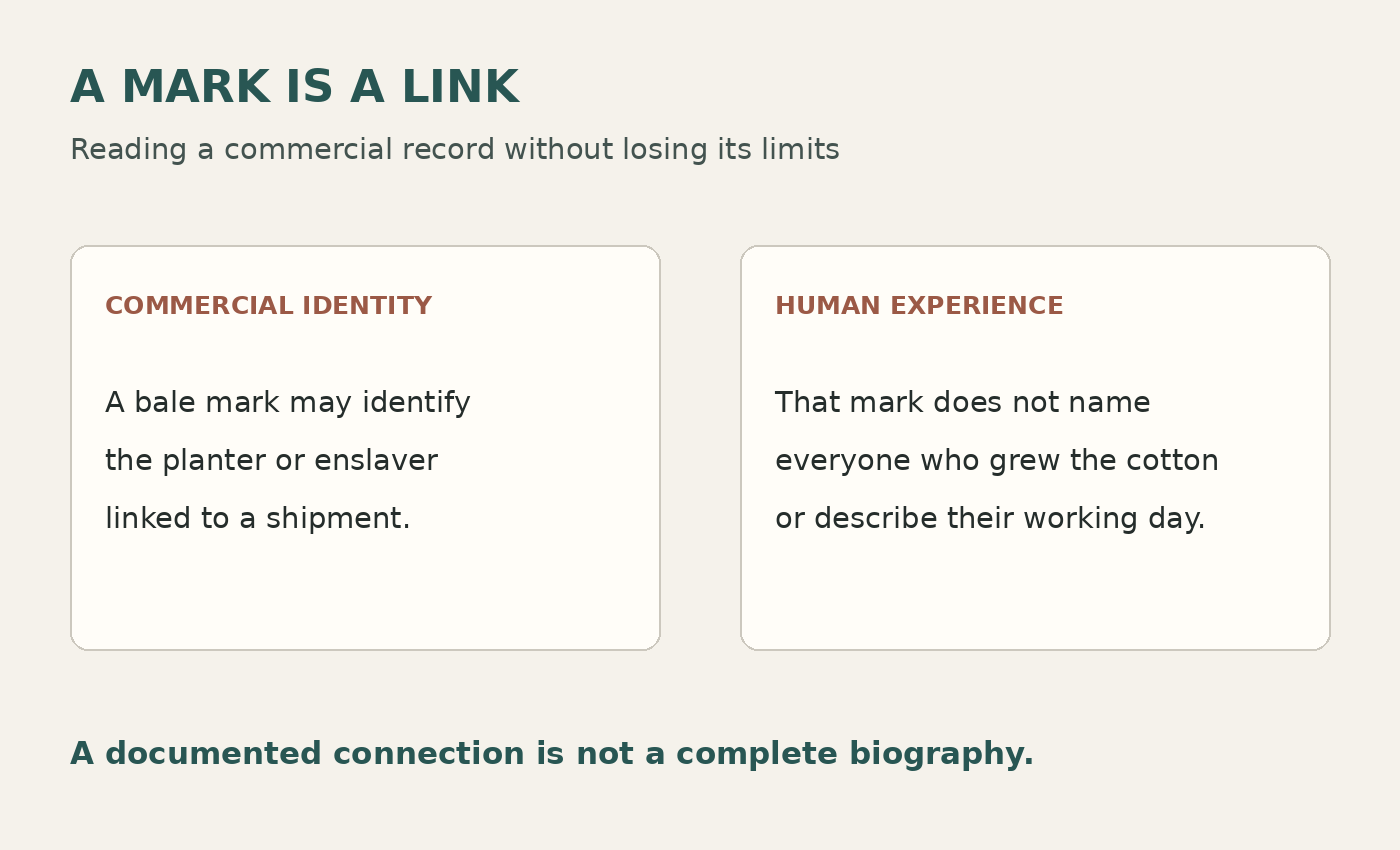
John Owens’s invoices record recurring purchases of 50–300 bales. Global Threads’ research connects a bale mark with enslaver W. H. Ellison in Fairfield County. That is a documented link within a supply network, not a complete roster of the people whose work filled a shipment.
TEST THE EVIDENCE
Does a bale mark identify every worker?
A bale mark tells us who grew all its cotton.
- RESEARCH REPORTS
- An identified bale mark linked Owens’s trade to Ellison.
- SUPPORTS
- A specific connection between commerce and an enslaving estate.
- CANNOT RECOVER
- Every grower’s name, task or lived experience.
A better-supported statement
A mark can connect a shipment to an enslaver without recovering every worker’s identity.
Research: Katie Haynes · Global Threads · Before Now · editorial reading guide
Different records illuminate different parts of this history. An invoice follows goods and value; a survivor’s narrative can describe a task and its consequences. Joining those sources makes the account richer without pretending they are the same evidence. Nor should Northup’s personal experience be attached to the Ellison shipment: these are separate, bounded examples of a wider system.
People subjected to that system were not merely entries in its books. Northup describes efforts to send secret letters north, while restrictions on movement and correspondence endangered those attempts. Such actions reveal persistence within severe constraints. His eventual rescue was a particular outcome, not evidence that every enslaved person possessed the same route to freedom.
A plantation visit should centre the people who worked there
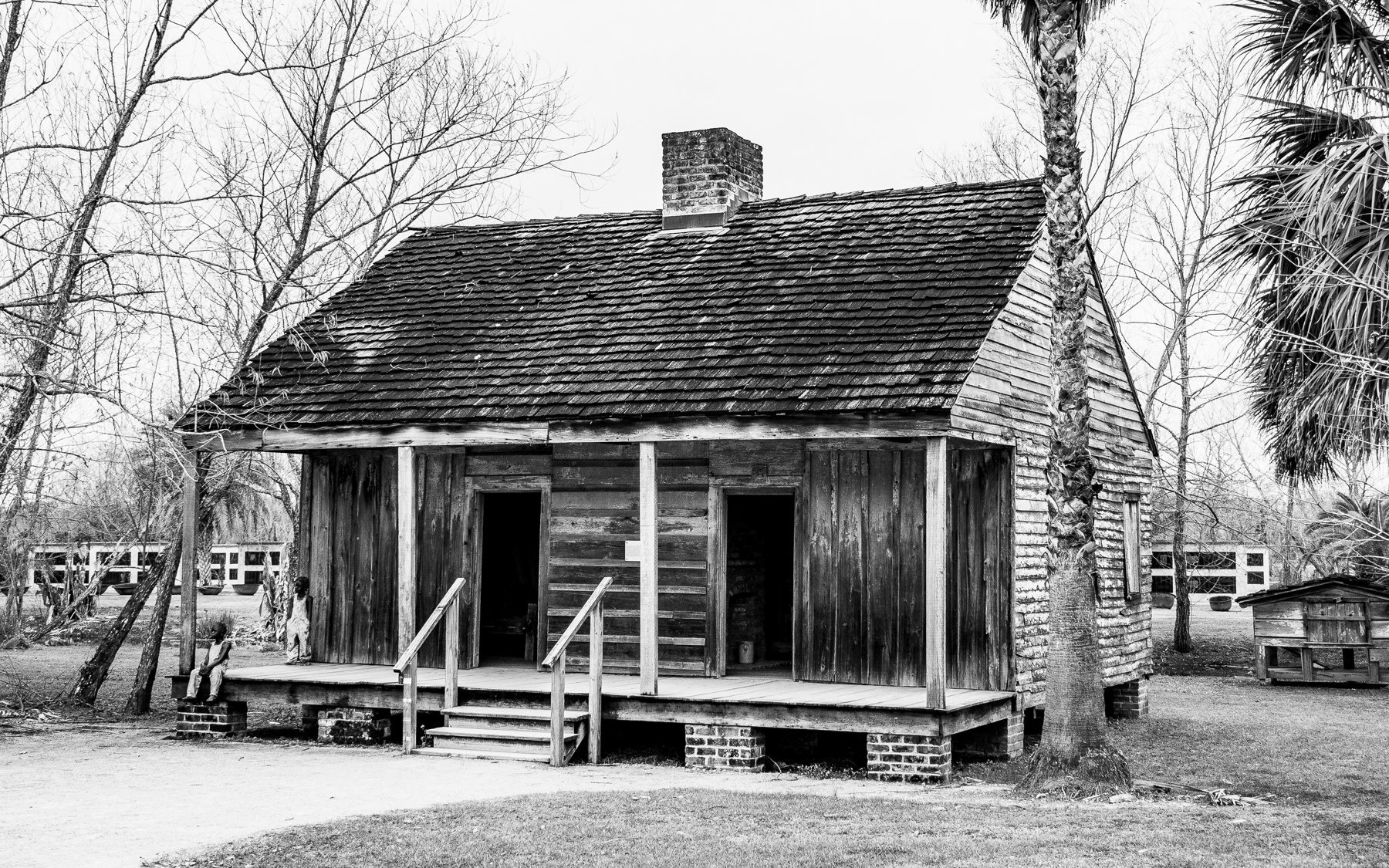
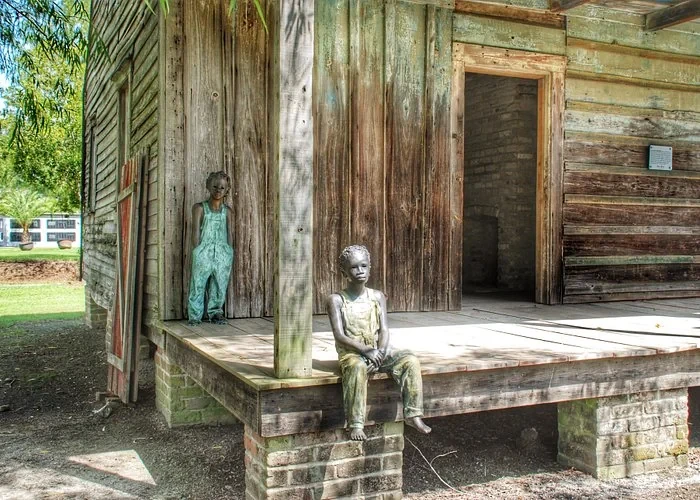
Preserved buildings can make labour’s setting tangible, but a picturesque house is an incomplete introduction. Whitney Plantation Museum in Louisiana centres slavery through interpretation, buildings and memorials. Its own history concerns rice and sugar, rather than the cotton plantations described by Northup. It offers a related encounter with enslavement, not the original location of his account.
When the Atlantic connection broke
The American Civil War exposed Lancashire’s dependence on distant supplies. Interrupted cotton exports, including the effects of the Union blockade, brought unemployment and reduced working hours. Manchester Archives+ documents a meeting on 31 December 1862 supporting Lincoln despite the hardship. That meeting is evidence of a public position, not proof that every worker or manufacturer agreed.
LAYERS OF TIME
Disruption and emancipation were different changes
- 1861
War interrupts supplies
The Civil War and Union blockade disrupted the trade feeding Lancashire’s mills.
- 31 December 1862
Support at the Free Trade Hall
A Manchester workingmen’s meeting offered support to Lincoln during the cotton famine.
- 19 January 1863
Lincoln replies
The president thanked Manchester’s working people for their support.
- 6 December 1865
Constitutional abolition
The Thirteenth Amendment was ratified, prohibiting slavery with an exception for punishment following conviction of a crime.
A war, a public meeting and constitutional abolition had different effects. None by itself explains every workplace’s experience.
The amendment changed the legal foundation of US slavery; it did not supply income, land or safety by itself. Cotton production could continue after emancipation under altered relationships. The distinction matters: restoring a trade and securing meaningful freedom are different historical problems. An end date on a timeline cannot answer both.
KEY IDEA
The cotton crossed an ocean. The people behind it did not share the same power over their lives.
Cotton connected the plantation and mill through a material chain, but the chain was held together by more than transport. It linked demand, technical processes and unequal control over work. The clearest comparison asks who could command a person, impose a task, claim an income or separate a family. Those questions explain why exhausting labour on both sides of the Atlantic was not the same relationship.
The next planned chapter returns to Manchester in 1819, before the Civil War: Peterloo. Its question is about political participation and violence at a reform meeting. That step follows the people living within an industrial society, rather than pretending every chapter must march forward along the same clock.