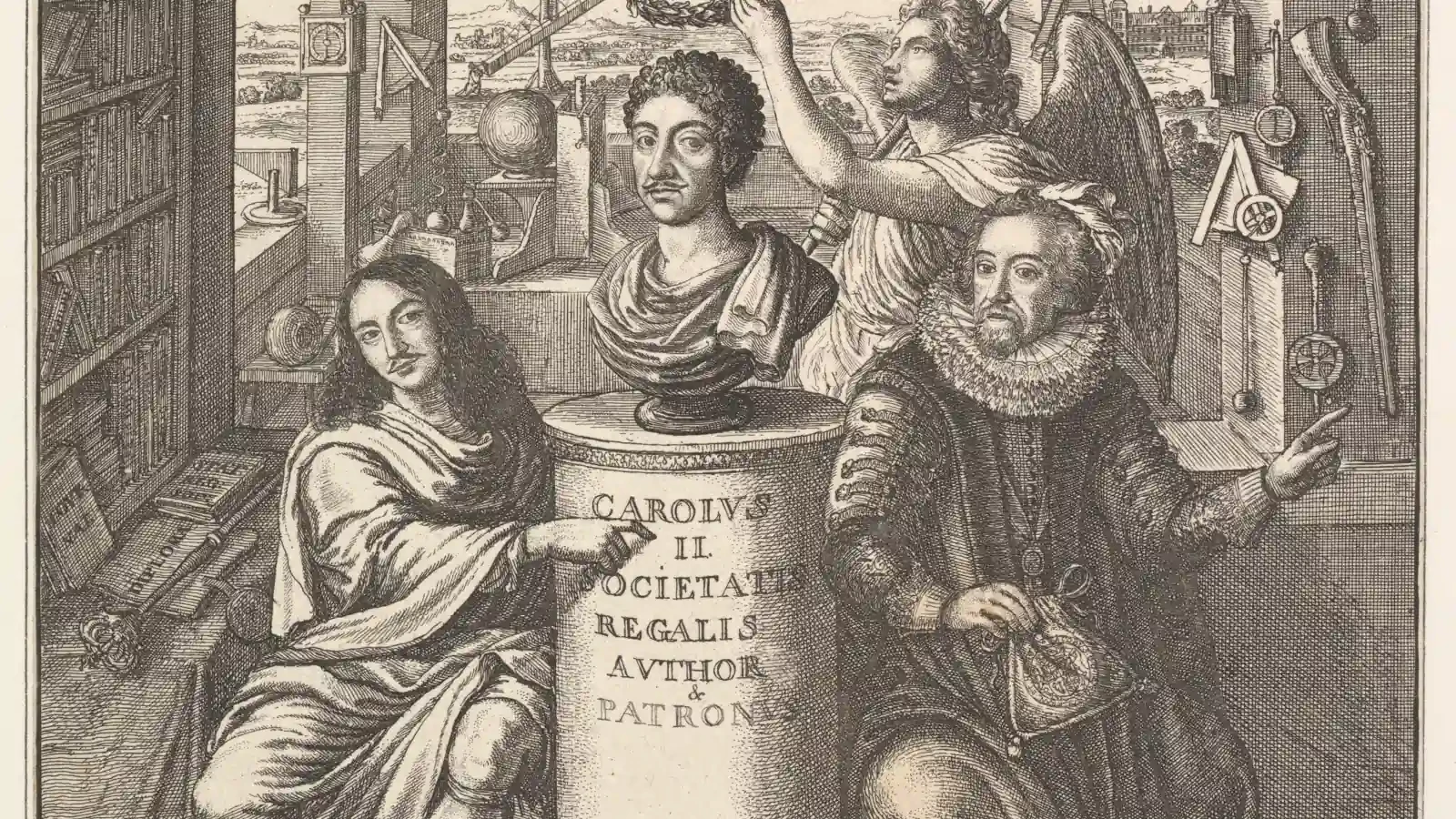
In May 1667, Margaret Cavendish visited a meeting of the Royal Society. Experiments had been prepared for her: the weighing of air, mixtures that changed colour or became hot, and water made to bubble in an air-pump receiver. The meeting record, reproduced by the Society, describes a carefully arranged encounter with experimental knowledge. It also records an exception. Cavendish came as an eminent visitor, not as a Fellow. The welcome did not amount to equal membership.
The episode opens two questions at once. How could an experiment be made public, and who belonged to that public? A device operating in a room was accessible to a limited audience. Its results might travel much further through correspondence and print. The early Royal Society became important by helping connect these settings, while the costs, skills and social conditions of participation shaped whose claims were heard.
PLACE & TIME
London · 1660–1677 CE
London
Meetings connected with correspondents in Britain and beyond
1660–1677 CE
A London reference point for a network; the map marker does not encompass every contributor or meeting place.
A society made enquiry a continuing activity
The Royal Society developed from earlier gatherings of people interested in natural knowledge. Its founding meeting is conventionally dated to 28 November 1660, following Christopher Wren’s lecture at Gresham College. Royal charters followed. The Society’s institutional history describes a membership drawn from occupations including medicine, law, commerce and landholding. These were not modern research scientists working in a university department.
Regular meetings mattered because an investigation could return to the agenda. An experiment might be proposed, attempted, reported and discussed on different occasions. A society gave that work continuity beyond a single friendship or demonstration. It also required organisation: someone had to supply apparatus, prepare the next trial, record business and maintain contact with people who were not present. Institutional history belongs as much to that recurring labour as to a list of famous Fellows.
FOLLOW THE PROCESS
A claim could pass through several settings
A meeting
An observer or operator presented a device, result or report to people able to ask questions in the room.
A written account
Descriptions, drawings and correspondence preserved selected details and invited responses from elsewhere.
An edited publication
An editor chose, translated or arranged material for readers who had not attended the original encounter.
Further examination
Readers and correspondents could compare observations, ask for detail or attempt related work; circulation did not end the discussion.
Hooke had to make something happen
Robert Hooke’s appointment as Curator of Experiments in 1662 gave practical preparation a place within the organisation. His archival record describes the demonstrations he supplied and the changing arrangements for payment. A programme of experiments was a demand on someone’s time and skill. Having members interested in results was not the same as possessing a reliable supply of working demonstrations.
Apparatus could fail, and a successful performance needed more than the person whose name headed the account. Construction, adjustment and maintenance shaped what the audience was able to inspect. The curator’s role helps make this visible. An experiment was not a proposition brought into a room and instantly accepted. It was a material event that had to be prepared well enough for the result and its interpretation to become discussable.
The Society’s motto, Nullius in verba, is commonly rendered as “take nobody’s word for it”. That was an aspiration to examination, not a declaration that nobody would ever rely on testimony. A Fellow could not personally visit every distant place or reproduce every observation. The practical question was which accounts and procedures made reliance on other people more reasonable. The motto made that problem urgent; it did not make it disappear.
KEEP THE DISTINCTION
Being present and reading a report offer different access
A demonstration in a room
Questions about the device, operator and immediate result; a shared occasion for comparison.
Every relevant detail may not be visible, and the gathering represents a restricted audience.
A letter from elsewhere
A named correspondent can describe circumstances and answer follow-up questions.
The recipient depends on what is reported and on the relationship that makes the letter credible.
A printed account
More readers can revisit an explanation and compare it with other reports.
A page cannot supply the same apparatus, practical skill or local conditions to each reader.
Oldenburg connected readers who never shared a room
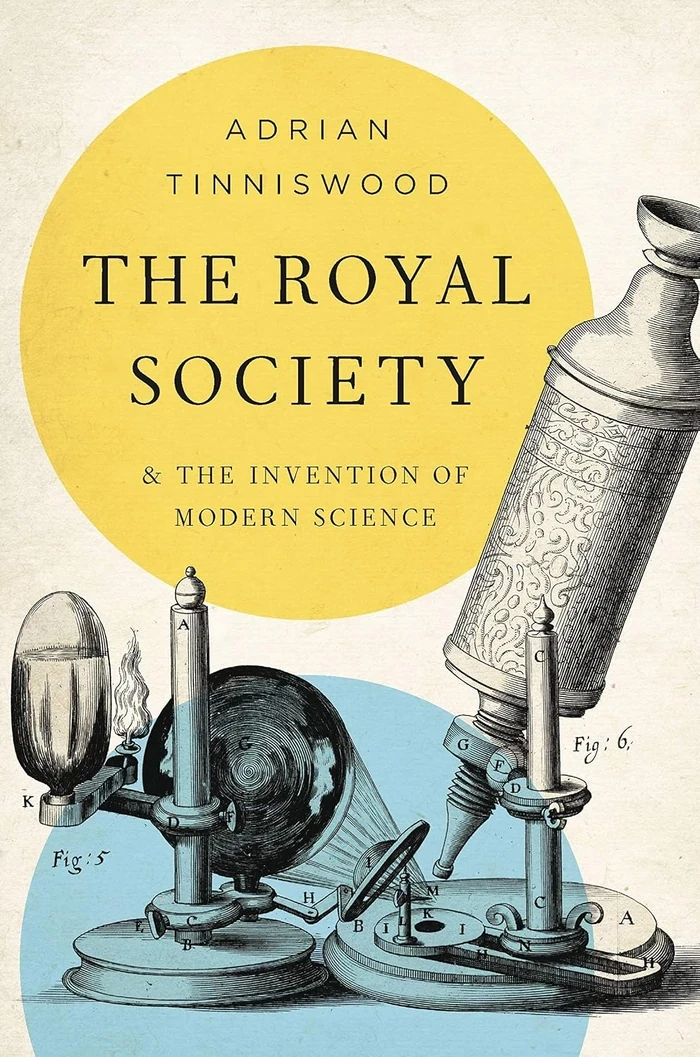
Henry Oldenburg, the Society’s secretary, used correspondence, language skills and editorial judgement to assemble Philosophical Transactions, launched in March 1665. The journal began as his personal publishing enterprise, with the Society’s approval, rather than as a fully funded institutional publication. The journal’s own history records that distinction. Only in 1752 did the Society formally take over its management.
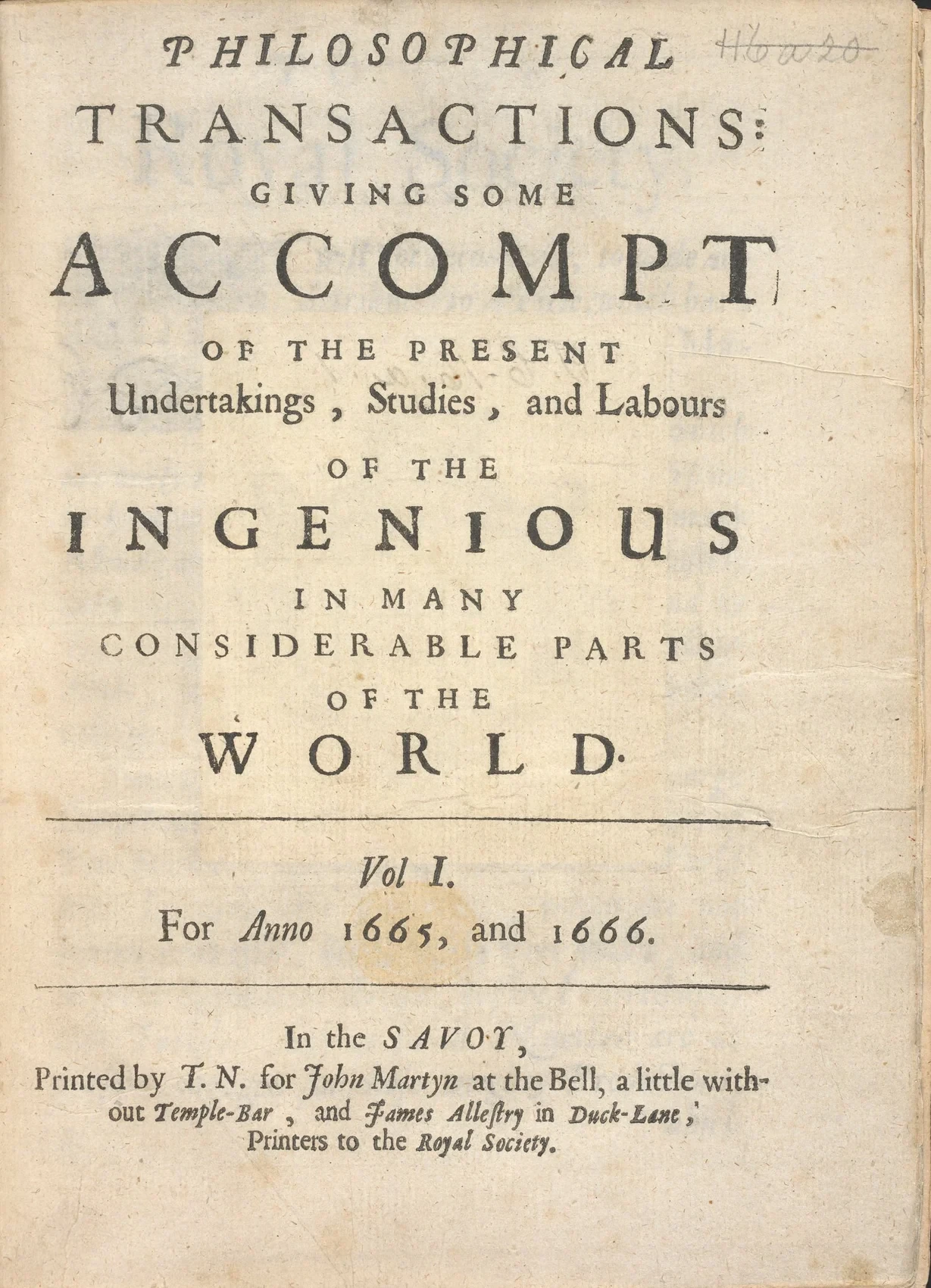
The title promised accounts of investigations from many parts of the world. Getting them into print required decisions about what to include and how to make it comprehensible. Translation and condensation could increase the reach of an account while changing its presentation. Research on translation at the early Society makes that editorial work visible. Oldenburg did not merely pass a finished scientific message from one unchanging container into another.
A periodical also gave readers a reason to return. Reports could arrive before a large book was complete; new information could respond to earlier material. But a journal’s existence did not guarantee that its editor earned a comfortable income or that every contribution had passed through procedures equivalent to today’s peer review. Studies of its early publishing model show an institution and format being worked out over time.
KEY IDEA
An account became available to more people; it did not become automatically true because it was printed.
A striking report could prompt a request for verification
A surviving letter from Hooke to Antoni van Leeuwenhoek, catalogued as 1 February 1677, offers a compact example. Hooke thanked him for a paper that had been read at the Society and asked for further material to verify the discovery of tiny animals in pepper water. The archive describes that request. The remarkable report had entered the network, but that was not the end of the enquiry.
The letter helps us avoid a misleading choice between instant acceptance and total dismissal. A recipient could take an account seriously enough to seek more detail while withholding complete agreement. Sending a letter back was itself a form of work. It depended on maintaining a relationship and making the question specific enough for someone elsewhere to answer. The network mattered because it allowed an observation to become a continuing exchange.
FOLLOW THE PROCESS
Read the verification request carefully
Identify the claim
The report concerned small living things in a particular preparation, not simply the general promise of the microscope.
Ask what another observer needs
Further information could make the preparation, instrument or observation easier to assess.
Preserve the distinction
A request to verify is evidence of scrutiny. By itself it does not document a successful repetition or settle every explanation of the result.
The Society’s wider collecting work drew on practical knowledge from outside its most visible membership. Its Classified Papers include investigations of trades, manufactures, commerce and agriculture. Craft workers and merchants could supply information that entered a learned record. We should ask who gathered that knowledge and how attribution changed as it moved, rather than imagining that a London meeting produced every fact it discussed.
The public was larger than the membership—and still restricted
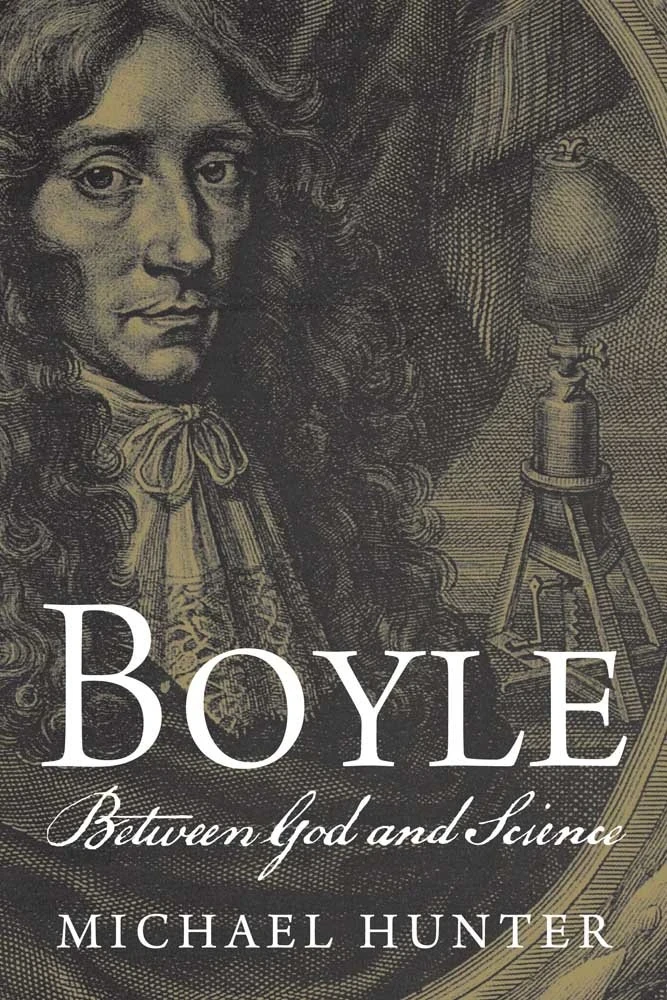
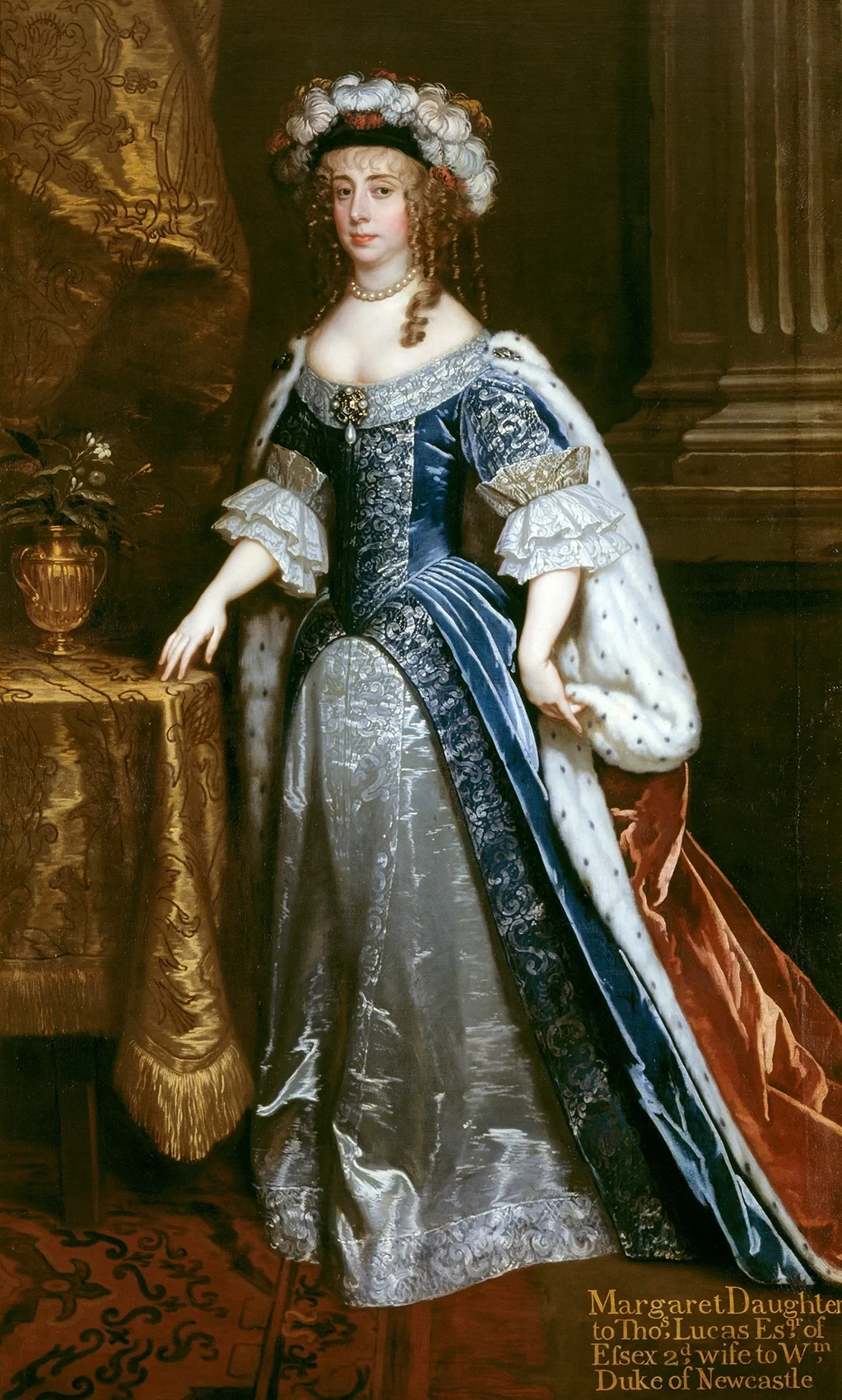
Cavendish’s visit returns us to the boundaries of participation. She was already an author who had published on nature, including a critical response to experimental philosophy. The portrait reproduced here predates the visit. Neither her books nor her reception at a meeting made her a Fellow. The Society’s account distinguishes these forms of presence, which should not be collapsed into a simple story of admission.
Access also depended on resources. A book had to be obtained and read; a letter needed a connection; apparatus required money and practical competence. These constraints differed between people and investigations. They do not make the expanding circulation of knowledge insignificant. They explain why “public” is a question to investigate rather than a promise that a seventeenth-century organisation automatically fulfilled for everyone.
What the Society made possible
The early Royal Society supplied places, roles and routes through which investigations could become objects of shared attention. Hooke’s preparation, Oldenburg’s editing and a correspondent’s reply solved different parts of that problem. The institution was most consequential when these activities supported further examination, not simply when its name was attached to a result. Its authority was made through those practices and through the social standing of its participants.
TAKE THIS WITH YOU
Ask how a claim reached its audience
Follow the preparation
A working demonstration depended on apparatus, skill, time and people whose labour could be less visible than a famous Fellow’s name.
Follow the account
Letters and journals carried selected details; translation and editing helped shape what distant readers could inspect.
Follow the boundary
Visitor, correspondent, reader and Fellow were different positions. Wider circulation was not equal participation.
The next chapter goes inside one of the instruments that made this work so demanding: Boyle and Hooke’s air pump. A glass receiver could turn invisible air into a subject of investigation. First, however, someone had to keep the air from leaking back in.