
On a page devoted to the peacock flower, Maria Sibylla Merian recorded two kinds of knowledge. She dated a caterpillar’s change into a pupa to 22 January 1700 and the emergence of moths to 16 February. Alongside that sequence, she reported how Indigenous and enslaved people understood the plant’s reproductive uses. The text of plate 45 refuses a tidy separation between insects, plants and the violent society around them.
Merian’s Metamorphosis insectorum Surinamensium, published in Amsterdam in 1705, is celebrated for pictures that bring living creatures and their food plants together. Those images deserve close attention. So does the work needed to produce them: rearing insects, finding plants, making drawings, preparing a publication and depending on knowledge that did not originate with its named European author.
PLACE & TIME
Paramaribo and Amsterdam · 1699–1705 CE
Paramaribo and Amsterdam
Research in colonial Suriname; publication in the Netherlands
1699–1705 CE
Paramaribo is the journey’s reference city. The publication and European workshop belong to Amsterdam.
The investigation began before the Atlantic crossing
Born in Frankfurt in 1647, Merian grew up in a family connected with art and publishing. In the preface to Metamorphosis, she traced her interest to raising silkworms and then watching other caterpillars change. That is her retrospective account of a developing practice, not a reason to imagine a scene from her childhood. The preface explains what she wanted to investigate: the stages that a preserved adult insect did not reveal.
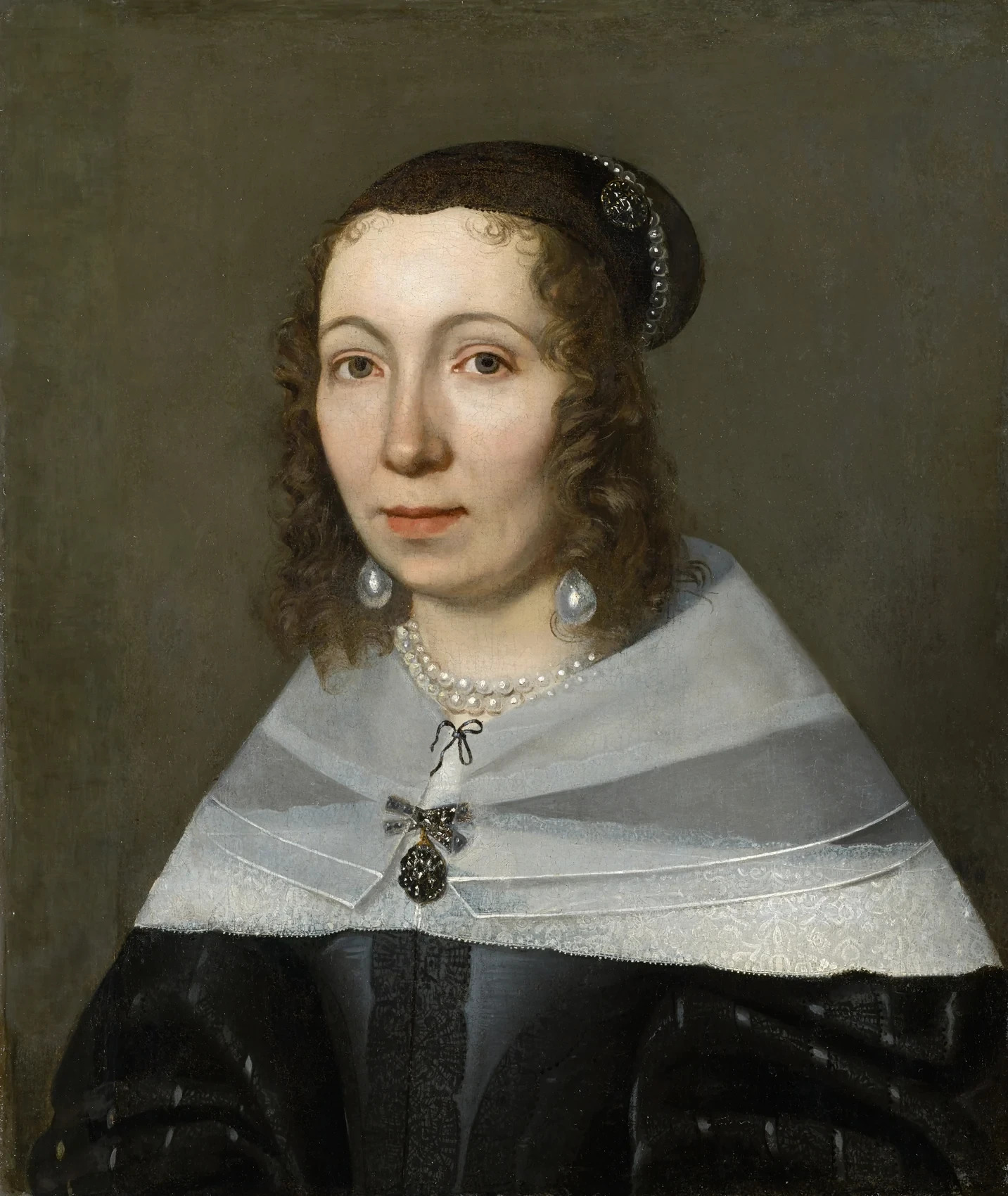
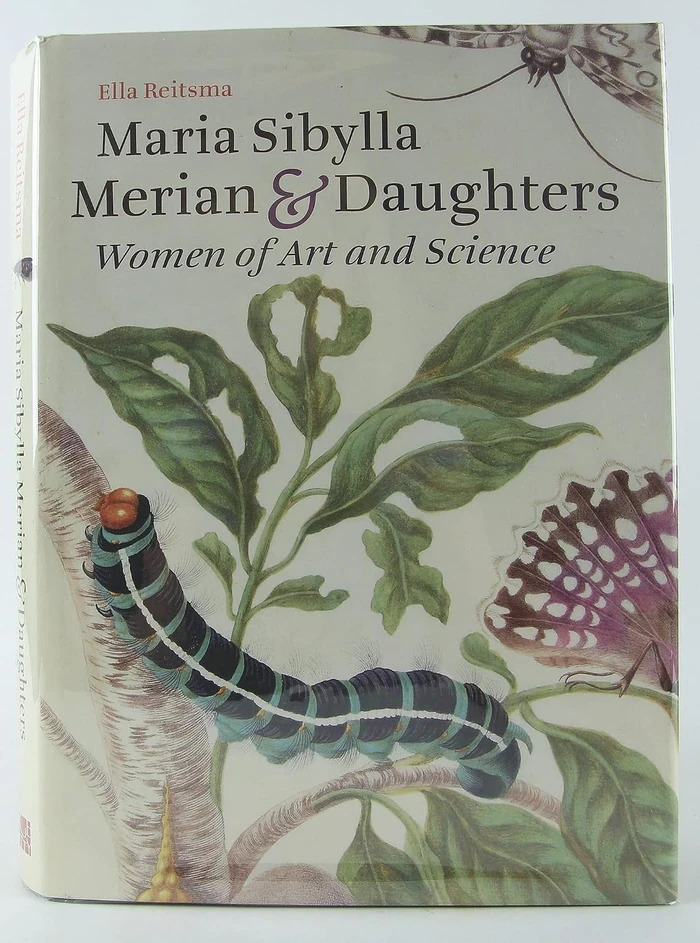
Her European insect publications appeared in 1679 and 1683, before the Suriname journey. They placed transformation and plants within a sustained programme of looking and recording. Merian was not the first person to study insect life cycles. Her particular achievement lay in the patient relationships she followed and the forms through which she made them available to an audience. Calling her a solitary inventor of observation would obscure the field in which she worked.
Artistic work was part of that practice and part of earning a living. Merian and her daughters made images and supplied materials for a market of collectors. The Getty’s exhibition follows the family workshop, rather than treating the mother’s fame as evidence that she worked without assistance. Drawing was not a decorative activity added after the serious investigation. It was one of the ways a sequence could be observed, preserved and presented.
FOLLOW THE PROCESS
A life cycle had to be followed, not merely collected
Find a living subject
A preserved butterfly could show an adult’s appearance without revealing its earlier stages.
Provide a suitable plant
Rearing an insect required attention to what it would eat and to the conditions under which it survived.
Watch through change
Dates and successive observations helped connect caterpillar, pupa and adult.
Compose an account
A plate and accompanying text brought stages and plant relationships together for readers who had not watched the process.
Collections supplied a question that specimens could not answer
In Amsterdam, Merian encountered insects brought from overseas in private collections. In her preface she explained the problem: the specimens did not show their origins and transformations. The gap helped motivate the expensive journey to Suriname. She left in June 1699 with her daughter Dorothea Maria and returned in 1701. The Royal Collection’s account locates their base in Paramaribo and describes journeys into the surrounding country.
Following living insects required a different kind of access from admiring a cabinet specimen. Someone had to locate a caterpillar, recognise the relevant plant, bring material back and help maintain the conditions for observation. Local guides and enslaved people supplied knowledge and labour within a plantation colony. This was not an empty landscape waiting to become known when a European visitor arrived. The ability to recognise and find things already belonged to people living there.
A single page could bring different times together
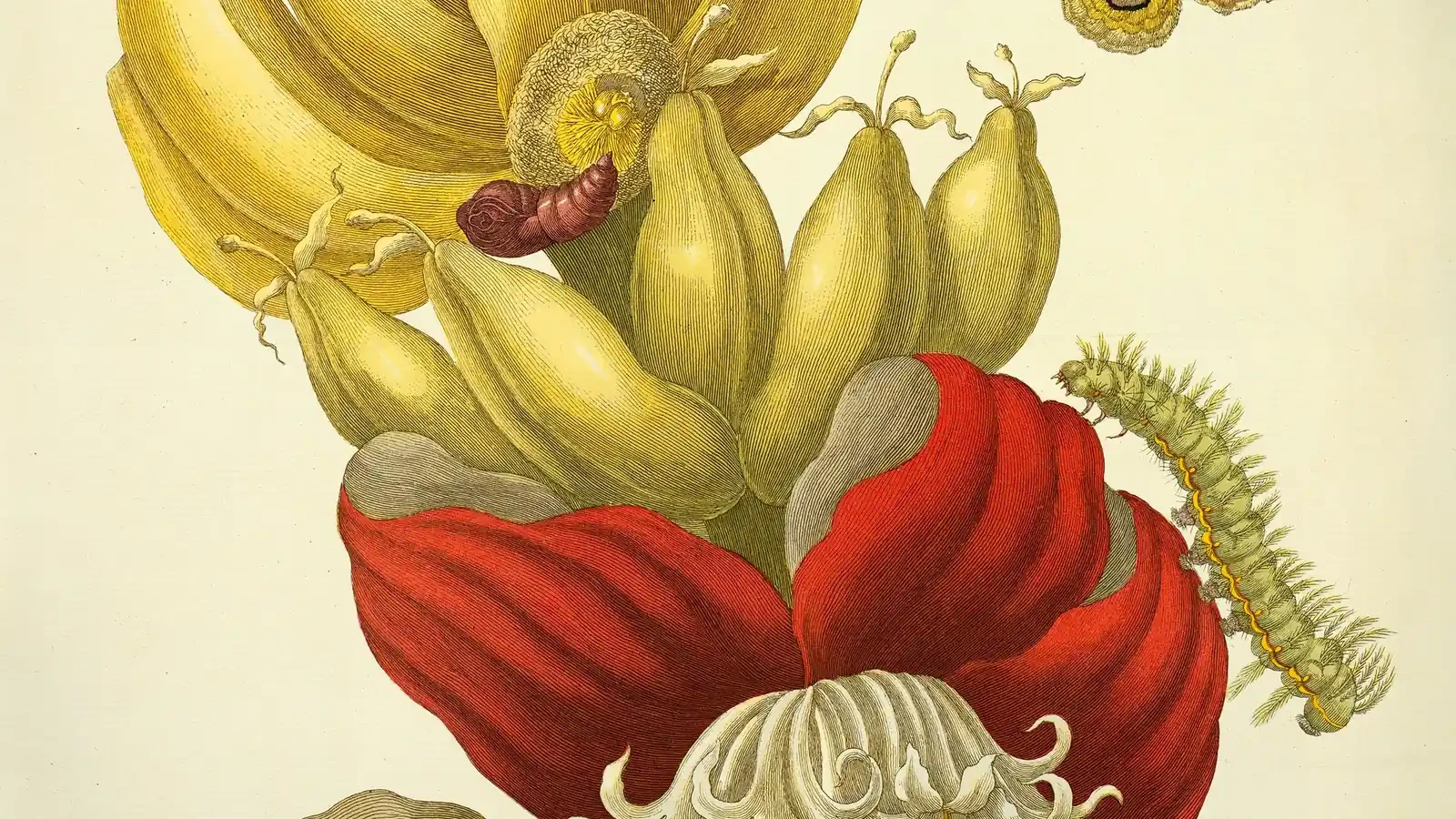
Merian’s plates often place an insect’s different stages around a plant. The composition makes a relationship easy to revisit, but it is not a promise that every stage occupied the branch simultaneously. The image compresses time. Its accompanying text may supply dates and circumstances that the arrangement itself cannot show. Reading the book means moving between those kinds of evidence, not treating visual detail as a substitute for a record of observation.
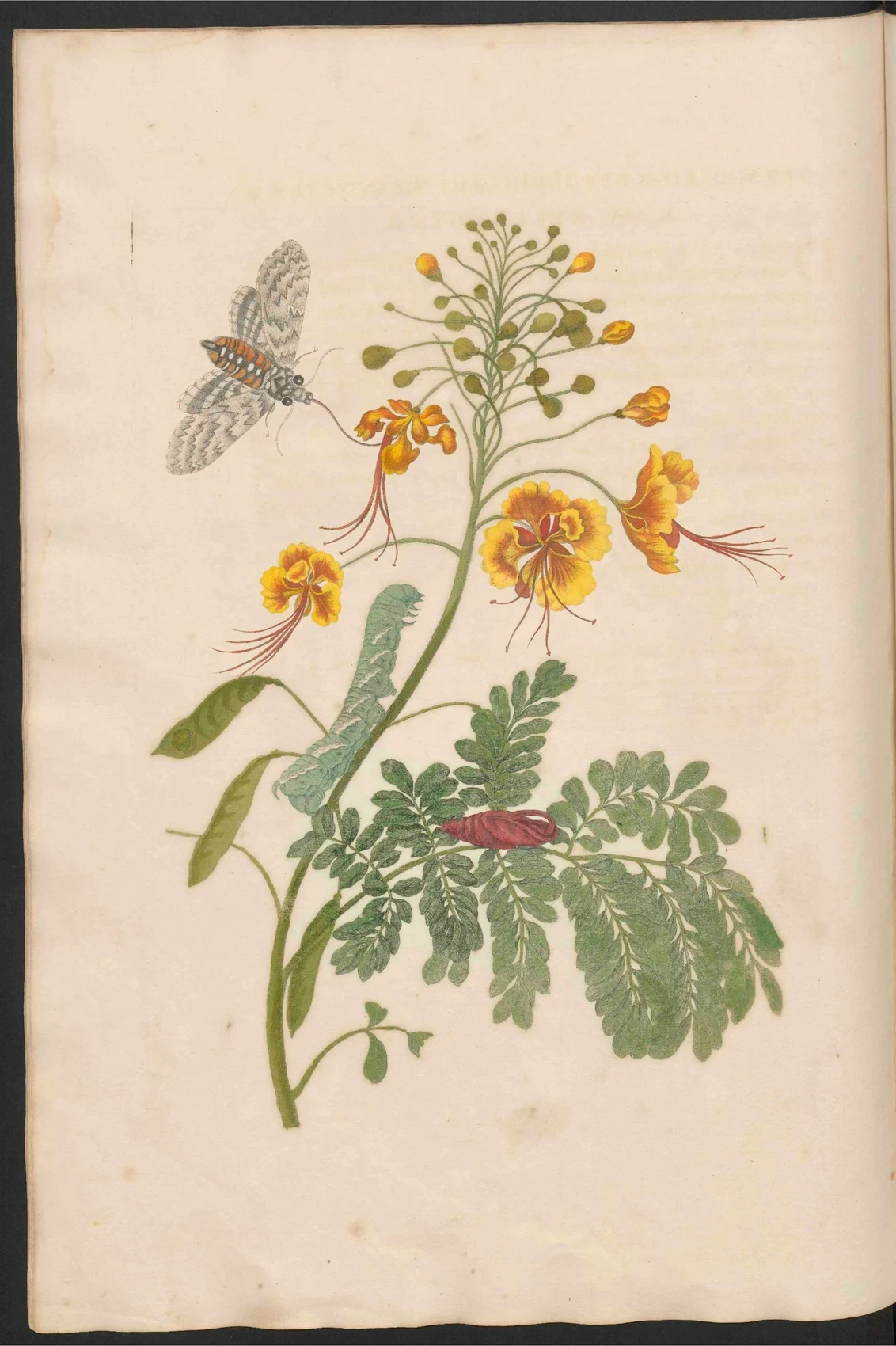
Plate 45 is especially useful because the text gives dates for the caterpillar, pupa and moth. Those details support a claim about a sequence of change. The page also describes a plant and reports what other people said about its uses. These are different evidential routes: a recorded transformation, a composed representation and testimony gathered from others. The authority of the image should not make those routes indistinguishable.
KEEP THE DISTINCTION
One page contains more than one kind of evidence
Dated insect changes
Merian’s written account connects a caterpillar, pupa and adult across time.
That every depicted stage was seen together in one outdoor moment.
A composed illustration
The page makes selected appearances and relationships available for comparison.
That detail alone verifies every association or establishes the circumstances of every observation.
Reported plant knowledge
The text preserves Merian’s account of what other people told her or were understood to do.
That a report proves medical effectiveness, supplies complete testimony or makes the named author its originator.
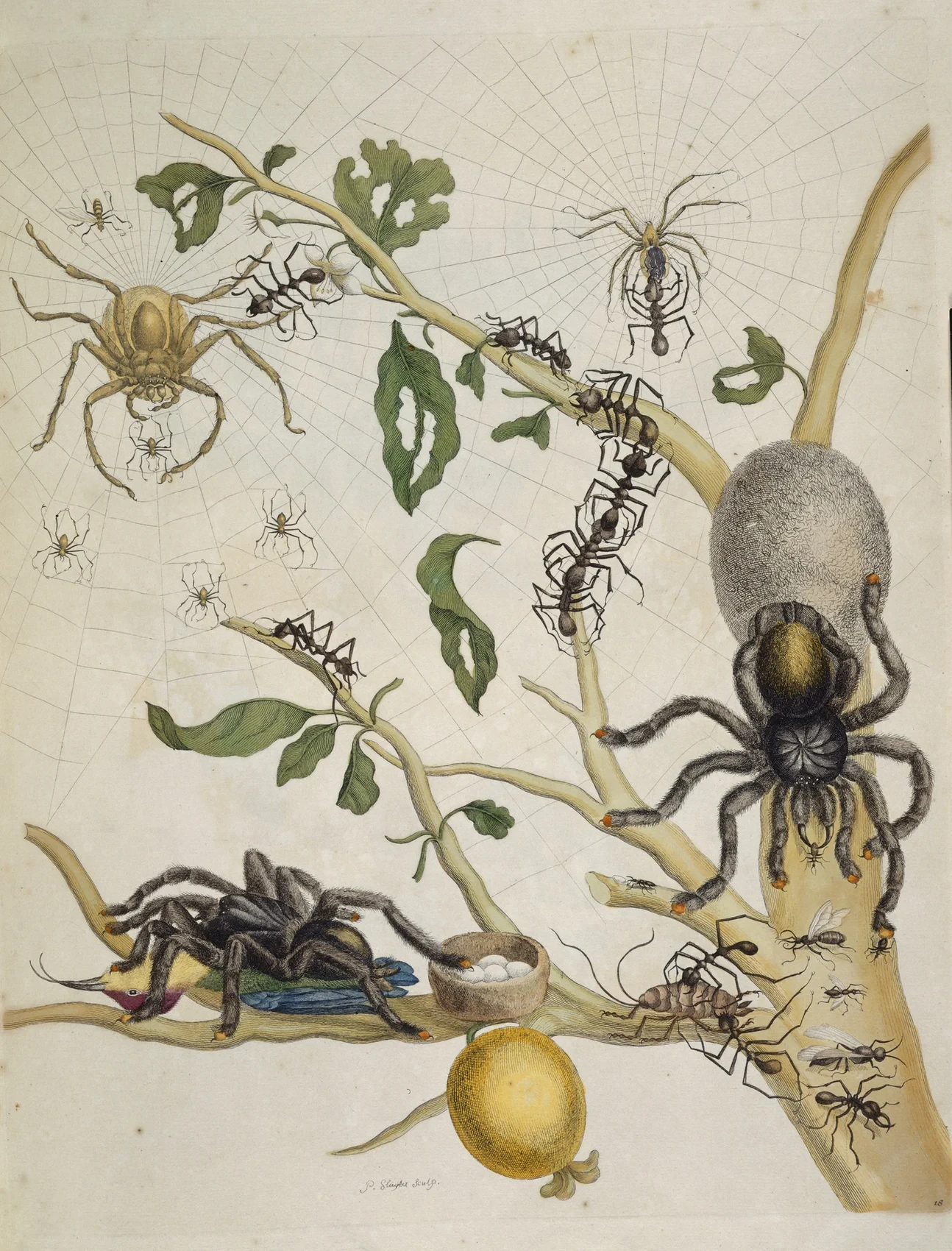
A different plate assembles spiders, ants and other creatures on a guava plant. Its density invites the eye to move between interactions. It also invites a question: which details came from direct observation, which from reports and which from the demands of composing an image? Merian’s accomplishment becomes more interesting when its representations can be examined in this way. We do not need to make every part infallible to recognise its force.
The peacock-flower text records knowledge under enslavement
Merian’s account of the peacock flower reports Indigenous people’s use of seeds to prevent children being born into slavery, and discusses the suffering of enslaved women from Africa. These are grave statements about coercion and reproduction. They belong to the book’s evidence, not to a colourful aside about an exotic plant. The Dutch text makes the colonial conditions explicit, while the Natural History Museum’s discussion helps identify why the passage matters.
The testimony still reaches us through Merian’s authorship and the categories she used. The people in this passage are described collectively rather than given biographies we can recover from the page. Her report preserves a trace of their knowledge without giving us an unrestricted record of their voices. We should neither erase that contribution nor fill the gaps with invented names, conversations or motives beyond those the text attributes to them.
KEY IDEA
A plant use reported by Merian was not knowledge that began with Merian.
The account is also not a modern clinical investigation. Reporting a reproductive practice does not establish its effectiveness or safety. The historical point is what the passage records about knowledge, suffering and the refusal of enslavement, as mediated by its European writer. Keeping that evidential limit visible lets us take the testimony seriously without changing its genre into something it was not.
The journey did not arrive home as a finished book
Merian returned to the Netherlands in 1701 after illness and difficult conditions. The book followed in 1705. Its preface describes sixty compositions and the cost of turning her work into print. She offered readers and potential purchasers ways of seeing the images and specimens. That account reveals the practical distance between field observation and publication. The cost of making a detailed illustrated work was part of deciding how it could become public.
Her daughters belong in this stage of the history too. Dorothea accompanied the journey, and both Dorothea and Johanna Helena had artistic careers. The Getty carefully distinguishes documented work from probable assistance and uncertain attribution. A family workshop is not a licence to assign a particular drawing to a daughter without evidence. It is a reason to examine how authorship, training and shared labour operated around the famous name.
LOOK FROM HERE
Three kinds of work entered the publication
Rearing and repeated attention produced sequences that a cabinet of dried adult specimens could not simply provide.
Drawings, plate design, engraving and colour helped selected observations reach a distant reader.
Guidance, material help and knowledge entered the investigation within unequal colonial relationships; printed authorship did not distribute recognition equally.
What Merian’s achievement asks us to notice
Merian’s work joined close attention to living things with the ability to build a convincing printed account. It does not fit a story in which art merely illustrates discoveries made elsewhere. Nor does it fit a story in which a determined woman escapes every constraint by travelling alone. Her daughter, her workshop and the local and enslaved people on whom the investigation depended change the scale of the achievement we are describing.
TAKE THIS WITH YOU
Read the relationships around the image
Follow the time
A composed plate brings stages together; the text can reveal the sequence and conditions behind it.
Follow the work
Artistic practice, family production and the costs of publication helped turn observations into a book.
Follow the contributors
Indigenous and enslaved people supplied knowledge and labour; collective labels in a European text do not give them equal authorship or power.
The final chapter brings these investigations together. A telescope, an anatomy book, an air-pump trial and an insect plate made different things available for examination. The shared problem was how an account could become credible beyond the person who first produced it—and whose work remained visible when it did.


,_74_plate_18_-_BL.jpg)