When French forces arrived at Saint-Domingue in February 1802, they encountered a colony that had already abolished slavery and developed its own powerful military leadership. The expedition, commanded by General Charles Leclerc and sent by First Consul Napoleon Bonaparte, aimed to restore metropolitan control. Its public assurances about liberty stood beside a project to remove autonomous authority. The question was whether an armed intervention could make those assurances believable to the people whose freedom was at stake.
At first, the answer appeared favourable to France. Its forces occupied ports, won ground and obtained the submission of leading commanders. Louverture was eventually deported. Yet occupation and submission did not end the war. Resistance continued beyond the commanders who had reached a settlement, while French policy elsewhere gave people reasons to fear a return to slavery. Philippe Girard’s account for the Bibliothèque nationale de France follows that changing campaign.
PLACE & TIME
Ports, inland resistance and the route to independence
Northern ports and interior strongholds
Caribbean
1802–1804 CE
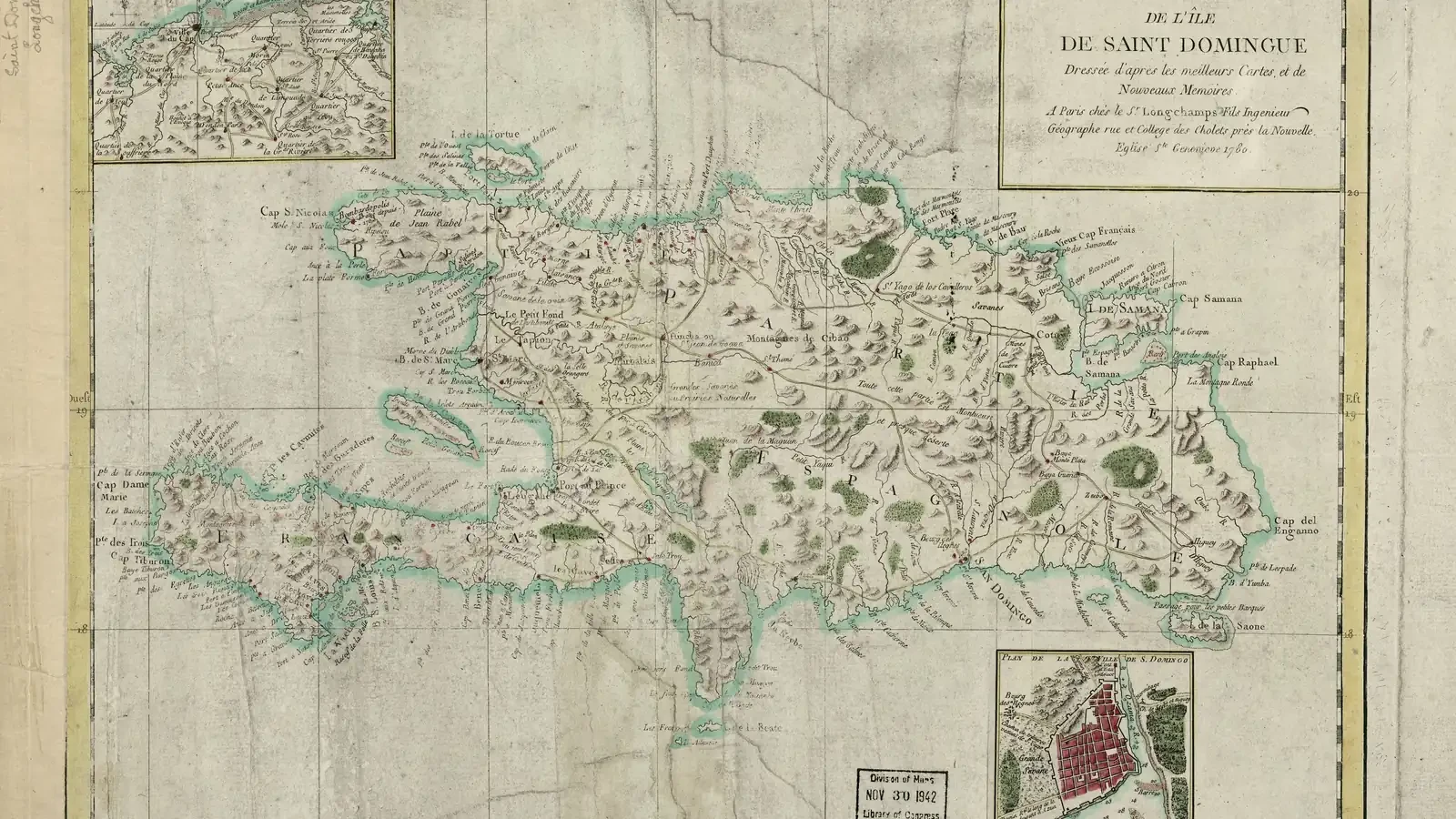
Cap-Français marks one major base; the campaign cannot be represented by a single battlefield.
The promises arrived with an army
Louverture’s constitution of 1801 retained attachment to France while reserving extensive power for his government. For Bonaparte, that arrangement challenged the authority of the metropole and its hopes for colonial commerce. Peace negotiations with Britain opened the possibility of a large Atlantic intervention. The expedition entered a political argument that had already become a question of who could command soldiers, revenue and work.
French assurances that emancipation would be preserved were directed at people whose cooperation mattered. Black officers and soldiers had defended the Republic and built positions within its colonial forces. Simply announcing their immediate re-enslavement would have made it harder to divide that opposition. Public declarations therefore belong within the military strategy. Their existence is not by itself proof that the expedition posed no danger to freedom.
KEEP THE DISTINCTION
What a French assurance could and could not settle
A promise to preserve liberty
The expedition sought cooperation or submission from people already legally free.
What would prevent the metropolitan government from changing the terms after disarmament?
Recognition of an officer’s rank
A commander could retain a position while accepting French authority.
Whether that protection extended to cultivators and ordinary soldiers, or would endure.
Occupation of a port
An expeditionary force gained an important point of supply and administration.
Whether it could govern the surrounding population and eliminate resistance inland.
Scorched earth made reconquest costly
At Cap-Français, Christophe’s forces burned the town rather than hand its resources intact to the expedition. Destruction deprived the French of facilities but also inflicted enormous loss on inhabitants. It should not be treated as a clever manoeuvre without social cost. War moved through places where civilians had to find food, shelter and safety while armies sought to deny those resources to their opponents.
Fighting in the interior included the siege of Crête-à-Pierrot in March 1802. French forces eventually occupied the position after defenders escaped through their lines. The episode was neither a simple French annihilation of the defenders nor a final defeat of the expedition. Holding a place and preserving an army were different military outcomes. A campaign could advance on a map while paying heavily for the ground it gained.
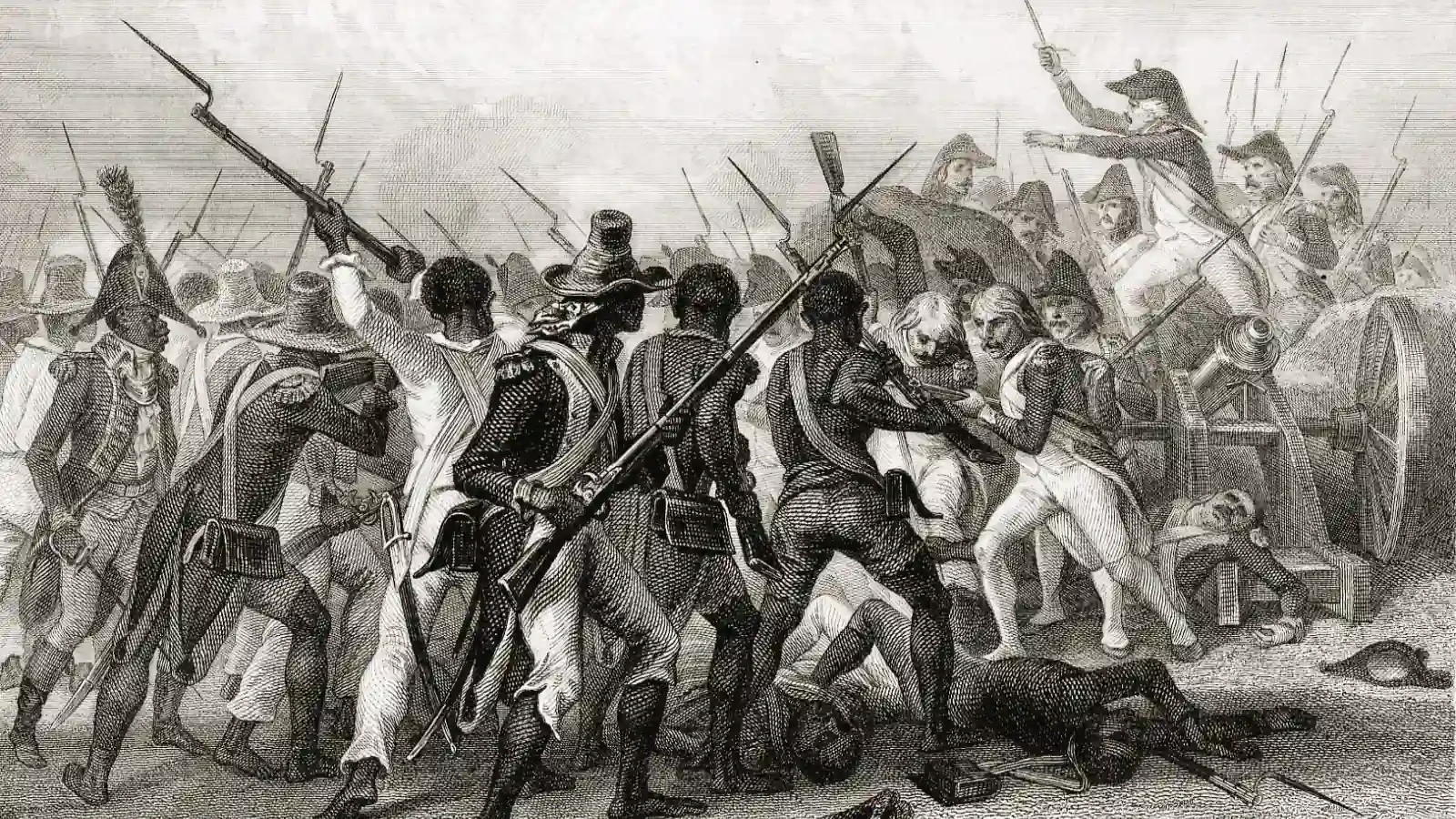
The nineteenth-century battle engraving at the beginning of this article gives the confrontation a concentrated, dramatic form. It was produced after the war. It can help us examine how the campaign was represented, but it cannot certify the words, individual gestures or exact arrangement of a moment in 1802. Reading an attractive image critically is especially important when later art supplies the scene through which an event becomes familiar.
A settlement changed the leadership without ending resistance
By the spring of 1802, leading commanders had submitted to Leclerc. Louverture accepted a settlement and withdrew from direct command. In June he was arrested and transported to France, where he died at Fort de Joux in April 1803. His removal was a major success for the expedition’s attack on autonomous leadership. It did not establish consent among the wider population or remove the experience of having fought for freedom.
Some of the men who would later command the independence struggle served under French authority during this interval. Dessalines and Christophe cannot be placed on one unchanging side throughout the campaign. Their submissions, cooperation and later renewed opposition require explanation. People fighting beyond the settlement also matter: continued resistance was not simply switched off by one agreement and switched on by one general’s later instruction.
FOLLOW THE PROCESS
A victory over leaders left other problems intact
Reach an agreement
Commanders could accept terms for their forces or their own future.
Secure control
The French still needed to disarm opponents and administer places beyond the garrisons.
Make the guarantee credible
Cultivators and soldiers had to judge whether their freedom would survive compliance.
Prevent renewed coalition
Decisions taken elsewhere could unite people who had previously fought on different sides.
Events elsewhere changed the meaning of a promise
The law of 20 May 1802 is often described as though one decree instantly re-established slavery in every French colony. Its immediate scope was more specific. It maintained slavery where abolition had not effectively taken place, including Martinique and Indian Ocean colonies. The restoration in Guadeloupe involved its own military repression and further decisions. The Fondation pour la mémoire de l’esclavage distinguishes these legal and regional steps.
For people in Saint-Domingue, the distinction did not make the news reassuring. The French state was sustaining and restoring slave systems within the same colonial world. Reports from Guadeloupe made assurances about Saint-Domingue more difficult to trust. An officer’s retained rank or a promise about liberty could now be judged against a concrete example of what metropolitan power was prepared to do.
KEY IDEA
The May law did not itself accomplish a general restoration of slavery in Saint-Domingue. It nevertheless formed part of a policy whose consequences made renewed enslavement a credible danger.
Arrest, deportation and attempts at disarmament made that danger immediate in another way. People asked what capacity they would retain to resist if the terms changed after they surrendered their weapons. The memory of emancipation was also a memory of how it had been won. A guarantee backed only by the power seeking to subdue them could appear much weaker than the means they still possessed to defend it.
Yellow fever transformed an army already fighting a war
Yellow fever devastated the expeditionary forces, killing soldiers and officers and reducing the numbers available to hold territory. Leclerc himself died in November 1802. Disease belongs at the centre of the explanation. It should not replace the explanation of armed resistance, supply, command and political calculation. An epidemic could cripple a force while opponents made decisions about how to exploit the altered balance.
The impact of disease must also be separated from a claim that all people of one colour possessed the same immunity. Troops differed in prior exposure, circumstances and vulnerability. The relevant historical point is the severe loss of effective French military strength under the conditions of this campaign. It was not a victory achieved by an abstract tropical climate while Haitian fighters merely watched.
LOOK FROM HERE
Three pressures worked together
Armed groups forced it to defend garrisons, secure routes and commit resources instead of simply administering a settled colony.
Sick and dying soldiers could not maintain the occupation; shortages and disrupted support intensified the crisis.
The wider restoration of slavery and the treatment of local leaders undermined the promises on which submission depended.
A new coalition rejected the return to colonial rule
During the second half of 1802, opposition widened and commanders including Dessalines returned to resistance. Their ability to combine forces mattered because the earlier revolution had included destructive rivalries. Shared opposition to French rule did not erase those histories, but it created the possibility of coordinated action. Independence became a way to place emancipation beyond a government that had demonstrated its willingness to reverse it elsewhere.
Rochambeau, who succeeded Leclerc, pursued extreme repression, including killings of prisoners and the use of dogs. French violence was not merely a rhetorical grievance. It formed part of how power was exercised and how people judged the consequences of defeat. Naming it does not require reproducing every graphic allegation or inventing a witness’s scene. The escalation helped make accommodation more dangerous and a common struggle more urgent.
The wider war changed again in 1803. Britain and France resumed hostilities, and British naval power interrupted the expedition’s supplies and possibilities for reinforcement. That intervention worked alongside the insurgent control of territory and the continuing losses from disease. British opposition to France was not equivalent to a general commitment to emancipation: Britain remained a slaveholding empire. Different aims could produce a military convergence.
Victory required more than one battlefield
On 18 November 1803, the battle of Vertières near Cap-Français marked the decisive final stage of the northern campaign. Dessalines’s forces pressed the remaining French position, and evacuation followed. The battle has a central place in Haitian memory, but its significance belongs to the longer deterioration of French control. The army’s retreat was made possible by sustained resistance, disease, interrupted supply and the failure to secure a durable political settlement.
French defeat in the western colony did not mean every French position throughout Hispaniola disappeared that day. The eastern part had a different subsequent history. Nor did a defeated army’s departure itself decide the constitution, land regime or citizenship of the country taking shape. The military outcome created room for a sovereign political act, which still had to be made and defended.
TAKE THIS WITH YOU
Ask why occupation could not become durable rule
Follow the changing sides
Submission in spring 1802 did not establish an unchanging allegiance or end resistance outside the settlement.
Keep colonial policies specific
The May law, the Guadeloupe restoration and the threat to Saint-Domingue belonged to one wider policy without being identical events.
Preserve Haitian action
Disease and British naval intervention mattered alongside the organisation and fighting through which Haitians secured victory.
At Gonaïves on 1 January 1804, Dessalines and the assembled commanders declared independence. The next chapter asks what that act made possible—and why the meaning of freedom remained contested inside the new state as well as beyond its borders.