During the night of 22–23 August 1791, enslaved people rose across the northern plantation region of Saint-Domingue. Estates burned, owners and other inhabitants were attacked, and the colonial authorities faced a movement far larger than an isolated escape. The Fondation pour la mémoire de l’esclavage identifies this night as the outbreak commemorated each August. It began a struggle whose eventual outcome would be the destruction of French colonial rule, but that outcome was still years away.
The fires matter as more than a dramatic opening image. Plantations concentrated the work, wealth and authority of the slave system. Attacking them struck at its capacity to continue operating. Yet destruction alone could not sustain an insurgency. People had to communicate, obtain supplies, organise armed groups and decide what demands to make. The event changed the colony because those tasks continued after the first night.
PLACE & TIME
Follow the uprising across the plantation region
The Plaine du Nord
Northern Caribbean
1791–1794 CE
The marker is approximate. It does not locate a disputed ceremony to a reconstructed precise point.
The colony was divided before the plantations burned
The French Revolution had opened conflicts over authority and citizenship. White colonists disagreed over their relationship with metropolitan government. Free people of colour demanded political equality against racial exclusion. Enslaved people remained outside those recognised political institutions while producing the commodities on which the colony depended. These conflicts overlapped, but none supplied a ready-made programme shared by everyone.
The dispute over free citizenship had already produced armed confrontation. Vincent Ogé’s challenge in 1790 and his execution in 1791 showed both the force of racial exclusion and the difficulty of changing it. The mass uprising that followed in August had a different social basis. People claimed as property were now acting collectively against plantation power. Their action could not be reduced to a quarrel among the colony’s recognised free citizens.
KEEP THE DISTINCTION
Three struggles could intersect without becoming identical
Colonial autonomy
How much authority should remain with France or pass to colonial institutions?
An owner could seek local power while defending slavery.
Free citizenship
Should free men of colour have equal political standing?
The removal of a racial barrier among free people was not general emancipation.
Enslavement
Could owners continue to command people as property?
A mass challenge to slavery transformed the stakes beyond participation in existing assemblies.
An uprising required connections across estates
A coordinated challenge depended on people knowing enough about one another to act beyond an individual plantation. Work, travel, markets and social or religious meetings could carry information through a society that tried to restrict movement. Drivers and others with responsibility on estates occupied positions from which they could connect people. Such possibilities help explain mobilisation without requiring us to imagine that every participant received the same instruction or understood the same final goal.
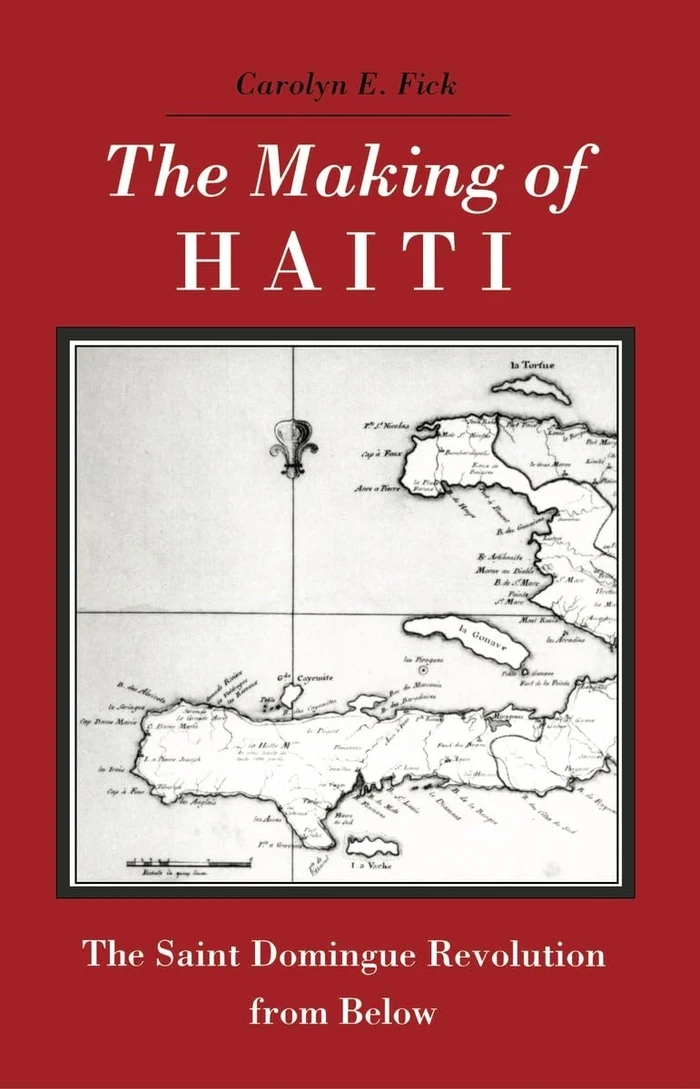
Enslaved Africans and people born in the colony brought different experiences, languages and political understandings. They had to build workable alliances rather than discover a complete unity that captivity had automatically created. The history from below associated with Carolyn Fick directs attention to these processes of organisation and participation. Famous leaders mattered within a much larger field of action.
FOLLOW THE PROCESS
What had to continue after a signal to rise
Connect people
A movement had to extend beyond one work group while dealing with different local conditions.
Disrupt plantation power
Attacks on estates challenged production, ownership and the immediate capacity to compel work.
Maintain armed groups
Food, supplies, routes and decisions about leadership mattered after the first confrontation.
Respond to the crisis
Insurgents had to choose how to fight, negotiate and react as colonial and imperial forces changed their positions.
Bois Caïman is a place of history and contested memory
The ceremony known as Bois Caïman occupies a central place in accounts of the revolution’s beginning. Tradition connects a religious gathering, Boukman and a commitment to rebellion before the August outbreak. Vodou provided practices and relationships through which people could act together under slavery. That historical importance does not make every detail of a familiar scene equally secure.
Accounts differ over timing, participants and what was said. Important descriptions were written after the event and passed through later authors. Léon-François Hoffmann’s critical study examines the growth of that narrative, while advancing a strongly sceptical interpretation of its historical basis. Recognising the dispute means neither presenting a later prayer as a verbatim transcript nor declaring that uncertain documentation proves no gathering could have occurred.
KEY IDEA
The place of Bois Caïman in Haitian memory is clear; the exact sequence and words of the gathering remain disputed.
For that reason, the opening of this chapter begins with the spread of the uprising, not a recreated storm, sacrifice or speech. Those elements may belong to particular later accounts, but they cannot be supplied as if a narrator stood there recording them. Uncertainty about one gathering should sharpen the investigation of organisation, rather than reduce thousands of people’s political action to an exotic spectacle.
The attacks broke the expectation of isolated resistance
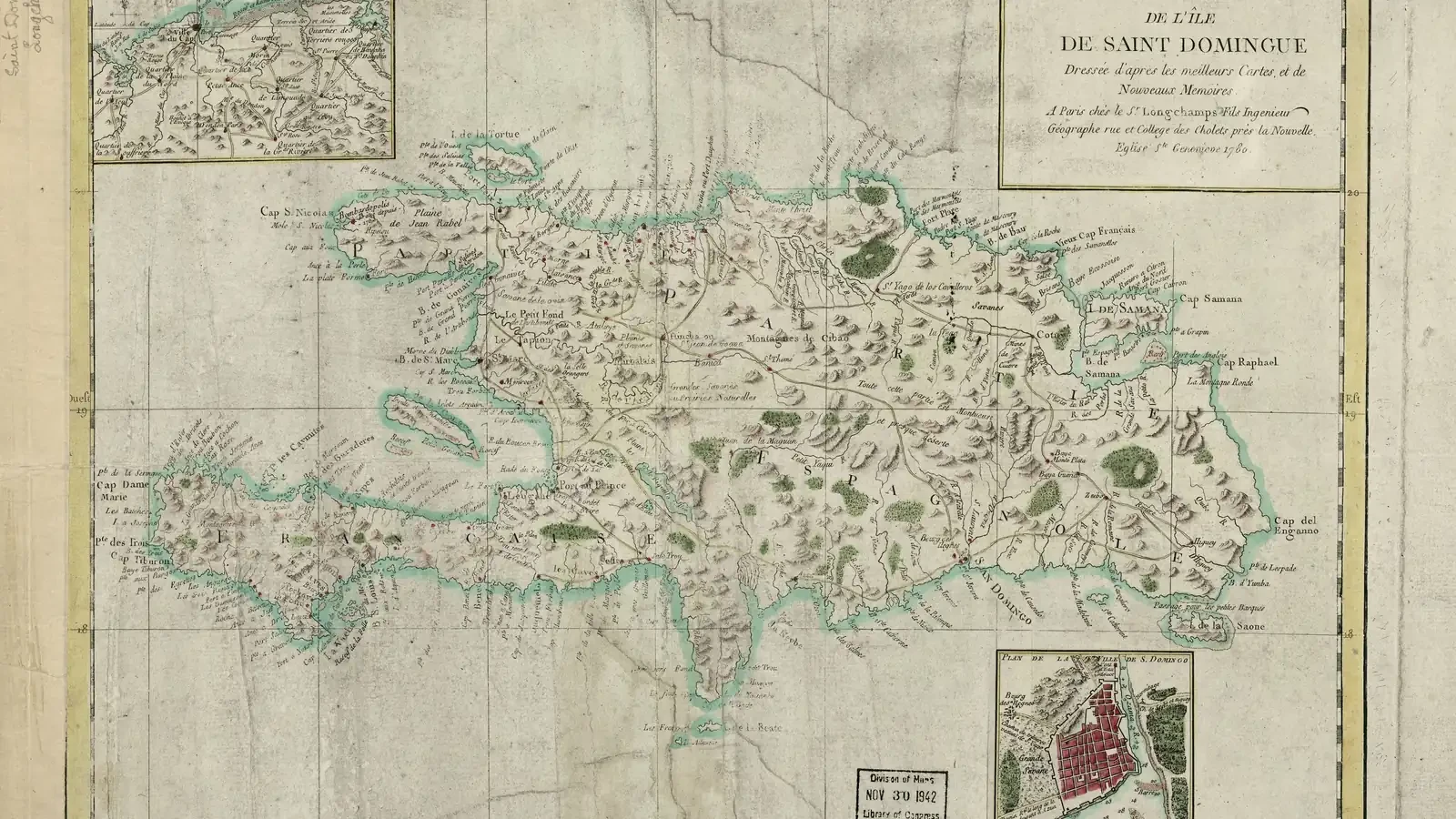
The northern plain placed numerous plantations within a connected region around Cap-Français. As revolt spread, owners lost the ability to regard each disturbance as a local disciplinary matter. Fires destroyed buildings and crops; killings and flight unsettled the existing order. The town and the plantation countryside did not fall into insurgent hands in one undifferentiated movement. Control had to be fought over, and surviving colonial strongpoints continued to shape the conflict.
The violence must be named without letting a colonial image determine the whole account. Insurgents killed white inhabitants, while colonial forces and armed defenders inflicted punishment and killing on people accused of rebellion. Records produced by frightened owners often foregrounded attacks on their own community and property. Reading them critically does not deny those deaths. It asks what forms of violence the source explains, normalises or leaves outside its frame.
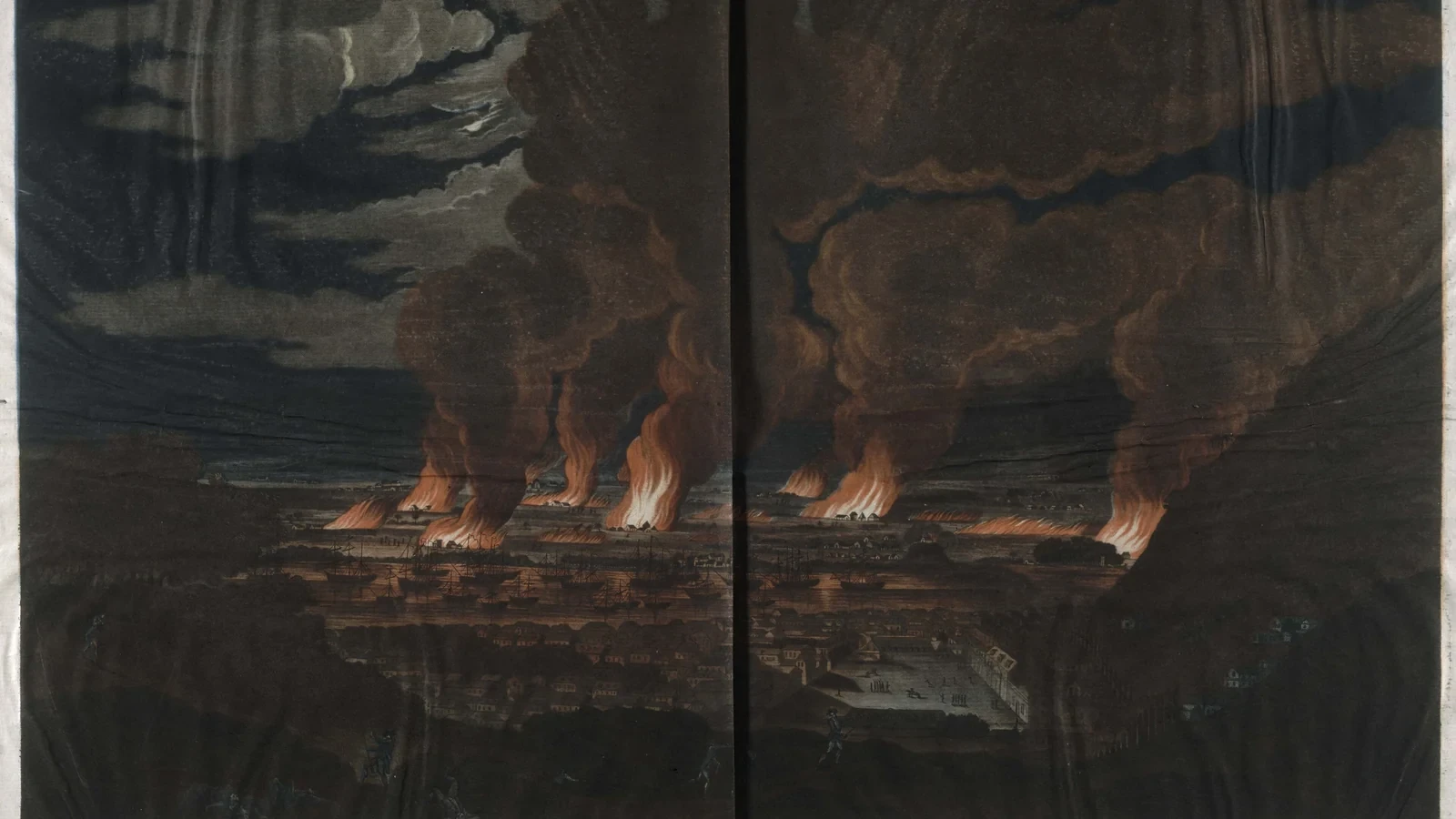
The print used as this article’s featured image is one such representation. Made after 1791, it arranges fire and landscape into a view of catastrophe. Its perspective is evidence of how the revolt was represented, rather than a transparent record of every participant’s conduct. A picture can show what an artist wanted viewers to see while concealing the work, relationships and demands that made the event possible.
Leadership did not settle every demand
Boukman, Jean-François and Biassou appear among the leaders associated with the early revolt. Toussaint, later known as Louverture, emerged within this wider insurgent history; he was not already commanding the entire revolution on its first night. Deaths, rivalries and changing military positions altered leadership. The movement’s continuation depended on people and groups whose actions could not be reduced to carrying out one future leader’s plan.
Negotiation also formed part of the struggle. Insurgent leaders and colonial authorities could explore settlements whose terms did not necessarily match the wishes of the wider insurgent population. Limited concessions for particular people were different from general freedom. The possibility of such a gap matters: leaders negotiating in a crisis did not automatically possess the power to send everyone back to the old plantation order.
LOOK FROM HERE
The same crisis created different immediate calculations
Returning to an owner’s authority could threaten the gains made through collective action, whatever a leader or official promised.
Negotiation, military resources and recognition could become urgent while wider demands remained unsettled.
A measure that divided opponents or recruited support might be considered even when it contradicted earlier policy.
The rebellion became entangled with imperial war
The uprising did not end the other conflicts of the colony. The struggle over free citizenship continued, and France’s political revolution changed the authority from which commissioners acted. In 1793 war with Britain and Spain widened the confrontation. Spanish power in the eastern part of Hispaniola offered opportunities to insurgent commanders, while British intervention threatened French control from another direction. The plantation revolt now mattered within a war among empires.
Such alliances should be read through their purpose and limits. A power competing with France could support an insurgent force without adopting a commitment to universal emancipation. A commander could accept assistance without treating the supplier’s wider slaveholding order as legitimate. The connection made military resources available while leaving difficult questions about future freedom unresolved.
TURNING POINTS
The beginning did not contain the whole outcome
- August 1791
The northern uprising
A coordinated mass challenge breaks plantation control across part of the colony.
- 1792
Citizenship and commissioners
France’s law recognises political equality among free men; commissioners face an armed colonial crisis.
- 1793
War and local emancipation
Imperial intervention and insurgent pressure transform the choices of colonial government.
- February 1794
Abolition by the Convention
A metropolitan decision extends abolition across the French colonies, though implementation is uneven.
Independence from France follows only in 1804, after another major war.
Emancipation followed pressure that the old order could not absorb
On 29 August 1793 Sonthonax proclaimed emancipation in the northern province. Polverel’s measures and the wider colonial struggle brought emancipation into other regions. The Convention’s decree of 4 February 1794 then abolished slavery in the French colonies. The later history of French colonial policy makes the distinction important: an emancipation enacted and defended in Saint-Domingue did not mean the same thing had been effectively realised in every French possession.
These decisions did not simply grant freedom from above to a passive population. Insurrection had made restoration of the old order increasingly difficult, while war transformed the need for allies and soldiers. Nor did legal abolition settle control over land and labour. The revolution had changed the question from whether slaveholders might concede a reform to how freedom could be defended and organised.
TAKE THIS WITH YOU
The uprising changed what could be negotiated
Keep preparation and memory distinct
Bois Caïman matters, but later descriptions do not supply a secure transcript of a single night.
Follow collective organisation
Supply, communication and the refusal to return to the old order mattered alongside named commanders.
Preserve the sequence
1791 uprising, 1793–1794 emancipation and 1804 independence were different achievements, connected through further struggle.
The next chapter follows Louverture as he rose within that changing struggle. His power would depend on defending emancipation, building an army and maintaining production. Those commitments could reinforce one another and come into conflict.