The constitution issued in Saint-Domingue in 1801 abolished slavery permanently and named Toussaint Louverture governor for life. It also declared the colony part of the French empire and insisted that agricultural work must not be interrupted. These provisions belonged to the same political document. They bring us directly to the central problem of his leadership: how could a government defend emancipation, finance its survival and command the work of the people it declared free?
Louverture had been enslaved and had obtained freedom before the uprising of 1791. He rose through a revolution made by many people, rather than creating it single-handedly. His military organisation, alliances and political decisions helped change its course. So did the actions of plantation workers, rival commanders, commissioners and foreign powers. A portrait becomes more revealing when those connections remain in view.
PLACE & TIME
A career across the boundaries of empire
Saint-Domingue and eastern Hispaniola
Caribbean; later captivity in France
1791–1803 CE
The city marker represents a centre of power, not the whole route of his career.
His early authority developed within an insurgent movement
The revolt of August 1791 did not begin with Louverture already in supreme command. Boukman, Jean-François, Biassou and local organisers belonged to its early history. Louverture gained military importance within this changing movement, including through his association with Biassou. The rise of one commander depended on opportunities created by the collective challenge to plantation power and by the colony’s divided authorities.
A force needed more than a celebrated general. Recruiting, maintaining discipline, obtaining supplies and coordinating units made it possible to fight beyond one locality. Command therefore produced relationships of dependence as well as recognition. Soldiers needed leaders capable of securing survival and gains; a leader needed people willing or compelled to act under his authority. The army was an institution through which emancipation could be defended and political power concentrated.
TURNING POINTS
A rise through changing political settings
- 1791–1793
Insurgency and wider war
Louverture emerges within the slave revolt as the crisis becomes entangled with imperial competition.
- 1794
Service to the French Republic
He changes allegiance from Spain to France amid the transformation brought by emancipation.
- 1798–1801
Consolidating authority
The British withdrawal, conflict with Rigaud and control of the eastern territory enlarge his power.
- 1802–1803
Expedition and captivity
French intervention defeats his government; deportation ends with his death in France before independence.
The milestones identify changing positions, not a career planned from its beginning.
Changing allegiance did not mean abandoning every aim
During the war that widened in 1793, Louverture and other insurgent commanders served Spanish interests against the French Republic. Spain controlled the eastern part of Hispaniola. That arrangement could supply weapons, recognition and military opportunity without making the Spanish empire a general opponent of slavery. The practical terms of an alliance were different from agreement on every principle of the ally’s political order.
Louverture joined the French side in 1794. The chronology of local and metropolitan emancipation is essential to understanding that change. French republican authority had become a possible vehicle for defending general freedom, even though its earlier representatives had protected slavery. Military calculation, rivalry and the changing credibility of emancipation all formed part of the setting. A single private motive cannot simply be read off the fact that he changed sides.
KEEP THE DISTINCTION
Three questions about an alliance
Military resources
A commander could obtain supplies, rank and a position within a larger war.
Whether the partner would protect freedom beyond the immediate bargain.
Political recognition
An ally could treat an insurgent commander as someone whose decisions mattered.
Whether that recognition would survive a change in military need.
A guarantee of emancipation
A legal commitment could support a claim that soldiers were defending their freedom.
Who would enforce it if a distant government reversed its policy.
His subsequent victories helped preserve French control against British intervention, which ended with the British evacuation in 1798. Yet serving the Republic did not mean accepting every official sent from France. Relations with commissioners could become confrontational as Louverture accumulated military authority. The question of who represented France in Saint-Domingue increasingly overlapped with the question of who actually controlled the colony.

Consolidation involved a destructive war against rivals
André Rigaud possessed a strong position in the south. The conflict between him and Louverture in 1799–1800, often called the War of Knives, destroyed any appearance of a single united revolutionary command. Racial and social tensions formed part of its setting, but reducing it to an inevitable war of Black people against mixed-ancestry people would erase the political relationships and interests within each camp.
Louverture’s victory strengthened his authority while imposing costs on the society he sought to govern. Defeated communities and rival networks did not cease to exist because one commander prevailed. The participation of officers such as Dessalines also matters: the exercise of power was distributed through a military hierarchy, not performed personally by one man at every point. Consolidation could secure a government and deepen divisions at the same time.
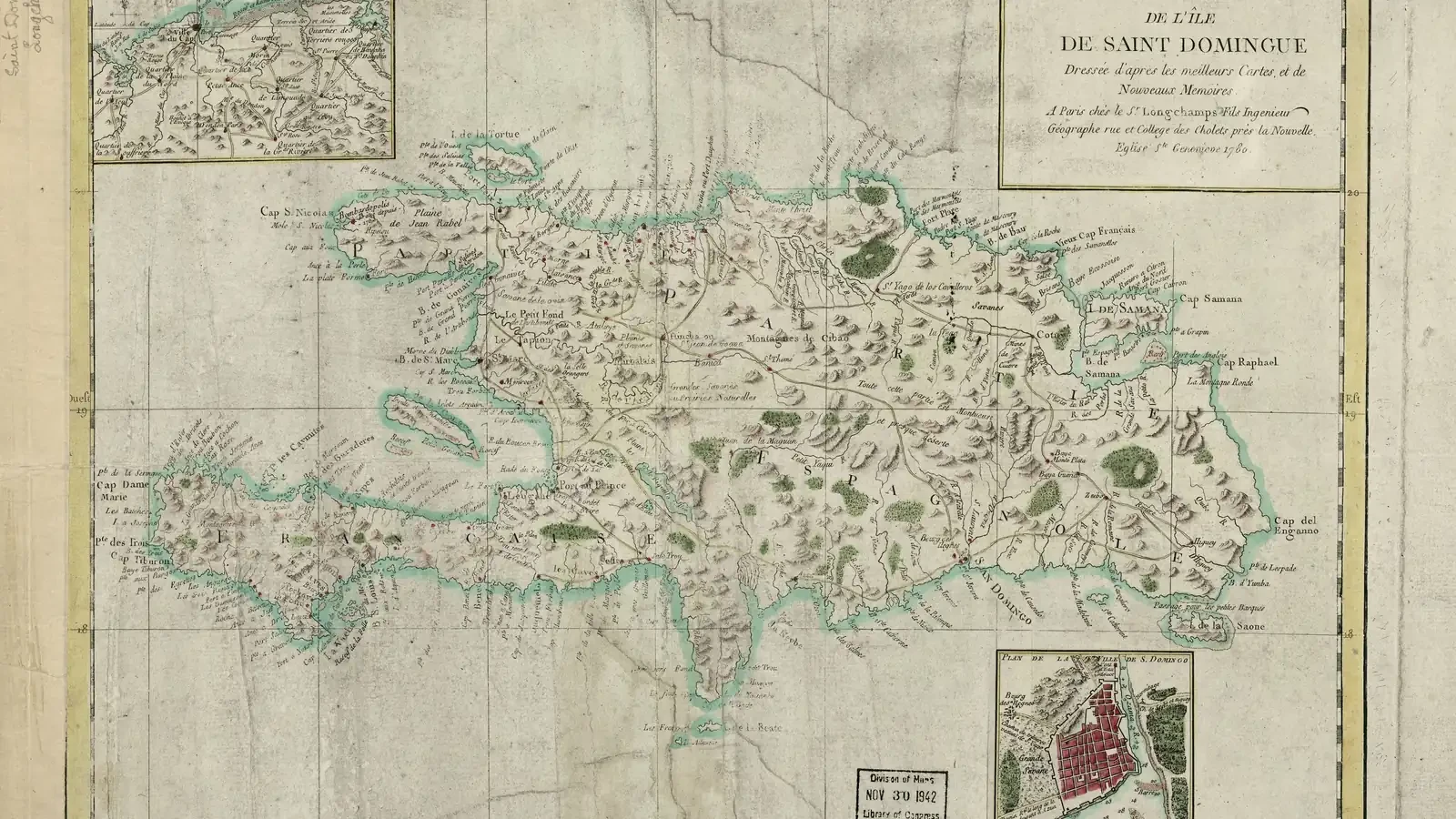
In 1801 Louverture also took control of eastern Hispaniola, whose transfer from Spain to France had been agreed in 1795. The territory is now the Dominican Republic. It should not disappear inside a map labelled simply “Haiti” in its present boundaries. His government’s territorial claim and emancipation policy reached across an island with different colonial histories, creating consequences beyond the western colony where his military rise had begun.
A free cultivator could still be ordered to remain at work
Export agriculture promised revenue for an army, administration and imported supplies. Restoring it therefore became a priority of Louverture’s government. The old plantation establishment offered productive infrastructure and a source of income, but its restoration raised a fundamental question for the people doing the work: what had freedom changed if they could not decide where and for whom to labour?
The constitution gives that conflict a particularly clear form. Article 3 permanently abolished slavery. Articles 14–16 demanded continuity in agricultural production and described cultivators as members of a plantation “family”, sharing in revenues. They also treated changes of residence as a threat requiring regulation. The paternal language of the estate accompanies an explicit restriction on workers’ movement. Declaring a family did not give its members equal authority.
KEY IDEA
No longer being someone’s legally owned property was an immense transformation. It did not automatically provide control over work, land or residence.
Military supervision gave these policies force. A retrospective observer such as James Franklin could praise compulsion as necessary for production while dismissing cultivators’ objections. That viewpoint is itself part of the evidence: an account may regard output as success and treat workers’ choices as a problem to be corrected. The cultivator’s interests cannot safely be inferred from the administrator’s vocabulary of order and prosperity.
The constitution concentrated power while requesting French approval
The document offered legal equality without distinction of colour and protected property. It also made Catholicism the sole publicly professed religion and placed wide authority in the governor. Louverture received a lifetime tenure and the ability to select his successor. This was a political design for durable executive control. It was not a declaration of independence or a system in which the entire population chose its rulers on equal terms.
Article 1 retained Saint-Domingue within the French empire under particular laws. In the letter of 16 July 1801 accompanying the constitution, Louverture asked Bonaparte for approval while explaining that it had already been put into provisional effect. His claim that citizens received it joyfully was part of a request for sanction. It cannot establish that cultivators, rivals and officials all agreed with its arrangements.
LOOK FROM HERE
Three perspectives on the same government
An army and a functioning administration required resources and a means of preventing hostile reconquest.
Restrictions on movement and compulsory estate work could frustrate the ability to build a different life after slavery.
A governor acting for life under a locally issued constitution challenged metropolitan control even while professing attachment to France.
The language of loyalty did political work
The prospect of a French expedition made these tensions acute. In a proclamation of December 1801, Louverture rejected claims that France intended to destroy liberty and called on soldiers to maintain discipline. The text appealed to his record of service while threatening people described as disturbers of public peace. It was an attempt to govern a dangerous moment through both reassurance and coercion.
That proclamation should not be turned into effortless access to his private confidence. Political leaders can deny a danger publicly while preparing for conflict, and the document alone cannot decide the balance. What is visible is the argument he chose to circulate: service to France, order and emancipation should remain compatible. The expedition that arrived in 1802 would expose how fragile that proposed settlement was.
His removal did not remove the forces that made revolution
French forces under General Leclerc confronted Louverture in 1802. After fighting and a settlement, he was arrested in June and deported to France. He died at Fort de Joux in April 1803, before the final military defeat of the expedition and the declaration of independence. He neither signed the 1804 declaration nor governed an independent Haitian state. Those distinctions keep a powerful biography from absorbing events made by other people.
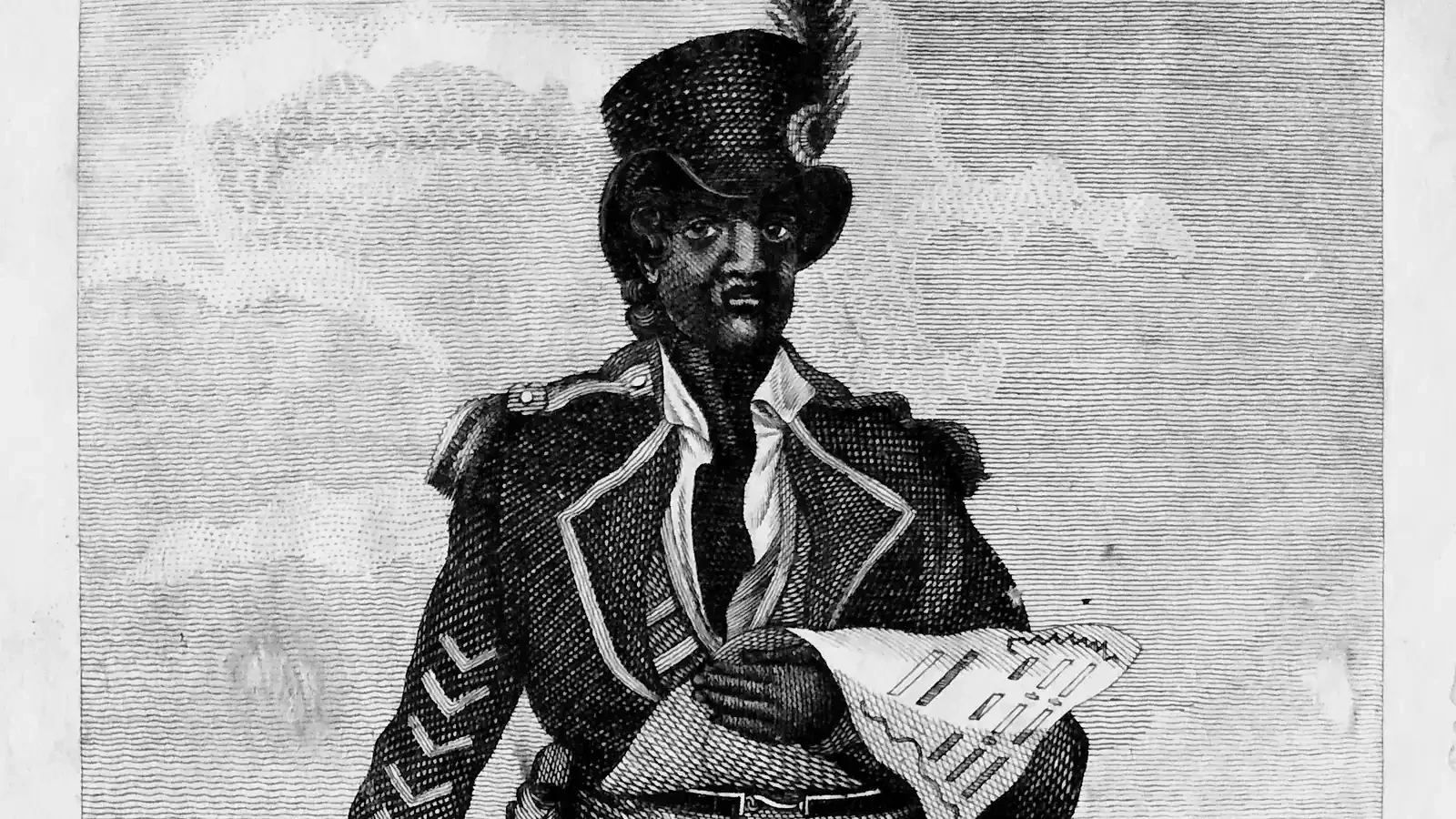
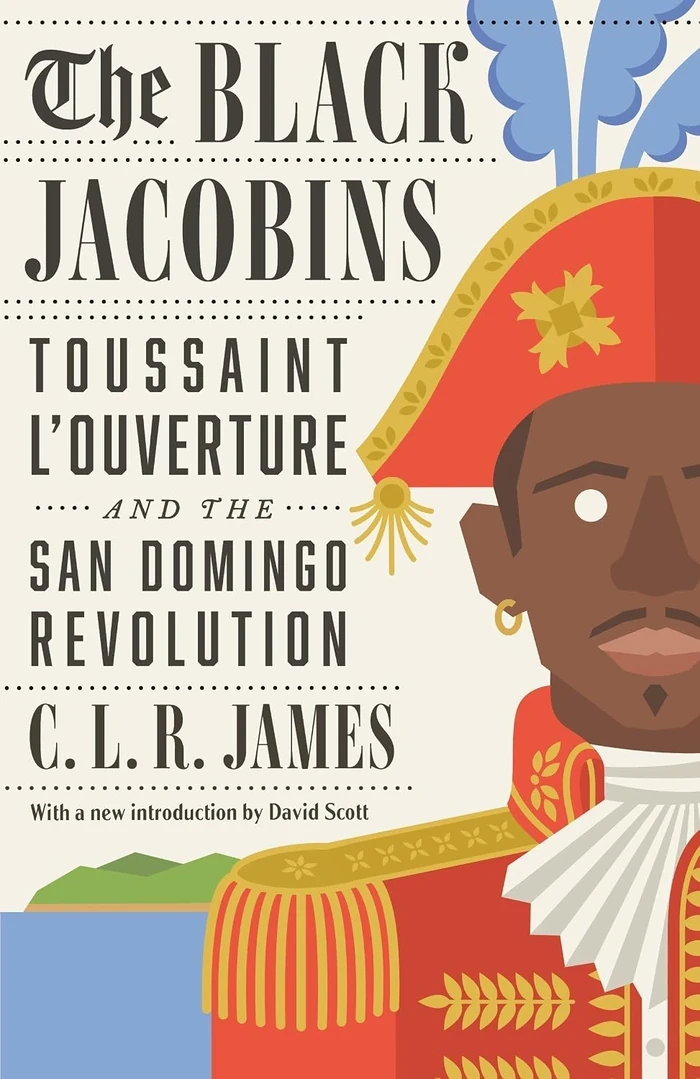
The portrait used here was published after his death. Like the constitution and proclamations, it helps reveal how authority was presented, but through a different medium and at another moment. Later writers have also emphasised different Louvertures: the defender of freedom, the strategist, the state-builder or the authoritarian ruler. Hazareesingh’s biography and the older interpretation of C. L. R. James invite comparison rather than substitution of one heroic formula for another.
TAKE THIS WITH YOU
Read his choices through the relationships they created
Follow the changing alliance
Spain, France and local rivals offered different possibilities and risks at different moments.
Read the constitution together
Abolition, agricultural controls, lifetime office and French attachment are provisions of the same 1801 document.
Keep the revolution collective
His death preceded independence. The movements and conflicts that made his career continued after his removal.
The next chapter follows the expedition and the war that outlasted him. French promises, the restoration of slavery elsewhere and the choices of people still resisting would turn a struggle over colonial authority into a successful fight for independence.