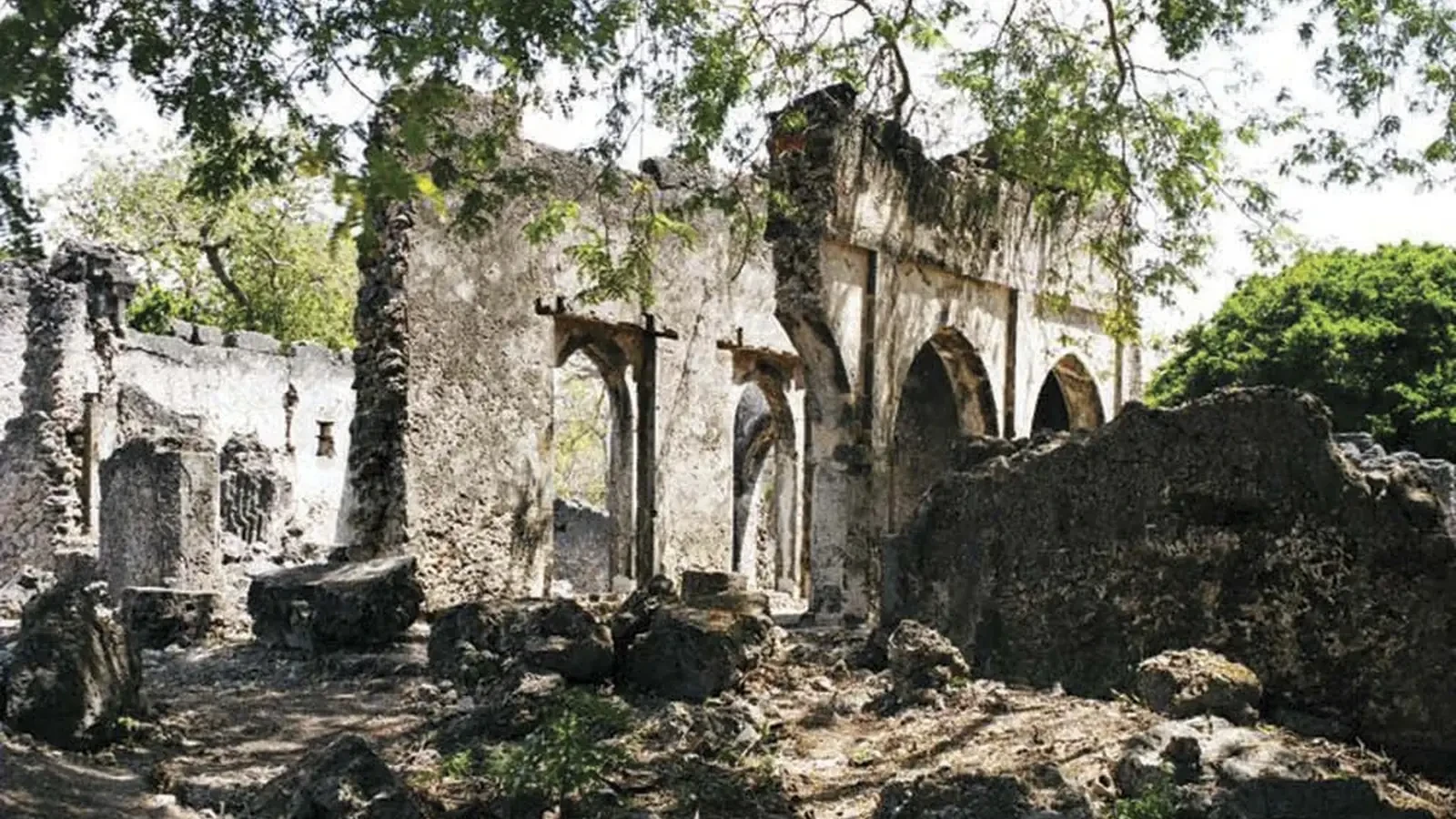
The most revealing detail at Murrays’ Mills is not the chimney. It is a canal entrance: an arch through which boats could reach a basin inside the complex. Cotton manufacturing needed more than a building full of machines. It needed routes into that building, routes out again and a surrounding city able to supply people, fuel, repairs and trade.
In Ancoats, just northeast of Manchester’s older centre, those relationships took a visible form. Tall brick mills, canal banks and nearby housing became parts of an industrial landscape. Follow them between about 1780 and 1850 and Manchester’s Industrial Revolution becomes something more concrete than a procession of inventions. It becomes a reorganization of space, with connections extending far beyond the city.
PLACE & TIME
An industrial city seen through one district
Manchester · Ancoats
Historical Lancashire · present-day England
c. 1780–1850 CE
The setting
A street plan made room for a different kind of town
Manchester did not begin with factories. Its earlier town and commercial life provided a setting into which industrial development expanded. The council’s history of Ancoats describes streets laid out in the late eighteenth century, with small houses along routes near Great Ancoats Street and Oldham Road. The industrial district emerged through building and investment rather than appearing as a single finished project.
That distinction matters when looking at a regular street pattern. A grid can organize development without ensuring good housing or equal access to services. Mills and homes could occupy the same district while serving different interests. The useful question is not simply whether the area looked planned, but what its spaces allowed people to do—and who controlled them.
LAYERS OF CHANGE
The district and its connections grew together
- Late 1700s
Streets and houses
Development laid out streets and small houses in Ancoats.
- 1798 / 1802
Murrays’ Mills expanded
Historic England dates Old Mill to 1798 and Decker Mill to 1802.
- 1804
A canal connection
The Rochdale Canal opened, strengthening the district’s transport setting.
- 1830
Manchester and Liverpool by rail
The railway added a faster connection between the manufacturing town and the port.
These dates identify selected buildings and transport links, not one synchronized transformation of every street.
Why put so much work behind one brick wall?
Murrays’ Mills makes industrial scale tangible. Adam and George Murray’s complex brought spinning mills, warehouses and offices around a courtyard. Historic England’s record identifies a working arrangement, not merely an impressive façade: manufacturing, storage and administration belonged within a connected site. A mill was a place where material had to keep moving between different tasks.
Spinning means turning prepared cotton fibres into yarn. It should not be confused with weaving yarn into cloth. That distinction keeps us from imagining every cotton building as a complete journey from raw material to a finished garment. The city’s textile economy joined different stages and businesses; one surviving mill does not contain the whole industry.
LOOK CLOSELY
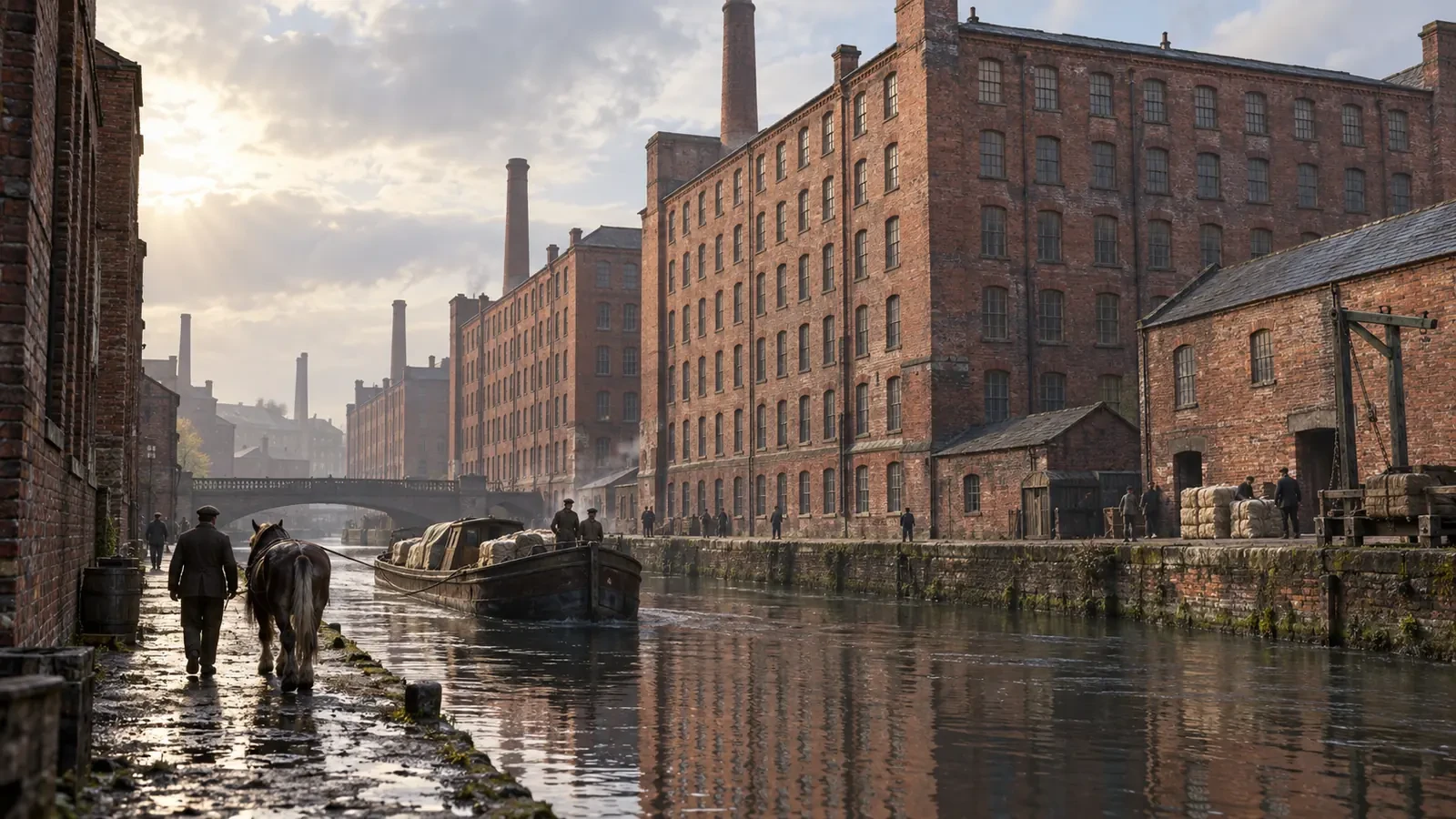
A mill complex seen from the canal
Read the repeated windows
Rows of windows make the scale of the buildings visible. The image does not reveal the conditions at every machine.
Keep the water in the frame
The canal places transport beside production. It does not mean the canal powered these steam-operated mills.
Notice the viewpoint
An engraving published in 1835 is a composed representation. Its small figures cannot provide a workforce census.

Cotton factories on Union Street, Manchester: an engraving published in Baines’s History of the Cotton Manufacture in Great Britain (1835). A wider Ancoats view, not an identified portrait of Murrays’ Mills.
The surviving structures add evidence that the engraving cannot supply. The listing for Old Mill and Decker Mill describes brick construction, cast-iron columns and timber beams. These early buildings were not automatically fireproof simply because they belonged to the age of steam. Technical change came in particular combinations, with older materials and new arrangements occupying the same workplace.
Water could carry goods without driving the machines
A canal beside a factory can encourage the wrong explanation: water is visible, so perhaps waterpower explains the site. At Murrays’ Mills, steam power and water transport had different jobs. The basin in the courtyard connected through a tunnel to the Rochdale Canal. That physical link brought the transport network into the organization of the mill complex itself.
Imagine the difference between a building that receives everything through its street frontage and one with an additional water entrance. This is a comparison of routes, not a reconstructed day at work. The basin suggests how the site could handle movement; it does not tell us the contents of every boat, the timing of deliveries or which workers unloaded a particular cargo.

KEEP THE DISTINCTION
Three connections, three different jobs
Canal and basin
The mill site with routes for moving materials and goods.
That the canal supplied the power for its spinning machinery.
Steam equipment
An energy source with machinery operating inside a workplace.
That every production stage took place in the same building.
Nearby housing
Workers’ domestic lives with the industrial district around them.
That proximity provided healthy homes or equal control over working conditions.
The mill depended on a city of supporting work
Cotton mills were the most conspicuous buildings, but they were not the district’s only workplaces. The Science and Industry Museum’s account identifies engineering firms supplying steam engines, boilers and textile machinery. Foundries and machine makers connected the manufacture of equipment to the manufacture of yarn. Industrial production required people able to build and repair the means of production.
Other trades complicate the picture further. Historic England’s district history includes glassworks and dye works as well as foundries. “Cotton city” is a useful description of a powerful industry, not a complete list of what residents made or did. Shops, services and households also occupied an environment shaped by the mills.
- Look at the mill for the organization of production.
- Look at engineering works for the equipment and repair network.
- Look at housing and streets for the lives that continued beyond the factory walls.
Each change of viewpoint alters what industrial growth means. More factory capacity could mean more orders for another business. For a household, the important questions might be earnings, rent, access to water or the distance between home and work. A larger skyline does not answer those questions by itself. It directs us towards the different records needed to investigate them.
Read the houses alongside the mills
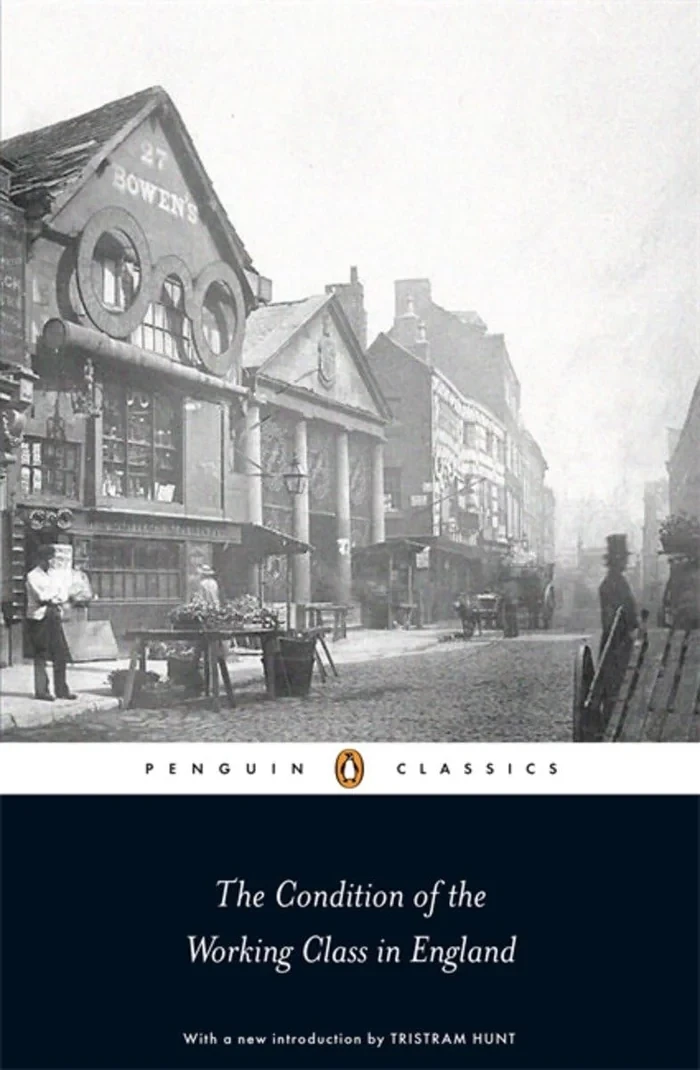
Friedrich Engels made that relationship central to his account of working-class Manchester, first published in 1845. In the Ancoats passage he describes enormous mills beside the canals, then turns to the dwellings around them. His attention moves between industrial scale and domestic conditions. The proximity of those subjects is part of his argument about the society producing the landscape.
IN THE SOURCE
the largest mills of Manchester lining the canals
His housing discussion includes cramped arrangements, poor construction and cellars. These descriptions make domestic conditions part of industrial history, rather than treating them as a separate background. But Engels was a political critic making an argument. A forceful contemporary account deserves close reading; it does not automatically become a neutral survey of every street or every resident’s experience.
An inland city reached across the Atlantic
A canal entrance leads the story beyond the mill; the cotton itself takes it much further. Manchester was inland, but its manufacturing depended on connections to ports and distant growing regions. The museum’s Global Threads research links the local cotton industry to raw material produced by enslaved people in the United States. Those fields belong in the history of the factory city even though they lay outside its streets.
The Liverpool and Manchester Railway opened in 1830, joining the manufacturing town more closely to the port. Passenger travel is the familiar part of that story. Movement of cotton and manufactured goods is another. Transport could connect an urban workplace to a chain of exchange whose labour conditions varied radically along the route.
FOLLOW THE CONNECTION
From a distant field to an industrial city
Grow the fibre
Raw cotton came from several regions; American supplies included production by enslaved people.
Move and trade it
Shipping, merchants and inland transport connected growing regions with manufacturing centres.
Spin the yarn
Manchester mills processed cotton within workplaces requiring machinery, fuel and labour.
Send it onward
Yarn entered further manufacturing and trade. One mill was a stage in a much larger system.
Slavery was not an incidental detail attached to an otherwise self-contained British achievement. The museum’s research framework connects industrial collections, cotton supplies and transport investment to enslavement. At the same time, a plantation and a Lancashire factory should not be collapsed into one legal condition. Their connections are essential; the differences between slavery and wage labour are essential too.
What survives—and what a view can hide
Today, the canal and restored mill buildings make these relationships easier to see. They also make the district easier to misunderstand. Conversion has changed uses; buildings have disappeared; surviving structures have been conserved. Historic England’s study of Ancoats treats the area as a changing historic landscape. The present view is another stage in that history, not an untouched industrial scene.
A visitor can notice the height of a mill, the course of the canal and the distances between buildings. That is valuable evidence about space. It cannot recover a shift’s noise, a household’s budget or a particular worker’s freedom of action without other sources. Reading the city well means making connections while recognizing which kinds of evidence can actually answer each question.
The city was part of the machine
KEY IDEA
The factory worked because a wider world reached its doors.
Manchester’s transformation was therefore more than taller buildings or faster equipment. Ancoats shows production taking shape through a district: workplaces needed supplies and repairs, routes carried goods, and people lived around the spaces in which they worked. Across the Atlantic, other people produced cotton under conditions the mill façade could never reveal.
That is the starting question for Industrial Lives: who gained from industrial production, and who carried its costs? Before answering it, we need to understand the relationships making production possible. The next chapter moves inside the factory to examine steam power. Here, the canal entrance leaves us with the larger setting: a city whose industrial life extended far beyond its walls.