
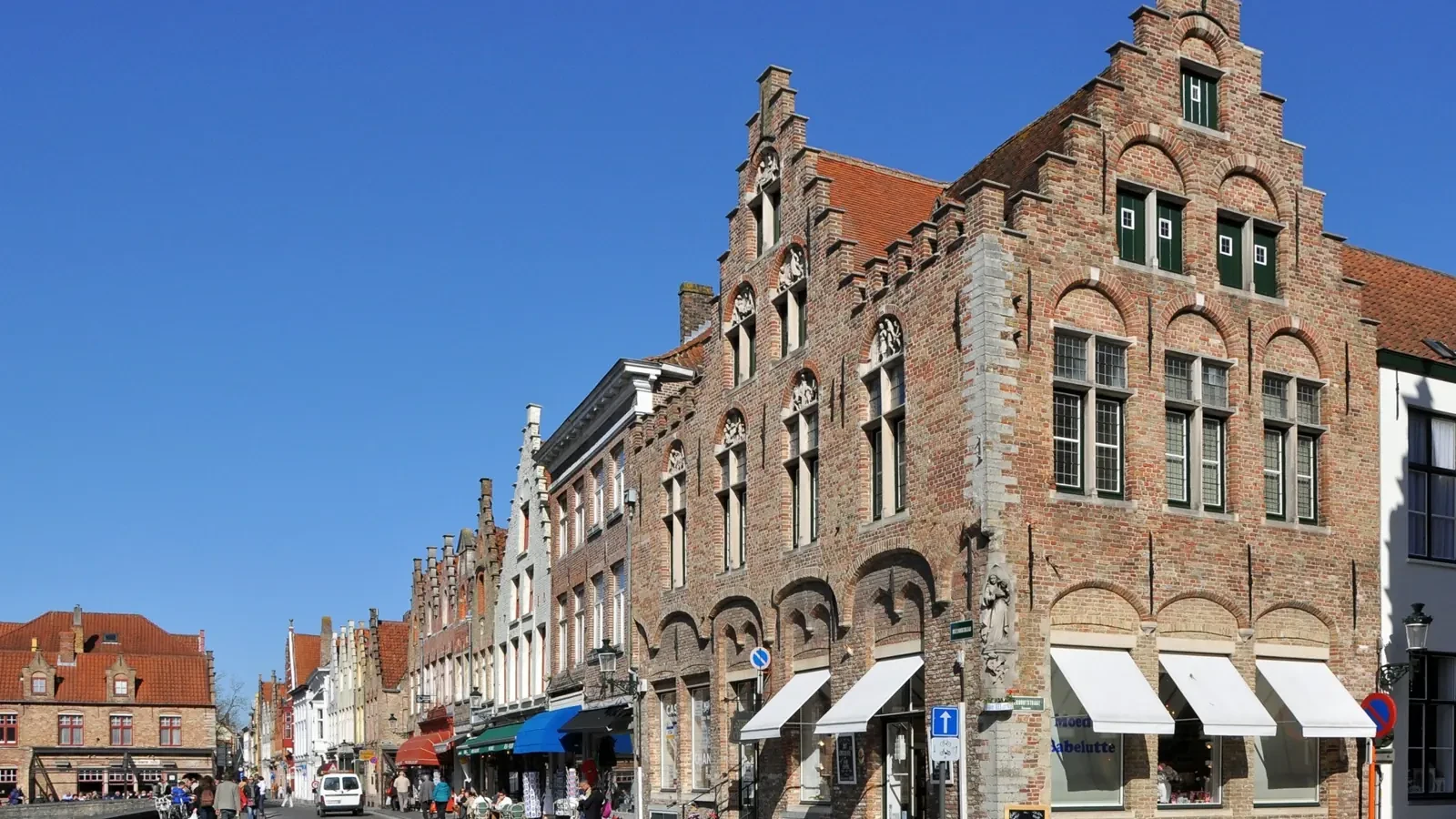
In a confiscation inventory, a household becomes a list. Objects are named, counted and assigned a value because officials have a job to do. The record was not created to let later readers imagine a comfortable afternoon indoors. Yet inventories from Bruges in 1383–1384 give us unusually concrete glimpses of the distance between households connected with the cloth trade.
The goods recorded for the wealthy cloth merchant Willem Koucke included numerous plates and cushions, chandeliers and a suit of armour. Other inventories describe much smaller resources. This was one city and one important industry, but participation in its economy could mean very different levels of security. To understand medieval working life, begin with that unevenness rather than with a single picture of “the medieval worker”.
PLACE & TIME
Work within a commercial city
Bruges and its connected settings
Historical County of Flanders · present-day Belgium
1250–1384 CE
Period and setting
The finished cloth concealed a chain of jobs
A length of woollen cloth brought together more than the person who sold it. Wool had to be prepared and spun into yarn; weaving produced a fabric that then needed further processing and finishing. Work could be divided between people, premises and occupations. A merchant’s name attached to a transaction therefore tells you little by itself about all the hands behind the cloth.
Research on the Flemish industry identifies several ways of organising these relationships. Some producers worked with their own materials; others depended on supplies or credit controlled by another participant. Hugo Soly’s study of craft guilds distinguishes these different economic positions. A title such as master could describe occupational standing without establishing that its holder possessed a large, independent business.
FOLLOW THE CONNECTIONS
Follow the handovers, not an imaginary factory
Material and yarn
Prepared wool and spun yarn had to move between people. Access to material helped determine who could keep working.
Making the fabric
Weaving connected a skilled task with decisions about tools, supplies and the terms on which the work was done.
Finishing and selling
Further processing and the sale joined production to the market. The person arranging these stages could gain influence over those performing them.
This sequence is a guide to the relationships, not a reconstruction of one workshop’s daily timetable. The sources do not put every stage under one roof. That matters because a divided process could join independent skills while making one participant dependent on another’s materials, payments or access to buyers.
Women’s work was part of the industry’s organisation
Spinning was essential to cloth production, and women were strongly associated with it. Shennan Hutton’s research follows gender through the industry’s specialised tasks. Bruges regulations restricted how much wool a spinner could hold at once: she was not to retain more than one person’s wool. A rule that seems narrowly practical also reveals an interest in controlling the relationship between supplied material and paid labour.
It would be a mistake to turn that association into the whole history of women’s work. Women also appeared in commercial and supervisory positions. Occupation, marital status and resources could produce different opportunities. The important distinction is between identifying a task frequently done by women and assuming that every woman occupied the same place in the production chain.
KEY IDEA
A task could be indispensable while its performers had limited bargaining power.
A household could also be a place of production. That does not make work performed there less commercial. It changes what the historian has to look for. A street-facing shop is easier to imagine as a business than a room used for several purposes, but the location of a task does not establish its value to the industry.
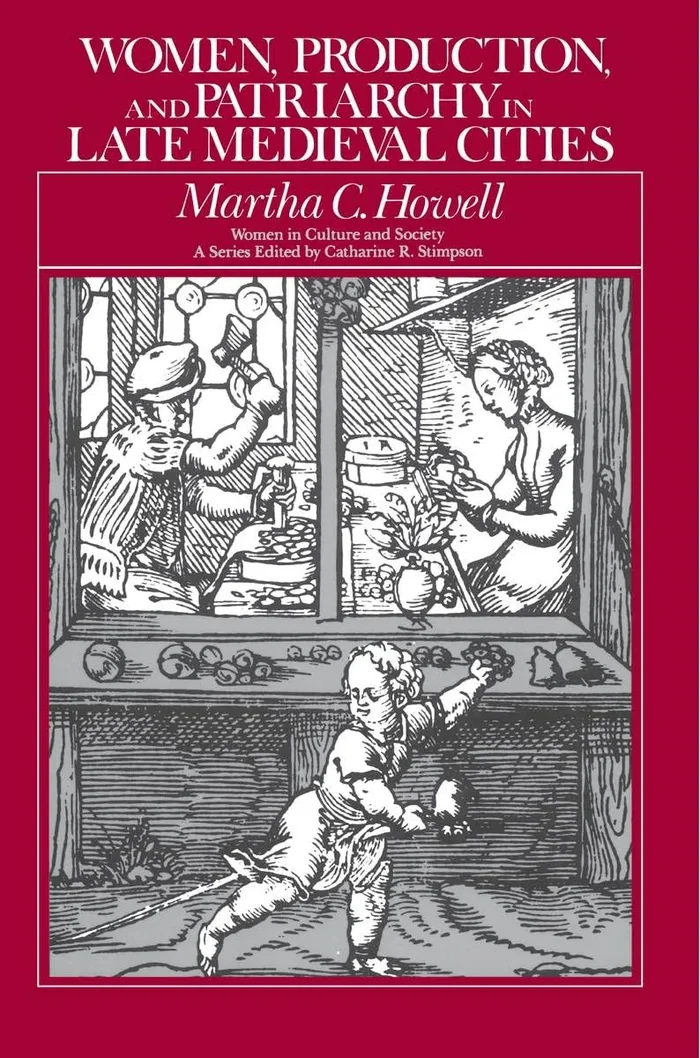
Women, Production, and Patriarchy in Late Medieval Cities
A comparative study of Leiden and Cologne offers questions about gender, household production and status. It is not a Bruges-specific household history. University of Chicago Press paperback · English · study first published 1986 · ISBN 9780226355047
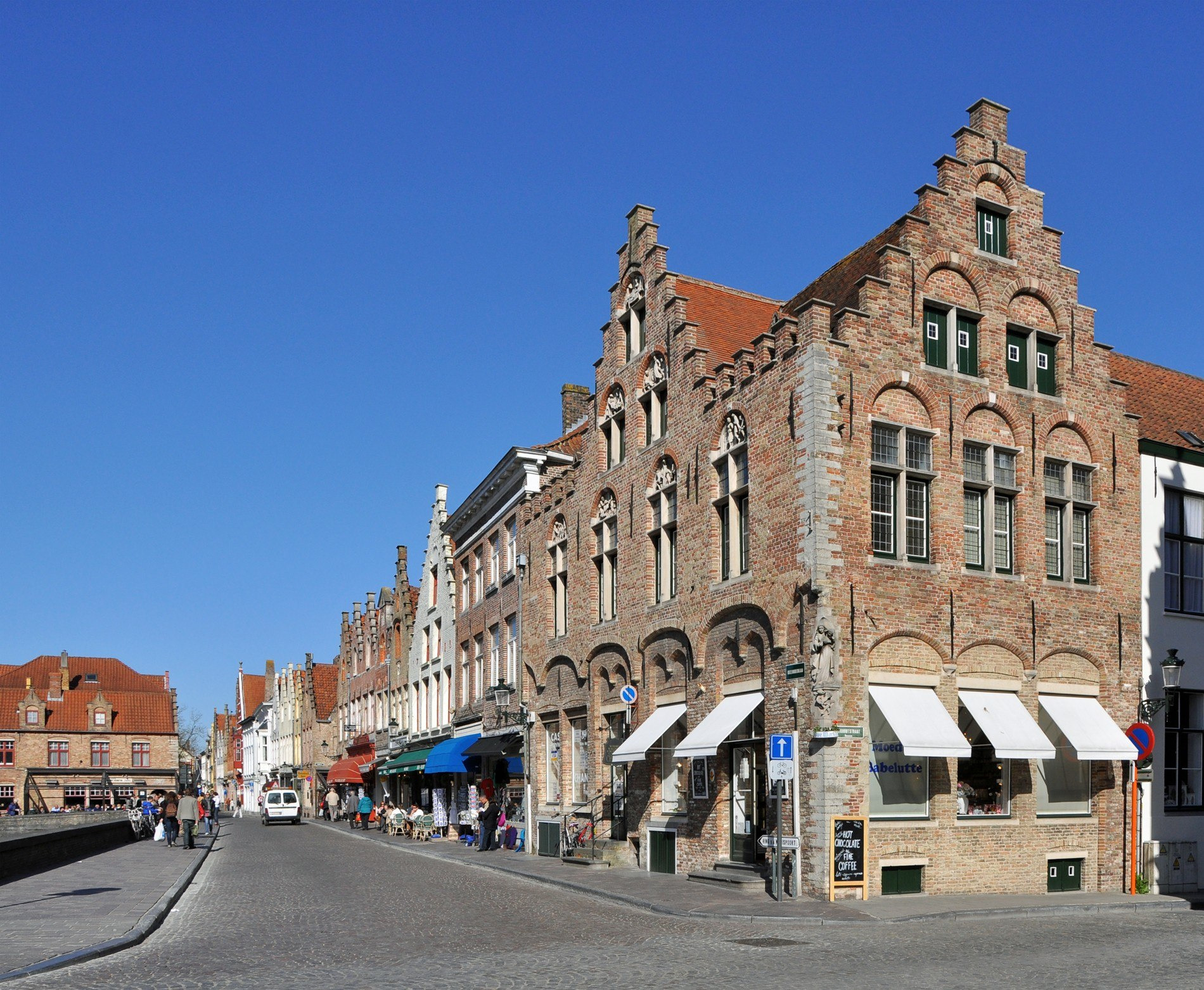
Marc Ryckaert (MJJR) · CC BY 3.0 · resized jpeg photograph.
A yarn market made an intermediate product public
Rules from Bruges in 1282 and 1284 locate a yarn market around St Salvator’s church and prohibit trading inside the church itself. Hutton uses these provisions to investigate the market for yarn. The detail brings an otherwise hidden handover into view: yarn could circulate as something bought and sold before it became finished cloth.
This helps explain why looking only at a cloth merchant’s final sale gives an incomplete account. There were exchanges within production itself. Someone could earn money by making or dealing in an intermediate product, while someone else assembled the resources needed for later stages. A finished piece condensed several commercial relationships into one apparently simple object.
COMPARE
Two different kinds of position
A skilled worker
Possession of a recognised skill could support a place in a craft.
That did not necessarily include ownership of material or access to profitable sales.
A producer arranging work
Coordination could connect several stages of production.
Credit, supplies and customers affected how much control the producer exercised.
A merchant selling cloth
Commercial connections could support the final transaction.
The size and security of a business still varied; the title alone is insufficient.
A market also needed rules about where trading belonged. The prohibition on commerce inside St Salvator’s is a small reminder that economic life occupied places used for other purposes. The city did not consist of a commercial district entirely separate from religious and domestic activity. Boundaries had to be drawn within a shared landscape.
Guild membership was not the same as equality
Guilds organised occupations and could provide collective institutions, but their members were not interchangeable. The same body might include people with quite different access to equipment, money and business relationships. Research on guild buildings in Bruges and Ghent connects shared premises with internal hierarchies. A hall could represent a craft’s public standing without giving every associated household equal influence.
Nor does the presence of a guild establish that every necessary task had equally strong representation. Someone making a vital contribution at an early stage of production might remain much less visible in civic records than a wealthy organiser or officeholder. A history centred on guild leaders therefore needs to be supplemented by evidence about labour and households.
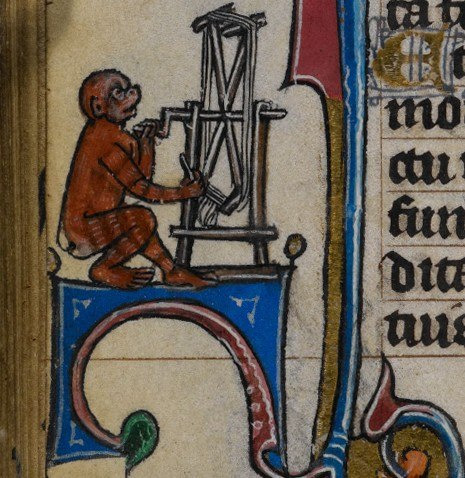
A marginal drawing in the early fourteenth-century Maastricht Hours presents a monkey handling threads on a frame. The playful image belongs to a devotional manuscript, not a Bruges workshop record. Research on the manuscript places its imagery within a reader’s book of prayer. It brings a different kind of evidence into view: a represented activity, rather than a regulation of how work should be organised.
WORDS TO KEEP APART
Words that separate skill from control
Yarn
Fibres spun into a continuous thread, used to make woven cloth.
Intermediate product
Something sold or transferred before the final product is complete, such as yarn.
Master
A recognised occupational position whose economic meaning depended on local arrangements.
Inventory
A record of possessions made for a particular purpose, not an impartial account of a whole life.
These distinctions make “independence” a question you can investigate. Did a person own the tools? Could the household obtain materials? Was income tied to a single supplier? The surviving evidence will not answer every question for every worker. It nevertheless allows a more useful comparison than ranking people solely by the names of their occupations.
Marc Ryckaert (MJJR) · CC BY 3.0 · resized jpeg photograph.
Return to the confiscated households
The 1383–1384 records survive because of political conflict and confiscation during the suppression of a revolt. Jan Dumolyn, Wouter Ryckbosch and Mathijs Speecke analyse a small set of detailed inventories. Their sample is selective, rather than a random survey of Bruges. It contains information recorded under pressure for an official financial purpose.
That limitation does not erase the differences in possessions. It changes the claim we can make from them. They demonstrate unequal resources among particular households; they do not give a representative average for every weaver or merchant in the city. A modest list might also omit activities or relationships that mattered greatly to the people who lived there.
CHANGE YOUR VIEW
What changes when you read the same record differently?
Confiscation required officials to identify and value possessions. Their categories served that task.
Tools, furnishings and other goods can suggest differences in material resources. They do not reveal every source of income or support.
The records allow comparisons among selected households. Extending those results to the whole population requires other evidence.
The contrast between richer and poorer inventories also suggests why industrial prosperity is an inadequate measure of everyday comfort. Cloth could bring wealth into Bruges while people involved in producing it lived with very unequal reserves. Being needed by an industry did not ensure that a household could withstand a missed payment or a period without work.
A working city contained many kinds of household
There was no single Bruges textile household that stood for all the others. Material supplies, market access, skill and property could combine in different ways. Gender influenced opportunities without defining every occupation or every person’s resources. Guild affiliation could offer a collective identity while leaving considerable differences within it.
The city’s commercial reputation is easier to see in a monument than in a spinner’s working relationship. But that relationship belongs in its history. Bruges’ prosperity depended on several kinds of labour, and the rewards did not reach all participants on the same terms. The next chapter follows a group with a particularly visible collective voice: the Hanseatic merchants who negotiated their place in the city.


.png)