Kilwa and Calicut belonged to the same ocean without belonging to the same society. One stood on an island off East Africa, the other on the Malabar coast of southwestern India. Goods, travellers and religious connections helped place them within overlapping networks. Their rulers, hinterlands and urban traditions nevertheless produced different arrangements. A shared maritime world did not require a shared political model.
Comparing the two ports is useful because it exposes what the phrase “Indian Ocean trade” can conceal. A commodity might move between distant places through several transactions, while the conditions at each end remained distinctive. Ask the same questions of both ports—what they offered, how authority worked, who arrived and what evidence survives—and the network becomes easier to understand without flattening its participants into interchangeable dots on a map.
PLACE & TIME
Place the evidence
Kilwa and Calicut
East Africa · Malabar
c. 1300–1505 CE
Orientation
Start with the same period and different evidence
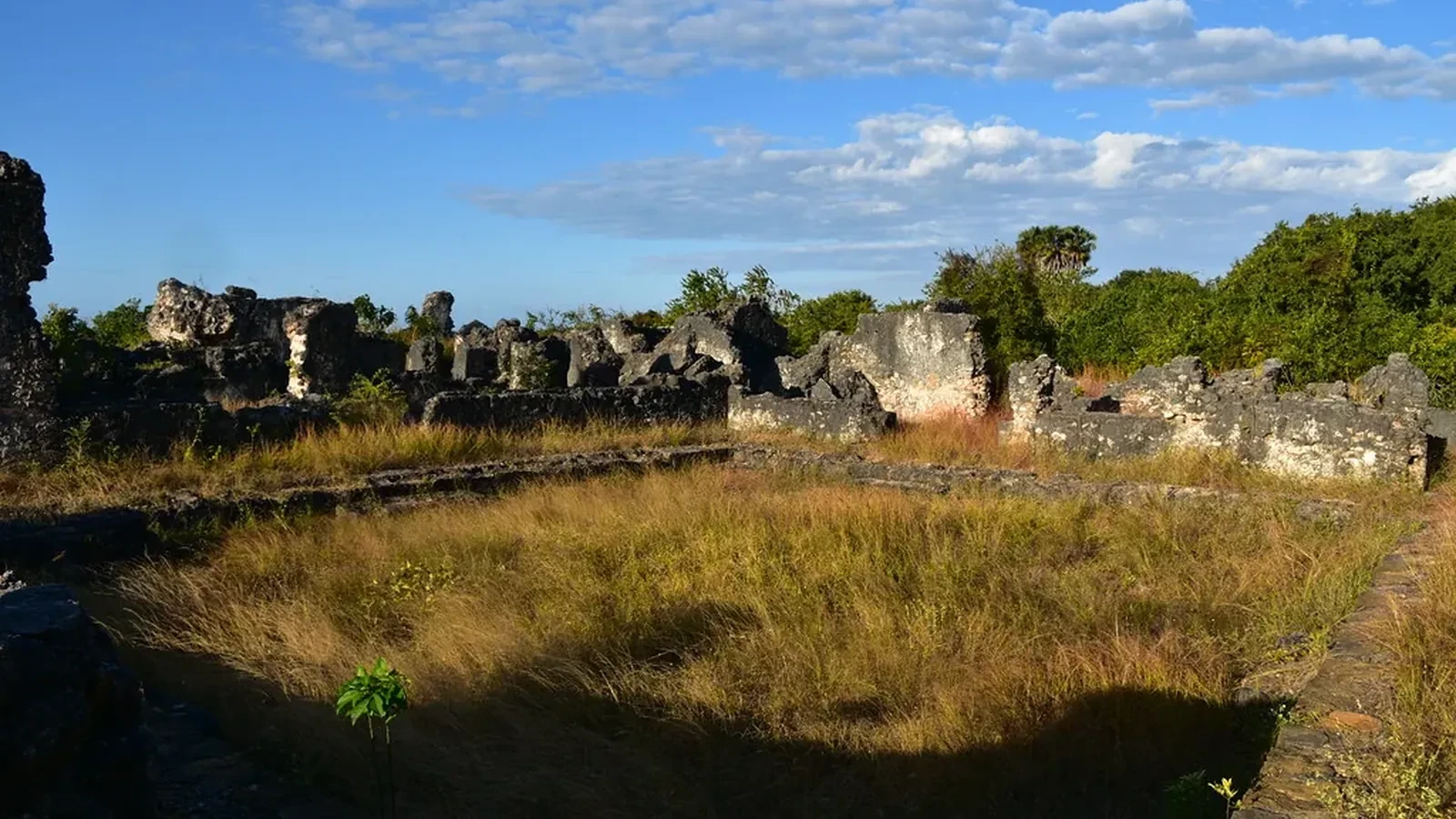
Both places mattered within the trading world of the later medieval Indian Ocean, particularly during the fourteenth and fifteenth centuries. Yet our evidence is uneven. Kilwa’s monumental remains and archaeological finds provide a strong material record, supported by written descriptions. Calicut appears prominently in travel accounts and records of encounters, especially around the arrival of Portuguese vessels. Different surviving traces encourage different kinds of explanation. 12
That imbalance creates a temptation: describe Kilwa through ruins and Calicut through lively scenes, then mistake the contrast in sources for a contrast in historical reality. Both places contained buildings and people, transactions and institutions. We simply possess different opportunities to reconstruct them. A comparison becomes fairer when it identifies which differences belong to the ports and which arise from the evidence available to us.
COMPARE
Apply the same questions
Goods
Connections to African inland gold and ivory routes.
Connections to Malabar spice production and exchange.
Authority
Islamic coastal rulership and visible monumental claims.
Regional rulership under the Zamorin, with Muslim merchant participation.
Evidence
Ruins, archaeology and selected written descriptions.
Prominent travel and encounter accounts; their perspective needs scrutiny.
The dates also require discipline. A sixteenth-century European image of Calicut cannot directly illustrate a fourteenth-century street layout. A palace at Kilwa cannot stand for every phase of the city’s long history. We can use later images or standing remains to orient ourselves, provided the caption and interpretation name those limits. A compelling visual is useful when it supports a bounded claim rather than silently expanding it.
The hinterlands supplied different opportunities
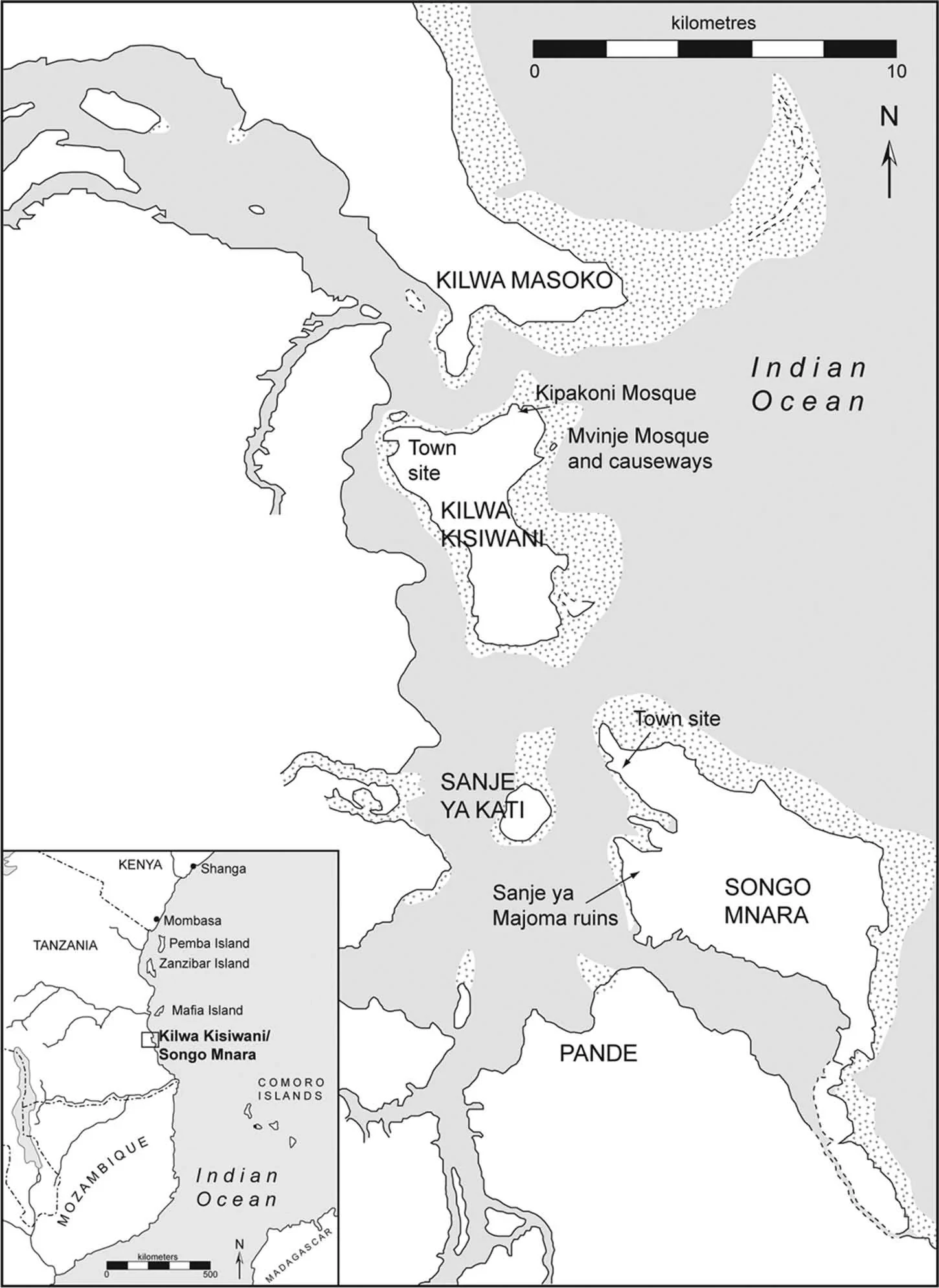
Kilwa’s maritime importance included connections to gold and ivory arriving through African networks. Those materials linked the coast to inland producers, transporters and authorities. The port’s commercial position depended on relationships extending beyond the island, not merely on its access to ships. Its significance cannot be explained by describing overseas buyers while leaving African supply invisible. 1
Calicut’s fame was closely associated with the Malabar region and the movement of spices, above all pepper. A ship seeking pepper was also entering a landscape of cultivation, collection, transport and political negotiation. The coastal transaction represented one stage in that chain. Even a powerful port authority could not create an agricultural commodity by commanding it into existence; producers and intermediaries mattered. 2
- Kilwa linked maritime exchange to African routes carrying valuable inland materials.
- Calicut linked maritime exchange to the productive and commercial landscapes of Malabar.
- Neither port’s prosperity can be explained from the anchorage alone.
These differences affected how visitors valued each destination. A merchant seeking one cargo might prioritize a port that was less attractive to someone carrying another. “Important” is therefore relational: important to whom, for which goods and during what period? There was no single league table of ports meaningful to every participant. Their positions depended on the movements and transactions being considered.
Authorities needed commerce, and commerce needed arrangements
Kilwa’s rulers expressed authority through institutions and material claims, including monumental construction and coinage. Their influence was connected to commerce, but describing the city as simply a merchant republic would erase political hierarchy. Equally, imagining a ruler directing every transaction would erase the practical roles of traders, residents and intermediaries. Authority worked through relationships whose precise balance changed over time. 13
At Calicut, the ruler known in European accounts as the Zamorin occupied a different regional political setting. Muslim merchants participated in a port under a non-Muslim ruler. That combination is central to the comparison: shared maritime and religious networks did not require religious identity between merchant communities and sovereign authority. Commercial participation could be secured through local political accommodation rather than through conversion of an entire port to one faith. 2
KEY IDEA
A shared network did not prescribe one society
Accommodation should not be idealized as limitless openness. A ruler could welcome useful visitors while imposing conditions, collecting revenue or favouring established interests. Merchants could seek protection while resisting changes that threatened their position. Describing a port as cosmopolitan identifies the presence of different people and connections; it does not prove that all groups enjoyed equal treatment or that conflict was absent.
The practical relationship also ran both ways. Visitors needed a predictable setting for transactions, while authorities could benefit from traffic and revenue. This mutual interest could create cooperation without eliminating mistrust. It helps explain why an unfamiliar newcomer might be welcomed for commerce yet still find gifts, procedures and expectations difficult to navigate.
- Distinguish welcome from equal treatment.
- Examine the conditions under which access was granted.
- Locate a visitor’s expectations within the host society’s procedures.
What arriving at Calicut actually meant
The journal of Vasco da Gama’s first voyage makes the problems of encounter particularly visible. In 1498, the Portuguese reached Calicut with a poor understanding of many local arrangements. The account describes conversations through intermediaries, disputes around gifts and access, and efforts to obtain goods. It also repeatedly misidentifies religious practices through a Christian framework. Arrival gave the visitors contact, not immediate comprehension. 4
The gift episode illustrates a difference in expectations. The journal records Portuguese offerings that officials considered inadequate for the ruler. The simplest reading is not that one side was greedy and the other innocent. Gifts communicated status and seriousness within an encounter. If the newcomers expected access on terms that local participants did not recognize, misunderstanding could become a dispute about rank, value and obligation.
EVIDENCE CHECK
Test the claim
Question
Does a Portuguese account explain Calicut’s motives?
It records the expedition’s explanations, not an equal account from every participant.
Evidence
Negotiation, gifts and misunderstandings from the visitors’ viewpoint.
Different expectations contributed to difficulties.
Boundary
Allegations of hostility do not fully recover the motives of local merchants.
Read the source record: Anonymous voyage journal: A Journal of the First Voyage of Vasco da Gama, 1497–1499
The source is also partisan. Its account tells us how members of the expedition explained their difficulties, not how every Calicut participant understood them. Reports of hostility from commercial rivals require that perspective to remain visible. Competition was plausible, but the narrative’s assignment of blame should not become a complete reconstruction of local motives. The people described had no equal opportunity to answer within the surviving text.
This encounter does not define Calicut’s whole history. It documents a particular moment when an ambitious new group entered an established port. Its very difficulties demonstrate that arrangements already existed. The Portuguese were not introducing trade to a vacant coast. They were trying to secure a position within relationships whose value and authority had been created before they arrived.
Religious connections travelled through local societies
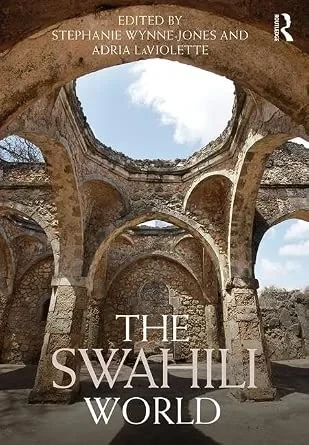
At Kilwa, Islamic institutions formed a visible part of the urban landscape. Mosques helped organize collective religious life and could make visiting Muslims feel a degree of familiarity. Familiarity, however, should not be confused with identity. A traveller could recognize prayer and religious authority while remaining dependent on hosts, translation and knowledge of local political circumstances. 15
At Calicut and elsewhere along Malabar, Muslim merchant communities likewise belonged within a wider regional society. Their maritime connections could provide commercial and religious resources without dissolving local attachments. A person could be oriented towards partners overseas and towards a ruler, household or community nearby. These loyalties did not necessarily form competing halves of an identity; they could operate together.
TERMS
Words that change the question
Port
A place organizing arrival and exchange, including services and political arrangements.
Hinterland
Connected inland landscapes; the term should not imply passive dependence.
Cosmopolitan
Involving varied populations and wider connections, without automatically implying equality.
The comparison therefore challenges a simple map of civilizations. An Islamic coastal city in Africa and a Malabar port under a non-Muslim ruler could both participate in Muslim commercial networks. Their arrangements differed because religion interacted with local authority in different ways. The historical task is to examine that interaction, rather than assign the entire ocean one religious or political character.
It also makes room for limits. Religious belonging could assist trust, but contracts, reputation and enforcement still mattered. Shared practices did not guarantee that a transaction was fair or that a guest would remain safe. A network could reduce some uncertainties while creating dependence on people whose interests did not always match those of the traveller.
- Do not equate shared religion with shared government.
- Look for local enforcement as well as commercial trust.
- Keep differences within a connected community visible.
Goods acquired different meanings in different places
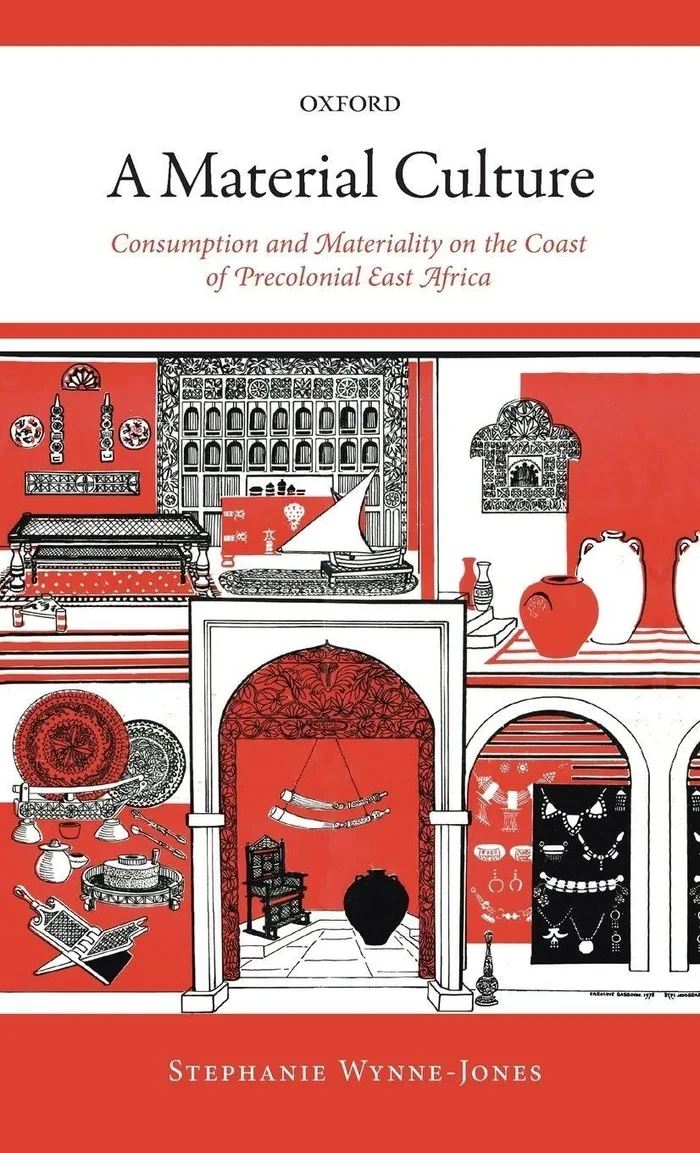
Imported ceramics on the East African coast are especially valuable for studying local consumption. Their presence shows participation in exchange, but their placement and use help reveal social meaning. A vessel might become part of household hospitality or an architectural display. Its significance at the destination cannot be inferred entirely from the preferences of the workshop that produced it. 6
At Calicut, the purchasing interests of distant visitors likewise did not exhaust the meaning of local goods. Pepper could be cultivated, transported and sold within regional relationships before entering a long voyage. The high value a European expedition placed on obtaining it was one demand within a wider commercial field. The Portuguese narrative can magnify that demand because it is the purpose around which the account is organized.
- Ask what a commodity did before it reached the port.
- Ask who controlled its transfer at the coast.
- Ask what changed when it entered another society’s use or market.
Following those questions turns a comparison of products into a comparison of processes. Kilwa and Calicut were places where goods could change hands, but the relevant chains began earlier and continued later. The port concentrated relationships rather than containing them all. Its urban history and the commodity’s history overlap without being identical.
Different shorelines meant different work
The physical act of arrival also deserves comparison. A sheltered island setting and an open coastal anchorage could demand different ways of moving cargo and passengers. Ships, small craft, storage and people ashore had to be coordinated. Broad maps usually omit these operations because they make better room for long routes than for the last practical stages of a voyage.
We should not invent a precise daily routine at either port from general nautical knowledge. The useful inference is narrower: whatever the harbour arrangement, commerce required labour between vessel and destination. Pilots, carriers, provisioners and intermediaries helped convert arrival into a transaction. Those activities can remain unnamed in a traveller’s account while still being essential to the encounter it describes.
FOLLOW THE CONNECTION
Look beneath a port’s headline commodity
Production
Locate cultivation or extraction before the commodity reaches the coast.
Transfer
Follow the people and arrangements moving it towards buyers.
Arrival
Identify the work between offshore vessel, landing place and store.
Value
Ask whose demand and authority shape the transaction.
The people performing this work occupied different positions. Some could negotiate their services; others worked within obligations or coercive circumstances. A flourishing port should not be imagined only from the perspective of a successful merchant. Prosperity could increase demand for labour without distributing profits evenly. The comparison becomes richer when it asks whose work made commerce possible and whose experience appears in the surviving record.
Nor did local food and water become less important because the export cargo was valuable. A voyage carrying prestigious goods still needed ordinary supplies. A port’s connection to nearby producers was therefore not peripheral to its international role. Distant movement depended on mundane arrangements whose historical importance can be obscured by the glamour of gold, pepper or porcelain.
Portuguese intervention followed different local paths
The Portuguese encounter with Calicut in 1498 and the construction of a Portuguese fort at Kilwa in 1505 belong to an expanding effort to intervene in existing trade. They were not identical episodes. Negotiation, coercion, alliances and armed conflict took different forms according to local circumstances. A European plan for maritime power met several political environments rather than one uniform opponent. 47
At Calicut, commercial entry became entangled with rivalries and violent confrontation. Along the wider Malabar coast, Portuguese partnerships with other rulers mattered to their position. At Kilwa, intervention likewise involved local political relationships. The capacity of outsiders to use divisions is itself evidence of the complexity of the world they encountered. It does not reduce all local decisions to manipulation by foreigners.
TIME
A sequence with boundaries
- 14th–15th centuries
Connected ports
Kilwa and Calicut participate in overlapping maritime exchange.
- 1498
Calicut
The first Portuguese voyage negotiates in an established port.
- 1505
Kilwa
Portuguese forces construct a fort within a distinct political setting.
Selected encounters belong to different local histories
This history also warns against projecting later imperial power backwards. Portuguese forces could inflict major harm and establish strategic positions without commanding every route or port. Local participants resisted, negotiated or pursued alternative relationships. The ocean remained larger and more complicated than any single newcomer’s ambitions. Its connected character made intervention possible while also limiting comprehensive control.
What the comparison changes
Kilwa and Calicut show that maritime connection could join societies whose political and cultural arrangements remained distinct. Both depended on hinterlands, practical services and repeated dealings with visitors. Yet neither was simply an example of a universal port model. Their goods, authorities, religious settings and surviving evidence require separate explanation before they can support a meaningful comparison.
The most useful result is a method. Apply the same questions, keep the period bounded and distinguish a historical difference from a difference in documentation. That approach prevents the famous traveller, monumental ruin or dramatic arrival from becoming the whole story. It also lets similarities emerge where they are supported, rather than requiring both cities to resemble each other in every respect.

An ocean connected Kilwa and Calicut through overlapping movements, not through the disappearance of local worlds. Each port made those movements work on particular terms. When we follow a cargo between them, we are following a sequence of translations: between measures and expectations, forms of authority, practical environments and uses of goods. The network’s strength lay partly in that ability to connect different arrangements. Its tensions arose from the same differences.