Ibn Battuta travelled farther than most people of his century could imagine. His account links North Africa, East Africa, Arabia, South Asia and places beyond through encounters with rulers, scholars, hosts and fellow travellers. It makes the fourteenth-century world feel populated and connected. That vividness is also a reason to read carefully. A compelling narrator can bring us close to an encounter without giving us unrestricted access to everything that happened.
The central question is not whether to believe or dismiss him as a person. It is how a particular claim in his account can be used. Did he describe something he says he witnessed, report what someone told him, or reproduce material associated with earlier writing? What did his position allow him to see? His journey becomes most valuable when the history of the traveller is joined to the history of the text. 1
PLACE & TIME
Place the evidence
Tangier · journeys across the ocean
North Africa · Indian Ocean
1325–1355 CE
Orientation
Departure did not establish the whole itinerary
Born in Tangier in 1304, Ibn Battuta began his travels in 1325 with the pilgrimage to Mecca as an important purpose. The subsequent journeys developed over many years. It is misleading to imagine him leaving home with a complete modern itinerary already planned. Opportunities, appointments, obligations and changing circumstances helped shape movement. A long journey could accumulate rather than unfold as one predetermined expedition. 2
Pilgrimage connected travellers to routes and institutions extending beyond their place of origin. Muslim communities could offer familiar religious practices and contacts, but the world he entered was neither politically unified nor culturally identical. A traveller might recognize a mosque while remaining uncertain about local power. Shared affiliation could help him find a place within a society without removing the need to learn how that society worked.
TIME
A sequence with boundaries
- 1325
Departure
Pilgrimage helps initiate a journey that develops over many years.
- Early 1330s
East African coast
The account includes coastal Muslim towns and Kilwa.
- Early 1340s
India and Maldives
Changing roles connect travel with patronage and authority.
- 1354–1355
Composition
The journeys become a literary account in Morocco.
Selected milestones; this is not a complete itinerary
Ibn Battuta’s education and religious standing also affected the journey. He was not an anonymous visitor equally likely to encounter every part of a population. His qualifications could help him enter circles of scholars and authority. The privileges and expectations attached to that position shaped hospitality, employment and the people who appear in his narrative. What he records is partly a history of the access he was able to obtain.
That access changed across regions and circumstances. A guest, a judge and an emissary had different responsibilities and vulnerabilities. Treating “traveller” as his only role can obscure those changes. His movement was tied to institutions as well as curiosity, and his opportunities depended on relationships that could produce both support and danger.
- Identify the role the traveller held in each setting.
- Ask how patronage affected his opportunities.
- Remember that an itinerary developed through changing circumstances.
East Africa appears through religious and social encounters
His description of the East African coast presents Muslim towns linked to wider maritime movement. At Kilwa, he gives particular attention to the ruler and religious life. Those concerns fit his position as a Muslim visitor whose account values piety, hospitality and notable encounters. They help explain why the narrative offers certain kinds of detail while leaving other aspects of urban life much less visible. 3
His visit is usually placed in the early 1330s, although simplified itinerary resources sometimes present the surrounding journeys under broader or differing date headings. That is a reason to avoid false precision in a chapter whose main question concerns interpretation. We do not need to assign every coastal stop an exact day in order to examine what the account says and how it relates to material evidence.
- A description of hospitality can reveal practices important to a visitor.
- Praise of a ruler shows the narrator’s evaluative framework as well as the ruler’s visibility.
- Silence about ordinary labour does not establish that labour’s absence.
Kilwa’s archaeology gives an independent route into the city’s maritime connections and built environment. It cannot confirm every conversation attributed to the visit. Conversely, Ibn Battuta’s praise cannot date every surviving wall. The two bodies of evidence become strongest when their different capacities are respected. Agreement about a broad urban setting should not be stretched into verification of all narrative particulars.
Delhi changed the terms of travel
Ibn Battuta’s time in India brought him into the service of the Delhi sultan Muhammad bin Tughluq. In the account, patronage offered substantial opportunities while entangling him in a political environment he presents as dangerous and unpredictable. His position was no longer simply that of a visitor moving between hosts. An appointment tied his prospects to the court and its decisions. 4
That relationship complicates the familiar image of the independent explorer. Travel required resources, and resources could come with obligations. A ruler’s support might make an ambitious journey possible while making departure difficult. The narrator’s explanations of favour, fear and reversals should therefore be read within a history of dependence. He had reasons to emphasize both his usefulness and the difficulties he faced.
PERSPECTIVES
The encounter changes with your position
Hospitality could introduce a visitor to prominent circles without exposing every household.
The visitor could prescribe conduct and meet resistance rather than simply observe.
The finished narrative needs claim-by-claim assessment and independent comparison.
His account of an intended embassy to China brings those conditions to the sea. At Calicut, preparations and severe weather disrupted the planned onward journey. The narrative describes losses and an outcome very different from the expedition’s purpose. These details belong to the account’s version of events; they should not be presented as if we possessed independent documentation for every vessel, passenger and sequence described. 4
The episode nevertheless raises useful questions about maritime life. Political orders did not eliminate seasonal conditions or risks at an anchorage. A traveller with official backing could still lose control over movement. Ships connected courts and communities, but their departures depended on practical circumstances that neither status nor ambition could fully command.
The Maldives exposes the narrator’s authority
In the Maldives, Ibn Battuta’s account describes judicial responsibilities and attempts to influence local religious and social practices. He did not observe the islands from a position of detached neutrality. He sought to exercise authority, entered relationships through marriage and evaluated practices against his own expectations. His frustration is evidence for a clash of purposes as well as a description of the society around him. 4
The distinction matters especially when he discusses women’s dress or behaviour. His criticism tells us what he considered proper and what he says people resisted. It does not entitle us to adopt his judgement as the historical truth about women’s conduct. The people he describes had their own habits and interests, even where the narrative gives them little space to explain those interests directly.
KEY IDEA
The narrator also acted within the world he described
A useful reading asks who gets to define a problem. If the traveller sees resistance to his prescription as a failure, a local participant might experience the same event as the defence of an established practice. We cannot invent that person’s thoughts. We can identify that the narrator’s perspective is only one position within the conflict and that authority was being negotiated rather than smoothly accepted.
This approach makes the account more informative. Instead of extracting an exotic custom and moving on, we can examine how a visitor tried to act within a local society. His difficulties show that shared Islam did not erase differences in interpretation or social arrangement. The connected ocean brought people together while leaving ample room for disagreement about how life should be organized.
- Separate the narrator’s judgement from the practice he describes.
- Identify where he sought to impose authority.
- Leave unrecorded participants’ private thoughts unassigned.
The book was produced after the journeys
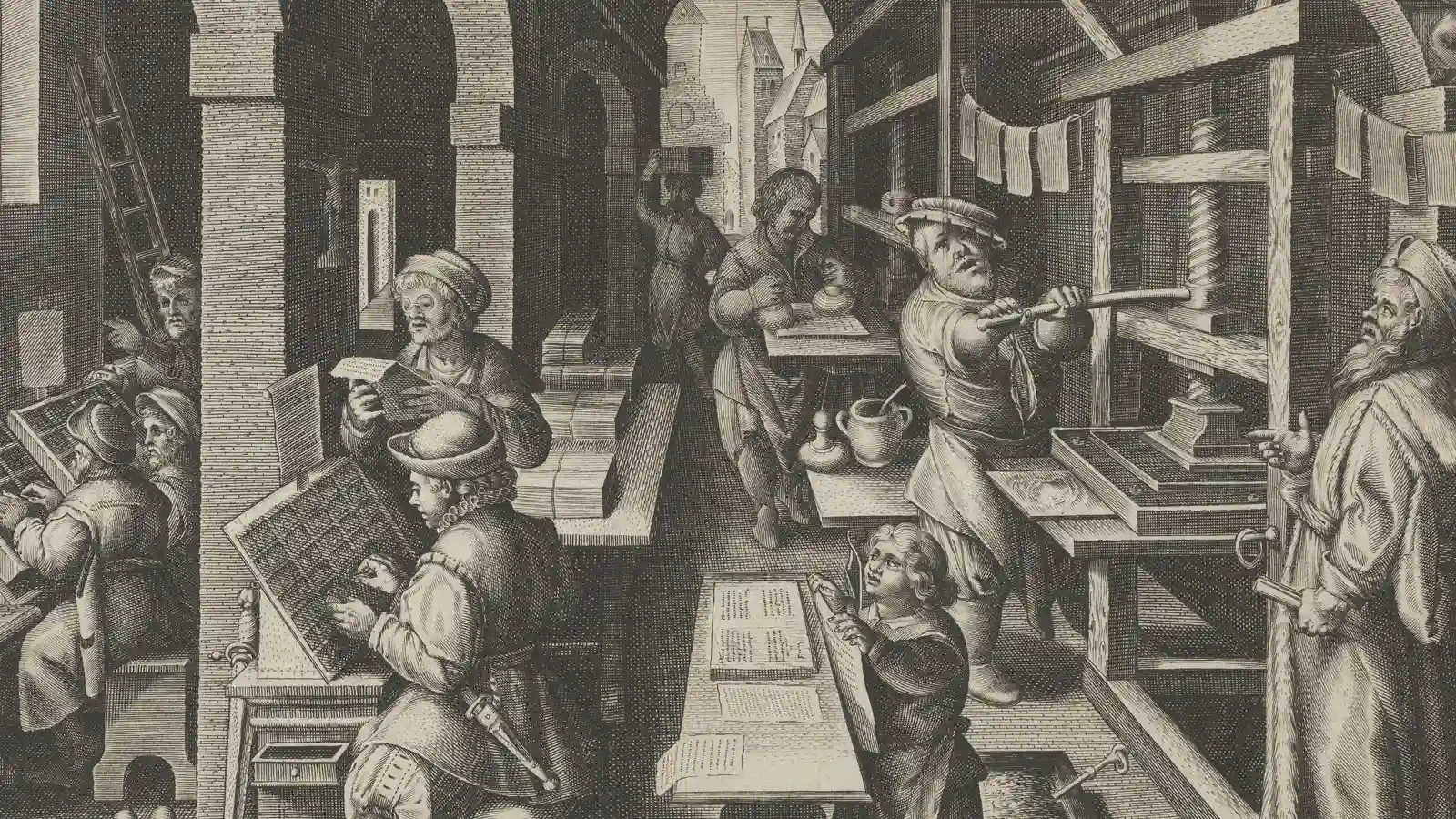
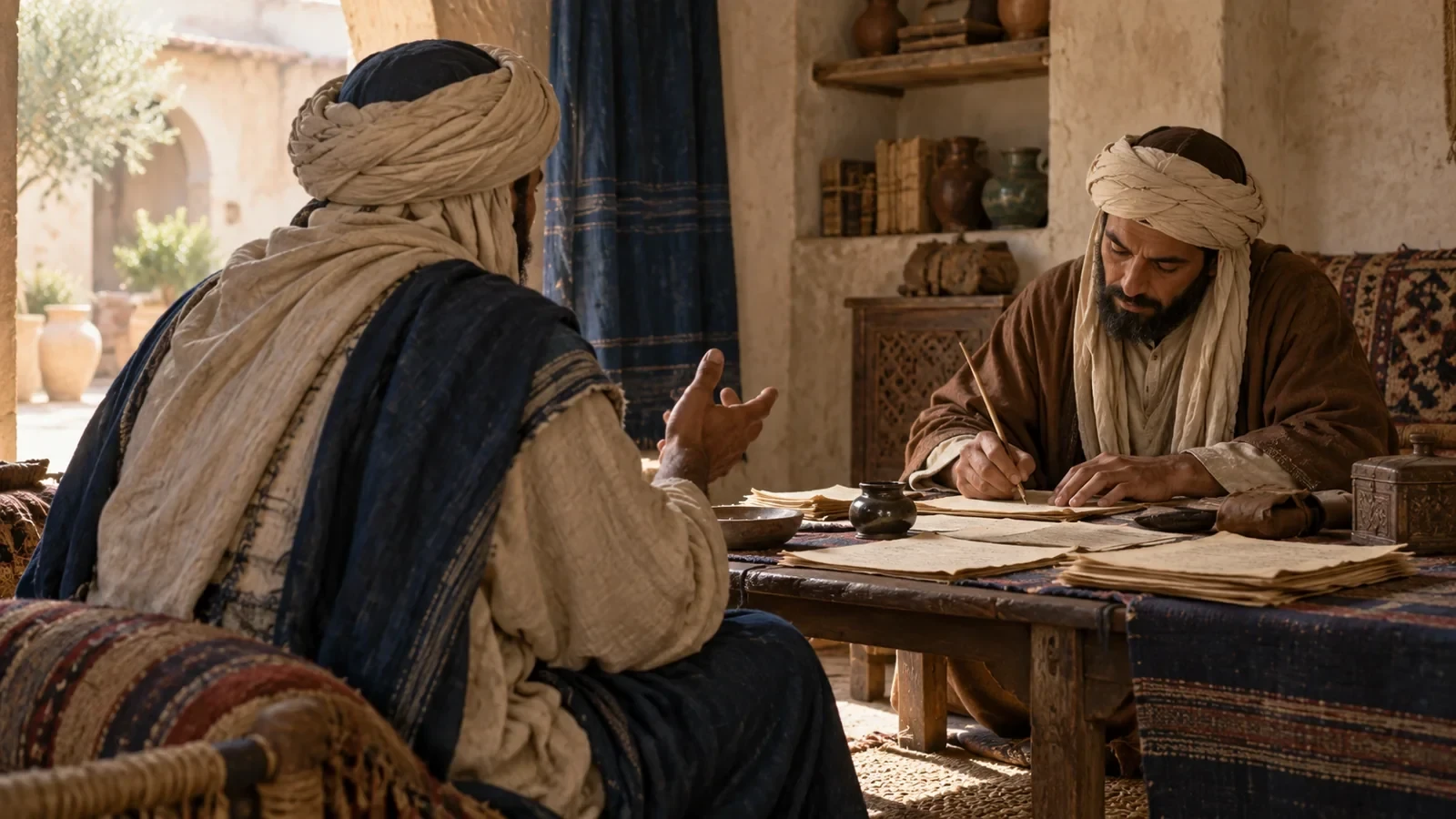
The narrative known as the Rihla was assembled after Ibn Battuta returned to Morocco. Under the patronage of the Marinid ruler Abu Inan, he worked with Ibn Juzayy, who gave the account its written literary form. The work was completed in the mid-1350s, usually dated to 1355. It is therefore not a surviving diary written each evening beside the events it describes. 1
The distance between travel and composition affected the source. Memory had to organize years of experience. A writer shaped the material into a readable account, and the literary conventions of travel writing supplied expectations about what a successful narrative should contain. These conditions do not make the work useless. They identify the process through which experience became the document that later readers inherited.
FOLLOW THE CONNECTION
Experience becomes a source
Journeys
Encounters occur in changing roles and circumstances.
Recollection
Events are selected and organized after the journeys.
Composition
Ibn Juzayy contributes literary form to the account.
Interpretation
Readers test particular claims against appropriate evidence.
Earlier writing also entered the finished narrative. Descriptions associated with Ibn Jubayr’s pilgrimage account appear in sections of Ibn Battuta’s text. Recognizing such borrowing changes the evidential status of those passages. A vivid description may reflect an established literary account rather than a newly recorded observation. Historians need to distinguish the text’s production from the traveller’s asserted personal presence. 1
The relationship between voice and authorship is consequently layered. “Ibn Battuta says” is convenient shorthand, but the surviving work passed through collaboration and literary arrangement. We need not imagine Ibn Juzayy inventing everything or Ibn Battuta dictating a perfect record. The important point is that the source was made, and its making belongs within the explanation of what it can tell us.
- Locate the account’s composition after the journeys.
- Distinguish collaboration and literary borrowing from direct observation.
- Assess a passage before judging the whole work.
Eye-witness claims need tests of their own
First-person narration can feel like a guarantee. It is not one. A claim that the traveller saw something establishes what the narrator asserts, while corroboration asks whether other evidence supports it. A text can contain credible observations, borrowed descriptions, hearsay and difficult chronology together. The appropriate unit of assessment is often a passage or claim rather than a verdict on the whole book.
That assessment can begin with internal questions. Does the itinerary fit the time available? Does the narrator distinguish what he saw from what he heard? Is the detail consistent with his location and role? Internal coherence is useful, but a smooth story can still be inaccurate. Independent evidence adds another test, whether through archaeology, other texts or knowledge of political and geographical circumstances.
- Identify the precise statement being tested.
- Establish whether it is presented as observation, report or description from another source.
- Compare evidence that does not merely repeat the same narrative.
A modern website quoting the Rihla is not an independent witness to a fourteenth-century event. Nor do several retellings become several original sources because their wording differs. This is a common problem in popular history: repetition creates the appearance of consensus. Tracing the information back to its origin helps distinguish broad circulation of a claim from genuinely separate support.
Who is missing from the itinerary?
The account gives exceptional visibility to rulers, scholars, hosts and notable occasions. Much of the labour supporting travel remains harder to recover. Someone supplied food, handled animals, maintained vessels and carried goods. Those people could make a journey possible without receiving a memorable description. A history centred only on the traveller’s named encounters reproduces that imbalance in our own account.
Enslaved people also appear within the world of travel, patronage and exchange. They should not be absorbed into a celebratory story of voluntary mobility. Moving across the ocean could mean opportunity for one person and coercion for another. Ibn Battuta’s ability to pursue appointments and journeys depended on a social world in which freedom and power were distributed unevenly. His travel is extraordinary, but it is not a representative biography.
EVIDENCE CHECK
Test the claim
Question
Is a first-person passage independent proof?
It establishes what the narrator asserts; the claim still needs assessment.
Evidence
A literary account assembled after the journeys.
Experience, recollection and composition contribute to the finished source.
Boundary
One passage cannot validate every episode or speak for every participant.
Read the source record: UC Berkeley ORIAS: Writing the Rihla
Gender affects visibility as well. Marriage and household relationships enter the narrative through his purposes and judgements. The account does not grant equal narrative authority to the women involved. We can examine those relationships without fabricating their feelings or treating the narrator’s explanation as the only possible meaning. Careful reading preserves both the information supplied and the imbalance through which it reaches us.
These limits also explain why comparison is valuable. Archaeology can recover patterns of dwelling, food or work that the narrative barely notices. It usually cannot attach a name or personal explanation to every trace. Written and material evidence have complementary strengths, but they do not combine into complete knowledge. Their gaps should remain visible rather than being filled with a seamless invented day.
- Look for work supporting the named encounters.
- Distinguish voluntary movement from coerced movement.
- Use other evidence to broaden the narrator’s field of access.
The traveller and the connected ocean
Ibn Battuta’s account demonstrates how one person could move through a far-reaching set of Muslim communities and political settings. Familiar institutions supported contact across substantial distances. Local differences repeatedly complicated that contact. His experiences therefore challenge both an image of isolated societies and an image of one homogeneous Islamic world. Connection made movement possible without making every destination the same.
The Rihla also helps us think about the nature of a network. A traveller’s route is only one path through it. Other people moved in different directions, stayed in place or performed the work on which movement depended. The extraordinary itinerary draws attention to links whose everyday maintenance was often less spectacular. Its value increases when it leads us towards those relationships instead of replacing them.
Read Ibn Battuta for his encounters, his judgements and the questions his text leaves open. Read him alongside evidence that can test or broaden particular claims. The result is neither a flawless eyewitness nor a narrator to discard, but a demanding historical source. His journey connects places; the history of his book connects experience, memory and literary production. Keeping both histories in view lets a remarkable account illuminate the ocean without allowing one traveller to speak for everyone who inhabited it.